Building code compliance is not just paperwork. It is the foundation of safe and lawful construction. Every commercial building, warehouse, restaurant, or office must follow approved construction regulations before it opens to the public.
If you are a developer, contractor, architect, or property owner, you deal with building codes at every stage. From design drawings to final inspections, compliance affects your timeline, budget, and approval process.
Simply put, building code compliance means meeting all local, state, and national construction standards that apply to your project. These standards protect public safety. They also reduce legal risk and costly delays.
In this guide, we will break down what compliance means, why it matters, and how it works in real construction projects. The goal is simple: clear information, practical insight, and no technical confusion.
Table of Contents
ToggleWhat Is Building Code Compliance?
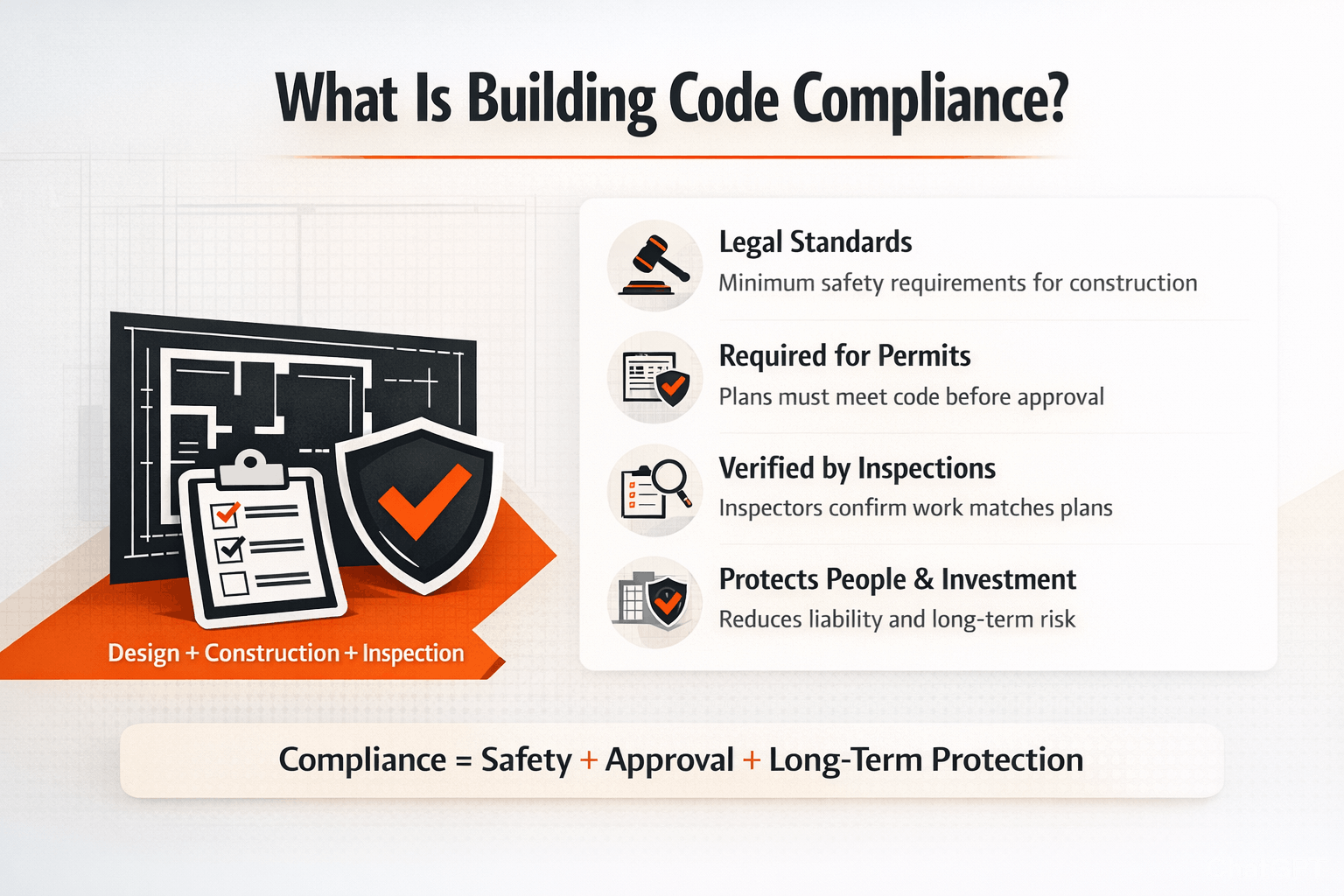
Building code compliance means following the legal standards that regulate how a structure is designed, built, altered, or occupied. These codes set minimum safety requirements. They apply to new construction, renovations, tenant improvements, and even change-of-use projects.
In most cities, you cannot begin construction without approved plans that meet code. After approval, inspectors verify that the work follows those plans. If it does not, corrections are required.
In short, compliance is both a design requirement and a construction responsibility.
Practical Tips for Code Compliance 💡
- ✅ Start with occupancy classification to avoid redesigns later.
- ✅ Coordinate architectural, structural, and MEP drawings before submission.
- ✅ Maintain a detailed checklist and document all inspections.
- ✅ Consult experienced permit consultants for complex projects.
Key Areas Covered by Building Codes
Building codes are detailed. However, they generally focus on several core areas.
Structural strength
Fire protection systems
Electrical safety
Plumbing systems
Mechanical systems (HVAC)
Accessibility standards
Energy efficiency requirements
Occupancy and use classifications
Each category plays a role in protecting occupants and neighboring properties.
Table 1: Major Building Code Categories and Their Purpose
| Code Category | What It Covers | Why It Matters |
|---|---|---|
| Structural Code | Foundations, framing, load-bearing walls | Prevents collapse and structural failure |
| Fire Code | Alarms, sprinklers, exits | Protects life during emergencies |
| Electrical Code | Wiring, panels, grounding | Reduces fire and shock risk |
| Plumbing Code | Water supply, drainage, venting | Ensures sanitation and health |
| Mechanical Code | HVAC systems | Maintains air quality and safety |
| Accessibility Code | ADA requirements, ramps, restrooms | Ensures equal access for all occupants |
| Energy Code | Insulation, lighting efficiency | Reduces energy waste and cost |
As you can see, building regulations cover far more than just structural design. They address safety, health, and sustainability.
Compliance vs. Permitting
It helps to understand the difference between compliance and permits. A building permit is official approval to start construction. Compliance is meeting the rules required to receive that approval and pass inspections. In other words, permits are granted because the project demonstrates code compliance.
For commercial projects, compliance often involves:
Plan reviews
Engineering calculations
Code analysis reports
Fire department approvals
Accessibility documentation
Because of this complexity, many developers hire consultants to manage the process efficiently.
Why Building Code Compliance Matters
Some view code compliance as a regulatory hurdle. In reality, it protects businesses and communities. It also prevents major financial risk.
Let’s look at why it matters in practical terms.
1. Life Safety Comes First
The primary purpose of construction standards is safety. Proper exit spacing allows occupants to evacuate quickly. Fire-rated materials slow the spread of flames. Structural requirements prevent collapse during earthquakes or heavy loads.
Without compliance, buildings can become hazardous.
2. Legal Protection and Liability Reduction
Non-compliance can result in:
Stop-work orders
Fines and penalties
Delayed occupancy
Lawsuits
Increased insurance costs
If an incident occurs and the building fails to meet code, liability exposure increases significantly. On the other hand, documented compliance helps protect owners and contractors.
3. Faster Project Approvals
Projects that follow building regulations from the beginning move through plan review more smoothly.
When drawings clearly show:
Occupancy classification
Fire separation details
ADA layouts
Structural calculations
Reviewers spend less time issuing corrections. That saves weeks, sometimes months.
4. Long-Term Cost Savings
Some compliance measures may increase upfront cost. However, they often reduce long-term expenses.
For example:
Energy codes lower utility bills.
Proper structural design reduces repair risk.
Correct fire protection systems reduce insurance premiums.
In the long run, compliance supports financial stability.
Table 2: Risks of Non-Compliance vs. Benefits of Compliance
| Non-Compliance Risks | Compliance Benefits |
|---|---|
| Construction delays | Faster inspections |
| Permit rejection | Smoother approvals |
| Fines and penalties | Legal protection |
| Occupancy denial | On-time opening |
| Increased liability | Safer environment |
| Insurance issues | Lower long-term risk |
When viewed this way, compliance is not just a requirement. It is a strategic advantage.
How Building Codes Are Created and Updated
Many professionals ask where building codes come from. The process is structured and collaborative. Most jurisdictions adopt model codes developed by national organizations. These model codes are then amended at the state or local level to address regional needs.
For example, earthquake zones may require stricter structural standards. Coastal areas may have stronger wind and flood requirements.
Who Develops Building Codes?
Building codes are typically created through cooperation between:
Code councils
Structural engineers
Fire safety experts
Architects
Government agencies
Public safety officials
Committees review research, accident data, and construction trends. Proposed updates go through public review before adoption. This ensures that codes reflect current technology and safety knowledge.
How Often Do Codes Change?
Codes are usually updated every three years.
Updates may include:
Improved fire protection standards
Revised energy efficiency requirements
Structural changes based on disaster data
New accessibility guidelines
Because of these updates, contractors and developers must stay informed. Working from outdated standards can cause plan rejection.
Local Amendments and Jurisdiction Differences
Even when cities adopt the same base model code, local amendments can differ. For example, one city may require additional fire sprinklers. Another may have stricter parking accessibility rules. Therefore, understanding local construction regulations is critical before submitting plans. Early consultation with permitting experts can prevent major redesign costs later.
Types of Building Codes You Should Know
Now that we understand what building code compliance means and why it matters, let’s look deeper at the types of codes that affect most commercial projects.
Not all codes apply equally to every building. The requirements depend on occupancy type, square footage, building height, and intended use.
However, most projects must address the following categories.
Building Code Compliance Benefits Chart 📊
Structural Building Codes
Structural codes focus on the strength and stability of a building. They ensure that foundations, columns, beams, and load-bearing walls can safely support expected loads.
These loads include:
Dead loads (permanent structural weight)
Live loads (people, furniture, equipment)
Environmental loads (wind, snow, seismic forces)
For example, a warehouse storing heavy materials requires higher floor load capacity than a standard office space.
Structural compliance often involves:
Engineering calculations
Soil reports
Foundation design review
Framing details
If structural drawings do not meet required standards, plan review will not move forward. Because structural safety is critical, this is usually the most technical part of compliance.
Fire and Life Safety Codes
Fire safety regulations protect occupants during emergencies. These codes address how quickly people can exit and how well a building resists fire spread.
Key components include:
Fire alarm systems
Automatic sprinkler systems
Fire-rated walls and doors
Exit signage and emergency lighting
Occupant load calculations
Occupant load determines how many people can safely occupy a space. This directly affects the number of required exits. For example, a restaurant requires more exit capacity than a small retail store of the same size because of higher occupant density.
Failing to meet fire code can delay occupancy approval. In many cities, the fire department conducts separate inspections before final sign-off.
Electrical Codes
Electrical compliance ensures wiring systems are installed safely. Poor electrical work is one of the leading causes of building fires.
Electrical codes regulate:
Panel capacity
Circuit protection
Grounding systems
Emergency backup power
Lighting standards
For commercial properties, additional requirements may apply for:
Commercial kitchens
Medical facilities
Industrial equipment
During inspection, officials check panel labeling, wire sizing, and load calculations. Any mismatch between approved plans and installed systems must be corrected.
Plumbing Codes
Plumbing regulations protect public health. They ensure clean water supply and proper waste disposal.
Plumbing compliance covers:
Fixture counts (based on occupancy)
Drainage systems
Backflow prevention
Venting systems
Water heater installation
For example, a commercial building must provide a specific number of restrooms based on occupant load and gender distribution.
Improper plumbing design can result in failed inspections and expensive rework.
Mechanical Codes (HVAC)
Mechanical codes regulate heating, ventilation, and air conditioning systems.
These standards focus on:
Indoor air quality
Equipment safety
Duct sizing
Energy performance
Ventilation rates
Proper ventilation is especially important in restaurants, warehouses, and medical spaces. Inadequate airflow can cause health issues and code violations. Because HVAC systems affect both comfort and safety, mechanical compliance plays a major role in plan approval.
Accessibility Codes (ADA Compliance)
Accessibility standards ensure that buildings are usable by individuals with disabilities. Commercial projects must comply with accessibility requirements related to:
Entry ramps
Door widths
Restroom layouts
Parking spaces
Elevators
Counter heights
Accessibility compliance is not optional. It is a federal requirement for most commercial properties. Even minor design errors, such as incorrect turning radius in a restroom, can result in plan corrections. Early planning prevents redesign later.
Energy Efficiency Codes
Energy codes aim to reduce energy consumption and environmental impact.
They regulate:
Insulation levels
Window performance
Lighting efficiency
HVAC efficiency
Building envelope performance
Although energy compliance can increase upfront cost, it reduces long-term operating expenses. Many jurisdictions now require energy reports during plan submission.
How Building Code Compliance Works in Practice
Understanding the types of codes is important. However, knowing how compliance works step by step is even more valuable. Let’s walk through the process as it typically unfolds in a commercial construction project.
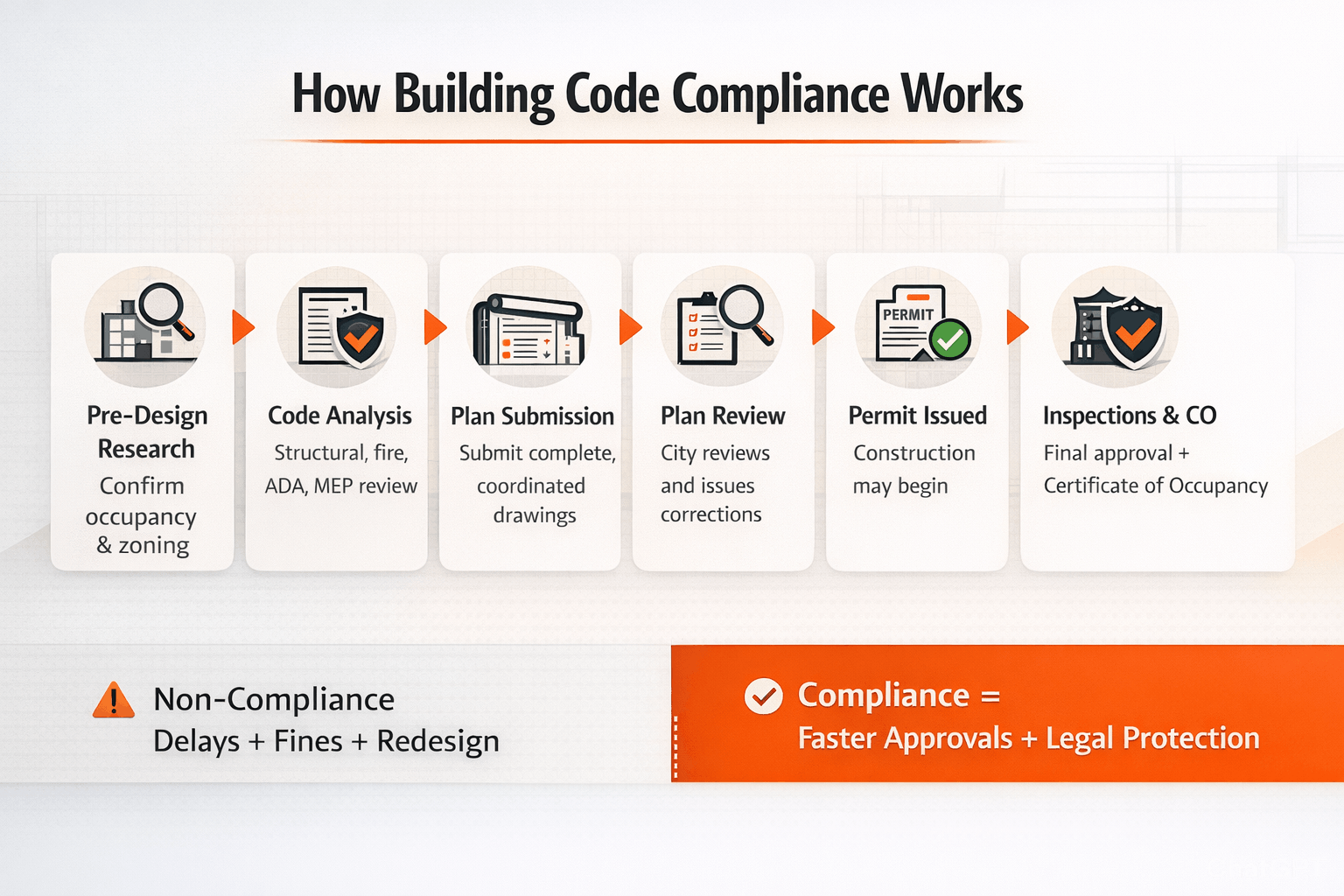
1st Step: Pre-Design Code Research
Before drawings begin, the project team must determine:
Occupancy classification
Construction type
Fire protection requirements
Zoning restrictions
This stage sets the direction for the entire design. If occupancy is misclassified, every calculation after that may be incorrect. Early research reduces costly revisions later.
2nd Step: Architectural and Engineering Design
Once requirements are clear, architects and engineers prepare drawings that reflect:
Structural calculations
Fire separation layouts
Exit pathways
Accessibility dimensions
Mechanical and electrical plans
These drawings must clearly demonstrate compliance. Ambiguous or incomplete plans often lead to correction notices from the building department. Clear documentation speeds up review.
3rd Step: Plan Review and Corrections
After submission, city officials review the plans.
They evaluate compliance in multiple areas:
Structural
Fire
Plumbing
Electrical
Mechanical
Accessibility
Most projects receive correction comments. This is normal. The design team revises plans and resubmits. Multiple review cycles may occur before approval. Well-prepared documents reduce the number of cycles.
4th Step: Permit Issuance
Once all corrections are addressed, the city issues the building permit. This allows construction to begin legally. However, compliance responsibilities do not end here. Field inspections will verify that the built structure matches the approved plans.
5th Step: Construction Inspections
Inspections occur at different phases, such as:
Foundation inspection
Framing inspection
Rough plumbing and electrical
Fire sprinkler inspection
Final inspection
Inspectors compare installed work with approved drawings. If discrepancies are found, corrections must be made before moving forward. Good project management keeps construction aligned with plans.
6th Step: Final Approval and Certificate of Occupancy
After passing final inspections, the building department issues a Certificate of Occupancy. This document confirms that the building complies with applicable codes and is safe for use. Without it, the property cannot legally operate.
Common Compliance Mistakes to Avoid
Even experienced professionals face compliance challenges. However, many issues are preventable.
Key Areas Covered by Building Codes 🏗️
Foundations, framing, load-bearing walls
Alarms, sprinklers, exits
Wiring, panels, grounding
Water supply, drainage
HVAC, ventilation
ADA ramps, restrooms
Lighting, insulation
Common mistakes include:
Submitting incomplete drawings
Ignoring local amendments
Miscalculating occupant load
Overlooking accessibility dimensions
Making field changes without approval
Avoiding these errors requires coordination between designers, contractors, and consultants. Clear communication is essential throughout the project.
Common Building Code Compliance Challenges
Even with good planning, many projects face compliance issues. Construction regulations are detailed. Local amendments add another layer of complexity. However, most problems follow clear patterns. If you understand them early, you can reduce risk and avoid delays.
Incomplete or Inconsistent Drawings
One of the most common reasons for permit delays is incomplete documentation.
For example:
Structural notes may not match architectural drawings.
Exit calculations may not align with floor plans.
Accessibility layouts may be missing dimensions.
Plan reviewers look for consistency. When information conflicts, they issue corrections. Clear coordination between architects and engineers prevents these issues.
Misunderstanding Occupancy Classification
Occupancy classification determines many compliance requirements. It affects:
Fire separation
Sprinkler systems
Exit requirements
Plumbing fixture counts
If a space is classified incorrectly, the entire design may require revision. For example, converting a warehouse into a restaurant changes occupant load, fire safety needs, and restroom requirements. Because of this, early code analysis is critical.
Ignoring Local Amendments
Many cities adopt model building codes. However, they often add local amendments.
These amendments may address:
Seismic design
Flood zones
Wildfire protection
Parking requirements
Accessibility standards
Designing based only on general code references can lead to costly revisions later. Always verify city-specific construction regulations before finalizing plans.
Field Changes Without Approval
Construction often involves on-site adjustments. However, making changes without submitting revised plans can create compliance issues.
Common examples include:
Moving walls
Changing door locations
Modifying restroom layouts
Adjusting HVAC equipment
Even small layout changes can affect egress or accessibility compliance. When changes occur, documentation should be updated and approved before inspection.
Delays in Inspections
Inspection scheduling also affects project timelines.
Delays may occur due to:
Inspector availability
Incomplete work at inspection time
Missing documentation
Failed inspections requiring rework
Planning inspection stages carefully helps maintain momentum. Clear communication with city departments reduces uncertainty.
Practical Strategies to Ensure Code Compliance
While challenges are common, they are manageable. A structured approach makes a major difference. Below are practical strategies used in successful commercial projects.
Conduct a Detailed Code Analysis Early
Before design begins, prepare a formal code summary that includes:
Occupancy classification
Construction type
Building height and area limits
Fire-resistance requirements
Exit calculations
Accessibility checklist
This document acts as a roadmap for the design team. It reduces guesswork and prevents mid-project changes.
Coordinate Design Disciplines
Compliance depends on coordination between:
Architecture
Structural engineering
Mechanical engineering
Electrical engineering
Plumbing design
When disciplines work independently, conflicts arise. Regular coordination meetings help ensure that drawings align with each other. For example, structural beams should not interfere with fire-rated ceiling assemblies. Clear communication avoids these conflicts.
Use a Compliance Checklist
A structured checklist keeps projects organized.
Table 3: Sample Building Code Compliance Checklist
| Stage | Key Compliance Actions |
|---|---|
| Pre-Design | Confirm zoning, occupancy, and use |
| Design | Complete code analysis and accessibility review |
| Plan Submission | Verify drawings are consistent and complete |
| Construction | Follow approved plans strictly |
| Inspection | Prepare documentation before each inspection |
| Final Approval | Confirm all corrections are resolved |
Using a checklist reduces the chance of missing key requirements.
Document Everything
Keep records of:
Approved plans
Inspection reports
Correction notices
Revised submissions
Engineer calculations
Clear documentation protects the project team. It also simplifies future renovations or tenant improvements.
Work With Experienced Permit Consultants
Many commercial developers choose to work with permit and code consultants.
These professionals:
Interpret local construction standards
Coordinate plan review comments
Communicate with city departments
Reduce approval time
This support is especially helpful for restaurants, warehouses, and tenant improvement projects where requirements can be complex.
Real-World Example: How Early Compliance Planning Saves Time
Consider a retail space converting into a restaurant. Without early code review, the owner may design the layout first and address compliance later.
This can lead to:
Insufficient restroom fixtures
Inadequate exit capacity
Missing grease interceptor requirements
Incorrect ventilation design
Correcting these issues after plan submission can delay opening by several months. However, if a compliance review happens before design finalization, adjustments are made early.
The result is:
Fewer correction cycles
Faster permit approval
Smoother inspections
Earlier occupancy
The cost of early planning is far less than the cost of redesign.
The Long-Term Value of Code Compliance
Building code compliance is not just about getting a permit. It supports long-term operational success.
Compliant buildings:
Operate more safely
Face fewer legal disputes
Attract better tenants
Maintain higher property value
In contrast, non-compliant properties often encounter insurance issues, renovation delays, and resale complications. When compliance becomes part of standard project management, it strengthens every phase of construction.
Future Trends in Building Code Compliance
Building codes continue to evolve. They respond to new technology, safety research, and environmental concerns.
For developers and contractors, staying informed is essential. Projects that ignore upcoming changes may face redesign or delays.
Let’s look at the key trends shaping construction regulations today.
Stronger Energy Efficiency Standards
Energy codes are becoming stricter across many jurisdictions. Cities and states now focus heavily on reducing carbon emissions and improving building performance.
Modern energy compliance often includes:
Higher insulation requirements
Improved window performance ratings
LED lighting standards
Smart building controls
Efficient HVAC systems
Many municipalities now require energy compliance reports at the time of plan submission.
Over time, buildings that meet stronger energy standards often see lower operating costs. That benefits both owners and tenants.
Increased Focus on Sustainability
Sustainability is no longer optional in many regions. Green building practices are influencing updates to construction codes. Requirements may include:
Water-saving plumbing fixtures
Solar-ready roof design
Electric vehicle charging infrastructure
Stormwater management systems
Some cities also offer incentives for exceeding minimum code requirements. This shift reflects broader environmental goals. As a result, future projects must consider sustainability from the beginning of design.
Enhanced Fire and Life Safety Requirements
Recent disasters have prompted updates to fire safety standards.
Changes often involve:
Improved exterior wall materials
Stricter sprinkler system coverage
Better smoke control systems
Clearer exit signage requirements
These updates aim to improve evacuation efficiency and reduce fire spread. Commercial properties, especially high-occupancy spaces like restaurants and event venues, must monitor these changes carefully.
Greater Accessibility Enforcement
Accessibility compliance continues to receive close attention. Regulatory agencies are increasing enforcement related to:
Restroom layouts
Parking accessibility
Entry path slopes
Service counter heights
Even minor dimensional errors can lead to corrections or legal complaints. Because accessibility requirements are precise, early design review remains critical.
Digital Plan Review and Electronic Permitting
Many building departments now use digital systems for plan submission and review.
Electronic permitting systems allow:
Online plan uploads
Real-time correction tracking
Faster communication with reviewers
Digital inspection scheduling
While this improves efficiency, it also increases transparency. Plans must be clearly organized and properly labeled. Reviewers can quickly flag inconsistencies. Good documentation matters more than ever.
FAQs About Building Code Compliance
Below are common questions clients ask during commercial projects.
What happens if a project fails inspection?
If a project fails inspection, the inspector issues a correction notice. The notice explains what does not meet code requirements. The contractor must correct the issue and request re-inspection.
In most cases, failures are fixable. However, repeated issues can delay final approval.
Can building codes change during a project?
Yes, codes can change. However, projects typically follow the code version in effect at the time of permit submission.
If a project is delayed significantly before submission, newer standards may apply. This is why early submission is important once plans are complete.
Who is responsible for code compliance?
Responsibility is shared.
Architects and engineers design according to code.
Contractors build according to approved plans.
Owners ensure proper permits are obtained.
Ultimately, the property owner carries legal responsibility for compliance. Clear coordination among all parties reduces risk.
Is building code compliance the same as zoning compliance?
No. Zoning regulations control land use, setbacks, height limits, and parking requirements. Building codes focus on structural safety, fire protection, and construction standards. Both must be satisfied before a project can move forward.
How long does the compliance process take?
Timelines vary depending on:
Project size
Jurisdiction workload
Completeness of submitted plans
Number of correction cycles
Smaller tenant improvements may take weeks. Large commercial projects may take several months. Early preparation shortens review time.
Conclusion: Building Code Compliance as a Foundation for Success
Building code compliance is a structured process. It starts with research and ends with final inspection approval.
While the requirements may seem detailed, they serve a clear purpose. They protect public safety, reduce liability, and improve building performance.
For commercial developers, restaurants, warehouses, and tenant improvement projects, compliance is not just a legal step. It is a strategic investment in long-term stability.
Projects that prioritize early code analysis, strong documentation, and coordinated design move through permitting more efficiently. They also avoid costly surprises during construction.
In today’s regulatory environment, proactive compliance planning is one of the smartest decisions a project team can make.
When approached with clarity and preparation, building code compliance becomes manageable, predictable, and ultimately beneficial for everyone involved.
Get Expert Help With Your Building Code Compliance
Planning a commercial project? Don’t let permit delays or code corrections slow you down.
Our team at JDJ Consulting helps developers, business owners, and contractors move through the building permit and code compliance process efficiently. From plan review coordination to final approval, we provide practical support at every stage.
If you’re starting a new project or facing correction notices, we’re ready to help.
Call us today: (818) 793-5058
Email: sales@jdj-consulting.com
Contact us online: https://jdj-consulting.com/contact-us/
Let’s make your permitting process smoother and get your project approved with confidence.