Adding a swimming pool can transform a backyard. In a city like Austin, it can also increase property value and create a space for relaxation during the long Texas summers. However, building a pool is not just a construction project. It also involves city regulations, safety rules, zoning limits, and environmental considerations.
Many homeowners assume that once they hire a contractor, the process is simple. In reality, several approvals may be required before construction begins. The City of Austin reviews residential pool projects to make sure they meet building codes, drainage rules, and safety standards.
For example, pool barriers must follow strict safety requirements. Property setbacks must also be respected. In some neighborhoods, HOA rules may apply as well. In addition, Austin has regulations on impervious cover, which can affect how large a pool or deck you can build.
Because of these rules, planning ahead is essential. A well-planned project can move through approvals smoothly. On the other hand, missing documents or ignoring zoning rules can lead to delays, redesigns, or even permit rejection.
This guide explains the key things Austin homeowners should understand before building a pool. It covers permits, zoning restrictions, safety codes, and other practical factors that influence pool construction in the city.
Table of Contents
ToggleWhy Austin Has Strict Regulations for Residential Pools
Austin has grown rapidly in the past two decades. As neighborhoods expand, the city must ensure that new construction does not create safety or environmental problems. Residential pools fall into this category because they involve structural work, electrical systems, plumbing, and water management.
City regulations exist to protect homeowners, neighbors, and the surrounding environment. They also help prevent accidents and reduce property damage caused by drainage issues or poor construction practices. Several factors explain why the city monitors pool construction closely.
Safety Risks Associated with Residential Pools
Swimming pools can be enjoyable, but they also come with real safety risks. For this reason, local governments enforce safety rules for residential pools.
Drowning is one of the most serious concerns. Children and pets are especially vulnerable if pools are not properly secured. Even experienced swimmers can face risks if pools lack proper barriers or safety devices.
To reduce these dangers, Austin requires protective measures such as:
-
Fencing around the pool area
-
Self-closing and self-latching gates
-
Proper electrical grounding for equipment
-
Approved pool covers or alarms in some cases
These rules may seem strict, but they help prevent accidents. Homeowners should also think about safety beyond code requirements. Installing slip-resistant decking, adequate lighting, and visible depth markers can make a pool area safer for everyone.
Environmental and Drainage Concerns
Austin places strong emphasis on environmental protection. The city must manage stormwater carefully because heavy rain can cause flooding and erosion.
Pools themselves hold water, but the surrounding surfaces often create drainage challenges. Concrete decking, patios, and equipment pads can prevent water from soaking into the soil. When rainwater cannot absorb naturally, runoff increases.
This is why Austin regulates impervious cover, which refers to surfaces that block water absorption.
Examples include:
-
Concrete patios
-
Pool decks
-
Driveways
-
Walkways
-
Equipment slabs
Managing impervious cover helps prevent flooding and protects nearby waterways. The table below explains common backyard surfaces and whether they count toward impervious cover.
| Backyard Surface | Counts Toward Impervious Cover |
|---|---|
| Pool water surface | No |
| Concrete pool deck | Yes |
| Stone patio with mortar | Yes |
| Gravel surface | Often yes |
| Grass lawn | No |
If a property exceeds impervious cover limits, a pool project may need redesign or special approval.
Neighborhood and Property Impact
Pool construction can also affect nearby properties. Noise, lighting, and drainage changes can influence neighbors if projects are not planned carefully.
For example, large pools with extensive decking may alter how water flows across a property. Without proper drainage planning, rainwater could move toward neighboring yards.
Setback rules help prevent these problems. Pools must be placed a certain distance away from property lines and structures. This spacing protects privacy and reduces potential disputes between neighbors.
In addition, some communities have homeowners associations that regulate backyard structures. HOAs may limit the size, style, or placement of a pool.
Because of these factors, the city reviews pool designs before construction begins. The goal is not to prevent homeowners from building pools. Instead, the review process ensures that projects are safe, compliant, and compatible with surrounding properties.
Do You Need a Permit to Build a Pool in Austin?
In most cases, yes. The City of Austin requires permits for residential swimming pools. Pools are considered permanent structures because they involve excavation, electrical systems, plumbing, and mechanical equipment.

A permit allows the city to review the project before construction begins. This review ensures that the design follows local building codes, zoning rules, and safety standards.
Without a permit, a homeowner risks fines, stop-work orders, and possible removal of the pool.
Types of Permits Required for Pool Construction
Pool projects often require more than one permit because different systems are involved. Each permit focuses on a specific part of the construction process.
Common permits include:
-
Building permit – covers the structure of the pool and related construction
-
Electrical permit – required for pumps, lighting, and bonding systems
-
Plumbing permit – applies to water circulation and drainage lines
-
Mechanical permit – may be required for heaters and filtration equipment
These permits help inspectors verify that every system meets safety codes. Below is a simplified breakdown of permits commonly required for residential pool construction.
| Permit Type | Purpose |
|---|---|
| Building permit | Structural approval for the pool |
| Electrical permit | Pool pumps, lighting, bonding |
| Plumbing permit | Water circulation and drainage |
| Mechanical permit | Heating systems and equipment |
Contractors usually handle permit applications, but homeowners should still understand the process. Ultimately, the property owner is responsible for ensuring the project follows local rules.
When a Permit May Not Be Required
Some small or temporary pools may not require permits. These typically include:
-
Inflatable backyard pools
-
Small above-ground pools designed for temporary use
-
Portable kiddie pools
However, the rules can vary depending on size and installation method. Even some above-ground pools require permits if they involve electrical connections or permanent foundations. Because the details matter, homeowners should always verify requirements before installation.
What Happens if You Build a Pool Without a Permit
Building a pool without proper permits can create serious problems.
If the city discovers an unpermitted pool, officials may issue a stop-work order immediately. Construction must stop until permits are approved.
In some situations, the homeowner may also face:
-
Financial penalties
-
Required inspections after construction
-
Expensive modifications to meet code
-
Removal of non-compliant structures
These issues can add significant costs and delays.
For this reason, it is always better to start with the correct approvals. A properly permitted project protects both the homeowner and the contractor.
Planning ahead, gathering the required documents, and working with professionals who understand Austin’s building rules can make the process much smoother.
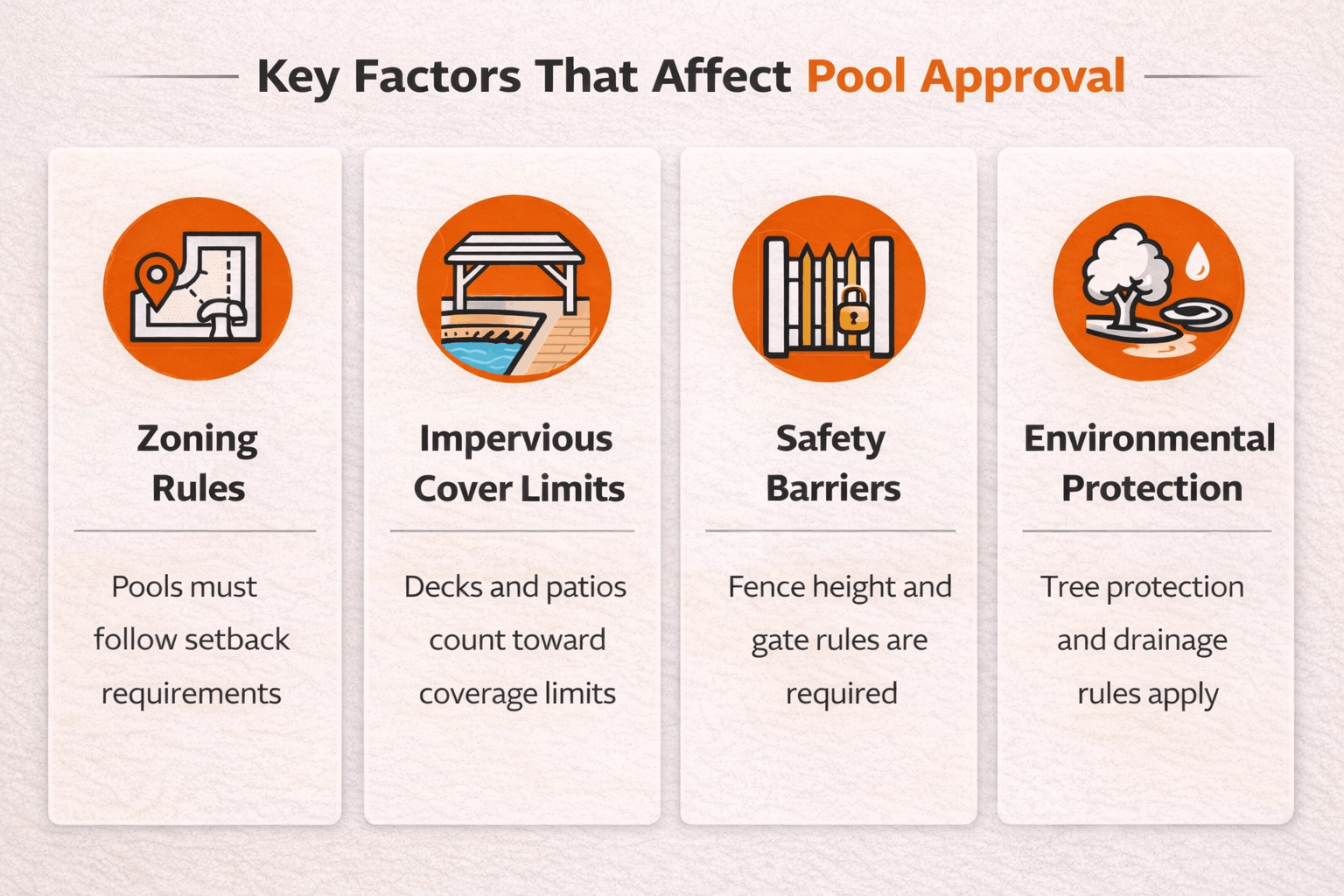
Understanding Zoning and Property Restrictions in Austin
Before designing a pool, homeowners should understand the zoning rules that apply to their property. Zoning laws determine how land can be used and what types of structures can be built on it.
In Austin, zoning affects many parts of a pool project. It can influence the size of the pool, where it can be placed, and how much of the yard can be covered with construction. These rules help maintain neighborhood character while also protecting infrastructure and natural resources.
Many pool permit delays happen because zoning restrictions were not reviewed early in the process. Therefore, it is important to confirm these requirements before finalizing a pool design.
Determining Whether Your Property Is Inside Austin City Limits
The first step is confirming whether your property falls within Austin city limits or in the surrounding county areas. This matters because building rules can change depending on the jurisdiction.
If the property is inside Austin city limits, the Austin Development Services Department oversees permits and inspections. City zoning regulations will apply.
However, if the property sits outside the city but within Travis County, a different permitting authority may handle approvals.
Homeowners can check jurisdiction by:
-
Searching the property address on the City of Austin GIS map
-
Contacting Austin Development Services
-
Reviewing property tax records
Knowing the correct jurisdiction helps avoid submitting permits to the wrong agency.
Deed Restrictions and HOA Rules
City approval does not always mean construction can begin immediately. Some neighborhoods also have private restrictions that apply to properties.
Homeowners associations (HOAs) often regulate exterior changes, including pools.
Common HOA requirements include:
-
Architectural review approval
-
Restrictions on pool size
-
Limits on equipment placement
-
Noise control requirements for pumps
Deed restrictions can also affect what can be built on a property. These restrictions are recorded with the property title and remain in place even if the home changes owners.
Because of this, homeowners should review both city regulations and neighborhood rules before starting a pool project. Ignoring HOA restrictions can lead to fines or legal disputes, even if the city has approved the construction.
Easements That May Limit Pool Placement
Another important factor is the presence of easements on the property. An easement allows utilities or government agencies access to a specific portion of land. These areas often cannot be built on.
Common residential easements include:
-
Utility easements for water, sewer, or electricity lines
-
Drainage easements for stormwater flow
-
Access easements shared between properties
Pools, decks, and equipment pads typically cannot be built within these easements. A site survey usually shows the location of easements. This document is essential when planning a pool layout.
If the pool design overlaps with an easement, the permit application may be rejected. In some cases, redesigning the pool placement is the only solution.
Impervious Cover Limits and How They Affect Pool Size
Austin regulates how much of a property can be covered with solid surfaces. This rule is known as impervious cover regulation.
Impervious cover refers to any surface that prevents water from soaking into the ground. These surfaces increase runoff during heavy rain. Because Austin experiences intense storms, controlling runoff helps prevent flooding and erosion.
For many residential properties, zoning rules limit impervious cover to a certain percentage of the lot size. The exact percentage depends on the zoning classification.
What Counts as Impervious Cover
Many homeowners assume only buildings count toward impervious cover. In reality, several backyard features contribute to the total.
Examples include:
-
Concrete pool decks
-
Patios and walkways
-
Driveways
-
Equipment slabs
-
Outdoor kitchens or hardscapes
However, the water surface of a swimming pool usually does not count as impervious cover. The surrounding deck and hardscape do count.
The following table shows common backyard features and whether they contribute to impervious cover totals.
| Backyard Feature | Counts Toward Impervious Cover |
|---|---|
| Pool water surface | No |
| Concrete deck | Yes |
| Paver patio | Yes |
| Outdoor kitchen slab | Yes |
| Grass lawn | No |
Because decks and patios count toward the limit, large pool areas can push a property close to its maximum allowance.
How to Calculate Your Remaining Impervious Cover
Before designing a pool, homeowners should determine how much impervious cover already exists on the property.
The calculation usually includes:
-
House footprint
-
Garage or accessory buildings
-
Driveway
-
Walkways
-
Patios
Once these surfaces are measured, the total is compared with the zoning limit. Below is a simple example of how impervious cover calculations may work.
| Surface Type | Area (sq ft) |
|---|---|
| House footprint | 2,200 |
| Driveway | 500 |
| Patio | 350 |
| Walkways | 150 |
| Total existing coverage | 3,200 |
If the lot size is 8,000 square feet and zoning allows 45% impervious cover, the property can support up to 3,600 square feet of impervious surfaces. That means only 400 square feet remain for new construction such as pool decking. Understanding this limit early helps prevent design problems later.
What Happens if You Exceed Impervious Cover Limits
If a project exceeds the allowed limit, the city may deny the permit application. Homeowners then have several options:
-
Reduce the size of the pool deck
-
Replace hard surfaces with permeable materials
-
Adjust the design to fit within limits
In rare cases, property owners may apply for a variance. However, variances require a separate review process and approval is not guaranteed. Because of this, most pool designers review impervious cover calculations before submitting plans.
Pool Setback Requirements in Austin
Setbacks determine how far structures must sit from property boundaries. These rules protect neighboring properties, maintain privacy, and ensure safe access for utilities.
Swimming pools must follow setback requirements similar to other residential structures. Setback distances vary depending on zoning district, lot shape, and property size. However, most residential areas require pools to be placed several feet away from property lines.
Minimum Distance From Property Lines
Pools usually cannot be built directly against property boundaries. Instead, they must maintain a minimum setback from side and rear lot lines.
Typical requirements often include:
-
Minimum distance from side property lines
-
Minimum distance from rear property lines
-
Additional restrictions near alley access
These distances help maintain space between neighboring structures and reduce the risk of drainage problems. Homeowners should confirm setback rules with the city or their design professional before finalizing the pool location.
Distance From the House and Other Structures
Pools must also maintain safe spacing from the home and other structures. For example, equipment such as pumps and heaters must often be placed away from windows and property lines. This spacing helps reduce noise impacts and provides safe access for maintenance.
Common structures that must be considered include:
-
Main house
-
Detached garages
-
Accessory dwelling units
-
Outdoor kitchens
A professional site plan usually shows these distances clearly.
Setback Rules for Corner Lots
Corner lots often have stricter setback requirements because they face two streets. In these cases, the property may have:
-
A front yard setback
-
A secondary front setback along the side street
These additional restrictions can reduce the buildable space available for a pool. Because of this, homeowners with corner lots should review zoning maps and site plans carefully before starting a pool design.
Proper placement helps avoid permit issues and ensures the project meets city requirements from the beginning.
Pool Safety and Fence Requirements in Austin
Safety is one of the most important parts of pool construction. Because swimming pools can pose risks to children and pets, Austin requires protective barriers and other safety measures for residential pools.
These rules follow both local building codes and state safety standards. Inspectors check these requirements before approving a pool for use.
Most of the safety rules focus on preventing unsupervised access to the pool area.

Minimum Fence Height Requirements
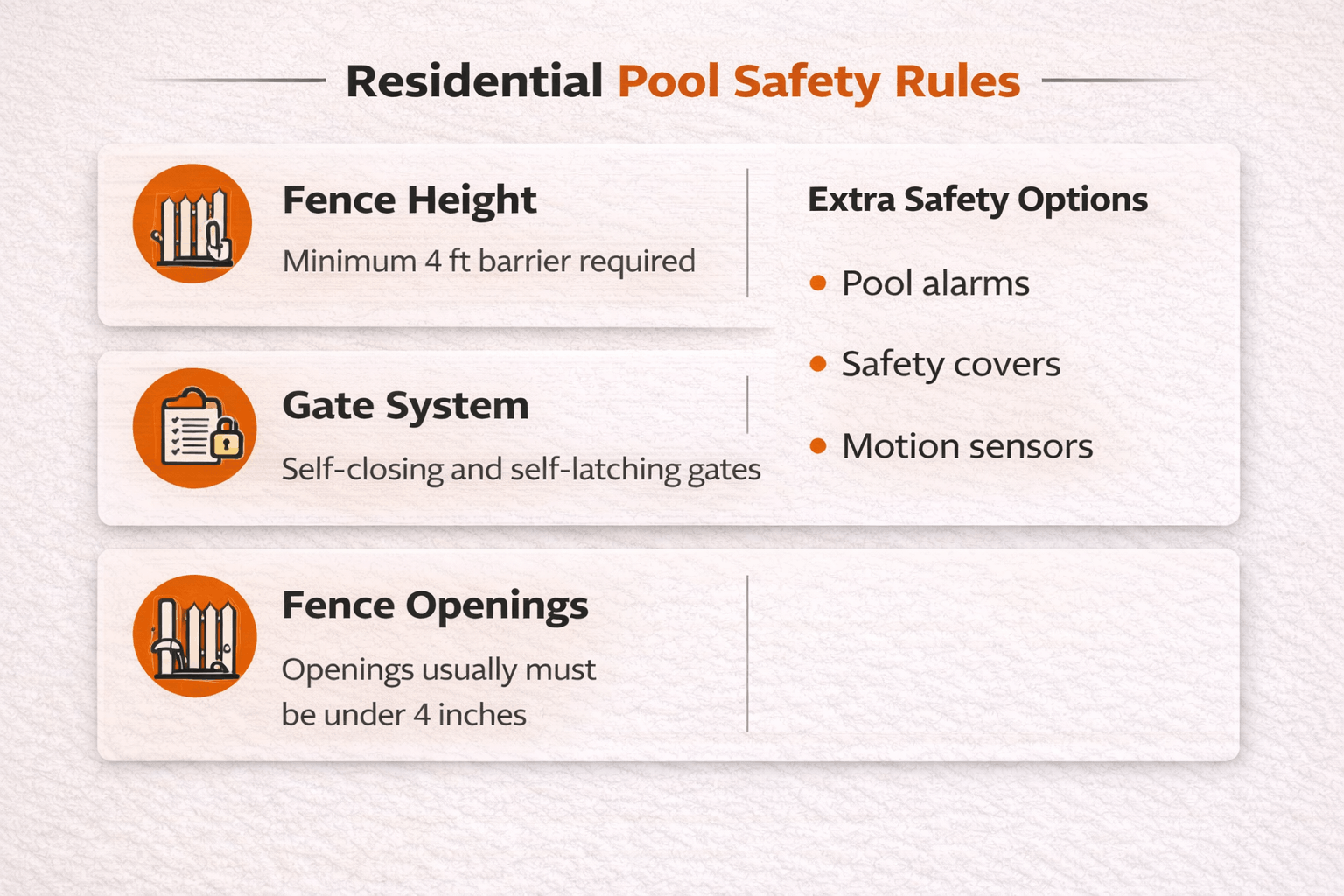
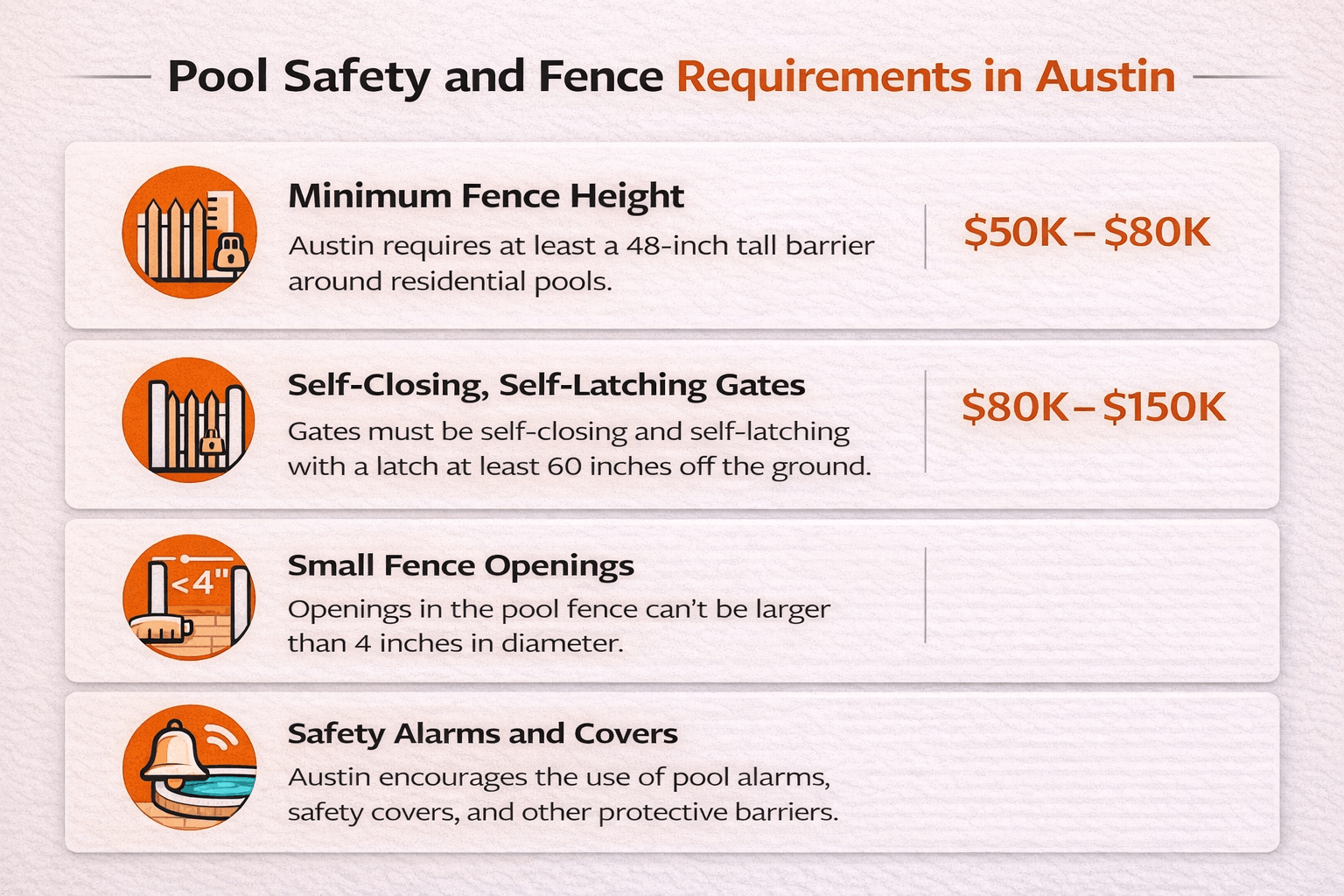
Austin requires a barrier around residential pools to reduce the risk of accidental entry. In most cases, the barrier must be at least 48 inches (4 feet) high.
The fence should completely surround the pool area. It must also be designed so that children cannot easily climb or squeeze through openings.
Common pool fence materials include:
-
Wood privacy fences
-
Metal safety fencing
-
Aluminum or steel rail fences
-
Glass pool barriers
Each type of barrier must meet spacing and height rules. The table below summarizes common safety barrier requirements.
| Safety Feature | Typical Requirement |
|---|---|
| Minimum fence height | 48 inches |
| Maximum gap under fence | 2 inches |
| Maximum opening between bars | 4 inches |
| Gate direction | Must swing outward from pool |
These standards help prevent children from entering the pool area without supervision.
Gate and Latch Requirements
The gate leading to the pool area must also meet strict safety standards.
Pool gates must include:
-
Self-closing hinges so the gate shuts automatically
-
Self-latching mechanisms to secure the gate after closing
-
Latch placement high enough to prevent children from reaching it
In many cases, the latch must be at least 54 inches above ground level. These requirements ensure the pool area remains secure even if someone forgets to close the gate. Homeowners should test the gate regularly to confirm it closes and latches properly.
Fence Spacing and Mesh Requirements
Fence design also matters. Openings that are too large can allow children to climb through or under the barrier. Austin codes usually limit:
-
Vertical spacing between bars
-
Openings in chain-link fences
-
Gaps beneath the fence
For example, vertical bars typically cannot be spaced more than 4 inches apart. This prevents small children from slipping through the barrier.
If chain-link fencing is used, the mesh size may also be limited so that it cannot act as a climbing surface. Because of these details, contractors usually install fences specifically designed for pool safety.
Pool Alarms and Safety Devices
In addition to fencing, homeowners may install additional safety equipment. These devices can improve safety and sometimes help meet code requirements.
Examples include:
-
Door alarms for doors that open toward the pool
-
Pool covers designed for safety
-
Motion sensors that detect water movement
-
Pool surface alarms
While not every device is mandatory, they can provide an extra layer of protection. Parents and pet owners often choose to install several safety features together.

The Pool Permit Application Process in Austin
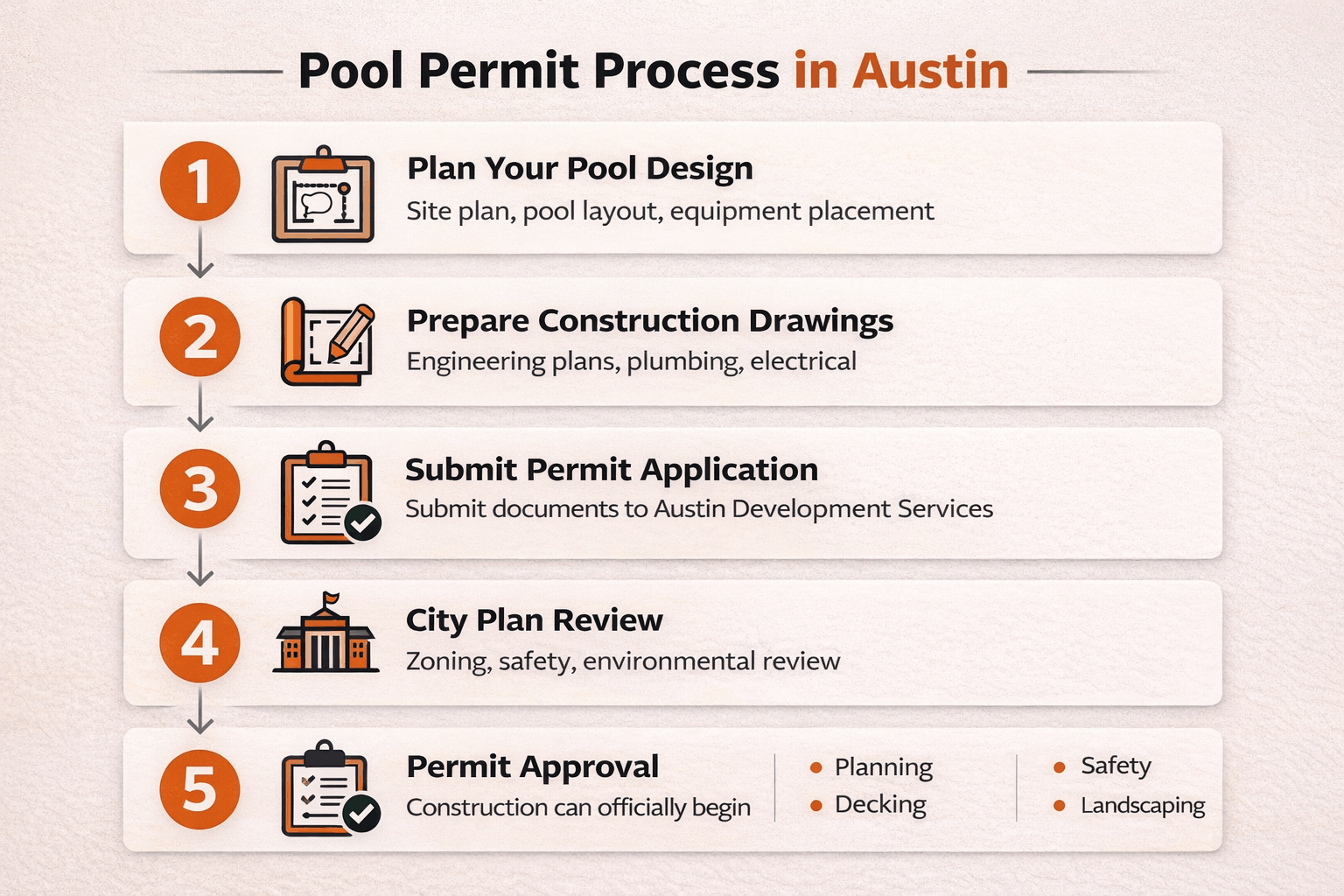
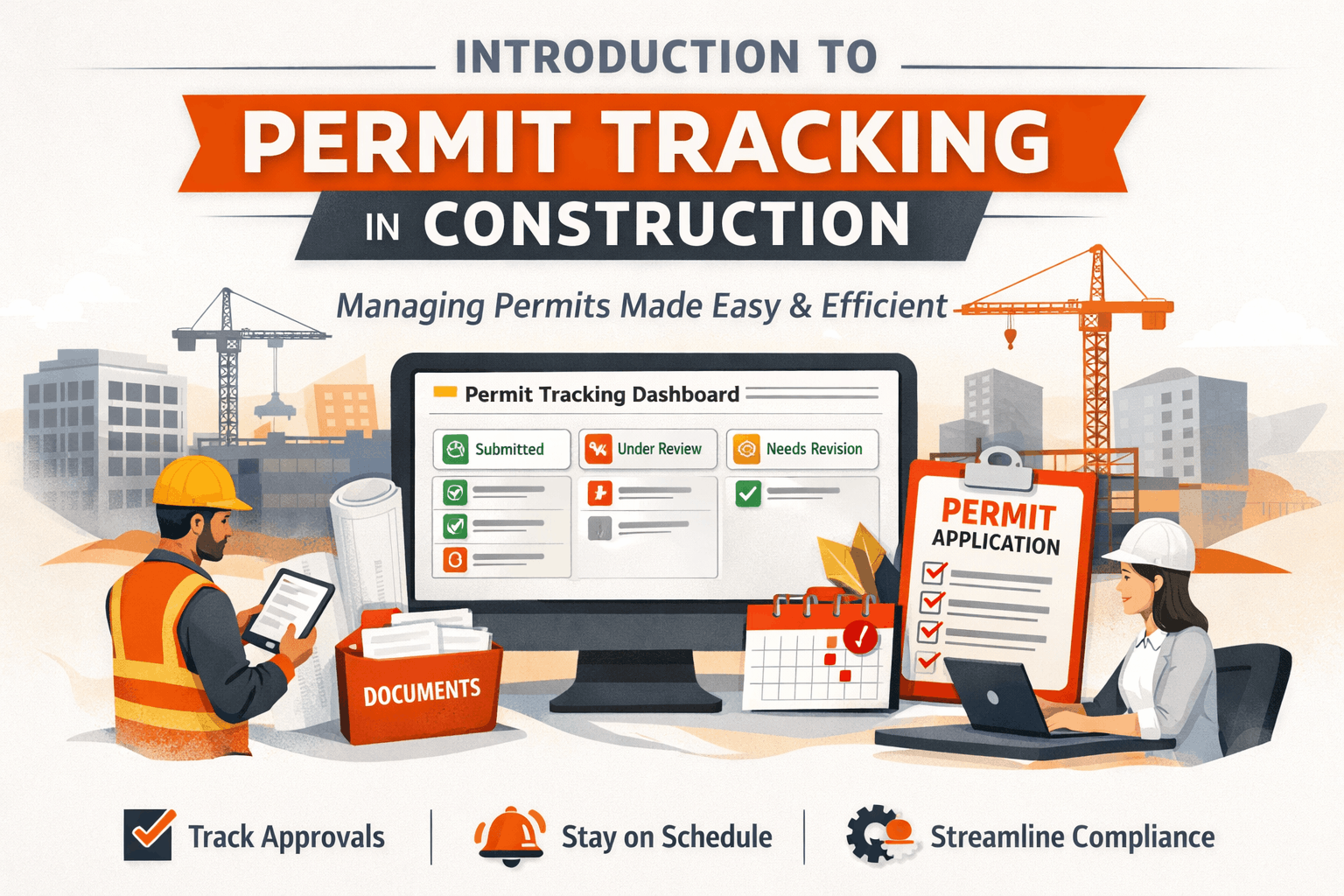
Once the design is complete and zoning requirements are confirmed, the next step is applying for a permit. The City of Austin requires permits for most residential pools. The permit process allows city officials to review construction plans before work begins. Submitting a complete application helps reduce delays during review.
Step 1: Preparing Construction Plans
Before applying for a permit, homeowners or contractors must prepare construction drawings. These plans show exactly how the pool will be built and where it will be located.
Typical pool permit plans include:
-
A site plan showing property boundaries and setbacks
-
Structural drawings for the pool shell
-
Equipment specifications for pumps and filters
-
Plumbing layout for circulation lines
-
Electrical details for bonding and lighting
The site plan is especially important. It shows the location of the pool relative to:
-
property lines
-
the house
-
easements
-
other structures
If the pool violates setback rules or impervious cover limits, the city may reject the application.

Step 2: Submitting Your Application
After the drawings are prepared, the permit application can be submitted to the Austin Development Services Department. Applications are usually submitted online through the city’s permitting portal.
Information commonly required includes:
-
Property address
-
Owner contact information
-
Contractor details
-
Estimated project cost
-
Construction plans and site drawings
Submitting complete documents helps the review process move faster. Incomplete applications often cause delays because the city must request additional information.
Step 3: Plan Review by the City
Once the application is submitted, city departments review the plans. Several departments may participate in the review process, including:
-
Building inspection division
-
Zoning review staff
-
Environmental review teams
-
Electrical and plumbing inspectors
Each department checks a different part of the project.
For example:
-
Zoning staff confirm setbacks and impervious cover limits
-
Environmental reviewers check drainage and tree protection
-
Building officials review structural design
If the plans meet all requirements, the permit can move toward approval. However, if issues appear, the city may send comments requesting revisions.
Step 4: Permit Approval and Construction Start
Once all reviews are complete and the application meets city requirements, the permit is approved. Only after permit approval can construction legally begin.
Contractors must display the permit information on site during construction. This allows inspectors to verify the project during scheduled inspections.
The table below summarizes the general permit process.
| Permit Stage | What Happens |
|---|---|
| Plan preparation | Engineers and designers create drawings |
| Application submission | Documents uploaded to city portal |
| Plan review | City departments review compliance |
| Permit approval | Construction may begin |
The review timeline can vary depending on the complexity of the project. Some permits move quickly, while others require revisions before approval.
Planning ahead and submitting accurate plans helps avoid unnecessary delays.
Pool Inspections Required During Construction
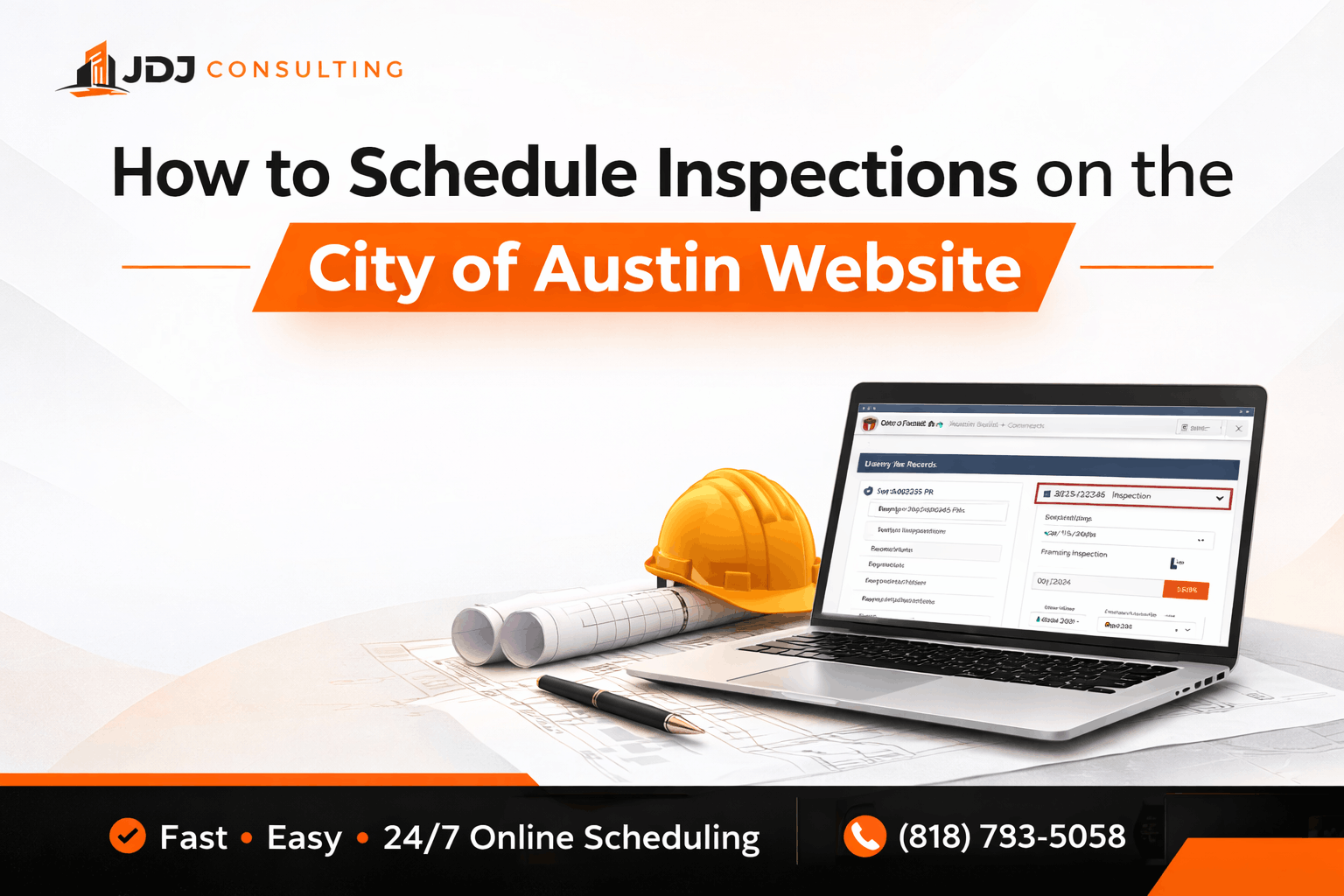
Receiving a permit is only the beginning of the process. The city also requires inspections during construction to ensure the project follows approved plans.
Inspections protect homeowners by verifying that electrical, structural, and safety systems are installed correctly. If an inspection fails, the contractor must correct the issue before work can continue.
Pre-Gunite or Structural Inspection
One of the earliest inspections occurs before the pool shell is permanently formed. During this stage, inspectors review:
-
Reinforcing steel placement
-
Structural support design
-
Excavation depth and shape
This inspection ensures the pool structure is strong enough to hold water pressure and withstand soil movement.
Electrical and Plumbing Inspection
Pools involve several electrical components, including pumps, lighting systems, and bonding wires. Electrical inspections confirm that:
-
Proper grounding systems are installed
-
Equipment wiring meets code
-
Electrical panels are safe and accessible
Plumbing inspections focus on circulation and drainage systems. Inspectors verify that pipes are installed correctly and that water flow systems meet safety standards.
Final Safety Inspection
The final inspection happens near the end of the project. At this stage, inspectors check several items before approving the pool for use.
These often include:
-
Pool fencing and gate installation
-
Safety barrier compliance
-
Equipment operation
-
Drainage around the pool area
Once the final inspection passes, the project can receive official approval. Homeowners can then begin using the pool. Proper inspections ensure that the finished pool is safe, compliant, and ready for long-term use.
Environmental Restrictions to Consider Before Building a Pool in Austin
Austin is known for its environmental protections. The city works to protect waterways, trees, and natural drainage systems. Because of this, pool construction must follow certain environmental rules.
Many homeowners focus only on design and cost. However, environmental regulations can affect where a pool can be built and how construction must be planned.
Ignoring these rules can delay permits or force changes to the pool layout. Understanding them early helps avoid problems during the approval process.
Protected Trees and Critical Root Zones
Austin has strict rules for protecting large and mature trees. Certain trees on private property are classified as protected trees, and construction near them is limited.
When a tree is protected, builders must avoid disturbing the critical root zone (CRZ). The CRZ is the area around the tree that protects its root system.
If excavation damages the roots, the tree could become unstable or die. Because of this risk, pool construction must stay outside the protected area.
Common restrictions may include:
-
No excavation inside the critical root zone
-
Limits on grading near protected trees
-
Restrictions on placing equipment or decking near the trunk
Sometimes the pool design must be adjusted to avoid the protected area. If a project cannot avoid the root zone, a tree permit or special review may be required.
Drainage and Floodplain Restrictions
Drainage is another important factor in Austin construction. Heavy rainstorms can create significant runoff, especially in areas with clay soil.
Pools and surrounding hard surfaces can change how water flows across a property. If drainage is not planned correctly, runoff may move toward neighboring homes or public streets.
Because of this, some properties require drainage planning before construction begins. In certain locations, additional restrictions apply if the property is located in a floodplain or near a creek.
Floodplain areas may require:
-
Additional engineering review
-
Elevation studies
-
Special permits before construction
These steps ensure the pool does not increase flood risks in the surrounding area.
Water Conservation Considerations
Austin also promotes responsible water use. Although residential pools are common, the city encourages efficient water management. Homeowners often install systems that reduce water waste and improve efficiency.
Examples include:
-
Energy-efficient pool pumps
-
Cartridge filtration systems that use less water
-
Automatic covers that reduce evaporation
-
Leak detection systems
These features help reduce long-term water consumption. In addition, proper maintenance helps keep water clean and reduces the need for frequent refilling.
Many homeowners ask how long it takes to get a pool permit. The answer depends on several factors, including project complexity and how complete the application is. Some permits move quickly through the review process. Others may take longer if revisions are required. Planning ahead helps prevent unnecessary delays.
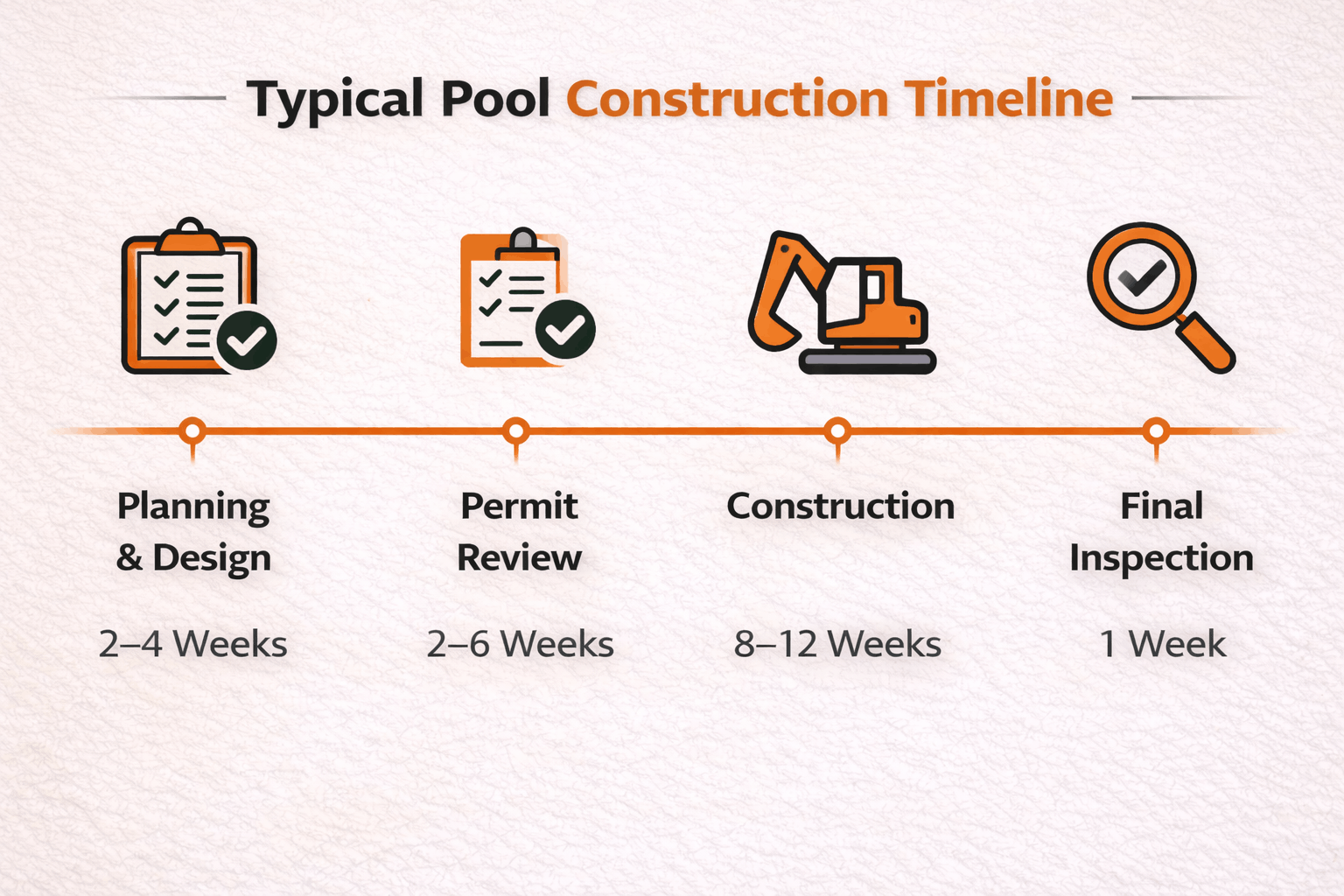
Typical Permit Timeline
Although timelines can vary, most pool projects follow a similar process from design to completion. The table below shows a typical schedule for residential pool construction.
| Project Stage | Typical Time |
|---|---|
| Pool design and engineering | 2–4 weeks |
| Permit review by city | 2–6 weeks |
| Permit approval and scheduling | 1–2 weeks |
| Construction phase | 8–12 weeks |
In many cases, the permit review stage is the most unpredictable part of the process. If city reviewers request revisions, the timeline can extend further.
Factors That Delay Pool Permits
Several issues can slow down permit approval. Common causes of delays include:
-
Incomplete application documents
-
Incorrect site plans
-
Impervious cover violations
-
Setback conflicts
-
Environmental review requirements
Even small errors can require a revised submission. Each revision may restart part of the review process. Because of this, accurate planning is important before submitting the permit application.

How to Speed Up the Approval Process
Homeowners and contractors can take several steps to improve approval timelines. Helpful strategies include:
-
Preparing detailed construction drawings
-
Verifying zoning and setback rules early
-
Confirming impervious cover calculations
-
Including all required documents in the first submission
Working with experienced professionals also helps reduce mistakes in the application. Many contractors or permit consultants are familiar with Austin regulations and can guide the process more efficiently.
Cost Factors When Building a Pool in Austin
The cost of building a residential pool can vary widely. Several factors influence the final price, including design complexity, materials, and site conditions.
While some homeowners expect only construction costs, additional expenses can appear throughout the project. Understanding these costs early helps homeowners plan their budget more accurately.
Average Pool Construction Costs
The size and style of the pool are the largest cost factors. Custom features such as waterfalls, spas, and lighting can increase the overall price.
Below is a general overview of typical pool construction costs.
| Pool Type | Estimated Cost Range |
|---|---|
| Basic in-ground pool | $50,000 – $80,000 |
| Custom pool with features | $80,000 – $150,000 |
| Luxury pool design | $150,000+ |
These estimates vary depending on materials, equipment, and landscaping. Excavation difficulty can also influence price. For example, rocky soil may require additional work before construction can begin.
Additional Costs to Expect
Beyond the pool itself, several additional expenses may appear during the project.
Common extra costs include:
-
Permit application fees
-
Engineering and design services
-
Electrical and plumbing installation
-
Pool fencing and safety barriers
-
Landscaping and deck construction
Equipment upgrades may also add to the cost.
For example:
-
LED pool lighting
-
Smart pool automation systems
-
Heating systems for year-round use
Although these features increase upfront costs, they can improve convenience and energy efficiency over time.
Long-Term Maintenance Costs
After construction is complete, pools require ongoing maintenance. Homeowners should plan for annual operating expenses.
Typical maintenance costs include:
-
Pool chemicals
-
Electricity for pumps and heaters
-
Equipment repairs
-
Cleaning services
While these costs vary depending on pool size and usage, regular maintenance helps extend the life of the equipment and keeps the water safe for swimming.

Common Mistakes Homeowners Make When Building Pools
Building a pool is a major home improvement project. Without careful planning, homeowners may encounter delays, unexpected costs, or compliance issues. Learning about common mistakes can help prevent these problems.
Ignoring Impervious Cover Limits
One of the most frequent issues involves impervious cover limits. Homeowners may design large decks or patios around the pool without realizing they exceed the allowed coverage for the property.
When this happens, the city may require a redesign before approving the permit. Checking impervious cover calculations early helps avoid this problem.
Not Checking HOA Restrictions
Some homeowners receive city approval but forget about HOA requirements. If the neighborhood association requires design approval, construction may need to pause until that approval is granted. Reviewing HOA rules before applying for permits helps prevent conflicts later.
Hiring Unlicensed Contractors
Another mistake is hiring contractors without proper licensing or experience. Pool construction involves structural work, electrical systems, and plumbing. Each of these must follow building codes.
Qualified contractors understand the permitting process and safety standards. Working with experienced professionals reduces the risk of construction problems.
Skipping Safety Compliance
Pool safety rules are not optional. Missing safety barriers, incorrect fencing, or improper gate installation can prevent final approval.
If the pool fails inspection, the contractor must correct the problem before the project can be completed. Following safety guidelines from the beginning ensures a smoother final inspection.

Why Working With a Permit Consulting Firm Helps
For many homeowners, the permit process can feel confusing. Regulations related to zoning, impervious cover, and environmental rules can be difficult to understand.
Permit consulting firms help simplify the process. These professionals understand local building codes and can guide projects through the approval stages more efficiently.
Faster Permit Approvals
Permit consultants help prepare accurate documents before submission. When applications are complete and detailed, city reviewers can process them faster.
Reducing errors also prevents delays caused by revision requests.
Expert Knowledge of Austin Codes
Local regulations can change over time. Permit specialists stay updated on zoning rules, environmental protections, and construction codes.
Their knowledge helps homeowners avoid design mistakes that could cause permit rejection.
Reduced Risk of Rejections
Permit consultants review site plans, setbacks, and impervious cover calculations before submitting an application. By identifying issues early, they reduce the risk of rejection during city review.
Coordination With Engineers and Contractors
Many pool projects involve several professionals, including engineers, contractors, and inspectors. Permit consultants often coordinate communication between these groups. This coordination helps ensure the project meets city requirements from the beginning.
Final Thoughts on Building a Pool in Austin
Building a pool can be one of the most exciting upgrades for a home in Austin. It creates a place to relax, spend time with family, and enjoy the long Texas summers.
However, pool construction involves more than design and installation. Homeowners must also think about permits, zoning rules, safety barriers, and environmental restrictions. These steps may seem complex at first, but understanding them early can save time and money later.
When you know what you need to know before building a pool in the City of Austin, the process becomes much easier. You can plan the right design, follow city requirements, and avoid common delays during permit review.
With careful planning and the right guidance, your project can move smoothly from idea to construction. In the end, you will have a safe, compliant pool that adds value and enjoyment to your home.
Need Help With Pool Permits in Austin?
Planning a pool project can quickly become overwhelming. Zoning rules, impervious cover limits, and permit applications can slow down the process if they are not handled correctly. That’s where JDJ Consulting can help.
Our team works with homeowners, contractors, and developers to simplify the permitting process in Austin. We help prepare the required documents, review site plans, and make sure your project meets city regulations.
If you are planning to build a pool and want expert help with permits and approvals, we’re here to assist.
Visit JDJ Consulting to learn more: https://jdj-consulting.com/blogs/
- Phone number: (818) 793-5058
- Email: sales@jdj-consulting.com
Let our team help you move your project forward with confidence.