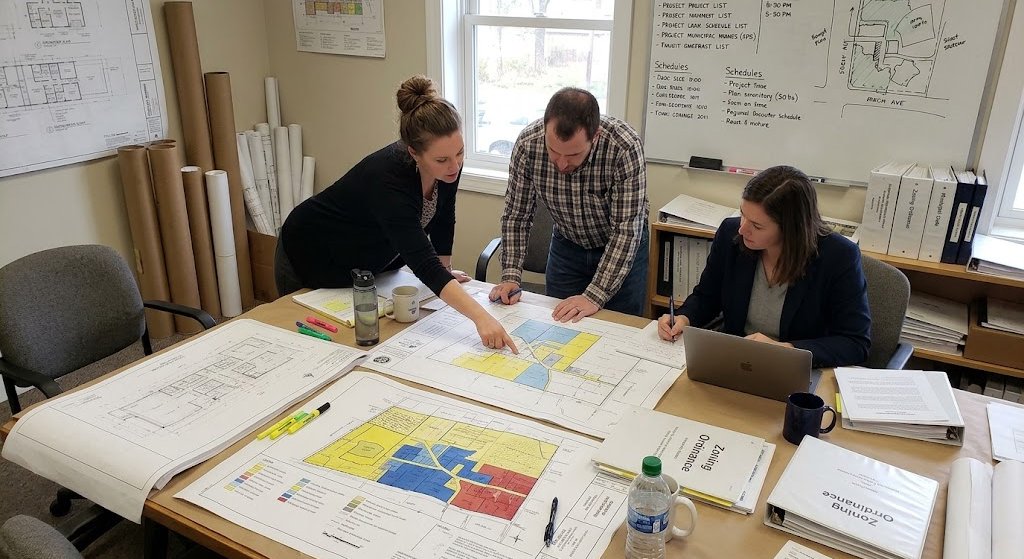
Zoning laws Florida affect almost every property transaction. Whether you’re buying land, building a home, or starting a business, understanding these rules is essential. Many property owners assume zoning only matters for developers. In reality, it shapes neighborhood character, property value, and what you can legally do with your land.
Table of Contents
This guide will break zoning laws down in a simple, clear way. We’ll cover what zoning is, why it matters, and how Florida enforces it. You’ll also learn the practical steps to check your property’s zoning and how to handle common issues. By the end, you’ll have a clear picture of zoning in Florida and how it affects your property decisions.
Florida Zoning Laws — Key Takeaways
Land Use Categories
Residential, Commercial, Mixed-Use, Agricultural
Setbacks & Height
Varies by county & zoning district
Permitting
Local + State approvals may apply
Public Hearings
Required for rezonings & variances
Source: Florida Statutes Chapter 163, Local Comprehensive Planning
What Are Zoning Laws in Florida?
Zoning laws are local rules that control how land is used. Every city or county in Florida has zoning codes. These codes decide what types of buildings can go where. They also control building size, height, and how far structures must be from property lines.
Zoning is not just about restrictions. It also protects property value, public safety, and community character. For example, zoning prevents a noisy factory from being built next to a quiet residential street.
Many Florida homeowners, investors, and developers overlook zoning. This can cause costly mistakes. Understanding zoning early helps avoid fines, delays, and conflicts.

Zoning Laws Explained in Plain English
Think of zoning as a city’s way to organize land. It tells you:
What type of building is allowed (home, office, store, industrial facility).
How big or tall the building can be.
How close it can be to streets or neighbors.
Florida zoning codes are usually divided into categories:
| Category | Purpose |
|---|---|
| Residential | Single-family homes, apartments, accessory buildings |
| Commercial | Retail shops, offices, restaurants |
| Industrial | Warehouses, factories, distribution centers |
| Mixed-Use | A combination of residential, commercial, or office spaces |
This table helps clarify the most common zoning categories you’ll see in Florida cities and counties.
Why Zoning Matters for Florida Property Owners
Zoning affects nearly every property decision. Here’s why it matters:
Property Value: The permitted use of land impacts its market value.
Development Costs: Certain zoning may require extra permits, setbacks, or design rules.
Neighborhood Character: Zoning keeps communities organized and safe.
Future Flexibility: Knowing zoning limits lets you plan potential expansions or renovations.
For instance, buying a lot zoned for single-family homes will limit commercial opportunities. Conversely, buying in a commercial zone could allow you to operate a business, but might restrict residential options.
1.3 Who Creates and Enforces Zoning Laws in Florida
Zoning in Florida is handled locally. Cities and counties pass ordinances to regulate land use. Each jurisdiction also maintains a zoning map, which shows permitted uses for each property.
Key points about zoning authorities:
| Authority | Role |
|---|---|
| Local City/County | Adopt zoning codes, maintain maps, issue permits |
| Planning Departments | Review applications, enforce compliance, recommend zoning changes |
| Local Boards | Approve variances, conditional uses, and rezonings |
Zoning enforcement is a shared responsibility. City staff, planning boards, and elected officials all ensure that land use aligns with local rules. Violations can result in fines or legal action, making compliance essential.
2. Florida Zoning Law Basics
Understanding the basics of zoning law is key before making any property decisions. Florida’s zoning rules may seem complex at first, but they follow clear patterns. Knowing these patterns helps you plan projects, avoid fines, and stay within legal limits.
Zoning laws in Florida focus on land use, density, setbacks, and building regulations. They guide property owners on what’s allowed, where it can go, and how it should look. Most cities and counties divide zoning codes into categories like residential, commercial, industrial, and mixed-use.
2.1 Common Zoning Standards
Zoning standards tell you the rules for building and using your property. They often include:
Permitted Uses – What type of building or activity is allowed.
Lot Size – Minimum area required for each property.
Height Limits – Maximum building height, often measured in feet or stories.
Setbacks – Distance from property lines, streets, or other structures.
Density – How many units or structures are allowed per acre.
Here’s a simple table showing typical zoning standards in Florida:
| Standard | Residential | Commercial | Industrial |
|---|---|---|---|
| Minimum Lot Size | 5,000–10,000 sq ft | 7,500–20,000 sq ft | 20,000–50,000 sq ft |
| Max Height | 35 ft / 2–3 stories | 45–60 ft / 4–5 stories | 60–80 ft / 5–6 stories |
| Setbacks | 10–20 ft front, 5–15 ft sides | 15–25 ft front, 10 ft sides | 20–50 ft front & sides |
| Max Units/Acre | 2–6 units | N/A | N/A |
Note: These numbers vary by city and county. Always check local zoning codes for precise requirements.
2.2 Land Use vs Zoning – What’s the Difference?
It’s common to confuse land use with zoning, but they are different:
Land Use: A long-term plan for how a city or county will develop. It shows areas intended for homes, businesses, parks, or industrial use.
Zoning: The specific rules that enforce that plan. Zoning tells you exactly what can be built and where.
Think of land use as the “big picture” vision. Zoning is the detailed guide to make that vision a reality. Both work together to control growth, protect neighborhoods, and maintain property values.
2.3 Key Zoning Terms Every Property Owner Should Know
Before working with zoning, it helps to know common terms:
Zoning Map: A visual map showing zoning classifications for every property.
Permitted Use: The type of building or activity allowed without special approval.
Conditional Use: A use allowed under specific conditions, often requiring approval.
Variance: Permission to deviate from certain zoning requirements.
Overlay District: Special zoning rules that apply in addition to the base zoning.
Here’s a quick reference table of common zoning terms:
| Term | Meaning |
|---|---|
| Zoning Map | Shows the zoning classification for properties |
| Permitted Use | Allowed use without extra approval |
| Conditional Use | Allowed only with specific approval or conditions |
| Variance | Exception to a zoning rule |
| Overlay District | Additional rules applied on top of standard zoning |
Knowing these terms will make it easier to read zoning codes and discuss your property with planners, developers, or attorneys.
Zoning basics in Florida might seem detailed, but understanding these foundations is the first step in avoiding costly mistakes. Knowing permitted uses, lot sizes, and building restrictions will help you plan wisely and make informed decisions.
3. Zoning Classifications in Florida
Zoning classifications divide land into categories based on how it can be used. Florida cities and counties use these classifications to manage growth, protect communities, and guide development. Each classification comes with its own rules for building size, density, and land use. Understanding these categories is key for property owners, developers, and investors.

3.1 Residential Zoning (R Zones)
Residential zoning controls where homes can be built. It applies to single-family houses, duplexes, townhomes, and apartments. Rules often include:
Minimum lot size
Maximum building height
Setback requirements
Density limits (units per acre)
Residential zoning helps maintain the character of neighborhoods. For example, a single-family R-1 zone prevents high-rise apartments from being built in a quiet street. Some cities allow Accessory Dwelling Units (ADUs), like guesthouses, with specific rules.
3.2 Commercial Zoning (C Zones)
Commercial zoning regulates areas for business and retail. It ensures businesses are placed where they make sense and don’t disturb nearby homes. Typical rules include:
Types of businesses allowed
Parking requirements
Signage restrictions
Building design standards
Commercial zoning can cover shops, offices, restaurants, and service centers. Cities may have subcategories, like C-1 for small neighborhood retail and C-3 for larger commercial centers.
3.3 Industrial and Agricultural Zoning
Industrial zoning is for manufacturing, warehouses, and distribution facilities. It keeps heavy traffic, noise, and chemicals away from residential neighborhoods. Key rules include:
Minimum lot sizes
Setbacks for safety
Noise and emissions restrictions
Agricultural zoning covers farmland, nurseries, and rural properties. It preserves green space and allows farming operations while controlling non-agricultural development.
Florida Zoning Approval Flow
- Pre-Application Review
- Planning Department Review
- Public Notice Issued
- Planning Commission Hearing
- City Council / County Approval
- Permit Issuance
Source: Florida Department of Economic Opportunity
3.4 Mixed-Use and Planned Unit Developments (PUDs)
Mixed-use zoning allows residential, commercial, and office spaces in the same area. Cities encourage mixed-use to reduce traffic, promote walkability, and support local businesses.
Planned Unit Developments (PUDs) are customized zoning areas. They allow flexibility in design, lot sizes, and building types while meeting overall community goals. PUDs often include amenities like parks, trails, and community centers.
Here’s a table summarizing Florida’s main zoning classifications:
| Zoning Type | Typical Use | Key Features |
|---|---|---|
| Residential (R) | Homes, apartments, ADUs | Lot size, height limits, setbacks, density |
| Commercial (C) | Shops, offices, restaurants | Parking, signage, permitted business types |
| Industrial (I) | Warehouses, factories, distribution | Lot size, noise limits, safety setbacks |
| Agricultural (A) | Farms, nurseries, rural land | Land preservation, minimal residential/commercial use |
| Mixed-Use / PUD | Combination of residential & commercial | Flexible design, community amenities, density rules |
Florida’s zoning classifications provide a clear framework for land use. Knowing which category your property falls into is essential before buying, building, or developing. Each classification comes with rules designed to protect property value, neighborhood character, and public safety.
Pro Zoning Tips
- ✔ Verify zoning before land acquisition
- ✔ Engage planners early
- ✔ Understand local overlays & future land use maps
4. How to Find Your Property’s Zoning in Florida
Knowing your property’s zoning is one of the first steps before buying, building, or developing land in Florida. Each city or county maintains zoning maps and codes, but accessing them can feel confusing at first. This section will guide you through the process, step by step, and explain how to interpret the information.
4.1 Step-by-Step Guide to Checking Zoning Online
Most Florida cities and counties have online zoning maps. These interactive maps make it easier to see your property’s classification and restrictions.
Here’s how to check:
Identify your property’s address or parcel number.
You can find the parcel number on your deed or property tax statement.
Visit your city or county planning department website.
Look for “Zoning Map” or “GIS Map” under planning or property sections.
Search for your property.
Enter the address or parcel number in the search bar.
Zoom in to view boundaries, zoning classification, and overlays.
Check zoning codes and notes.
Most maps link to zoning regulations, which explain permitted uses, setbacks, and other requirements.
Save or print the information for reference.
This can be helpful for permit applications or discussions with planners.
4.2 Understanding Zoning Codes and Labels
Zoning codes in Florida usually include letters and numbers. Understanding these labels helps you know what is allowed:
| Code Example | Meaning | Typical Uses |
|---|---|---|
| R-1 | Single-family residential | Houses, small accessory structures |
| R-2 | Multi-family residential | Duplexes, townhomes, small apartments |
| C-1 | Neighborhood commercial | Small retail, offices, cafes |
| C-3 | General commercial | Larger stores, mixed-use developments |
| I-1 | Light industrial | Warehouses, small manufacturing |
Tip: Codes can vary by county, so always confirm with the local planning department.
Reading zoning codes may seem technical at first. Focus on permitted uses, building size limits, and special conditions. These are the most relevant factors for planning any project.
4.3 When to Contact Local Planning Staff
While online maps are helpful, some situations require direct guidance from local planning staff. Contacting the city or county ensures that you understand current rules and pending changes.
Situations where you should reach out:
If your property is near a zoning boundary or overlay district.
If you plan to change the use of your property (e.g., convert a home into a small business).
If the zoning code includes conditional uses or variances.
If you want clarification on setbacks, density, or height restrictions.
Planning staff can provide:
Written confirmation of your zoning classification.
Advice on whether a variance or rezoning may be needed.
Guidance for submitting permit applications correctly.
Contacting your local planning department early can prevent delays and unexpected costs. It also gives you a clear picture of what’s legally allowed before you invest in your project.
4.4 Quick Tips for Using Zoning Maps
Check multiple sources: County GIS maps and city planning maps may differ slightly.
Look for overlays: Special districts can affect what’s allowed even within the base zoning.
Confirm updates: Zoning maps are updated periodically; always verify the latest version.
Keep notes: Document codes, setbacks, and requirements for future reference.
By following these steps, property owners in Florida can clearly understand their zoning and avoid costly mistakes. Whether you are planning to build a home, start a business, or invest in land, knowing your zoning is essential.
5. The Zoning Approval Process in Florida
Understanding the zoning approval process is essential for anyone planning to build, renovate, or change the use of a property in Florida. The process ensures that projects comply with local rules and community plans. Following the correct steps can save time, reduce costs, and prevent legal issues.

5.1 Zoning Review Before You Build
Before starting any construction, most Florida cities require a zoning review. This process checks whether your proposed project follows all local rules, such as:
Permitted uses: Is your project allowed in this zone?
Setbacks and lot coverage: Does your building fit within required distances from property lines?
Height restrictions: Is your building within allowed height limits?
Parking and access: Are there enough spaces, and is traffic flow safe?
A zoning review can reveal potential problems early, reducing the risk of project delays or redesign costs.
Tip: Submit your plans to the planning department before hiring contractors. This step ensures your project is feasible under current zoning laws.
5.2 Rezoning – Changing a Property’s Zoning
Sometimes your property’s current zoning does not match your plans. Rezoning is the process of changing a property’s zoning classification.
Key steps in rezoning:
Submit a rezoning application with the city or county.
Provide project details, including site plans, building use, and community impact.
Attend public hearings: Most rezoning requests require notice to neighbors and input from planning boards.
Receive approval or denial: Decisions are based on compatibility with local land use plans and community goals.
Note: Rezoning is often time-consuming. It may take months and sometimes requires compromise on building design or use.
5.3 Variances, Conditional Uses, and Special Exceptions
Even if your project mostly complies with zoning rules, some situations require special approvals:
Variance: A request to deviate from certain zoning rules, like setbacks or height limits.
Conditional Use: Permission to use property in a way not typically allowed, provided certain conditions are met.
Special Exception: Approval for uses that require strict evaluation, such as a daycare or small manufacturing facility in a mixed zone.
These tools allow flexibility without completely changing the zoning classification.
Example: A homeowner may request a variance to build a garage closer to the property line than normally allowed. The city reviews the request and may approve it if it does not affect neighbors or safety.
5.4 Steps to Ensure a Smooth Approval Process
Check the zoning code early: Understand permitted uses and requirements.
Meet with planning staff: Discuss your project and get early guidance.
Prepare complete applications: Include all required documents and site plans.
Attend all public meetings: Answer questions and address concerns from staff or neighbors.
Follow up regularly: Track your application to avoid delays.
5.5 Common Pitfalls to Avoid
Submitting incomplete applications
Ignoring community input or public hearing requirements
Failing to follow design or setback rules
Starting construction before approval
Avoiding these mistakes can save time and money, and ensure your project meets local zoning requirements.
By understanding the zoning approval process, property owners and developers in Florida can move forward confidently. Whether you need a rezoning, variance, or conditional use, following proper steps ensures compliance and reduces the risk of fines or legal challenges.
Estimated Zoning Consulting Costs
| Service Type | Typical Cost Range |
|---|---|
| Zoning Analysis | $1,500 – $3,000 |
| Rezoning Application | $3,000 – $7,500 |
| Variance Support | $2,000 – $5,000 |
Costs vary by jurisdiction & project scope.
6. The Role of Public Participation in Florida Zoning Decisions
Public participation plays a major role in zoning decisions across Florida. Local governments want community input before approving changes that affect neighborhoods. This process helps balance private development goals with public interests.
For property owners and developers, understanding public participation is critical. A well-prepared approach can reduce opposition and improve approval chances.
6.1 Public Hearings and Transparency Requirements
Most zoning decisions require at least one public hearing. These meetings give residents a chance to review and comment on proposed projects. Public hearings are typically required for:
Rezoning requests
Variances and conditional uses
Major development approvals
Amendments to zoning codes or maps
Local governments must follow notice requirements, which usually include:
Mailing notices to nearby property owners
Posting signs on the property
Publishing notices on city or county websites
These steps ensure transparency and give the public time to prepare feedback.
6.2 How Community Input Influences Zoning Outcomes
Community feedback can shape zoning decisions in meaningful ways. Planning boards and elected officials often consider:
Compatibility with surrounding properties
Traffic and parking concerns
Noise, lighting, and privacy impacts
Environmental or drainage issues
Positive community support can strengthen an application. On the other hand, strong opposition may lead to delays or added conditions.
Example: A small retail project near a residential area may gain approval if the developer adjusts hours, improves landscaping, or limits signage after hearing public concerns.
6.3 Tips for Preparing for a Public Hearing
Preparation is key when presenting a zoning request. A clear and respectful approach can help ease concerns.
Helpful tips include:
Explain the project clearly using simple language
Show how the project fits with the surrounding area
Address concerns early, especially traffic or noise
Be open to adjustments that improve compatibility
Showing that you value community input can build trust and improve outcomes.
6.4 Common Mistakes During Public Participation
Some applicants underestimate the importance of public input. Common mistakes include:
Failing to notify neighbors early
Using technical language that confuses the audience
Ignoring community concerns
Appearing defensive or dismissive
Avoiding these mistakes can make the approval process smoother and more predictable.
Public participation is not meant to block development. Instead, it helps ensure projects align with local goals and community needs. When handled well, it can support better planning outcomes for everyone involved7. Florida Zoning Law Updates and Development Trends
Florida is growing fast. Population increases, housing demand, and economic expansion continue to influence zoning laws across the state. As a result, many cities and counties are updating zoning codes to reflect new priorities.
For property owners and developers, staying informed about these trends is essential. Zoning rules today may not look the same a few years from now.
7.1 State-Level Laws That Affect Local Zoning
While zoning is mostly controlled by local governments, Florida state laws still play an important role. State policies can limit or guide how cities apply zoning regulations.
Recent state-level influences include:
Encouraging higher housing density
Supporting affordable and workforce housing
Limiting overly restrictive local regulations
Promoting consistent planning standards
These changes aim to address housing shortages while maintaining local control. In practice, cities must balance state guidance with local needs.
7.2 Housing Density and Urban Growth
Housing demand is one of the biggest drivers of zoning changes in Florida. Many cities are adjusting zoning codes to allow:
More multi-family development
Smaller lot sizes
Mixed-use communities
Accessory dwelling units (ADUs)
Higher density helps cities manage growth without expanding outward. It also supports walkable neighborhoods and public transit options.
However, increased density often raises concerns. Residents may worry about traffic, parking, or neighborhood character. This is why zoning updates usually involve public review and phased implementation.
7.3 Mixed-Use Development and Walkable Communities
Mixed-use zoning continues to expand across Florida. Cities favor this approach because it:
Reduces traffic by placing housing near jobs
Supports local businesses
Encourages pedestrian-friendly design
Uses land more efficiently
Developments that combine residential, office, and retail uses are becoming more common in urban and suburban areas alike.
For developers, mixed-use zoning can offer flexibility. However, it also requires careful planning to meet design, parking, and compatibility standards.
7.4 Environmental and Resilience Considerations
Florida’s environment strongly influences zoning trends. Flood risks, wetlands, and coastal regulations play a growing role in land use decisions.
Zoning updates increasingly focus on:
Floodplain restrictions
Stormwater management requirements
Coastal setback rules
Sustainable development practices
These factors can affect building height, placement, and density. Understanding them early helps avoid costly redesigns.
7.5 What These Trends Mean for Property Owners
Zoning trends can create both opportunities and challenges.
Opportunities may include:
New development potential
Increased property value
Expanded permitted uses
Challenges may include:
Stricter design requirements
Longer approval timelines
Additional compliance costs
Staying informed and working with zoning professionals can help property owners adapt to these changes.
Florida zoning laws are not static. They evolve as cities respond to growth, housing needs, and environmental concerns. Understanding current trends helps property owners make better long-term decisions.
8. Compliance, Enforcement, and Zoning Appeals in Florida
Zoning approval is not the final step. Once a project is approved, property owners must stay compliant with local zoning rules. Cities and counties actively enforce zoning regulations. Failing to comply can lead to fines, stop-work orders, or legal action.
Understanding enforcement and appeal options helps protect your investment and avoid unnecessary setbacks.
8.1 What Happens After Zoning Approval
After approval, local governments monitor projects to ensure they follow the approved plans. This applies to both residential and commercial properties.
Common compliance checks include:
Building location and setbacks
Height and lot coverage limits
Approved use of the property
Parking layout and access points
Inspections may happen during construction or after completion. If something does not match the approved plans, enforcement action may follow.
8.2 Zoning Violations and Enforcement Actions
Zoning violations occur when a property is used or built in a way that does not meet local regulations. Some violations are accidental. Others result from misunderstanding zoning rules.
Common zoning violations in Florida include:
Operating a business in a residential zone
Building without proper permits
Ignoring setback or height limits
Using property for unapproved purposes
Enforcement actions may include:
Written notices of violation
Fines or daily penalties
Stop-work orders
Required removal or correction of structures
Early action matters. Addressing violations quickly can reduce penalties and prevent escalation.
8.3 How to Resolve a Zoning Violation
If you receive a zoning violation notice, take it seriously. Ignoring it can make the situation worse.
Steps to resolve most violations:
Review the notice carefully to understand the issue
Contact the zoning or code enforcement office for clarification
Correct the violation, if possible
Apply for a variance or approval, if compliance is not feasible
In many cases, cities are willing to work with property owners who act promptly and communicate clearly.
8.4 Appealing a Zoning Decision in Florida
If a zoning request is denied, property owners usually have the right to appeal. Appeals allow decisions to be reviewed by a higher authority or board.
Appeals are commonly used for:
Denied variances
Conditional use denials
Rezoning rejections
Enforcement disputes
The appeal process typically includes:
Filing an appeal within a set deadline
Providing written justification
Attending a public hearing
Receiving a final ruling from a board or court
Appeals must be well-prepared. Clear reasoning, supporting documents, and compliance with deadlines are critical.
8.5 When Professional Help Makes Sense
Zoning enforcement and appeals can be complex. Many property owners seek professional guidance when:
Facing major fines or penalties
Requesting variances or exceptions
Appealing denied applications
Managing large or multi-phase projects
Working with zoning consultants or land-use professionals can improve outcomes and reduce risk.
Compliance and enforcement are ongoing parts of zoning in Florida. Knowing your obligations and your rights helps you stay protected. When issues arise, timely action and clear communication make a real difference.
9. Conclusion and Next Steps for Florida Property Owners
Zoning laws in Florida affect how land is used, developed, and protected. From residential neighborhoods to commercial corridors, zoning shapes growth across the state. Understanding these rules helps property owners avoid costly mistakes and plan with confidence.
Zoning codes may seem technical, but the basics are manageable. Knowing your zoning classification, approval process, and compliance requirements makes a real difference. It also helps you spot opportunities while staying within local regulations.
Every city and county applies zoning differently. That’s why early research and clear guidance matter. Whether you’re building, buying, or redeveloping, zoning should always be reviewed before moving forward.
How JDJ Consulting Can Help
At JDJ Consulting, we help property owners, investors, and developers understand zoning rules and approval processes across Florida. Our team of land use consultants works directly with local planning departments to reduce delays and support smarter land use decisions.
If you’re unsure about zoning, approvals, or next steps, getting professional insight early can save time and money.
Contact JDJ Consulting today to discuss your project, review zoning requirements, and move forward with clarity and confidence.
- Phone number (818) 793-5058
- Email: sales@jdj-consulting.com
FAQs: Guide to Zoning Laws Florida
1. What are zoning laws in Florida?
Zoning laws in Florida are rules set by local city and county authorities that control how land can be used and developed. They define permitted uses, zoning, building sizes, density limits, setbacks, and parking requirements.
Each zoning ordinance aligns with a local plan. It aims to guide long-term growth, environmental protection, and real estate development.
2. What is the 80/20 rule in Florida?
The 80/20 rule refers to regulations where at least 80% of a property must be used for a primary permitted use. While up to 20% may be used for secondary or conditional purposes. It often applies in mixed-use or accessory-use zoning districts but varies depending on the local code.
3. What is the 7-year property law in Florida?
The 7-year property law usually relates to adverse possession. In Florida, a person may claim ownership of property after openly occupying it for seven years. However, they have to meet strict legal conditions, such as continuous possession, payment of property taxes, and clearly defined property boundaries. Zoning laws still apply even if ownership changes through adverse possession.
4. What are local zoning rules?
Local zoning rules are regulations adopted by city councils and county governments. They manage land use within their jurisdiction. They vary by location, such as in Miami-Dade, Sarasota, Volusia, Franklin, or Santa Rosa counties. These rules control permitted uses, building height, lot width, impervious surface coverage, and other development standards.
5. How do zoning regulations affect property use in Florida?
Zoning laws determine whether land can be used for residential, commercial, agricultural, or mixed purposes. They influence building permits, density limits, parking requirements, and environmental compliance. They directly affect property value and development potential.
6. What are the procedures for applying for a zoning variance in Florida?
To apply for a zoning variance, property owners submit an application to the local planning division. They must demonstrate hardship caused by zoning rules and show that the variance will not harm neighboring properties. Public hearings before a zoning board or city council are usually required.
7. How do Florida zoning laws address short-term rentals?
Local governments regulate short-term rentals through zoning codes and development standards. Some areas allow them by right, while others require a conditional use permit or restrict them entirely. Rules often include parking, occupancy limits, and compliance with safety codes and building permits.
8. What are the laws for living in a recreational trailer or modular home on raw land in Florida?
Living in a trailer, modular home, or similar structure on raw land depends on zoning rules, land use regulations, and environmental standards.
Even without HOA restrictions, counties may require permanent structures, building permits, approved septic systems, and flood protection compliance. Temporary dwellings may be restricted, and RV occupancy often has time limits.
9. What is a zoning ordinance in Florida?
A zoning ordinance is a legal framework adopted by local authorities. It establishes zoning districts and specifies permitted land uses, development standards, and building regulations. It is enforced through zoning codes and is essential to managing land development.
10. What are zoning classifications in Florida?
Zoning classifications define allowed land uses, such as residential, commercial, industrial, agricultural, or mixed-use. Each classification includes rules for building size, density, setbacks, and parking. Understanding classifications is critical before buying or developing property.
11. What is a comprehensive plan in Florida zoning?
It is a long-term policy document guiding land use and development decisions. Zoning ordinances and land development regulations must align with this plan to ensure orderly growth and environmental protection.
12. Who enforces zoning laws in Florida?
Local governments enforce zoning laws through planning departments, zoning officials, and city councils. They review permits, conduct inspections, and take corrective actions when violations occur.
13. Do zoning laws affect property boundaries and lot size?
Yes. Zoning laws regulate lot width, setbacks, and density. They determine how close structures can be built to property lines and how much land can be developed.
14. Are building permits required under Florida zoning laws?
Most construction, property modifications, and land development require building permits. Requirements vary by zoning district, and failure to get permits can result in fines or enforcement actions.
15. How do environmental regulations impact zoning in Florida?
Environmental regulations complement zoning laws to protect wetlands, coasts, and flood-prone areas. Local planning and environmental authorities review developments. They ensure compliance with protection and flood standards.