
Building in Austin sounds exciting. But before you pour concrete or start framing, there’s one thing you can’t skip—permits.
Austin is one of the fastest-growing cities in the U.S. With that growth comes strict rules. The city wants to ensure every project meets safety, zoning, and environmental standards. That’s where building permits come in.
If you’re a homeowner planning a remodel, a developer working on a new project, or an investor exploring opportunities, understanding permits early can save you time, money, and stress.
In this guide, we’ll break everything down in simple terms. You’ll learn what permits are, why they matter, and what to expect before starting your project.
Table of Contents
What Is a Building Permit in Austin, TX?
Simple Definition
A building permit is official approval from the City of Austin that allows you to start construction or renovation. Think of it as a green light. It tells you that your plans meet local rules and safety standards.
You typically need a permit if your project involves:
Structural changes
Electrical work
Plumbing updates
HVAC installation
New construction
Even some smaller upgrades may require approval. That’s why it’s always smart to check first. Without a permit, your project is not considered legal—even if the work looks fine.
Why Permits Exist (Safety + Compliance)
Permits are not just paperwork. They serve a real purpose.
- First, they protect safety. The city reviews your plans to make sure the structure is sound and systems like wiring and plumbing are installed correctly.
- Second, they ensure compliance. Austin has specific zoning laws and building codes. Permits confirm that your project follows those rules.
Here’s what permits help prevent:
Unsafe structures
Fire hazards from poor electrical work
Plumbing failures
Flood risks in restricted zones
They also protect property value. A permitted project is easier to sell because buyers know the work was inspected and approved.
What Happens If You Skip a Permit?
Skipping permits might seem like a shortcut, but it usually creates bigger problems later.
Here’s what can happen:
The city may issue a stop-work order
You could face fines or penalties
You might have to remove or redo the work
Selling the property becomes harder
In some cases, the city can require full demolition of unapproved work. That means losing both time and money.
Quick Overview Table: Permits vs No Permits
| Factor | With Permit | Without Permit |
|---|---|---|
| Legal Status | Fully approved | Illegal work |
| Safety Checks | Inspected | Not verified |
| Resale Value | Higher | Lower |
| Risk Level | Low | High |
| Potential Penalties | None | Fines, delays, demolition |
Types of Building Permits in Austin
Not all permits are the same. The type you need depends on your project. Understanding these categories helps you apply correctly and avoid delays.
Residential Permits
Residential permits are for homes and small living spaces.
You’ll need one if you are:
Building a new house
Adding a room or second floor
Remodeling kitchens or bathrooms
Making structural changes
Even replacing walls or changing layouts can require approval if it affects the structure. For smaller updates, like painting or flooring, you usually don’t need a permit.
Commercial Permits
Commercial permits apply to business properties.
These include:
Office buildings
Retail stores
Warehouses
Mixed-use developments
These permits are more detailed. They often involve multiple departments, including fire safety, accessibility, and environmental review. Because of that, approval takes longer than for residential projects.
Trade Permits (Often Missed)
This is where many people get confused. Even if you already have a building permit, you may still need separate trade permits.
These include:
Electrical permits
Plumbing permits
Mechanical (HVAC) permits
For example, if you remodel a kitchen, you may need:
A building permit
An electrical permit
A plumbing permit
Missing one of these can delay inspections later.
Special Permits
Some projects require additional approvals beyond standard permits.
These include:
Demolition permits
Site development permits
Temporary use permits
Tree removal permits
Austin has strict environmental regulations. So, site work and land changes often go through extra review.
Table: Types of Permits and When You Need Them
| Permit Type | When It’s Required | Typical Projects |
|---|---|---|
| Residential Permit | Home construction or remodel | Additions, renovations |
| Commercial Permit | Business-related construction | Offices, retail spaces |
| Electrical Permit | Wiring or panel changes | Rewiring, upgrades |
| Plumbing Permit | Water or drainage systems | Pipe replacement, fixtures |
| Mechanical Permit | HVAC systems | AC installation, ductwork |
| Demolition Permit | Removing structures | Full or partial teardown |
| Site Development Permit | Land changes | Grading, drainage work |
Projects That Require a Permit in Austin
One of the most common questions is simple: “Do I need a permit for this?” The answer depends on the type and scope of work.
Common Residential Projects
Most home improvement projects that go beyond surface-level changes need permits.
Here are some common examples:
Adding a new room
Converting a garage into living space
Replacing structural walls
Installing new electrical systems
Upgrading plumbing lines
If your project changes how the home functions or is built, a permit is likely required.
Commercial & Development Projects
For commercial properties, permits are almost always required.
These include:
New building construction
Interior tenant improvements
Structural upgrades
Parking lot development
Utility installations
Because these projects affect public safety and usage, they go through stricter reviews.
Quick List of Work That Usually Needs a Permit
Electrical panel upgrades
HVAC system installation
Foundation repairs
Roof structure changes
Major concrete work
Window or door resizing
If the work involves systems, structure, or safety, assume a permit is needed.
Projects That May NOT Require a Permit
Not every project needs approval. Here are some examples where permits are often not required:
Interior painting
Cabinet replacement
Flooring installation
Minor repairs
Fixture replacements (non-structural)
Still, rules can change. It’s always best to double-check before starting.
Table: Permit vs No Permit (Common Home Projects)
| Project | Permit Required? | Notes |
|---|---|---|
| Interior Painting | No | Cosmetic only |
| Flooring Replacement | No | If no structural change |
| Kitchen Remodel | Yes | If plumbing/electrical involved |
| Room Addition | Yes | Structural work |
| Electrical Panel Upgrade | Yes | Safety requirement |
| Roof Repair | Sometimes | Depends on extent |
| Window Replacement | Sometimes | If size changes |
At this point, you should have a clear idea of what permits are, the types available, and when you need one in Austin.
Step-by-Step Austin Building Permit Process
Getting a building permit in Austin is not a single-step task. It’s a process with multiple stages, and each one matters. If you understand the flow early, you can avoid delays and keep your project on track. Let’s go through it step by step.
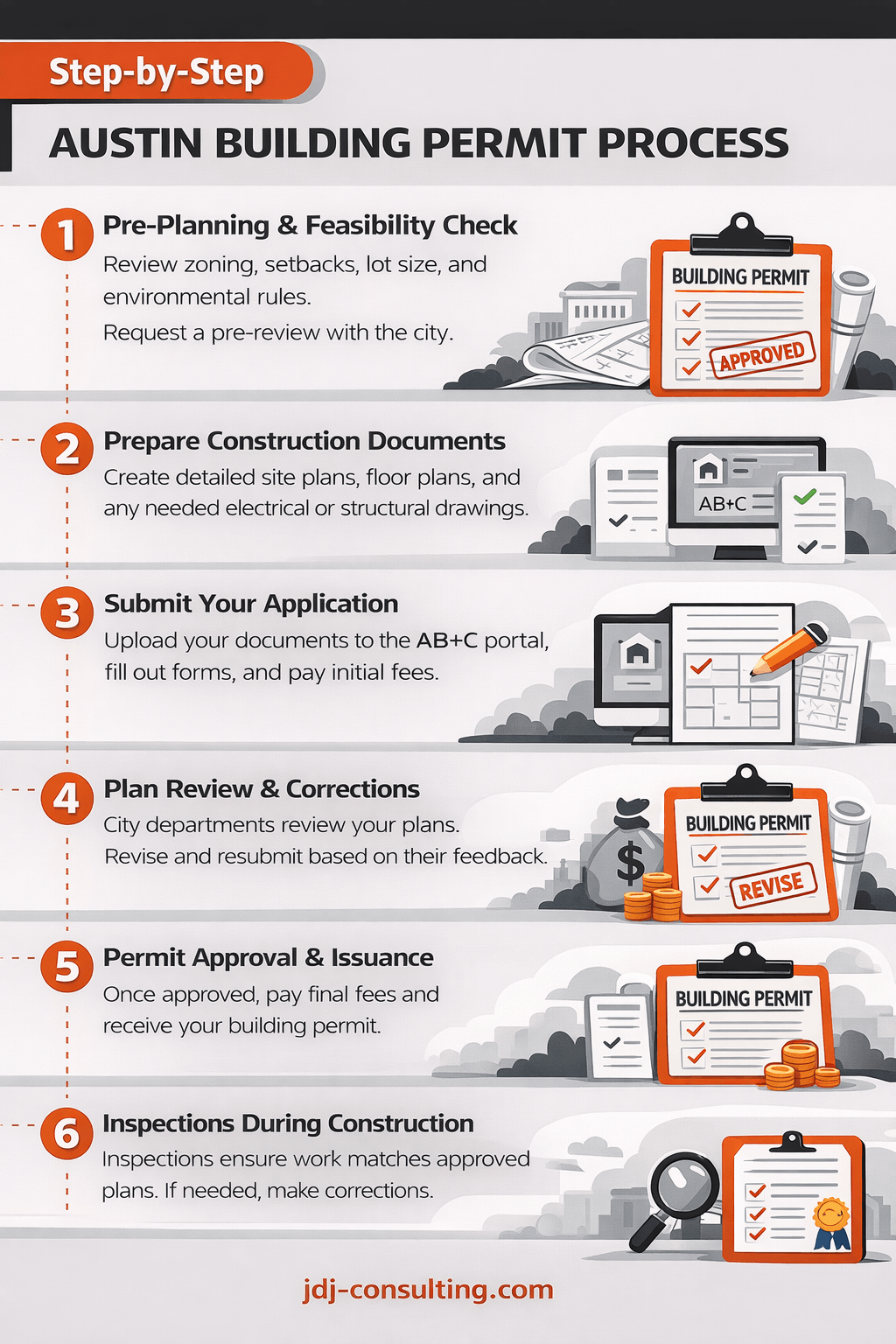
A simple infographic explaining the Austin building permit process, from planning and document preparation to approval and inspections.
Step 1: Pre-Planning and Feasibility Check
Before you draw plans or hire contractors, start with basic research. This step helps you confirm whether your project is even allowed on your property.
Here’s what to review:
Zoning regulations (what you can build)
Property setbacks and height limits
Lot size and usage restrictions
Environmental or tree protection rules
Austin has strict zoning codes. For example, some areas limit how much of your lot you can build on. You can also request a pre-review meeting with city staff. This is optional, but it helps catch issues early. Skipping this step often leads to redesigns later.
Step 2: Prepare Your Construction Documents
Once your project is feasible, the next step is preparing your plans. These documents show exactly what you plan to build.
Typical requirements include:
Site plan (layout of the property)
Floor plans (interior layout)
Elevations (exterior views)
Structural drawings (if needed)
MEP plans (mechanical, electrical, plumbing)
The level of detail depends on the project.
For example:
A small remodel may need basic drawings
A new construction project requires a full plan set
Working with an architect or engineer can make this step smoother and more accurate.
Step 3: Submit Your Application (AB+C Portal)
Austin uses an online system called the AB+C Portal for permit applications.
This is where you:
Upload your documents
Fill out application forms
Pay initial fees
Everything is handled digitally. Make sure your submission is complete. Missing documents are one of the biggest reasons for delays.
Step 4: Plan Review and Corrections
After submission, your application enters the review phase. This is where different city departments check your plans.
Common reviewers include:
Building department
Zoning team
Fire department
Environmental services
Each department may request changes. These are called “review comments.” You’ll need to revise your plans and resubmit them. This back-and-forth can happen multiple times, especially for larger projects.
Step 5: Permit Approval and Issuance
Once all departments approve your plans, your permit is issued. But there’s one more step—activation.
You may need to:
Pay final fees
Confirm contractor details
Schedule initial inspections
Only after activation can construction begin legally.
Step 6: Inspections During Construction
Permits don’t end after approval. Throughout construction, inspections are required to ensure work matches the approved plans.
Common inspections include:
Foundation inspection
Framing inspection
Electrical and plumbing checks
Final inspection
If something doesn’t pass, you’ll need to fix it before moving forward.
Step 7: Final Approval and Project Closeout
The last step is final approval. Once all inspections are complete, the city signs off on your project.
For new buildings or major renovations, you may receive a:
Certificate of Occupancy (CO)
This confirms the building is safe and ready for use. Without this, you may not be able to legally occupy or lease the property.
Table: Austin Permit Process Overview
| Step | What Happens | Key Tip |
|---|---|---|
| Pre-Planning | Check zoning and feasibility | Catch issues early |
| Document Prep | Create plans and drawings | Hire professionals if needed |
| Submission | Upload to the AB+C portal | Double-check completeness |
| Review | City reviews plans | Expect revision cycles |
| Approval | Permit issued | Pay fees quickly |
| Inspections | Work is checked on-site | Stay compliant |
| Final Approval | Project closed out | Get CO if required |
Required Documents for Austin Building Permits
Your permit application is only as strong as your documents. Incomplete or unclear plans are one of the main reasons projects get delayed. Let’s break down what you’ll need.
Core Documents Checklist
Most projects require a standard set of documents.
These include:
Site Plan: Shows property boundaries, building placement, and setbacks
Floor Plans: Layout of rooms, walls, and dimensions
Elevations: Exterior views of the building
Structural Drawings: Details about framing, beams, and load-bearing elements
These form the foundation of your application.
Additional Documents (Depending on Project)
Some projects need extra documentation. This depends on complexity and location.
You may need:
Energy compliance reports
Drainage or grading plans
Utility connection details
Tree surveys (common in Austin)
Fire safety plans (for commercial projects)
The city may also request more documents during review.
Why Document Quality Matters
Clear and accurate plans make a big difference.
Poor documentation can lead to:
Multiple revision cycles
Longer approval times
Higher costs
On the other hand, strong submissions often move faster through the system.
Table: Required Documents by Project Type
| Project Type | Basic Documents | Advanced Documents | Extra Requirements |
|---|---|---|---|
| Small Remodel | Floor plan | Structural (if needed) | Trade permits |
| Home Addition | Site + floor plans | Structural drawings | Energy compliance |
| New Construction | Full plan set | Engineering + MEP | Zoning review |
| Commercial Project | Full plans | Fire + ADA compliance | Multi-agency approval |
Zoning Laws and Land Use Regulations in Austin
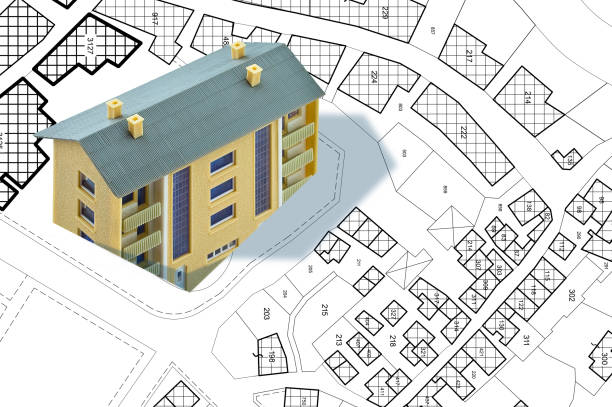
Before you build anything, you need to understand zoning. Zoning determines what you can build, where you can build it, and how large it can be. Ignoring zoning rules is one of the fastest ways to get your permit denied.
Understanding Zoning Codes
Austin divides land into different zoning categories.
Common types include:
Residential (single-family, multi-family)
Commercial
Mixed-use
Industrial
Each zone has its own rules.
These rules control:
Building height
Lot coverage
Property use
Density
For example, you can’t build a commercial property in a single-family residential zone.
Key Zoning Rules You Should Know
Here are some of the most important restrictions:
Floor Area Ratio (FAR): Limits how much of your lot you can build on
Setbacks: Minimum distance between your structure and property lines
Height Limits: Maximum building height allowed
Impervious Cover Limits: Controls how much of your land can be covered with non-permeable surfaces
These rules vary by location, so always check your specific property.
Deed Restrictions and HOA Rules
City approval is not the only thing that matters.
Some properties also have:
Deed restrictions
HOA (Homeowners Association) rules
These can limit:
Building style
Exterior materials
Property usage
In some cases, these rules are stricter than city regulations. So even if your permit is approved, you must still comply with these additional restrictions.
How Long Does It Take to Get a Permit in Austin?
Timelines are one of the biggest concerns for builders and investors. The short answer? It depends on your project type, how complete your application is, and how many revisions are needed. Still, there are general timeframes you can expect.
Typical Permit Timelines
For smaller residential projects, approvals can be relatively quick.
Minor residential permits: 1–2 weeks
Standard residential projects: 3–5 weeks
New construction (residential): 4–8 weeks
Commercial projects take longer due to complexity.
Small commercial projects: 6–10 weeks
Large developments: 2–4+ months
These are average timelines. Some projects move faster, while others take longer due to revisions.
What Causes Delays?
Delays are common, but most of them are preventable.
Here are the biggest reasons projects slow down:
Incomplete applications: Missing documents or unclear plans
Multiple revision cycles: Corrections requested by reviewers
Zoning conflicts: Plans that don’t match local regulations
High application volume: Austin is growing fast, so the system gets busy
Coordination issues: Delays between contractors, architects, and owners
Even a small mistake can push your timeline back by weeks.
Fast-Track Options and How to Speed Things Up
Austin offers some ways to move faster, especially for simpler projects.
Here’s how you can reduce delays:
Use pre-review meetings to catch issues early
Submit complete and detailed plans
Respond to review comments quickly
Hire experienced professionals
Apply for expedited review programs (if eligible)
Speed is not just about luck. It comes from preparation.
Table: Estimated Permit Timelines in Austin
| Project Type | Typical Timeline | Risk of Delays |
|---|---|---|
| Minor Remodel | 1–2 weeks | Low |
| Residential Addition | 3–6 weeks | Medium |
| New Home Construction | 4–8 weeks | Medium–High |
| Small Commercial Project | 6–10 weeks | High |
| Large Development | 2–4+ months | Very High |
Cost of Building Permits in Austin
Permit costs vary widely. There is no flat fee for all projects. Instead, fees are based on project size, type, and valuation.

Average Permit Costs
Here’s a general idea of what you might pay:
Small residential projects: $100 – $1,500
Mid-size remodels: $1,500 – $5,000
New home construction: $5,000 – $15,000+
Commercial projects: $10,000 – $50,000+
These numbers can change depending on scope and location.
Fee Breakdown
Permit costs are made up of several components.
Common fees include:
Application fees: Paid when you submit your permit
Plan review fees: Charged for reviewing your drawings
Inspection fees: Cover on-site inspections
Impact fees: For infrastructure like roads and utilities
Utility connection fees: Water, sewer, and electrical connections
Each fee adds up, especially for larger projects.
Hidden Costs to Watch For
Many people budget for permit fees but miss the extra costs.
Here are some common ones:
Revision fees after plan changes
Re-inspection fees if work fails inspection
Consultant or expeditor fees
Delays that increase labor costs
Planning for these early helps avoid surprises.
Table: Typical Permit Cost Breakdown
| Cost Type | What It Covers | Estimated Range |
|---|---|---|
| Application Fee | Initial submission | $50 – $500 |
| Plan Review Fee | Reviewing drawings | $500 – $5,000 |
| Inspection Fees | Site inspections | $300 – $3,000 |
| Impact Fees | Infrastructure contribution | $1,000 – $20,000+ |
| Utility Fees | Water, sewer, electric | Varies widely |
Common Mistakes That Delay Permits
Most permit delays are not random. They happen because of avoidable mistakes. If you know what to watch for, you can save weeks—or even months.
Incomplete Applications
This is the most common issue. Missing documents, unclear drawings, or incorrect forms can stop your application immediately. Even small gaps can trigger review comments.
Tip: Always double-check your submission before uploading.
Ignoring Zoning Rules
Zoning mistakes can lead to major setbacks.
For example:
Building too close to property lines
Exceeding height limits
Violating lot coverage rules
These issues often require redesign, which delays approval.
Poor Planning and No Pre-Review
Skipping early planning is risky. Without a pre-review, you may not catch:
Code conflicts
Environmental restrictions
Utility issues
Fixing these later is more expensive and time-consuming.
DIY Without Experts
Trying to handle everything alone can slow things down. Permit applications require technical knowledge.
Without experience, you may:
Submit incomplete plans
Misunderstand requirements
Miss important steps
Hiring professionals often saves time, even if it costs more upfront.
Slow Responses to Review Comments
After submission, the city may request changes. Delays often happen when applicants take too long to respond. Every day you wait adds to your timeline.
Tip: Respond quickly and clearly to all review comments.
Quick Summary Table: Mistakes vs Solutions
| Mistake | Impact | Solution |
|---|---|---|
| Incomplete application | Immediate delays | Double-check documents |
| Zoning violations | Redesign required | Verify zoning early |
| No pre-planning | Unexpected issues | Schedule pre-review |
| DIY approach | Errors and delays | Work with professionals |
| Slow responses | Extended timeline | Reply quickly |
At this point, you have a clear picture of timelines, costs, and common pitfalls.
Tips to Get Your Austin Permit Approved Faster
Speed matters, especially if you’re working on a tight construction schedule. While no one can guarantee instant approval, there are proven ways to reduce delays and keep your project moving.
Work With the Right Professionals
One of the easiest ways to save time is to hire experienced professionals.
This includes:
Architects
Engineers
Permit consultants
Contractors familiar with Austin codes
They understand local requirements and know how to prepare clean, complete submissions. This reduces back-and-forth during review.
Use Pre-Review Meetings
Pre-review meetings are optional, but they can make a big difference. You can meet with city staff before submitting your application.
This helps you:
Identify zoning issues early
Confirm documentation requirements
Get clarity on complex rules
Fixing issues early is always faster than fixing them during review.
Submit Complete and Clear Applications
A strong submission speeds everything up.
Make sure your plans are:
Detailed and readable
Accurate and consistent
Fully complete
Avoid uploading partial documents just to “get started.” That usually leads to delays.
Respond Quickly to Review Comments
Once your application is under review, timing matters.
If the city requests changes:
Respond as soon as possible
Address every comment clearly
Avoid partial responses
Fast replies keep your application active in the system.
Stay Organized and Track Everything
The AB+C portal allows you to track your application status.
Use it regularly.
Keep records of:
Submitted documents
Reviewer comments
Inspection schedules
Staying organized helps you avoid missed steps.
Quick Checklist for Faster Approvals
Double-check all documents before submission
Verify zoning and site restrictions
Hire experienced professionals
Use pre-review meetings
Respond quickly to feedback
Austin Building Codes You Must Follow
Permits are only one part of the process. Your project must also follow building codes. These codes define how structures should be built to ensure safety and performance.
Key Codes to Know
Austin follows a mix of local and international codes.
Here are the main ones:
Building Code – Structural safety and design
Electrical Code – Wiring and power systems
Mechanical Code – HVAC systems
Plumbing Code – Water and drainage
Fire Code – Fire safety and prevention
Each code applies to different parts of your project.
Why Codes Matter
Building codes are not optional.
They ensure:
Structural stability
Fire safety
Energy efficiency
Proper system installation
If your project does not meet code, it will fail inspection. That means rework, added costs, and delays.
Updated 2025–2026 Code Considerations
Austin continues to update its codes to reflect growth and sustainability goals.
Recent updates focus on:
Energy efficiency standards
Green building practices
Improved safety requirements
This is especially important for new construction and commercial projects.
Common Code Violations to Avoid
Many delays happen because of simple code issues.
Watch out for:
Improper electrical installations
Incorrect framing or load support
Poor drainage planning
HVAC systems that don’t meet standards
Working with licensed professionals helps reduce these risks.
Residential vs Commercial Permits (Key Differences)
Not all permits follow the same path. Residential and commercial permits differ in complexity, review time, and requirements. Understanding this helps you plan better.
Approval Complexity
Residential permits are usually simpler. They often involve fewer departments and less documentation. Commercial permits are more detailed.
They require:
Fire safety review
Accessibility compliance (ADA)
Environmental checks
Multi-department approvals
Because of this, commercial projects take longer.
Timeline Differences
Residential projects typically move faster. Commercial projects involve more steps, so they take more time.
Expect:
Faster approvals for home projects
Longer timelines for business developments
Documentation Requirements
Residential projects usually need:
Basic plans
Structural drawings (if needed)
Commercial projects require:
Full architectural plans
Engineering documents
Fire and safety plans
Accessibility compliance details
The level of detail is much higher.
Table: Residential vs Commercial Permits
| Feature | Residential Permits | Commercial Permits |
|---|---|---|
| Complexity | Low to Medium | High |
| Review Time | Faster | Slower |
| Documentation | Basic to moderate | Extensive |
| Departments Involved | Few | Multiple |
| Cost | Lower | Higher |
When You Need a Permit Consultant (And Why It Saves Time)
Not every project requires a consultant. But in many cases, having one can save time and reduce stress.
Who Should Consider Hiring One?
A permit consultant is especially useful if you are:
A developer managing multiple projects
A real estate investor working on renovations
A first-time builder unfamiliar with Austin rules
Handling a complex commercial project
If your project has multiple moving parts, expert help can make things smoother.
What a Permit Consultant Does
A consultant helps manage the entire permit process.
They can:
Review your plans before submission
Identify potential issues early
Coordinate with city departments
Handle revisions and resubmissions
Track your application status
This keeps your project organized and moving forward.
Benefits of Hiring a Consultant
Here’s what you gain:
Faster approvals
Fewer mistakes
Reduced revision cycles
Better communication with city reviewers
While there is a cost involved, it often pays off by saving time and avoiding delays.
When It May Not Be Necessary
For small, simple projects, you may not need a consultant.
Examples include:
Minor home repairs
Cosmetic upgrades
Small-scale remodels
In these cases, the process is more straightforward.
FAQs About Austin Building Permits
Below are some of the most common questions people ask before starting a project in Austin.
Do I need a permit for remodeling in Austin?
It depends on the scope of your remodel.
If your project involves structural changes, electrical work, plumbing, or HVAC updates, you will likely need a permit. For example, removing walls, upgrading wiring, or relocating plumbing fixtures usually requires approval.
However, cosmetic updates like painting, flooring, or cabinet replacement often do not need permits. When in doubt, it’s always safer to check with the city before starting.
How long does it take to get a permit approved?
Approval timelines vary based on the type of project.
Small residential permits may take 1–2 weeks. Larger residential projects often take 3–6 weeks. Commercial permits can take several months due to multiple review stages.
Delays usually happen when applications are incomplete or require multiple revisions. Submitting accurate documents can help speed things up.
Can I start construction without a permit?
No, starting without a permit is risky and not recommended. If the city finds out, it can issue a stop-work order. You may also face fines or be required to remove completed work.
In some cases, unpermitted work must be redone to meet code requirements. It’s always better to get approval first.
What is the AB+C Portal?
The AB+C Portal is Austin’s online system for permits and inspections.
You can use it to:
Submit applications
Upload documents
Track review status
Schedule inspections
It keeps everything organized in one place, making the process easier to manage.
Do I need separate permits for electrical or plumbing work?
Yes, in many cases.
Even if you have a building permit, you may still need trade permits for:
Electrical work
Plumbing systems
HVAC installations
These permits ensure each system meets safety standards.
What happens if my permit application is rejected?
A rejection does not mean your project is denied permanently. It usually means changes are required.
You’ll receive review comments explaining what needs to be fixed. Once you update your plans and resubmit, your application will go back into review. Many projects go through at least one revision cycle.
Are inspections required during construction?
Yes, inspections are a key part of the process.
Inspectors check your work at different stages, such as:
Foundation
Framing
Electrical and plumbing
Final completion
If something doesn’t pass, you must fix it before moving forward.
How much do building permits cost in Austin?
Costs vary depending on the project. Small residential permits may cost a few hundred dollars, while larger projects can cost several thousand.
Commercial projects are usually more expensive due to additional reviews and requirements. It’s important to budget for both permit fees and related costs.
Can I apply for a permit myself?
Yes, homeowners can apply for permits. However, the process can be complex, especially for larger projects. Many people choose to work with professionals to avoid mistakes and delays.
Do permits affect property value?
Yes, they do. Permitted work is documented and inspected, which increases buyer confidence. Unpermitted work can raise concerns and may lower property value or delay a sale.
Final Thoughts: Planning Your Austin Project the Right Way
Building in Austin comes with opportunity, but it also comes with responsibility. Permits are not just a formality. They protect your investment, ensure safety, and keep your project aligned with local rules.
If you plan ahead, prepare strong documents, and follow the process carefully, you can avoid most delays.
Here’s a simple way to think about it:
Start with zoning and feasibility
Prepare complete and accurate plans
Submit everything correctly the first time
Respond quickly to feedback
Stay organized throughout the process
Whether you’re working on a small remodel or a large development, the same principles apply. Taking the permit process seriously from day one can save you time, money, and stress later on.
Need Help With Your Austin Permit Process?
If you’re dealing with a complex project or tight timeline, getting expert help can make a real difference. At JDJ Consulting, we help developers, investors, and property owners handle the permit process more efficiently.
From early planning to final approval, our goal is to keep your project moving without unnecessary delays. If you want clarity before you start, reaching out early is always a smart move.