If you search “HPD violations,” most results point to New York City. That is because HPD stands for the Department of Housing Preservation and Development, a specific agency in NYC. Texas does not have an HPD department.
So why do people still use this term in Texas?
In practice, many investors, landlords, and even contractors use “HPD violations” as a general phrase. They are usually referring to housing code violations, building code issues, or property maintenance problems. The name stuck, even though the system is different.
In Texas, enforcement is handled at the city level. Each city has its own departments, processes, and standards. For example, Houston, Dallas, and Austin all follow similar principles, but their enforcement systems are not identical.
This difference matters more than most people think.
If you assume Texas works like NYC, you might:
Look for the wrong authority
Miss local deadlines
Misunderstand how violations are classified
Delay compliance and increase penalties
Instead of one centralized system, Texas uses a decentralized approach. Local governments set and enforce their own rules based on state guidelines.
Here’s a simple comparison to make this clear:
| Aspect | New York (HPD System) | Texas (Local Code Enforcement) |
|---|---|---|
| Authority | Centralized (HPD) | City-based departments |
| Terminology | HPD Violations | Code violations / housing violations |
| Process | Standardized | Varies by city |
| Enforcement | Uniform | Flexible |
Because of this structure, property owners in Texas need to think locally. What applies in Austin may not fully apply in Dallas.
At the same time, the core idea stays the same. A violation means your property does not meet required safety, health, or maintenance standards. Understanding this early helps avoid confusion later. It also sets the right foundation for compliance and planning.
Table of Contents
Understanding Housing Code Violations in Texas
Once you move past the terminology, the next step is understanding what actually counts as a violation. In simple terms, a housing or property violation happens when a building fails to meet minimum safety and livability standards. These standards are designed to protect both occupants and the surrounding community.

What Counts as a Housing or Property Violation
Violations can range from small maintenance issues to serious safety hazards. Some are easy to fix. Others can stop a project entirely.
Common examples include:
Structural damage such as cracked foundations or unsafe stairs
Electrical problems like exposed wiring or overloaded panels
Plumbing failures, including leaks or lack of running water
Mold, pests, or unsanitary conditions
Broken windows, doors, or locks
Fire safety issues such as missing smoke detectors
These issues may seem basic, but they are taken seriously. Even a minor problem can escalate if ignored.
It also helps to understand the difference between related categories:
| Type | What It Covers | Example |
|---|---|---|
| Housing Code | Living conditions and safety | Mold, pests, no heat |
| Building Code | Construction standards | Improper wiring |
| Zoning Violations | Land use rules | Illegal property use |
Although these categories overlap, they are enforced differently. A single property can have multiple types of violations at the same time.
Who Enforces Violations in Texas
Unlike NYC, there is no single authority. Enforcement depends on the city where the property is located.
Typically, the following departments are involved:
Local code enforcement offices
Housing or community development departments
Health departments
Fire marshal offices
Each department focuses on specific issues. For example, fire hazards fall under fire authorities, while sanitation issues may involve health inspectors. This layered system can feel complex at first. However, it allows cities to respond based on local needs. For property owners, this means one thing: you may deal with multiple agencies for a single issue.
How Violations Are Identified
Violations do not appear randomly. They usually follow a clear trigger.
The most common ways violations are identified include:
Tenant or neighbor complaints
Routine inspections by city officials
Permit-related inspections during construction
Proactive enforcement in high-risk areas
Complaint-based inspections are especially common. A tenant reports an issue, and the city sends an inspector to verify it. In other cases, violations are discovered during renovations. If work is done without proper permits or does not meet code, it can lead to immediate action. Because of this, staying proactive matters. Waiting for a complaint often leads to stricter scrutiny.
Types of Property Violations in Texas (Equivalent to HPD Classes)
Even though Texas does not use the same classification system as NYC, violations are still grouped by severity. This helps authorities decide how quickly an issue must be fixed. Understanding these categories helps you prioritize actions and avoid penalties.

Minor (Non-Hazardous) Violations
These are the least severe issues. They usually do not pose an immediate risk to health or safety.
Examples include:
Peeling paint
Small cracks in walls
Minor leaks
Cosmetic damage
While these may seem low priority, they should not be ignored. Over time, small problems can turn into larger ones. Most cities allow longer correction periods for minor violations.
Moderate (Hazardous) Violations
Moderate violations affect livability but may not be immediately dangerous.
Common examples:
Pest infestations
Plumbing issues
Broken fixtures
Water damage
These issues require faster action. They can impact tenant health and comfort if left unresolved. Cities often set shorter deadlines for these violations.
Severe (Immediately Hazardous) Violations
These are the most serious cases. They pose a direct threat to safety.
Examples include:
Fire hazards
Structural instability
Lack of electricity or water
Dangerous electrical systems
In these situations, action is required immediately. Delays can lead to heavy fines or legal consequences. In extreme cases, properties may be declared unsafe for occupancy.
Here’s a clear breakdown:
| Violation Level | Examples | Risk Level | Typical Fix Timeline |
|---|---|---|---|
| Minor | Paint, small leaks | Low | 30–90 days |
| Moderate | Pests, plumbing issues | Medium | 7–30 days |
| Severe | Fire hazards, structural risks | High | Immediate |
This classification helps property owners make decisions quickly. Instead of treating all issues the same, you can focus on what matters most first. It also improves communication with inspectors. When you understand severity levels, discussions become more straightforward.
Common Causes of Violations in Texas Properties
Most violations do not happen overnight. In many cases, they build up over time due to small oversights. Understanding the root causes helps you prevent repeat issues and reduce long-term costs.
Deferred Maintenance
This is one of the most common reasons properties fall out of compliance.
When routine upkeep is delayed, small problems grow into larger ones. For example, a minor roof leak can lead to water damage, mold, and structural concerns if ignored.
Typical signs of deferred maintenance include:
Aging systems that have not been serviced
Repeated temporary fixes instead of permanent repairs
Visible wear in high-use areas
Over time, this approach becomes more expensive. It also increases the likelihood of inspections and complaints.
A simple maintenance schedule can prevent most of these issues. Regular checks keep systems working and reduce unexpected violations.
Permit & Construction Issues
Construction-related violations are another major category, especially for developers and investors.
These issues usually arise when:
Work is done without permits
Renovations do not meet current code standards
Contractors cut corners to save time
Even experienced teams can run into problems if documentation is incomplete. In Texas, permit compliance is taken seriously. Inspectors often review both the work and the paperwork.
Here’s a quick look at common construction-related violations:
| Issue | Description | Risk Level |
|---|---|---|
| No Permit | Work done without approval | High |
| Failed Inspection | Work does not meet code | High |
| Incorrect Installation | Systems not installed properly | Medium |
| Incomplete Documentation | Missing plans or approvals | Medium |
These issues can delay projects and increase costs. In some cases, work may need to be redone entirely.
Tenant Complaints
Tenant complaints are one of the fastest ways a violation gets triggered.
When residents report issues such as leaks, pests, or lack of utilities, the city may send an inspector to verify the claim. If the issue is confirmed, a violation notice is issued.
Common complaint triggers include:
Lack of heating or cooling
Plumbing failures
Unsafe living conditions
Pest infestations
Even a single complaint can lead to a full inspection. This means one issue can uncover several others. Clear communication with tenants helps reduce this risk. When issues are addressed early, they are less likely to escalate.
Environmental & Safety Issues
Some violations are tied to health and environmental risks. These are often treated with higher urgency.
Examples include:
Mold growth due to moisture problems
Asbestos in older buildings
Lead-based paint in pre-1978 properties
Fire safety violations, such as missing alarms
These issues affect both safety and compliance. They may also involve multiple departments, which can complicate resolution. Addressing environmental risks early is critical. Delays can lead to stricter enforcement and higher penalties.
The Violation Process in Texas (Step-by-Step)
Once a violation is identified, the process follows a fairly structured path. While details may vary by city, the overall flow remains consistent. Understanding this process helps you respond quickly and avoid unnecessary delays.
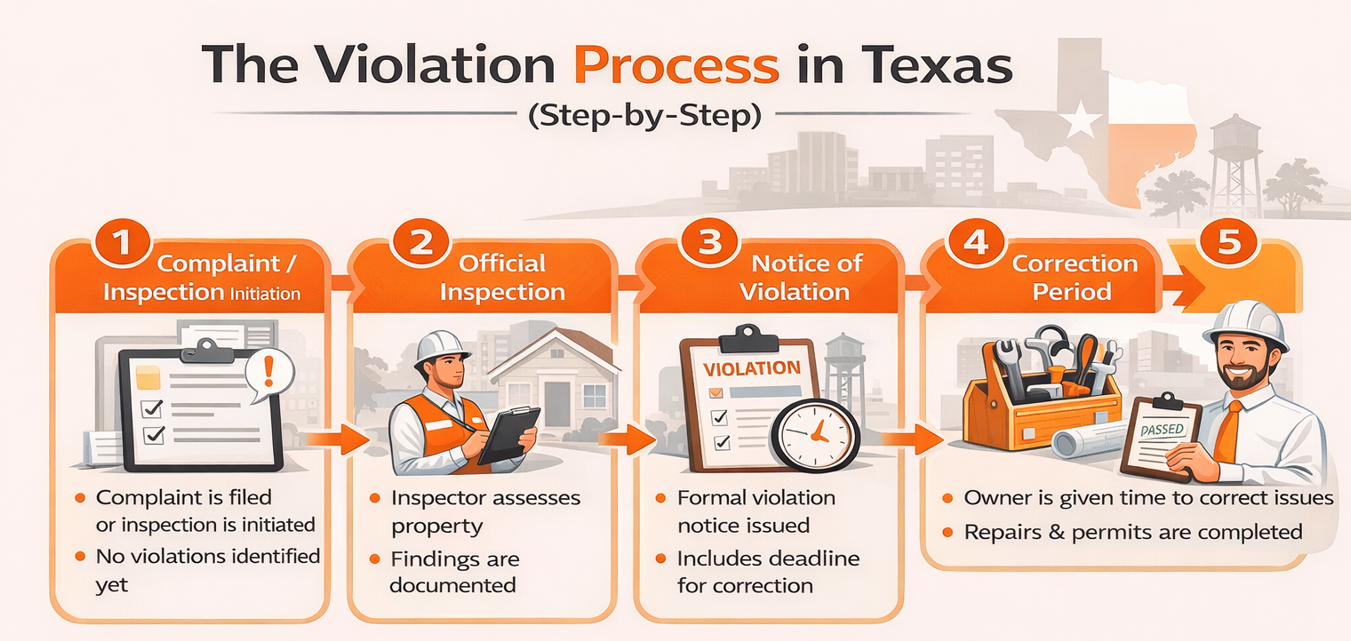
Step 1: Complaint or Inspection Initiation
The process usually begins in one of two ways:
A complaint from a tenant or neighbor
A scheduled or routine inspection
In some areas, cities also conduct proactive inspections in high-risk zones. This is more common in older neighborhoods or dense housing areas.
At this stage, no violation has been issued yet. The city is simply gathering information.
Step 2: Official Inspection
An inspector visits the property to assess the reported issue.
During the inspection, they may:
Examine structural and safety conditions
Check utilities such as water and electricity
Review visible signs of damage or neglect
Inspectors often document everything with notes and photos. If multiple issues are found, they may all be included in the report. This step is critical because it determines whether a violation will be issued.
Step 3: Notice of Violation
If the inspector finds non-compliance, a formal notice is issued.
This notice typically includes:
A description of the violation
The specific code section involved
A deadline for correction
Possible penalties for non-compliance
It is important to read this document carefully. Missing details or deadlines can lead to further action.
Step 4: Correction Period
After receiving the notice, the property owner is given time to fix the issue.
The timeline depends on severity:
Minor issues may allow several weeks
Moderate issues often require faster action
Severe violations may require immediate correction
During this period, owners may:
Hire contractors
Apply for permits
Complete repairs
Delays can result in additional fines or escalation.
Step 5: Reinspection & Certification
Once repairs are complete, a reinspection is scheduled.
The inspector will:
Verify that the issue has been resolved
Confirm compliance with code standards
If everything meets requirements, the violation is cleared. If not, further corrections may be required.
Here’s a simple overview of the process:
| Step | Action | Outcome |
|---|---|---|
| 1 | Complaint/Inspection | Issue identified |
| 2 | Inspection | Evaluation completed |
| 3 | Notice Issued | Deadline assigned |
| 4 | Repairs Made | Compliance in progress |
| 5 | Reinspection | Violation cleared or extended |
Following this process carefully helps avoid repeat visits and added costs.
Penalties and Consequences of Violations
Ignoring violations can lead to serious consequences. These go beyond simple repair costs. Understanding the risks helps property owners act quickly and make better decisions.
Financial Penalties
Fines are the most immediate consequence.
In many Texas cities:
Fines may be charged daily until the issue is resolved
Costs increase with severity
Repeat violations may lead to higher penalties
Even a small issue can become expensive if left unresolved for weeks.
Legal Consequences
If violations are not addressed, cities may take legal action.
This can include:
Court appearances
Legal notices
Property liens
A lien can affect your ability to sell or refinance the property. It may also damage your financial standing. In extreme cases, ongoing non-compliance can lead to forced action by the city.
Business & Investment Impact
Violations can also affect the overall value of a property.
For investors and developers, this may result in:
Delays in project timelines
Increased holding costs
Reduced buyer interest
Properties with open violations are often seen as higher risk. This can limit financing options or lower resale value.
Tenant Risks and Liability
Violations that affect living conditions can lead to tenant disputes.
Potential risks include:
Rent withholding
Legal claims for unsafe conditions
Damage to reputation
These situations can escalate quickly if not handled properly.
How to Check for Violations on a Property in Texas
Before buying, selling, or renovating a property, checking for violations should be a standard step. Many issues are not visible during a basic walkthrough. However, they still exist in public records.
Taking time to verify this information can prevent delays and unexpected costs.
Public Records & City Portals
Most Texas cities provide online access to property records. These portals allow you to search by address and review:
Active violations
Past violations
Permit history
Inspection records
Each city has its own system. While the interface may differ, the purpose remains the same—transparency.
When reviewing records, pay attention to:
Open violations that have not been cleared
Repeated issues at the same property
Expired permits or failed inspections
These details help you understand the property’s compliance history.
Pre-Purchase Due Diligence
For investors and developers, this step is critical.
Before closing a deal, you should:
Review all public records
Request seller disclosures
Confirm that past violations were resolved properly
Skipping this step can lead to inherited problems. In some cases, new owners become responsible for unresolved violations.
Here’s a quick checklist for due diligence:
| Check Item | Why It Matters |
|---|---|
| Open Violations | May require immediate repairs |
| Permit History | Ensures work was approved |
| Inspection Records | Confirms compliance |
| Property Condition | Identifies visible risks |
A careful review reduces surprises and supports better investment decisions.
Professional Inspections
Public records are useful, but they do not show everything.
Hiring a professional inspector adds another layer of protection. Inspectors can identify:
Hidden structural issues
Electrical or plumbing risks
Early signs of code violations
For larger projects, compliance audits may also be helpful. These reviews focus on code requirements and regulatory risks. This step is especially important for older buildings or properties with renovation history.
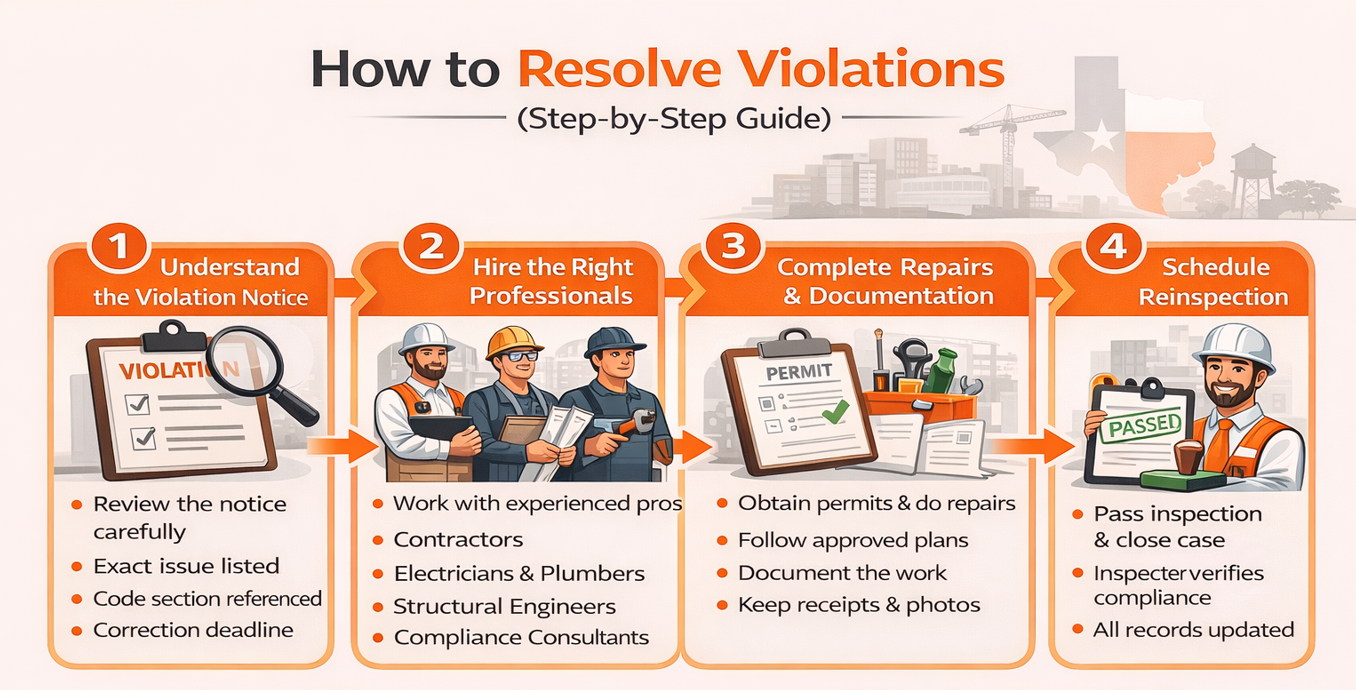
How to Resolve Violations (Step-by-Step Guide)
Once a violation is issued, the focus shifts to resolution. Acting quickly and following a clear process can save both time and money.
Step 1: Understand the Violation Notice
Start by reviewing the notice carefully.
Look for:
The exact issue listed
The code section referenced
The deadline for correction
If anything is unclear, it is better to ask questions early. Misunderstanding the issue can lead to incorrect repairs and failed reinspections.
Step 2: Hire the Right Professionals
Not all violations can be handled alone. Depending on the issue, you may need:
Licensed contractors
Electricians or plumbers
Structural engineers
Compliance consultants
Choosing experienced professionals reduces the risk of repeat issues. It also helps ensure the work meets code requirements.
Step 3: Complete Repairs & Documentation
Once the scope is clear, begin repairs.
During this phase:
Obtain required permits
Follow approved plans
Document the work completed
Documentation matters more than many realize. Inspectors often require proof that repairs meet standards. Photos, receipts, and permits all support this process.
Step 4: Schedule Reinspection
After completing repairs, request a reinspection.
Before scheduling, double-check:
All issues listed in the notice are addressed
Work meets current code standards
Required documentation is ready
Missing even one item can lead to delays.
Step 5: Obtain Clearance
If the inspector confirms compliance, the violation is officially cleared.
At this stage:
Records are updated
The case is closed
No further action is required
If the issue is not fully resolved, additional corrections may be needed. This is why preparation is key.
How Long Do You Have to Fix Violations in Texas?
Timelines vary depending on the severity of the violation and the city’s policies. However, general patterns are consistent across most areas.
Typical Timelines by Severity
The more serious the issue, the faster it must be fixed.
| Violation Type | Typical Timeline | Notes |
|---|---|---|
| Minor | 30–90 days | Flexible in most cases |
| Moderate | 7–30 days | Requires quicker action |
| Severe | Immediate to a few days | High priority, strict enforcement |
These timelines are not fixed rules, but they provide a reliable guide. Severe violations often come with strict deadlines. Delays can result in fines or further legal action.
Extensions and Appeals
In some situations, more time may be needed.
Property owners can request:
Deadline extensions
Appeals for disputed violations
Extensions are usually granted when:
Repairs require permits or specialized work
Contractors are scheduled but not immediately available
Appeals may be considered if:
The violation was issued in error
The issue does not apply to the property
It is important to communicate early. Waiting until after the deadline reduces the chances of approval.
Preventing Future Violations
Fixing a violation is only part of the job. The real value comes from preventing it from happening again. A proactive approach reduces costs, avoids stress, and keeps projects on schedule.
Routine Maintenance Plans
Regular maintenance is the simplest way to stay compliant. Instead of reacting to problems, create a schedule that includes:
Monthly visual inspections
Quarterly system checks (plumbing, electrical, HVAC)
Annual structural reviews
This approach helps catch issues early. Small fixes are easier and cheaper to handle.
For example, checking for minor leaks can prevent mold or water damage later. Over time, these small actions protect both the property and your budget.
Compliance Checklists for Property Owners
A checklist keeps things consistent. It ensures nothing is overlooked, especially in larger properties.
Key areas to review include:
Fire safety systems (alarms, extinguishers)
Electrical systems and wiring
Plumbing and water supply
Structural integrity (walls, stairs, roofing)
Ventilation and air quality
Here’s a simple compliance checklist:
| Area | What to Check | Frequency |
|---|---|---|
| Fire Safety | Smoke detectors, exits | Monthly |
| Electrical | Wiring, panels | Quarterly |
| Plumbing | Leaks, pressure | Quarterly |
| Structure | Cracks, stability | Annually |
Using a checklist improves consistency. It also helps when dealing with inspections, as records can show ongoing maintenance.
Tenant Communication Strategies
Tenants often notice problems before owners do. Encouraging open communication can prevent small issues from becoming violations. Simple steps include:
Providing clear contact channels
Responding quickly to complaints
Conducting periodic check-ins
When tenants feel heard, they are more likely to report issues early instead of escalating them.
Documentation & Record Keeping
Keeping records is just as important as doing the work.
Maintain:
Maintenance logs
Repair invoices
Permit approvals
Inspection reports
These records serve two purposes. First, they help track property condition over time. Second, they provide proof of compliance if questions arise. Well-documented properties are easier to manage and less likely to face repeated violations.
Special Considerations for Real Estate Investors & Developers
For investors and developers, violations are more than a compliance issue. They directly affect timelines, budgets, and returns.
Due Diligence Before Acquisition
Before acquiring a property, always review its compliance status.
This includes:
Checking for open violations
Reviewing past inspection reports
Verifying permits for previous work
A property may look fine on the surface but still carry hidden risks. These risks can delay redevelopment or increase costs after purchase.
Budgeting for Compliance Costs
Many investors underestimate the cost of bringing a property up to code.
Typical expenses may include:
Repairs and upgrades
Permit fees
Inspection costs
Professional services
Planning for these costs early prevents budget overruns.
Here’s a simple breakdown:
| Cost Type | Example | Impact |
|---|---|---|
| Repairs | Structural fixes | High |
| Permits | Renovation approvals | Medium |
| Inspections | City or third-party | Medium |
| Consulting | Compliance experts | Variable |
Including these in your initial budget leads to more accurate projections.
Value-Add Opportunities
Not all violations are negative. In some cases, they create opportunities. Properties with unresolved issues are often priced lower. Investors who understand compliance can:
Purchase at a discount
Resolve violations efficiently
Increase property value
This approach requires experience, but it can lead to strong returns.
Texas vs NYC HPD Violations: Key Differences
Since the term “HPD violations” comes from New York, it helps to understand how the systems compare. This highlights why Texas requires a different approach.

Centralized vs Decentralized Enforcement
New York uses a centralized system. One agency handles most housing violations. Texas operates differently. Each city manages its own enforcement. This means:
Processes vary by location
Requirements may differ slightly
Communication involves multiple departments
This flexibility allows cities to adapt, but it also requires more attention from property owners.
Classification Systems
NYC uses a clear classification system (Class A, B, and C). Each class has defined timelines and penalties. Texas does not follow a single classification model. Instead, violations are grouped by severity at the local level. This makes it important to review city-specific guidelines rather than relying on a universal system.
Enforcement Approach
Enforcement styles also differ.
NYC often uses structured, standardized enforcement
Texas cities may take a more flexible, case-by-case approach
This does not mean enforcement is less strict. It simply means the process can vary depending on the situation.
Here’s a side-by-side comparison:
| Feature | NYC HPD System | Texas System |
|---|---|---|
| Authority | Central agency | Local city departments |
| Classification | A, B, C categories | Severity-based, varies |
| Process | Standardized | Flexible |
| Enforcement | Uniform rules | Case-by-case approach |
Understanding these differences helps avoid incorrect assumptions. It also allows for better planning when working across different states.
Conclusion: Handling HPD Violations in Texas the Right Way
Understanding “HPD violations in Texas” starts with recognizing that the system is local, not centralized. Once that is clear, everything else becomes easier to manage.
Violations are not just about fixing problems. They are about maintaining safe, compliant properties over time. When handled early, most issues remain manageable. When ignored, they grow into larger risks.
A structured approach makes the difference. Regular maintenance, proper documentation, and timely action help avoid penalties and delays. For investors and developers, this also protects project timelines and returns.
In the end, compliance is not just a requirement. It is part of running a stable and successful property.
Need Help Fixing Violations or Avoiding Them Altogether?
Dealing with property violations can feel overwhelming—especially when deadlines, inspections, and city requirements start piling up. But you don’t have to figure it out on your own.
At JDJ Consulting, we work closely with property owners, developers, and investors to resolve violations faster, stay compliant, and keep projects moving without unnecessary delays. Whether you’re facing an active issue or just want to avoid future problems, our team is here to guide you step by step.
If you’re unsure where to start, the best next step is simple.
Fill out our pre-consultation form or schedule a meeting with our consultants today: https://jdj-consulting.com/book-consultation/
Prefer to talk directly? Reach out anytime:
- Phone: (818) 793-5058
- Email: sales@jdj-consulting.com
A quick conversation now can save you time, money, and stress later. Let’s get your property back on track.
Key Sources & Further Reading
- https://sitecompli.com/knowledge-center/agencies/hpd/complaints-and-violations/what-is-an-hpd-violation/
- https://www.furmancenter.org/wp-content/uploads/2021/08/Up_To_Code-How_Cities_Enforce_Housing_Standards_Final.pdf
- https://houstontx.gov/housing/complaints.html
- https://leadandmold.com/what-is-an-hpd-violation/
Frequently Asked Questions About HPD Violations in Texas
What are HPD violations in Texas?
The term “HPD violations” is not officially used in Texas. It usually refers to general housing or code violations enforced by local city departments. These violations occur when a property does not meet safety or maintenance standards.
In Texas, this may include:
Structural issues
Electrical or plumbing failures
Health and safety concerns
Each city handles enforcement separately, so requirements and processes may vary depending on location.
Who issues housing code violations in Texas?
Housing code violations in Texas are issued by local government departments, not a centralized agency.
Common authorities include:
Code enforcement departments
Housing or community development offices
Fire and health departments
Inspectors from these departments review properties after complaints or routine checks. If they find non-compliance, they issue a formal notice with required corrections and deadlines.
How do I know if my property has a violation?
You can check for violations through your city’s public records or online property portals. These platforms allow you to search by address and review active or past violations.
To stay thorough:
Check permit history
Review inspection reports
Look for unresolved issues
Hiring a professional inspector can also help identify hidden problems that may not appear in public records.
How long do I have to fix a violation in Texas?
The timeline depends on how serious the violation is. Minor issues usually allow more time, while serious hazards require immediate action.
Typical timelines include:
Minor violations: 30–90 days
Moderate violations: 7–30 days
Severe violations: Immediate to a few days
Always review your notice carefully, as deadlines can vary by city and situation.
What happens if I ignore a code violation?
Ignoring a violation can lead to escalating consequences. What starts as a small issue can quickly become costly.
Possible outcomes include:
Daily fines that increase over time
Legal action or court involvement
Liens placed on the property
In severe cases, the property may be declared unsafe. Addressing violations early helps avoid these risks.
Can violations affect selling or refinancing a property?
Yes, open violations can impact both selling and refinancing. Buyers and lenders often review property records before proceeding.
You may face:
Delays in closing
Reduced property value
Limited financing options
Clearing violations before listing a property improves transparency and makes the transaction smoother.
Are tenants responsible for any violations?
In most cases, the property owner is responsible for fixing violations. However, tenants may be responsible for certain issues depending on the lease agreement.
Examples may include:
Damage caused by misuse
Poor sanitation inside the unit
Even then, the owner is typically accountable to the city, so it’s important to address issues quickly regardless of fault.
Do I need permits to fix a violation?
Not all repairs require permits, but many do—especially for structural, electrical, or plumbing work.
You should:
Check local permit requirements
Hire licensed professionals when needed
Ensure all work meets code standards
Skipping permits can lead to additional violations, even if the original issue is fixed.
Can I appeal a violation notice?
Yes, you can appeal a violation if you believe it was issued incorrectly. The process depends on your city’s regulations.
Common reasons to appeal include:
Incorrect inspection findings
Misinterpretation of code
Issues already resolved
It’s important to act quickly and provide supporting documentation to strengthen your case.
How can I prevent future violations on my property?
Preventing violations requires a proactive approach rather than reactive fixes.
Best practices include:
Scheduling regular maintenance inspections
Keeping detailed repair and permit records
Addressing tenant concerns early
Consistent upkeep helps identify problems before they become violations. It also improves property value and reduces long-term costs.