
Table of Contents
Starting a construction project is exciting. However, before any work begins, most projects need a building permit. A permit shows that the construction follows building codes, zoning rules, and safety standards. Whether you are building a new home or a commercial property, getting permit approval is important.
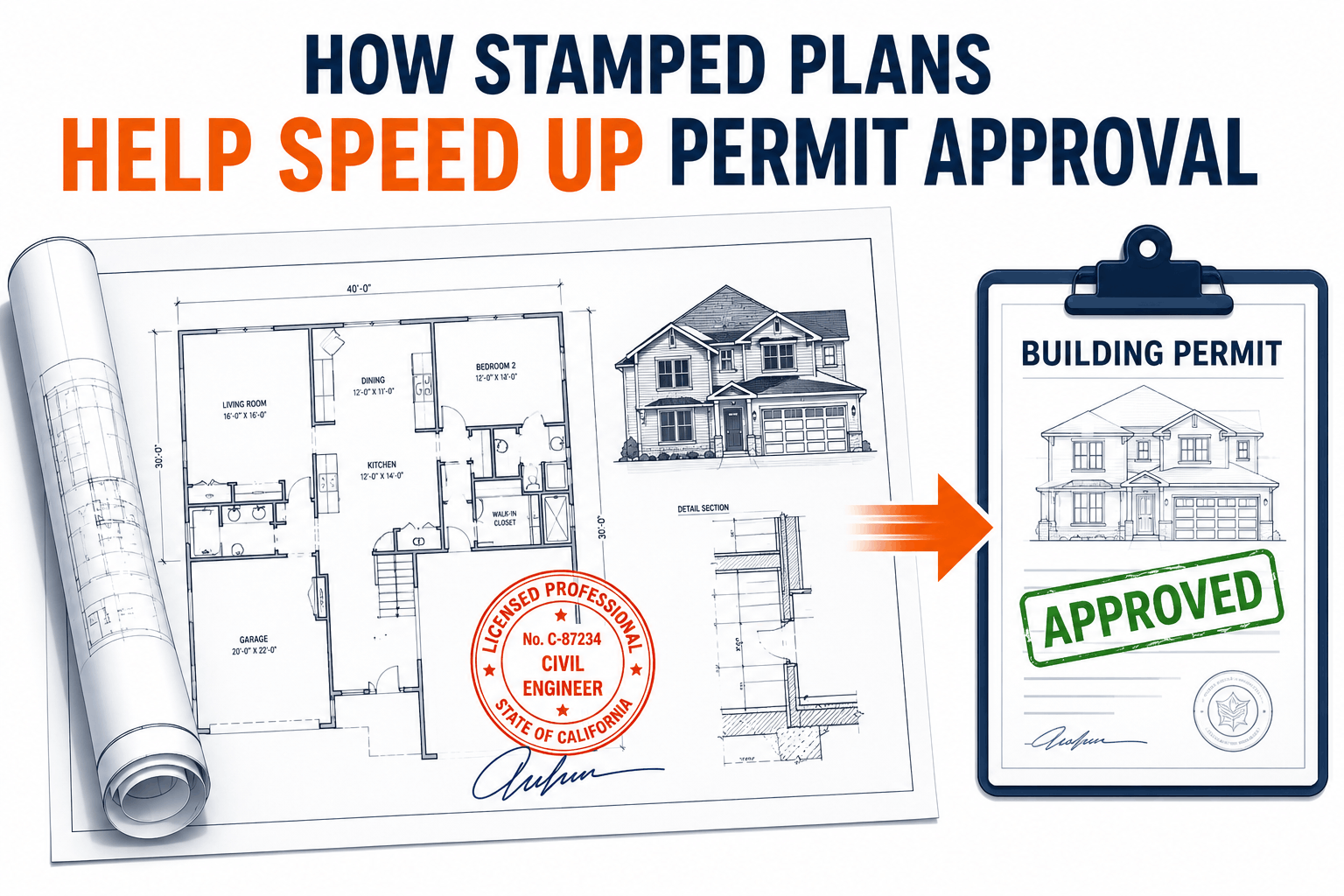
One document that can make this process much smoother is a stamped plan. Many people see it as just another requirement, but it plays a much bigger role. A stamped plan tells the building department that a licensed design professional has reviewed the drawings. And that he believes they meet the required codes and engineering standards. This gives permit reviewers greater confidence when checking the application.
Permit delays are common across many cities. Most delays happen because of incomplete applications, mistakes in drawings, or unfollowed local code requirements. Each time the reviewer requests corrections, the applicant must revise and resubmit the documents. This adds days or even weeks to the approval process.
According to the World Bank, improving the quality of plan submissions and using better permitting systems can reduce permit processing times. This guide explains what stamped plans are, why they matter, and how they can help move your permit application through the review process faster.
What Are Stamped Plans?
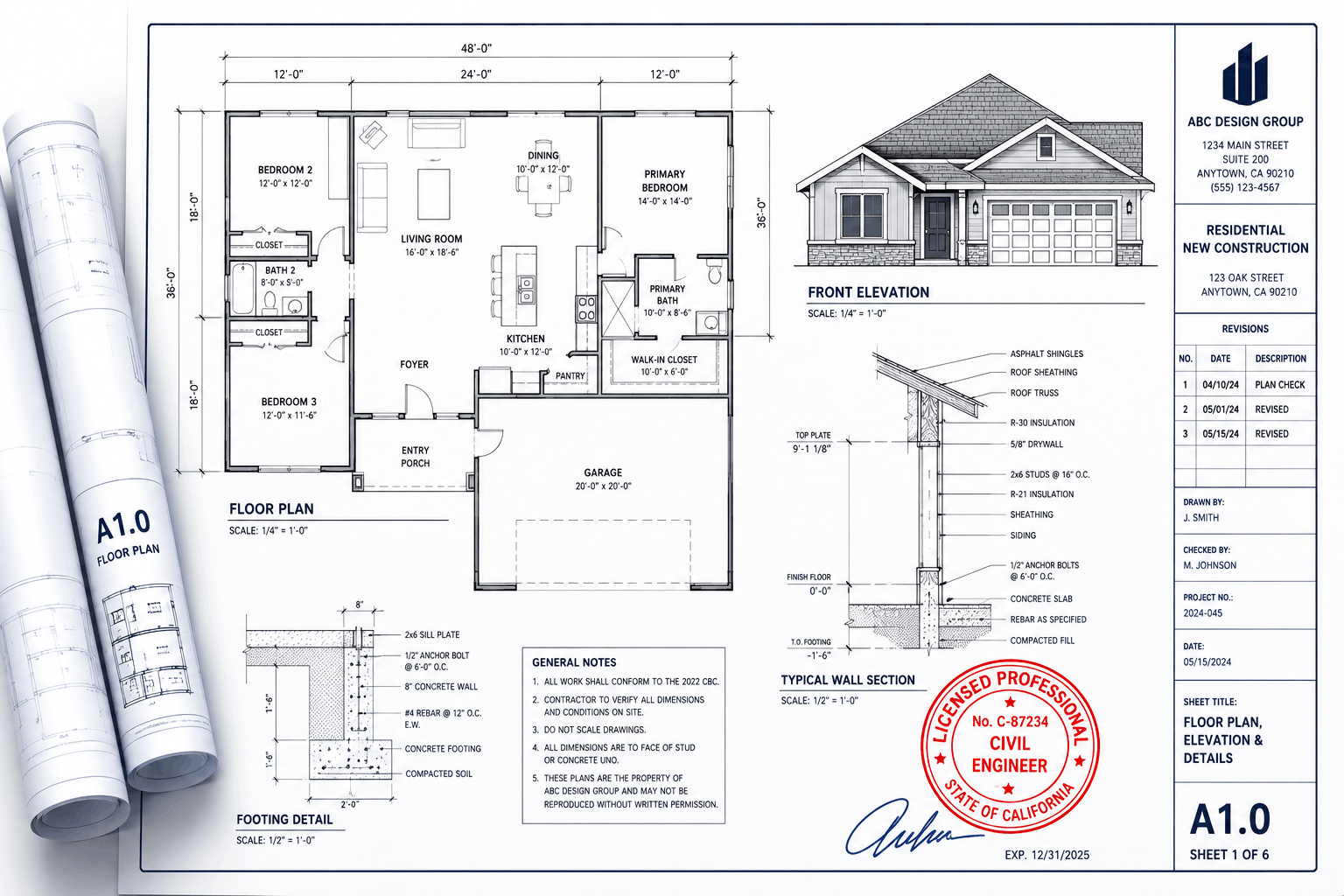
Stamped plans are construction drawings. They have been reviewed, signed, and sealed by a licensed architect or professional engineer. The stamp confirms that the professional prepared or reviewed the design. As well as accepting responsibility for it within the limits of their professional license.
These plans usually include important project details such as:
- Site plans
- Floor plans
- Structural drawings
- Foundation details
- Roof framing
- Engineering calculations (when required)
A regular drawing may show what a building will look like. However, a stamped plan shows that the design has been professionally reviewed for safety and code compliance.
Many local building departments require stamped plans for projects involving structural work, commercial buildings, multi-family housing, or larger residential additions. Requirements vary by city and state. Hence, property owners should always check local regulations before submitting an application.
Why Permit Approval Takes Time
Many people think permit delays happen because building departments are slow. In reality, delays often begin with the application itself.
Some of the most common reasons include:
- Incomplete Documents
Missing forms, calculations, or supporting documents stop the review process until everything is submitted.
- Design Errors
Incorrect dimensions, missing structural information, or conflicting drawings force reviewers to request revisions.
- Building Code Violations
Every project must follow local building codes. If the design does not meet these standards, corrections are required before approval.
- Zoning Problems
The proposed project may exceed height limits, violate setbacks, or fail to meet land-use requirements.
- Multiple Review Cycles
Every correction request means the plans must be revised and submitted again. Several review cycles can extend approval by weeks or even months.
Because building departments review many applications every day, clear and complete plans help reviewers work more efficiently. The International Code Council explains that plan review is meant to verify compliance with applicable building codes before construction begins.
How Stamped Plans Speed Up Permit Approval
A stamped plan does not guarantee that a permit will be approved. However, it greatly improves the quality of the application and reduces many of the issues that commonly cause delays.
Example: How Stamped Plans Can Reduce Permit Review Time
A mixed-use commercial project was submitted for permit review. However, the plans were missing some structural calculations and accessibility details. Because of this, the city issued several correction notices, which slowed down the approval.
After licensed engineers stamped the plans, the next review cycle had fewer corrections. This helped the project move through the permit process more quickly.
Every project and jurisdiction is different. However, this example shows how professionally prepared/ stamped plans can reduce review issues. It helps support a faster permit approval process.
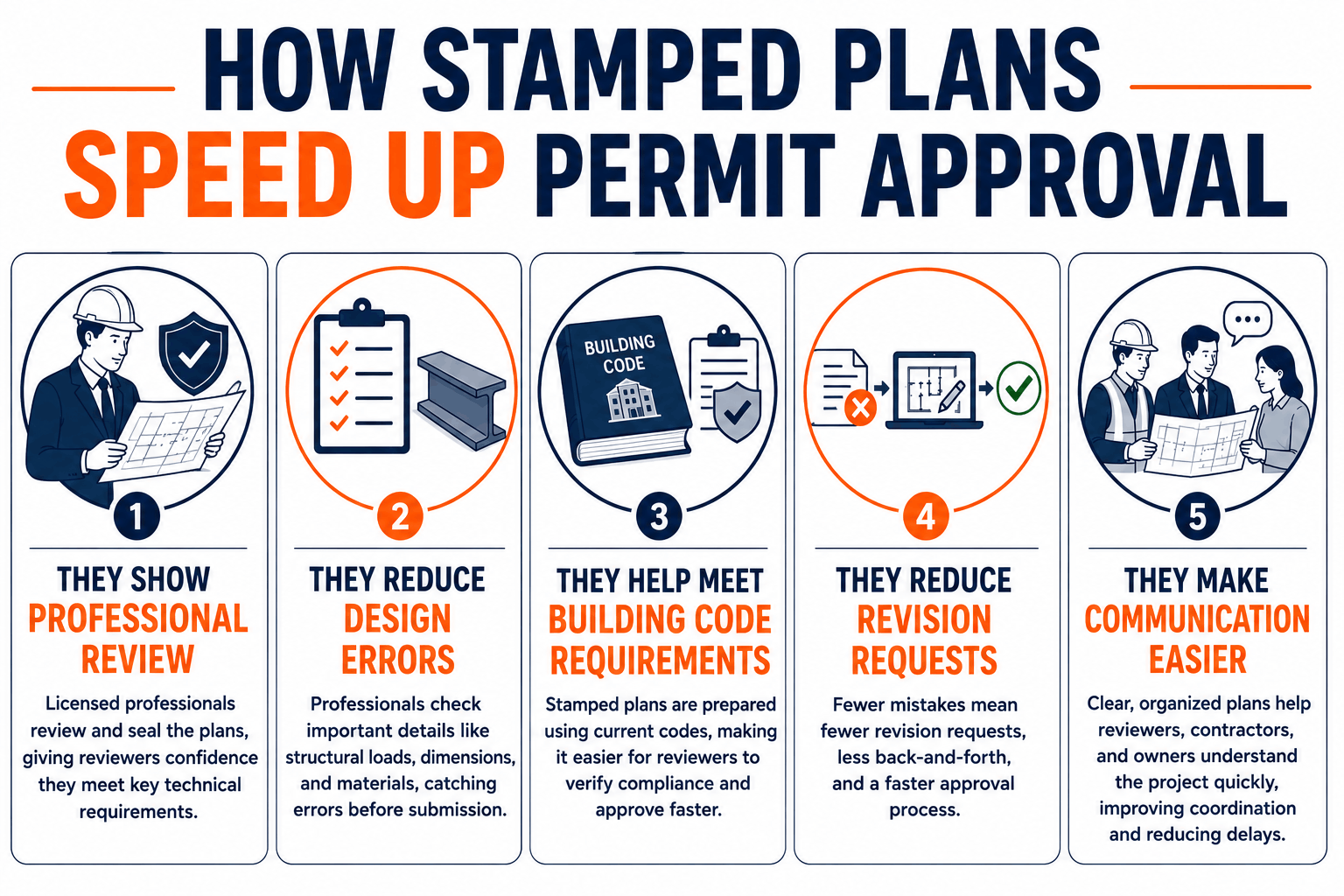
They Show Professional Review
When an architect or engineer places their seal on the drawings, it tells the building department that a qualified professional has reviewed the design. Permit reviewers know the plans have already been checked for important technical requirements. Hence, making the review process more efficient.
Example: If a commercial building requires structural steel calculations, a licensed engineer can verify the design. This reduces the chance that reviewers will reject the plans because of missing structural data.
They Reduce Design Errors
Construction drawings are detailed documents. Even a small mistake can delay approval.
Professional designers review details such as:
- Structural loads
- Beam sizes
- Foundation dimensions
- Wall layouts
- Roof framing
- Material specifications
Finding these issues before submission saves time during permit review. For example, if a beam size is incorrect, correcting it before submitting the plans prevents the reviewer from sending the application back for revisions.
They Help Meet Building Code Requirements
Building codes exist to protect public health and safety. They cover structural strength, fire protection, accessibility, energy efficiency, and many other requirements.
Licensed professionals prepare stamped plans using current building codes adopted by the local jurisdiction. This makes it easier for permit reviewers to verify compliance instead of identifying missing data.
Although reviewers still complete their own review, professionally prepared plans often require fewer corrections than incomplete/ inaccurate drawings.
They Reduce Revision Requests
One of the biggest causes of permit delays is repeated revisions. Every time the reviewer requests changes, the applicant must:
- Update the drawings.
- Resubmit the documents.
- Wait for another review.
This cycle can happen several times if the original plans contain multiple problems.
Stamped plans lower this risk because many issues have already been addressed before submission. While revisions are still possible, they are often fewer and less significant.
They Make Communication Easier
Permit reviewers, contractors, and project owners all rely on the same construction drawings. Clear, organized, and professionally prepared plans reduce confusion during review and later during construction.
Everyone can quickly understand:
- Project dimensions
- Structural details
- Materials
- Safety requirements
- Building layout
This improves coordination throughout the project, not just during permit approval.
Benefits of Using Stamped Plans
Stamped plans do more than help you get a building permit. They also improve the overall construction process. From planning to inspections, they help reduce problems and keep projects moving forward.
Faster Permit Approval
One of the biggest benefits of stamped plans is a smoother permit review process.
Permit reviewers can review complete and professionally prepared drawings more efficiently. Since many technical issues have already been addressed, they often spend less time requesting revisions.
Although approval times vary by location, complete permit applications generally move through the review process faster than incomplete ones.
Fewer Construction Delays
Construction usually cannot begin until the permit is approved. When permit approval is delayed, the entire project schedule can be affected. Contractors may need to postpone work, inspections may be rescheduled, and material deliveries can be delayed.
Stamped plans help reduce these setbacks by improving the quality of the initial submission.
Lower Project Costs
Time is money in construction. Every extra week spent waiting for permit approval can increase project costs. Labor, equipment rentals, and material prices may all rise during the delay.
Fixing design issues before submitting the plans is usually much less expensive than making changes after construction has started.
Better Safety and Code Compliance
Building codes are designed to protect people and property. Licensed architects and engineers prepare stamped plans using the building codes adopted by the local jurisdiction. Their review helps identify structural or safety issues before construction begins.
This reduces the risk of code violations, failed inspections, and expensive corrections later in the project.
Better Communication Throughout the Project
Construction projects involve many people. These include property owners, contractors, inspectors, engineers, architects, and permit reviewers. Everyone works from the same set of construction drawings.
When the plans are clear and professionally prepared, it becomes easier for everyone to understand the project requirements. This reduces misunderstandings and helps work move forward more efficiently.
Projects That Usually Require Stamped Plans
Not every construction project needs stamped plans. The requirement depends on local building codes and the scope of the project.
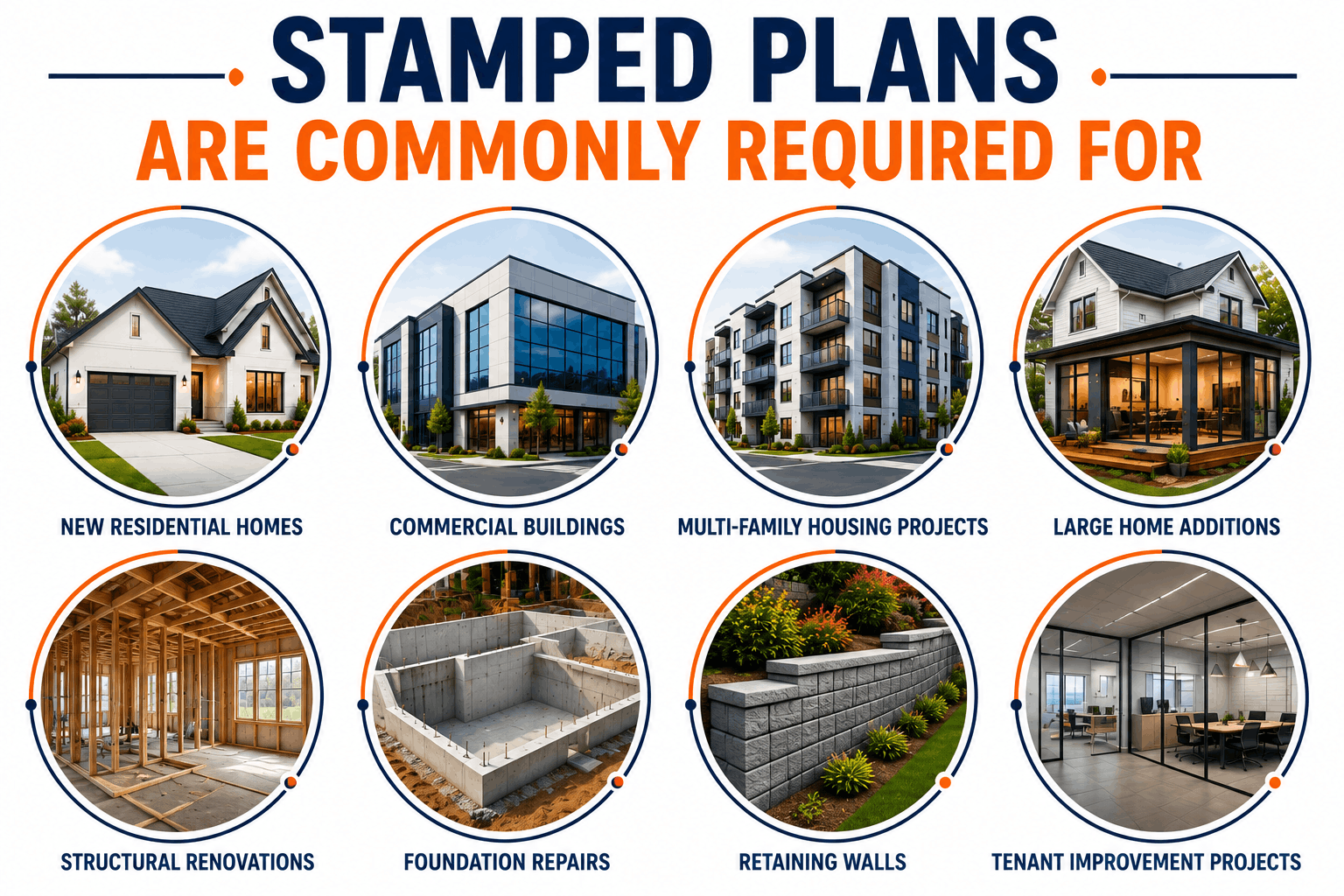
However, stamped plans are commonly required for:
- New residential homes
- Commercial buildings
- Multi-family housing projects
- Large home additions
- Structural renovations
- Foundation repairs
- Retaining walls
- Tenant improvement projects
Some cities may also require stamped plans for major electrical, plumbing, or mechanical work. Since permit requirements vary by city and state, always check with your local building department before preparing an application.
Tips to Avoid Permit Delays
Even with stamped plans, proper preparation is important. The following tips can help you avoid unnecessary delays.
Hire Licensed Professionals
Work with licensed architects and engineers who understand local building codes. Experienced professionals know what building departments expect. They can prepare complete and accurate drawings that reduce the chances of revisions.
Submit a Complete Permit Application
Before submitting your application, make sure every required document is included. Missing forms, engineering calculations, or supporting reports are common reasons permit applications are placed on hold. Using a permit application checklist can help ensure nothing is overlooked.
Understand Local Building Requirements
Building codes are not the same in every city. Some jurisdictions have additional zoning regulations, energy efficiency requirements, or design standards. Reviewing these requirements before preparing your plans can save time later.
- Review Your Plans Carefully
Take time to check the drawings before submitting them. Look for missing dimensions, incorrect measurements, inconsistent notes, or incomplete details. Correcting these issues early helps avoid revision requests.
- Respond Quickly to Review Comments
Sometimes reviewers may still request changes. When this happens, respond as quickly as possible. Prompt responses help move your application back into the review process without unnecessary delays.
Common Mistakes That Slow Permit Approval
Many permit delays are avoidable. Understanding the most common mistakes can help you prepare a stronger application.
- Submitting Unstamped Plans
Some projects require plans to be stamped by a licensed architect or engineer. Submitting unstamped plans for these projects will almost always delay permit approval.
- Missing Structural Information
Permit reviewers need complete structural details to evaluate a project. Missing calculations, framing details, or foundation information often lead to revision requests.
- Using Outdated Building Codes
Building codes change over time. If your plans are based on an older code edition, they may need to be updated before the permit can be approved.
- Poor Drawing Quality
Construction drawings should be clear, organized, and easy to read. Unclear notes, missing labels, or inconsistent dimensions make it more difficult for reviewers to evaluate the project.
- Incorrect Property Information
Simple mistakes can also delay approval. Incorrect addresses, parcel numbers, site dimensions, or legal descriptions may require the application to be corrected before the review can continue.
Why Working With Experienced Permit Consultants Helps
Preparing permit documents can be complicated, especially for larger construction projects. Even a small mistake can lead to revisions and delays. Experienced permit consultants understand the permit process from start to finish. They work closely with architects, engineers, and local building departments. They make sure every document is complete before submission. Their experience can help reduce delays and keep your project moving forward.
They Understand Local Requirements
Every city has its own permit process. Some require additional forms, engineering reports, or zoning documents. Others may have different building code amendments or submission standards. Permit consultants understand these local requirements. They help ensure the application meets their requirements before it is submitted.
They Help Prepare Complete Applications
A complete application is one of the best ways to avoid delays. Permit consultants review the project documents. They check that all required drawings, calculations, and supporting information are included. This reduces the chance of missing documents that could slow down the review process.
They Improve Communication
Construction projects often involve several professionals, including:
- Property owners
- Architects
- Engineers
- Contractors
- Building officials
Permit consultants help coordinate communication between these parties. This makes it easier to resolve questions and respond to reviewer comments quickly.
They Save Time
Preparing permit documents takes time and attention to detail. An experienced consultant understands the process. They can identify potential issues before the application is submitted. This helps reduce revisions and shortens the overall approval timeline.
Conclusion
Stamped plans are much more than a permit requirement. They are an important part of a successful construction project. Professionally reviewed plans help reduce design errors. They improve code compliance and make it easier for building departments to review applications. As a result, projects often experience fewer revisions, fewer delays, and a smoother approval process.
Although stamped plans do not guarantee permit approval, they improve the quality of your application. When combined with complete documents and careful planning, they can keep your project on schedule. If your project requires a building permit, investing in professionally prepared and stamped plans is one of the best ways to save time and avoid costly delays.
Need professional stamped plans for your project? Contact our experts today to streamline your permit approval process and avoid delays. Call us now or schedule a free consultation today!
Frequently Asked Questions
1. What are stamped plans?
Stamped plans are construction drawings. They have been reviewed, signed, and sealed by a licensed architect or engineer. The stamp shows that the design meets professional standards and building code requirements.
2. Do all construction projects require stamped plans?
No. Requirements depend on the type of project and local building regulations. Larger residential projects, commercial buildings, and structural work likely need stamped plans.
3. Who can stamp construction plans?
Only licensed architects or licensed professional engineers can legally stamp construction plans within their area of practice.
4. Do stamped plans guarantee permit approval?
No. The building department still reviews every application. However, stamped plans often reduce errors and revision requests. Hence, making the approval process more efficient.
5. Why do building departments require stamped plans?
They help confirm that a qualified design professional has reviewed the project for safety and code compliance before construction.
6. What happens if I submit plans without a required stamp?
If a stamp is required, the building department will usually request revised documents before continuing the permit review. This can delay project approval.
7. Can stamped plans reduce construction costs?
Yes. By identifying design issues before construction starts, stamped plans can help prevent costly revisions, project delays, and unexpected changes during construction.
8. How can I speed up permit approval?
Submit complete and accurate documents. Use professionally prepared stamped plans when required. Likewise, check local permit requirements and respond quickly to reviewer comments.
References
- International Code Council (ICC). Plan Review and Building Code Compliance.
- World Bank. From Paper to the Cloud: Improving Building Control Through E-Permitting.
- U.S. General Services Administration (GSA). Construction and Facility Standards.
- National Institute of Building Sciences (NIBS). Building Performance and Building Safety Resources.