Table of Contents
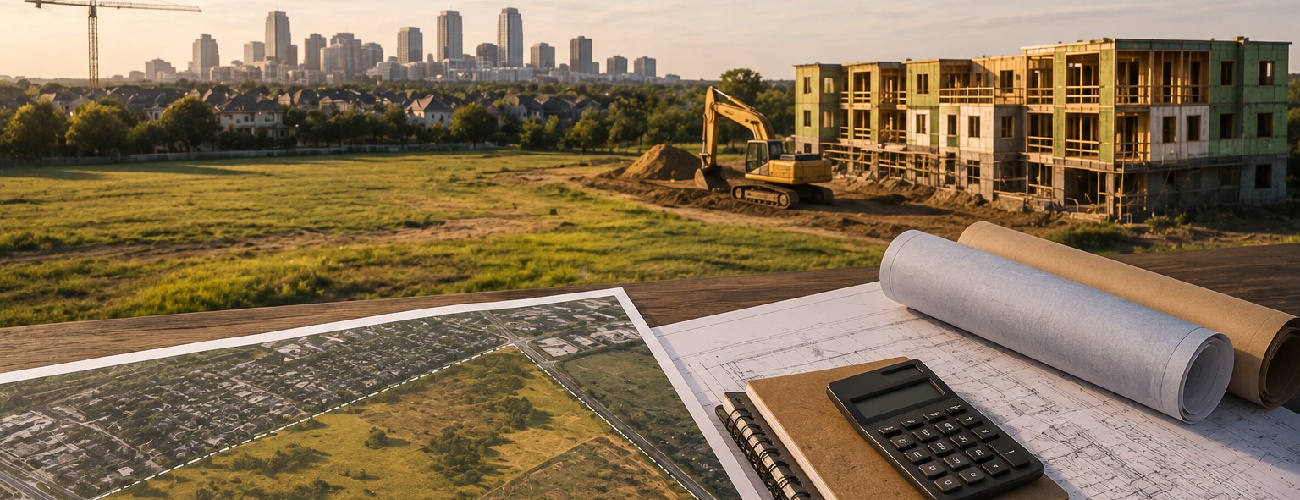
Land is not the constraint in western Palm Beach County anymore. There is still plenty of it. What actually decides whether a project pencils out is whether the site can get the roads, schools, water, sewer, drainage and fire-rescue coverage it needs without turning into an isolated pocket of houses waiting on infrastructure that hasn’t arrived yet. That’s the real underwriting question along corridors like Okeechobee Boulevard, Wellington, Royal Palm Beach, Loxahatchee, Arden, Westlake, western Northlake Boulevard and State Road 7, and it’s one a lot of buyers still get backwards.
Here’s a corridor-by-corridor read on where the opportunity actually is, what the entitlement path looks like once you’re under contract, and which incentive programs are worth building into the pro forma.
Which corridors in western Palm Beach County have the strongest residential development potential?
Seven areas stand out right now: Okeechobee Boulevard and western West Palm Beach, the State Road 7 corridor, Wellington and Royal Palm Beach, Arden and Loxahatchee, Westlake, and western Northlake Boulevard near Palm Beach Gardens and Avenir. Each one has its own infrastructure story, its own entitlement history and its own buyer, and each one comes with a catch worth knowing before you write an offer.
Okeechobee Boulevard and western West Palm Beach
This corridor ties West Palm Beach to Royal Palm Beach and Wellington, which gives it something most western sites don’t have: real proximity to jobs and services already in place. That supports a broad mix, multifamily, townhomes, single-family subdivisions, mixed-use nodes, workforce housing, medical and neighborhood commercial, senior housing, even institutional and school uses. The catch is traffic. Intersection capacity and widening requirements are real constraints here, and the corridor still has to manage the transition from urban density to the more rural residential character further out.
State Road 7 corridor
This is probably the most important corridor in western Palm Beach County right now, and also the one that demands the most caution. FDOT’s State Road 7 Extension is meant to connect Okeechobee Boulevard with Northlake Boulevard through a new four-lane divided roadway. It’s been described as a $137.6 million extension and widening project, with construction possibly starting in spring 2028.
If that road gets built on schedule, the upside is significant, large residential communities, mixed-use centers, workforce housing, medical office, schools, neighborhood retail, employment uses. But the road isn’t built yet, and land values along the corridor are already moving as if it were. Parcels near the alignment may be exposed to future right-of-way takes or heavy intersection obligations. The practical advice here is simple: don’t underwrite SR 7 access as though it already exists. Confirm the schedule, the right-of-way footprint and the concurrency implications directly with FDOT and the County before you finalize numbers.
Wellington and Royal Palm Beach
These are the most established western residential markets in the county, with schools, commercial centers and a buyer base that isn’t going anywhere. The recent town-center activity says a lot about where this corridor is headed. Wellington Village Marketplace is an approximately 18-acre mixed-use project with a hotel, multifamily residences, retail, restaurants, office space and a school component. Village Landing is planned as a 71-acre walkable town center near State Road 7 and Stribling Way. Separate Multiple Use Planned Development approvals have added residential, retail, hotel, office and educational uses to the area as well.
Townhomes, entry-level and move-up single-family, multifamily rental, active-adult and mixed-income products all do well here. But it’s not an easy corridor to build in. Established neighborhoods push back on added density, Wellington’s equestrian identity raises real compatibility questions, roadway congestion is already significant, and drainage, wetlands, and school and recreation capacity all shape what a site plan can actually look like.
Arden and Loxahatchee
Arden is the best proof point in the county for what a master-planned, amenity-heavy community can do in a rural setting. It was approved as a Planned Unit Development surrounded by rural residential land, and it combines single-family homes with an agrihood concept, agricultural and open-space elements, trails and community facilities. By late 2024 it had reportedly sold out. That’s a strong signal for well-designed, agriculture-integrated housing in the right segment, but it also came with a heavy amenity investment to make up for limited infrastructure nearby.
Loxahatchee and similar rural-adjacent areas often lack central sewer, lean on septic systems, have longer emergency-response times, and have roads that weren’t built for higher-density traffic. Add in drainage limits, environmental review and the possibility of annexation disputes, and it’s easy to see why community pushback on urbanizing rural land is common.
Westlake
Westlake had the advantage of being planned as a town center and residential community from day one, rather than assembled piece by piece. It supports single-family housing, townhomes, multifamily, mixed-use town-center development, schools, civic uses and senior or workforce housing. The main thing to watch here is pacing, absorption, infrastructure and amenities all need to keep up with how fast homes are being delivered, or the community starts to feel underbuilt relative to its own housing stock.
Western Northlake Boulevard and Palm Beach Gardens
This corridor connects Palm Beach Gardens, Avenir and the broader western growth area. Avenir alone covers roughly 4,763 acres and was approved for about 4,050 residential units, 2.4 million square feet of nonresidential space and a 300-room hotel, with town-center retail, medical office, hotel, professional office, schools, parks and civic uses all folded into one master plan. The risk for anyone entering this corridor now is supply. You’re competing against an already-approved pipeline of that size, and it’s a mistake to assume every parcel nearby can support the same unit mix or price point Avenir commands.
What does the entitlement process look like for a western Palm Beach County residential project?
The sequence is fairly consistent across projects, though the complexity scales up fast with size and how much infrastructure is already in place.
Start by confirming jurisdiction, tier and infrastructure status. That means pinning down the Future Land Use designation, zoning district, County tier, agricultural or rural-residential status, PUD eligibility, service boundaries, water and sewer provider, school zone, environmental restrictions and any existing development agreements. Palm Beach County’s planning framework has been pushing toward infill and redevelopment within the established coastal tiers rather than continuous westward expansion, and County planning materials have stated that the coastal tiers’ western boundaries didn’t need to expand further to accommodate growth beyond the 2025 planning horizon. In other words, not every rural parcel west of the current urban edge should be treated as an obvious extension of the development boundary.
Nail down the residential product and density early. A 20-lot rural subdivision, a 500-unit townhouse project, a 2,000-unit PUD, a mixed-use town center and a Live Local affordable project can all follow very different entitlement paths, even on comparable acreage.
Come to the pre-application conference prepared. A strong package usually includes a boundary and topographic survey, environmental and wetlands mapping, a conceptual master plan, traffic-generation estimates, a water and sewer service plan, a stormwater concept, school-impact analysis, fire-rescue response analysis and a preliminary market study. This is the step that determines whether the project needs only site-plan approval, or also a Future Land Use amendment, rezoning, PUD, development agreement, annexation or concurrency approval.
Pursue the Future Land Use amendment and rezoning where needed, along with any PUD approval, development order amendment, special exception, density bonus, annexation or development agreement the project requires. Expect to demonstrate comprehensive-plan consistency, adequate public facilities, transportation and utility capacity, school capacity or mitigation, and compatibility with the surrounding rural and agricultural uses.
Work through traffic and roadway review. Palm Beach County’s Traffic Performance Standards are administered by the County’s Growth Management Section and apply county-wide. Depending on the site, this can mean a traffic impact study, intersection analysis, turn lanes, signalization, road widening, access-management improvements and, for state roads, an FDOT access permit.
Resolve water, sewer, stormwater and environmental issues before they become late-stage surprises. Western sites often deal with limited central sewer, septic constraints, wetlands, agricultural drainage, floodplain issues and the need for off-site utility extensions. Palm Beach Gardens’ water-supply planning documents, for instance, require the City to confirm adequate water supplies and facilities are available before a Certificate of Occupancy is issued, and to consult with the applicable water provider before building-permit approval. Treat utility capacity as an acquisition question, not a detail to sort out during engineering.
Budget for school, park and public-facility impact fees. Palm Beach County’s Article 13 sets impact fees for roads, parks, fire rescue and schools, with a fee schedule effective January 1, 2026. Use the schedule in effect at the time of assessment, not the one that applied when the land was purchased.
Move through platting, construction plans and vertical permitting. This typically includes master-plan approval, preliminary and final plat, construction plans, roadway and utility plans, stormwater approvals, landscape plans, vertical building permits, inspections, Certificates of Occupancy and final development-order closeout. Larger communities often need multiple plats and separate permit sequences for each phase and product type.
What incentive and financing programs apply to western Palm Beach County housing?
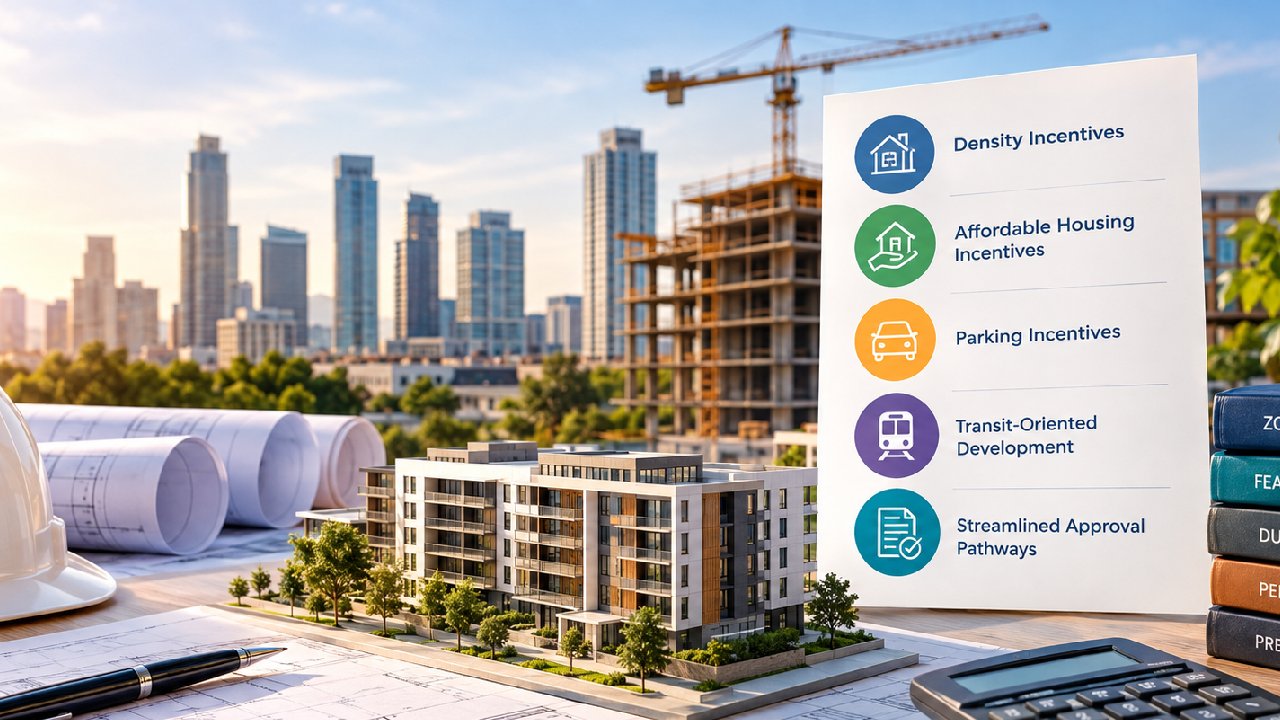
A handful of programs can genuinely move the needle on density, unit mix or feasibility:
- Workforce Housing Program. Generally targets households earning 60% to 140% of Area Median Income and can offer density bonuses for qualifying units, in exchange for keeping those units affordable, typically for 30 years on rental product.
- Live Local Act. Can bring administrative approval plus statutory density and height benefits for qualifying affordable multifamily projects on commercial, industrial or mixed-use parcels. It’s a better fit for workforce apartments, affordable multifamily and mixed-use redevelopment than for a conventional single-family subdivision.
- Impact Fee Affordable Housing Assistance. The County has put real money behind this, including a recent notice of roughly $3.37 million for eligible road, park and fire impact fees tied to affordable housing.
- Florida Housing Finance Corporation programs, including SAIL loans, Low-Income Housing Tax Credits, tax-exempt multifamily bonds, and HOME and SHIP funds, all of which can support an affordable or workforce component inside a larger market-rate project.
- Infrastructure financing tools, such as Community Development Districts, special assessment districts, tax increment financing and development agreements. These can help fund public infrastructure, but they don’t get you out of proving land-use consistency, traffic capacity and environmental compliance.
What is the recommended development strategy for western Palm Beach County?
In most cases, a phased, master-planned community with several housing types and an early-service town center outperforms a single-product subdivision built on its own. That means locking down the real urban-service boundary and future roadway network before you buy, confirming water and sewer capacity as a condition of the deal, screening wetlands and conservation obligations early, and phasing units alongside roads, utilities, schools and parks rather than ahead of them. Projects that pair a realistic housing mix with a genuine amenity or town-center component tend to hold up better than ones competing on price alone against the surrounding master-planned pipeline.
The best sites are the ones where funded infrastructure and residential demand are arriving on roughly the same timeline. The weakest are the cheap rural parcels that need new roads, utilities, drainage and emergency services built from scratch before the project can reach a viable scale, no matter how good the land basis looks on paper.
Common hurdles by project role
| Stakeholder | Typical challenges |
|---|---|
| Developers | Buying on theoretical density, underestimating infrastructure cost, assuming unbuilt roadway projects will show up on schedule, securing water and sewer, pricing attainable housing correctly |
| Architects | Designing to density before zoning is confirmed, weak transitions to rural neighbors, oversized amenity packages, inefficient lot layouts |
| Investors and lenders | Long entitlement timelines, high horizontal-development costs, absorption risk, impact fees, dependence on roads and schools that don’t exist yet |
| Municipalities and the County | Balancing traffic, school and fire-service capacity against rural character, annexation pressure and long-term infrastructure maintenance |
Working through entitlement risk before you close
None of this means western Palm Beach County isn’t worth pursuing. It means the due diligence has to happen before the land is under contract, not after. Confirming jurisdiction, tier status, utility capacity, traffic thresholds and impact-fee exposure up front is what separates a fundable project from an expensive lesson, and it’s usually the difference between a corridor that works for you and one that just looks good on a map.
JDJ Consulting works with developers, architects and investors evaluating sites across Palm Beach County’s western corridors, guiding projects through Future Land Use amendments, rezoning, PUD approvals, traffic and concurrency review, and the permitting sequence that follows. If you’re weighing a site in one of these corridors, our permit expeditor and entitlement consulting team can help confirm what the parcel can actually support before you’re locked into a contract.
Frequently Asked Questions
What are the best western Palm Beach County corridors for residential development? Okeechobee Boulevard, the State Road 7 corridor, Wellington, Royal Palm Beach, Arden, Loxahatchee, Westlake and western Northlake Boulevard near Avenir are currently the strongest western growth corridors, each with its own infrastructure profile and buyer market.
Is the State Road 7 Extension a safe assumption for future site access? No. The extension is planned but not yet built, with construction possibly starting around spring 2028. Confirm the schedule, right-of-way and concurrency implications directly with FDOT and Palm Beach County rather than underwriting future access as a given.
What triggers a Future Land Use amendment versus a simple rezoning in Palm Beach County? It comes down to whether the proposed density, unit type and use fit the site’s current Future Land Use designation. Projects that exceed it typically need a Future Land Use Atlas amendment on top of rezoning, and larger projects usually need Planned Unit Development approval as well.
How does workforce housing density bonus eligibility work in Palm Beach County? The County’s Workforce Housing Program generally targets households earning 60% to 140% of Area Median Income and can offer density bonuses in exchange for keeping units affordable, typically for 30 years on rental product.