Table of Contents
Airport-related logistics development in Broward County requires navigating two separate approval systems at once: municipal or county zoning and entitlement review, and, for any on-airport activity, a permit agreement with the Broward County Aviation Department (BCAD). A logistics facility located off airport property follows the standard path through one of Broward’s 31 municipalities or the unincorporated Broward Municipal Services District (BMSD). A facility that requires physical access to Fort Lauderdale-Hollywood International Airport (FLL) to serve airlines or tenants needs a BCAD permit agreement on top of that. Getting the sequencing wrong, or missing the concurrency and environmental review steps that Broward treats as gating items, is the single most common reason airport-adjacent industrial projects stall.
This guide breaks down why demand for this product type has accelerated, what the entitlement and permitting process actually looks like from pre-application to certificate of occupancy, where competition for sites is heaviest, where opportunity still exists, and which incentive programs make the underwriting work.
Why Demand for Airport-Related Logistics Is Accelerating in Broward
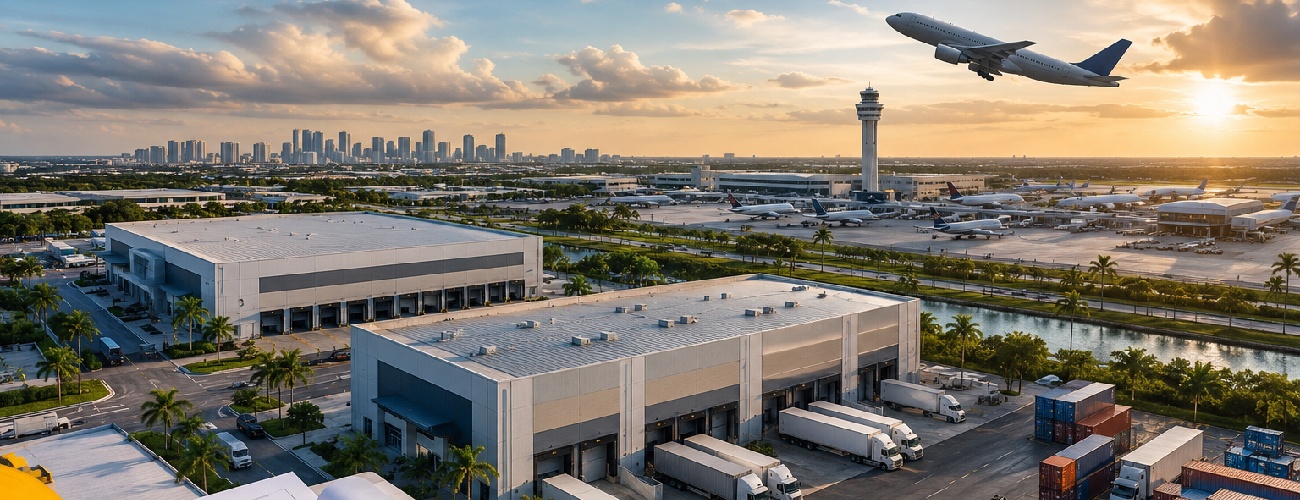
Broward’s industrial market benefits from a rare combination of infrastructure assets in close proximity: FLL, Port Everglades, and a highway network built around I-95, I-595, Florida’s Turnpike, and the Sawgrass Expressway. That convergence has made the county a natural home for last-mile distribution, freight forwarding, and aviation-supporting industrial uses that need to move goods quickly between air, sea, and road.
Three forces are compounding that structural advantage right now:
Tenant requirements have shifted upward. Occupiers are no longer satisfied with older industrial stock. Demand is concentrated in facilities with higher clear heights, efficient loading configurations, adequate power capacity, and layouts built for operational throughput rather than simple storage. That preference is pushing rents higher even as absorption has cooled.
Population growth is compounding demand across every asset class. Southeast Florida’s sustained population growth is generating parallel demand for office, medical, retail, and mixed-use product, which in turn increases pressure on industrial and logistics land near major infrastructure nodes like FLL.
Policy is actively de-risking well-located projects. State and county incentive programs targeted at aviation, aerospace, and transportation equipment manufacturing, combined with brownfield redevelopment credits and CRA/TIF financing in several cities, are lowering entitlement risk and improving pro forma yields for developers willing to work through the process correctly.
As of Q2 2026, Broward’s industrial market showed vacancy near 6.7 percent and average asking rents at a record $17.44 per square foot, with net absorption still slightly negative but moderating. That combination signals a market that has repriced but not softened: well-executed airport-adjacent logistics product still commands premium rents, while poorly positioned or poorly entitled projects face real lease-up risk.
What Is the Entitlement and Permitting Path for Airport-Related Logistics in Broward?
The short answer: confirm jurisdiction first, then follow either a by-right site plan and building permit path or a hearing-driven entitlement path depending on zoning consistency, and layer on a BCAD permit agreement if the operation touches airport property.
Step 1: Confirm Jurisdiction and Zoning
Broward County does not have unified countywide zoning authority. Each of its 31 municipalities administers its own planning, zoning, and building departments, and the county itself only regulates land within the unincorporated BMSD. Before anything else, a project team needs to confirm which authority governs the parcel, verify the zoning district and permitted uses (industrial districts typically include I-1 Light, I-2 General, and I-3 Heavy, along with overlays such as IG-PBC and IRO-DB within the BMSD), and confirm Future Land Use Map consistency.
Step 2: Determine Whether Entitlements Are Required
If the proposed logistics use is permitted by right in the applicable district and consistent with the Future Land Use Map, the project can typically move directly to site plan and development review. If it is not, expect a rezoning, conditional use or special exception approval, planned development designation, or variance, each of which requires public hearings before a planning board and city commission or county board.
Industrial and logistics uses in Florida commonly trigger development permit review under the state’s concurrency framework. That means the applicant must demonstrate adequate capacity for traffic, drainage and flood control, water and sewer service, schools, parks, and fire and police response before approval is granted. Concurrency, not zoning itself, is frequently the real gating item on airport-adjacent sites.
Step 3: Site Plan and Development Review
Conceptual and then final site plans need to show building footprint, truck maneuvering and turning radii, loading dock configuration, landscaping and buffering, signage, lighting, and utility connections. Logistics uses draw particular scrutiny around truck access and compatibility with adjacent uses, especially where sites border residential or commercial neighbors. Within the BMSD, zoning permits and inspections apply to all new construction and tenant changes, and a certificate is required before occupancy.
Step 4: Engineering and Utility Approvals
Drainage, stormwater, roadway access, and water and sewer capacity typically receive separate technical review, often at the county level even where the municipality handles the building permit itself.
Step 5: Building Permit
Once land use approval is secured, the project moves to a uniform building permit application with signed and sealed plans, survey, zoning approval, a notice of commencement for projects at or above $2,500, and sub-permits for electrical, plumbing, and other trades. Permits are generally valid for 180 days, and extensions are not automatic.
Step 6: Inspections and Certificate of Occupancy
Final inspections for logistics buildings tend to focus on life safety systems, loading dock construction, and fire suppression. A certificate of occupancy is issued only after every sign-off is complete, and in the BMSD that certificate is explicitly required before an industrial property can be occupied or change tenants.
Does On-Airport Logistics Activity Require a Separate Permit?
Yes. Any logistics operation that will be physically located on FLL property, or that requires regular access to airport grounds to serve airlines or airport tenants, needs a permit agreement from the Broward County Aviation Department, separate from and in addition to municipal or county land use approval.
Key features of the BCAD permit process:
- Permit agreements authorize business or commercial activity on airport property and are typically structured month to month, not to exceed one year, with the possibility of extension.
- Applications generally require a completed application, a local business tax receipt, a non-refundable application fee, a refundable security deposit, executed service agreements with an airport tenant, and insurance certificates that meet BCAD’s coverage requirements.
- Review can take up to three weeks depending on complexity, and approvals are subject to legal sufficiency review and executive sign-off.
- Ground transportation permits are handled separately through the airport’s curbside management vendor.
For major capital improvement work at FLL, BCAD also runs periodic industry outreach events to brief prime vendors and subcontractors on upcoming procurement opportunities, which is worth tracking for firms positioning for airside or landside contracts.
Because this dual-track process (municipal or county entitlement plus BCAD authorization) has more moving parts and more places for a timeline to slip than a standard off-airport industrial project, many developers bring in a firm that has already run this specific process before rather than learning the sequencing in real time. JDJ Consulting’s Broward permit expediting and entitlement consulting services are built around exactly this kind of multi-agency coordination, tracking concurrency, zoning, and airport permitting requirements in parallel so approvals move on a predictable timeline rather than a reactive one.
Where Is Airport-Related Logistics Activity Concentrated in Broward?
The heaviest competition for sites sits along the I-95, I-595, and Turnpike corridor near FLL and Port Everglades, in Dania Beach and southern Fort Lauderdale, and in Pompano Beach, which is the county’s largest industrial submarket at more than 25 million square feet and functions as the effective core of Broward’s industrial activity.
These submarkets carry real advantages in access and visibility, but they also carry the highest land basis in the county and the tightest available parcels. Dania Beach in particular combines strong locational fundamentals with meaningful environmental constraints, including mangrove and environmentally sensitive land designations that add time and cost to entitlement. Sites here often require assemblage of smaller parcels or remediation work before they are development-ready
Where Does Opportunity Still Exist?
Three types of sites carry lower basis and less competition while retaining reasonable proximity to FLL and Port Everglades:
Secondary infill nodes. Older industrial strips within city limits, underutilized commercial parcels along major arterials, and sites adjacent to established activity centers but outside the core submarkets offer a lower cost of entry for developers willing to do redevelopment work.
Northern and western Broward. Land is more available and less expensive in these corridors, though haul times to the airport and port are longer and labor availability or infrastructure capacity can be constrained.
Redevelopment of aging parcels near FLL. Older commercial or industrial buildings close to the airport can be repositioned for modern logistics use, but expect zoning transitions, community pushback over truck traffic and hours of operation, and higher site work costs tied to utility and drainage upgrades.
Every one of these opportunity categories comes with the same underlying risk: infrastructure capacity and environmental sensitivity are what actually determine feasibility, not just zoning designation. A parcel that looks entitleable on paper can still stall for months over a drainage capacity shortfall or a wetlands determination that was not screened early.
What Incentive Programs Apply to Airport-Related Logistics Projects?
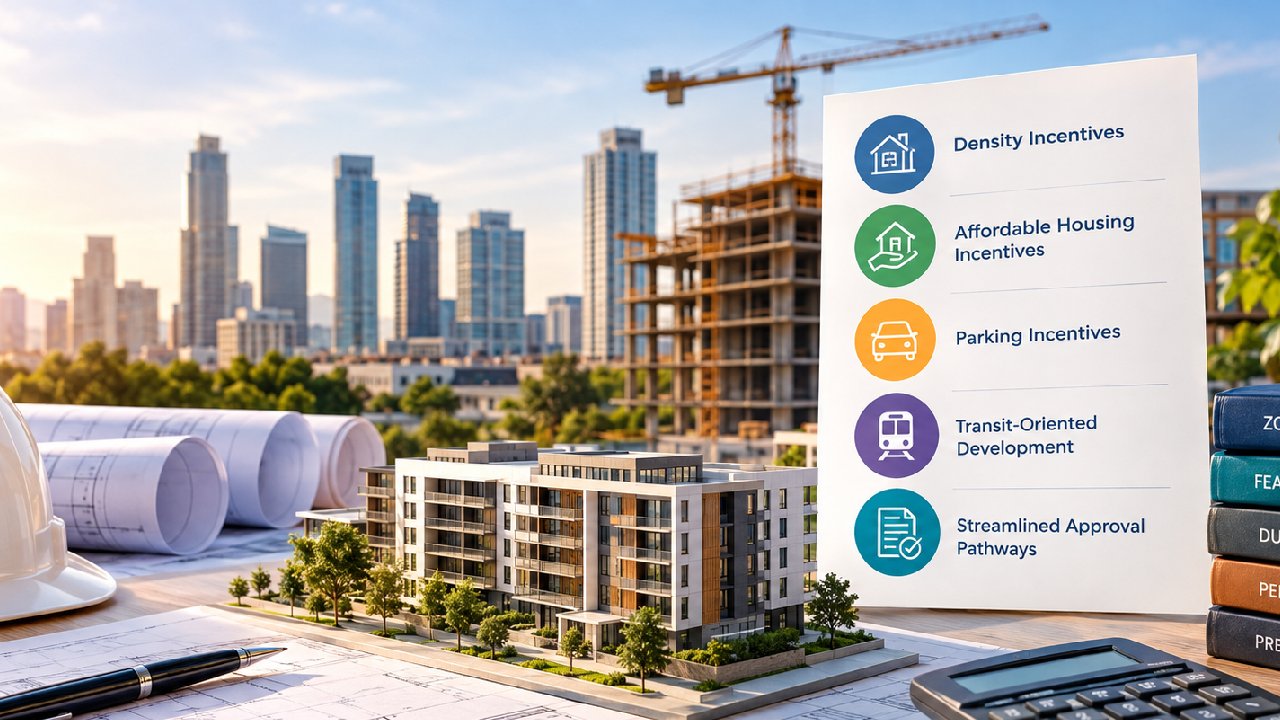
Florida and Broward County offer a substantial incentive stack for logistics, aviation-supporting, and transportation equipment manufacturing uses, and most of it is underused simply because developers do not know it applies to their tenant mix.
State-level programs:
Florida has no state income tax, a baseline advantage for owners and operators.
- The Qualified Target Industry Tax Refund provides refunds for businesses in targeted sectors, including aviation, aerospace, and transportation equipment manufacturing, that create jobs and invest capital.
- The High Impact Performance Incentive offers negotiated grants for major high-impact facilities in designated sectors, contingent on significant job creation and capital investment.
- The Capital Investment Tax Credit provides up to five percent of eligible capital costs for up to twenty years for qualifying high-impact projects.
- Sales tax exemptions apply to machinery, equipment, and electricity used in manufacturing, relevant for flex and light manufacturing tenants within logistics parks.
- Quick Response Training grants fund workforce training for new and expanding businesses.
- The Economic Development Transportation Fund can provide up to three million dollars to local governments to resolve location-specific transportation problems such as access roads and signalization for eligible companies.
Local and area-specific programs:
- Enterprise Zones in Fort Lauderdale, Hollywood, and Pompano Beach offer additional incentives tied to job creation and investment.
- Broward’s Brownfields Redevelopment Program and Voluntary Cleanup Tax Credits can offset up to fifty percent of qualified remediation costs against Florida corporate income tax, a meaningful lever on older industrial sites.
- Brownfield Site Redevelopment Agreements unlock tax credits and regulatory guidance once executed, and Broward has issued substantial credits supporting hundreds of millions of dollars in capital investment countywide.
- CRA and Tax Increment Financing districts in cities including Coral Springs, Hallandale Beach, Margate, and Fort Lauderdale fund public improvements and facade or job-creation incentives within designated redevelopment areas.
- FPL’s economic development rate offers discounted electric service to new or expanding businesses that add sufficient demand and job creation, potentially saving $9,500 to $12,000 in the first year.
- Industrial Revenue Bonds provide long-term, tax-exempt financing for capital costs tied to relocating or expanding manufacturing and certain not-for-profit facilities.
The practical move for airport-related logistics: structure leases to capture QTI, HIPI, or CITC benefits where tenants qualify under aviation, aerospace, or transportation equipment manufacturing classifications, and prioritize brownfield or Enterprise Zone tracts to strengthen pro forma yields from the outset.
What Are the Most Common Hurdles by Stakeholder?
Developers and investors face concurrency bottlenecks that can delay approval or force design mitigations, tight infill sites with legacy easements or contamination near FLL, and a market where tenants have become more selective, raising lease-up risk relative to the prior cycle.
Architects and engineers contend with code and design alignment issues, particularly around truck maneuvering and loading design, along with environmental constraints in wetland, coastal, and floodplain-adjacent parcels that add review complexity.
General contractors manage the 180-day permit validity clock, inspection sequencing, and coordination across electrical, plumbing, and fire sub-permits, any of which can cascade into delays if not tightly scheduled. Materials and labor cost inflation remain a persistent pressure on margins across South Florida construction generally.
Lenders and investors find that logistics assets with nonstandard configurations or airport-adjacent locations can be harder to underwrite, since clear height, truck access, and parking directly drive value and lease-up assumptions. Flood and hurricane exposure, along with rising insurance costs, are material line items in any pro forma near coastal or canal-adjacent parcels.
A Pre-Development Checklist for Airport-Related Logistics in Broward
- Confirm jurisdiction (municipality versus BMSD) and zoning or Future Land Use Map consistency before making site control decisions.
- Screen the parcel for brownfield or Enterprise Zone eligibility early, since these designations change both the incentive picture and the remediation timeline.
- Run a concurrency screen for traffic, drainage, water and sewer, schools, parks, and fire and police capacity before locking in purchase price or design.
- Design for functionality first. Clear height, truck access, loading configuration, power capacity, and parking are the primary drivers of leasing velocity and value in the current market.
- If any on-airport operation is required, engage BCAD early on permit agreement terms and insurance thresholds rather than treating it as a formality late in the process.
- Map applicable incentive programs, including QTI, HIPI, CITC, VCTC, the FPL economic development rate, and Industrial Revenue Bonds, against the specific tenant profile and build them into underwriting and marketing materials from day one.
Frequently Asked Questions
Does Broward County have unified zoning for industrial and logistics uses?
No. Each of Broward’s 31 municipalities administers its own zoning and building review, and the county government only regulates land within the unincorporated Broward Municipal Services District.
Is a separate permit required for logistics operations located on airport property?
Yes. Any business activity conducted on FLL property or requiring regular airport access needs a permit agreement from the Broward County Aviation Department, in addition to standard municipal or county entitlements.
What is the biggest risk factor for airport-adjacent logistics entitlements in Broward?
Concurrency, meaning the demonstrated capacity for traffic, drainage, water and sewer, schools, parks, and emergency services, is frequently the actual gating issue, even on parcels where zoning is otherwise straightforward.
Which incentive programs apply most directly to airport-related logistics tenants?
The Qualified Target Industry Tax Refund, High Impact Performance Incentive, and Capital Investment Tax Credit are the most relevant for aviation, aerospace, and transportation equipment manufacturing tenants, alongside brownfield credits and Enterprise Zone benefits for qualifying sites.
How long is a Broward County building permit valid once issued? Building permits are generally valid for 180 days from issuance, and extensions are possible but not automatic.
This overview reflects the general entitlement and permitting framework for airport-related logistics development in Broward County. Every parcel carries its own jurisdictional, environmental, and concurrency profile, and the fastest path to approval depends on getting that specific picture right from the start. For a jurisdiction-by-jurisdiction breakdown, including which agencies to engage and in what order, JDJ Consulting’s Broward permit expediting and entitlement services work directly with developers, architects, and investors to move projects from acquisition through certificate of occupancy.