Table of Contents
Miami-Dade’s housing market has split into two distinct stories. Luxury and market-rate towers are sitting with vacancy near 10.5 percent, while workforce and older attainable units are leasing far faster and absorbing demand that the top of the market simply can’t reach. For developers and investors reading the tea leaves, that gap is the opportunity. But workforce and mixed-income housing is not a market-rate deal with a discount applied. It runs on a different financial and regulatory chassis entirely, and the projects that succeed are the ones where that distinction gets built into the pro forma on day one, not bolted on after the architect has already drawn the units.
This guide walks through how workforce and mixed-income housing actually gets approved and financed in Miami-Dade County, where the real opportunities sit on the map, and where deals tend to go sideways.
Workforce and Mixed-Income Housing in Miami-Dade: What Developers Need to Know Before They Buy the Site
Miami-Dade’s housing market has split into two distinct stories. Luxury and market-rate towers are sitting with vacancy near 10.5 percent, while workforce and older attainable units are leasing far faster and absorbing demand that the top of the market simply can’t reach. For developers and investors reading the tea leaves, that gap is the opportunity. But workforce and mixed-income housing is not a market-rate deal with a discount applied. It runs on a different financial and regulatory chassis entirely, and the projects that succeed are the ones where that distinction gets built into the pro forma on day one, not bolted on after the architect has already drawn the units.
This guide walks through how workforce and mixed-income housing actually gets approved and financed in Miami-Dade County, where the real opportunities sit on the map, and where deals tend to go sideways.
What Counts as Workforce Housing in Miami-Dade?
Workforce housing in Miami-Dade generally serves households earning between 60 percent and 140 percent of Area Median Income (AMI). That is a meaningfully different band than traditional low-income housing, which most public funding and tax-credit programs cap at 60 percent or 80 percent AMI. The distinction matters because it changes everything downstream: which subsidies a project can access, how deep the affordability restriction needs to be, and how the unit mix gets underwritten against market rents.
A workforce or mixed-income project in the County can take several forms:
- Fully income-restricted workforce housing
- Market-rate development with a workforce set-aside
- Mixed-income rental or condominium buildings
- Affordable senior housing
- Transit-oriented development
- Adaptive reuse of office, hotel, or commercial buildings
- Public-private development on County, municipal, or faith-based land
- Preservation or rehabilitation of naturally occurring affordable housing
Before a single design decision gets made, the sponsor needs to know whether AMI restrictions will apply by unit, by household, by rent, or by sale price, and how long that restriction runs. Affordability covenants in Miami-Dade commonly extend 15 to 50 years or more depending on the funding source, which is a long enough horizon that it should shape the capital stack, not just the compliance plan
Why Jurisdiction Determines Almost Everything
The single biggest variable in a Miami-Dade workforce housing deal is which government actually has land-use authority over the parcel. Unincorporated Miami-Dade County, the City of Miami, Miami Beach, Hialeah, Doral, North Miami, Miami Gardens, and Homestead each define affordable housing differently, apply different AMI bands, and offer different density bonuses, parking reductions, and fee relief.
The City of Miami is a good example of how granular this gets. Under the Miami 21 framework, the City recognizes several distinct categories, including affordable housing developments, attainable mixed-income housing, attainable workforce housing, and workforce living housing developments, each with its own required unit mix and AMI thresholds. A project might need at least 40 percent of units at or below 60 percent AMI, or an alternative structure combining units at 50 percent AMI with additional units in the 60 to 100 percent AMI range, and it will almost certainly need a recorded 30-year affordability covenant to qualify for City benefits.
This is precisely the kind of variable that has to be locked down before land acquisition, because the entitlement strategy, the achievable density, and the underwriting all flow from it. A parcel that looks straightforward under County rules can carry a completely different set of obligations once it crosses into a municipal boundary.
The Entitlement Pathways Available to Workforce Projects
Developers generally have several routes into a workforce or mixed-income project, and the right one depends on the site, the funding source, and the target AMI mix.
Conventional by-right development. The project complies with existing zoning and layers in public funding or local incentives without pursuing a rezoning.
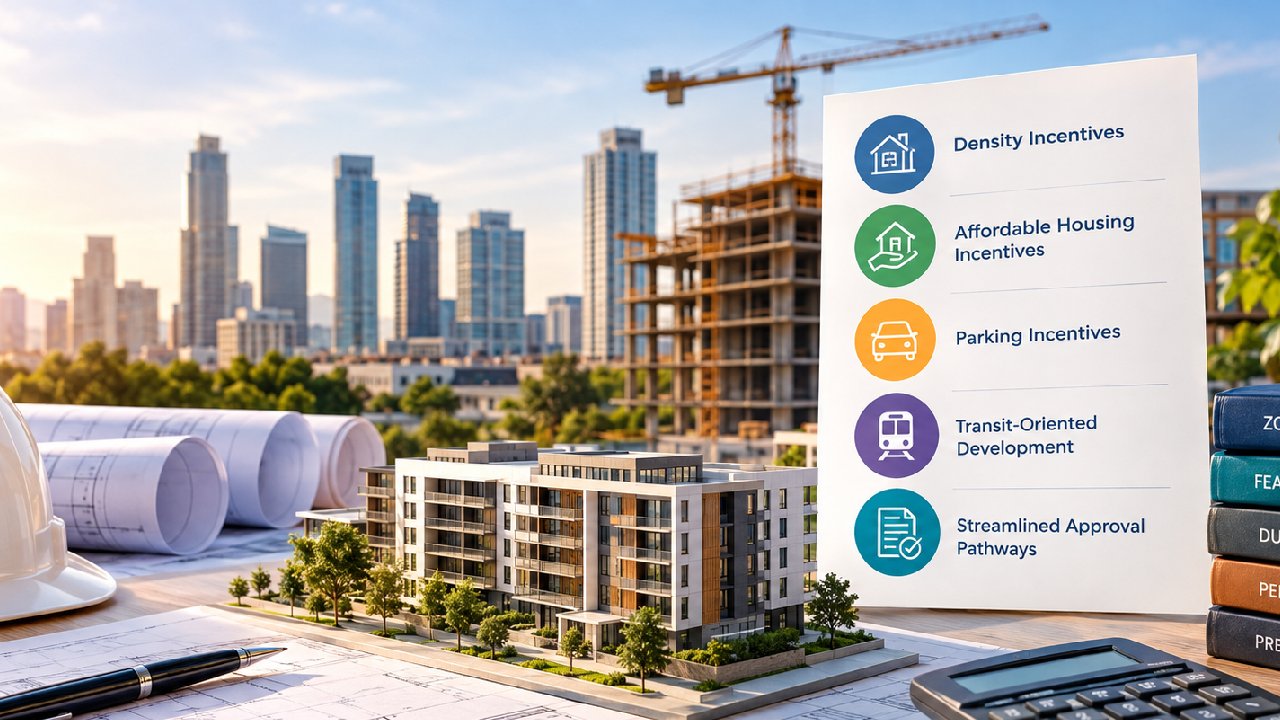
The Miami-Dade Workforce Housing Development Program. A voluntary County program offering density bonuses and related incentives for projects serving the 60 to 140 percent AMI range, either through on-site units or a payment in lieu.
City of Miami affordable and attainable mixed-income categories. Discussed above, these Miami 21 pathways offer meaningful density and fee benefits in exchange for recorded affordability commitments.
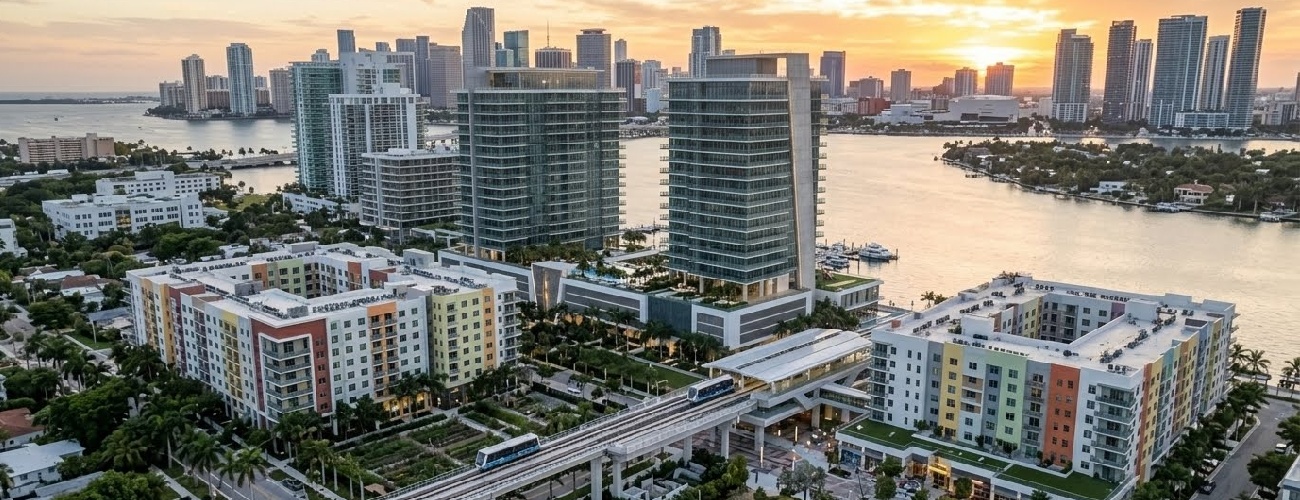
Rapid Transit Zone and TOD pathways. Sites near Metrorail, Metromover, or SMART corridors can access increased density and more flexible development standards, consistent with the County’s broader push to concentrate housing near high-capacity transit.
The Live Local Act. Florida’s Live Local Act can require administrative approval, bypassing discretionary rezoning entirely, for qualifying multifamily or mixed-use residential projects on eligible commercial, industrial, or mixed-use land. The 2026 amendments expanded eligible site categories and strengthened state preemption in several areas, which makes a current legal eligibility review essential before a sponsor relies on this pathway in underwriting.
Public-private development on County or municipal land. Miami-Dade’s Housing and Community Development department periodically solicits developers for County-owned parcels through RFPs, RFQs, and RFAs, often at a reduced land basis in exchange for deeper affordability commitments.
None of these pathways eliminate zoning and permitting review. They change the process, and in some cases the timeline and density, but the project still has to satisfy building, fire, environmental, flood, and utility requirements like any other development.
Where the Opportunities Actually Are
The urban core, including Brickell, Downtown Miami, Edgewater, Wynwood, and parts of Miami Beach, already carries substantial Class A and luxury supply, and land basis in those submarkets is often too high to pencil against workforce rents without a public subsidy, a ground lease, or an office or hotel conversion strategy.
The more compelling workforce and mixed-income opportunities tend to cluster around:
- Metrorail stations and SMART corridors
- The South Dade TransitWay
- Hialeah and Miami Lakes
- North Miami and Miami Gardens
- Doral and the employment-oriented Airport West submarket
- Kendall and South Miami employment corridors
- Homestead and South Dade, where demand is strong but infrastructure and density need to be verified site by site
- Commercial corridors with underused shopping centers or aging office buildings ready for adaptive reuse
The strongest public-private potential generally sits on County-owned, municipal, school-district, or larger faith-based parcels, along with aging institutional and commercial sites. These can meaningfully reduce land basis, but they also introduce ground-lease structures, procurement rules, and political review that a conventional site acquisition does not carry.
Incentives and Funding Sources Worth Underwriting
A workforce or mixed-income project in Miami-Dade can potentially draw on a stack of incentives and capital sources, though eligibility depends heavily on the AMI bands, jurisdiction, and program compliance.
- Density bonuses through the County’s Workforce Housing Development Program or a municipality’s local ordinance
- Impact-fee exemptions, which Miami-Dade extended to qualifying housing serving households up to 120 percent AMI, generally secured through an interlocal agreement, workforce ordinance, or restrictive covenant
- Expedited plan review, available when a project submits the required affordability documentation at permit filing, though this speeds review rather than resolving underlying zoning or funding issues
- Live Local Act property-tax exemptions, which can provide significant ad valorem relief for qualifying income-restricted units, subject to the current statutory framework
- HOME, SHIP, and Documentary Stamp Surtax funding, distributed through Miami-Dade’s competitive RFA process for new construction, redevelopment, and rehabilitation
- 4% and 9% LIHTC with tax-exempt bonds, generally the most scalable capital source for projects reaching deeper into the AMI bands
- Project-based rental assistance, which can make the deepest affordability tiers feasible but adds housing-authority approval and long-term compliance obligations
The financing sequence in a workforce deal typically runs in parallel with entitlements, not after them, which is a structural difference from most market-rate development timelines and one that has real implications for site control and carrying costs.
Where These Projects Tend to Break
The recurring failure pattern in Miami-Dade workforce housing is straightforward: sponsors apply market-rate assumptions to a revenue-restricted project and underestimate the cost of ongoing compliance. Land priced for market-rate returns rarely pencils against restricted rents without a subsidy layer, and utility allowances quietly erode the rent a restricted unit can actually charge.
On the design side, the challenge is building one coherent community rather than a project with visibly separate tiers. Parking ratios sized for market-rate product, inefficient unit plans, and amenity allocation that favors one income band over another can create fair-housing, financing, and reputational problems that outlast the construction period.
On the construction side, rising material and labor costs, prevailing-wage requirements tied to public funding, and value engineering imposed after a funding award has already locked in the design are common sources of schedule and budget slippage.
And after certificate of occupancy, the obligations do not end. Income recertification, rent and utility limits, affirmative marketing, and long-term lender and covenant reporting can run for decades, which is why experienced sponsors treat compliance as a dedicated function rather than a leasing add-on.
The Practical Sequence
- Define the target AMI bands, tenure, unit mix, and affordability term before evaluating sites.
- Confirm the governing jurisdiction, zoning, transit status, and Live Local eligibility.
- Complete title, survey, environmental, flood, and utility due diligence.
- Model by-right, incentive, and public-funding scenarios side by side.
- Secure a preliminary housing-program certification or written eligibility determination.
- Underwrite rents, utility allowances, taxes, insurance, and restricted-unit revenue by AMI band, not as a blended average.
- Confirm which density bonuses, fee exemptions, or payment-in-lieu options actually apply.
- Run a pre-application review with zoning, housing, transportation, and fire agencies before finalizing site control terms.
- Apply for HOME, SHIP, Surtax, LIHTC, or bond funding on the applicable cycle.
- Record the affordability covenant and submit zoning, site-plan, and permit packages together.
- Build a long-term compliance and asset-management plan before lease-up begins, not after.
This is where most delays and cost overruns in Miami-Dade actually originate: not from the affordability requirement itself, but from misaligned timing between entitlements, funding awards, and permit submission. A team that coordinates housing certification, zoning approval, and permit filing as one sequence, rather than three separate tracks, moves through the process considerably faster than one that treats them independently. This is the kind of coordination permit expeditors and entitlement consultants in Miami-Dade are typically brought in to manage, particularly on projects layering County, municipal, and state incentive programs on top of one another.
Frequently Asked Questions
What AMI range defines workforce housing in Miami-Dade? Miami-Dade’s workforce housing program generally targets households earning between 60 percent and 140 percent of Area Median Income, a broader band than the 60 percent or 80 percent AMI ceilings used by most low-income tax-credit and public funding programs.
Does workforce housing in Miami-Dade require rezoning? Not always. Some projects qualify for administrative approval under programs like the Live Local Act or a municipality’s mixed-income incentive framework, while others still require a formal rezoning, variance, or special exception depending on the site and jurisdiction.
How long do affordability covenants last in Miami-Dade? Terms vary by program and funding source, but recorded covenants commonly run 15 to 50 years. The City of Miami, for instance, generally requires a 30-year covenant for projects receiving Miami 21 affordable or workforce benefits.
Can a project combine multiple incentive programs? Yes. It is common for a Miami-Dade workforce project to layer a County or municipal density bonus with impact-fee exemptions, Live Local tax benefits, and HOME, SHIP, Surtax, or LIHTC financing, provided each program’s eligibility requirements are independently satisfied.
The Bottom Line
The strongest workforce and mixed-income opportunities in Miami-Dade are rarely the highest-profile sites. They are transit-connected parcels with a manageable land basis, public or institutional ownership, existing improvements suited to adaptive reuse, or a credible path to density and fee relief. The projects that perform are the ones where the AMI mix, covenant term, funding stack, and entitlement pathway are established before design begins, because those decisions define the zoning envelope, the achievable density, and the project’s economics for the life of the covenant.
For sponsors navigating that sequence across County, municipal, and state programs at the same time, having a team that understands both the land-use process and the affordability compliance layer, like JDJ Consulting’s Miami-Dade entitlement and permitting services, tends to be the difference between a project that moves on schedule and one that stalls waiting on paperwork it didn’t know it needed.