Table of Contents
A permitting and entitlement roadmap for advanced manufacturing projects in Fort Worth, Texas
A site selection team closes on forty acres in South Fort Worth, drawn by rail access and a shovel ready pad. The pro forma assumes a straightforward tilt wall shell, the same product type that has filled every logistics park along I-35W for a decade. Then the equipment list arrives from the manufacturing tenant. Solvent based coating lines. A wastewater stream carrying metal content. Three shifts worth of compressed gas storage. A twelve megawatt power draw the local substation cannot currently support.
The zoning is fine. The building permit is achievable. Neither fact matters yet, because the project has just walked into a second regulatory system that has nothing to do with land use and everything to do with what happens inside the building once the doors close.
That is the reality sitting underneath Fort Worth’s advanced manufacturing boom. Siemens, Bell Textron, Wistron, Celestica and a widening circle of aerospace, defense, electronics and electrification manufacturers have made North Texas one of the more active advanced manufacturing markets in the country. But the entitlement path for these projects does not resemble the industrial playbook that built out Alliance’s last mile distribution product. It runs on two tracks at once, and developers who treat it as a single process tend to discover the difference on the tenant’s timeline rather than their own.
What Actually Counts as “Advanced Manufacturing” Under Fort Worth’s Zoning Code?
There is no single zoning use called advanced manufacturing. Fort Worth’s Unified Development Code sorts industrial activity by intensity, and the correct classification depends on what the process narrative describes, not what the marketing brochure calls the building. Aerospace assembly, semiconductor and printed circuit board manufacturing, battery and energy storage production, robotics, precision machining, additive manufacturing, medical device production and data center hardware fabrication can each land in a different regulatory category depending on emissions, chemical storage, wastewater characteristics and truck activity.
The UDC directs applicants to confirm the property’s zoning and any overlays, run the proposed use through the Use Index, check the nonresidential use tables and review the supplemental standards tied to the district. The three likely landing zones are I Light Industrial for lower impact assembly and clean manufacturing, J Medium Industrial for more intensive production, and K Heavy Industrial for high impact processing involving significant material handling or off site effects. A precision electronics assembly plant and a metal plating operation are not the same use, even when both appear on a site plan labeled manufacturing.
The distinction carries real economic weight. A facility that looks like a warehouse on paper can convert into a higher intensity industrial use the moment equipment, chemicals, emissions or outdoor storage enter the picture, and that reclassification, discovered late, is one of the more expensive surprises in Texas industrial development.
How Does the Entitlement Path Actually Move, Start to Finish?
The sequence that works begins before a site is even under contract. A detailed process narrative covering products, raw materials, shift structure, hazardous materials, emission sources, wastewater characteristics and projected power load should exist before the zoning conversation starts. That narrative determines almost everything downstream, including the UDC classification, whether a rezoning or planned development is required, and which city divisions need to be in the room.
Fort Worth’s pre-development conference is the pivot point for these projects. Zoning, development engineering, building, fire, transportation, stormwater, environmental staff, water and wastewater utilities and Economic Development can each have a stake in an advanced manufacturing campus. Bringing a process summary to that meeting instead of only a building footprint changes the quality of the feedback an applicant receives, and often surfaces issues that would otherwise appear later during permit review, when they cost more to fix.
From there, the path typically runs through platting and property assembly, with particular attention to lot depth, utility easement placement and reserved expansion area, followed by civil engineering for a site that has to handle more than ordinary warehouse truck counts. The building and fire permit package can span cleanrooms, controlled environments, hazardous material control areas and industrial ventilation within a single campus, sometimes within a single building. Fire review is frequently the critical path item, and a hazardous material inventory prepared at the outset tends to move faster than one assembled during permit review under deadline pressure.
None of this authorizes what comes out of the stack, though. That approval sits with the state.
Why Does TCEQ Matter More Than the Building Permit for Some of These Projects?
A municipal building permit says nothing about air emissions, industrial wastewater or hazardous waste. Those fall under the Texas Commission on Environmental Quality, and depending on the process, a project may need anything from an air permit by rule to a major source or Title V operating permit, plus wastewater discharge, pretreatment or stormwater authorizations. TCEQ’s air program runs under Title 30 of the Texas Administrative Code, alongside the parallel federal rules in Title 40 of the CFR.
Coating, welding, solvent use, plating, combustion equipment and even backup generators can all trigger review. The practical risk here is economic rather than legal. A use that zoning clearly allows can still sit in TCEQ review for months, or require emission controls that were never priced into the original pro forma. The air permit strategy has to be developed alongside the site plan, not after it is finalized.
Wastewater tells a similar story. Domestic sanitary sewer and industrial process wastewater are not interchangeable, and metal containing streams, solvent waste or cooling water discharge can require pretreatment equipment, dedicated sampling points and industrial discharge agreements with the utility provider. Power is its own entitlement risk category. High voltage service, redundant feeders and large transformers for electronics, battery or semiconductor adjacent manufacturing can carry utility lead times that outpace the building schedule entirely, which is exactly why the electrical utility belongs in the site selection conversation and not the construction documents phase.
Projects that route zoning, TCEQ review, wastewater approval and power capacity through separate, uncoordinated tracks tend to lose months to sequencing rather than to any single agency moving slowly. Coordinating that sequence across Development Services, environmental staff, the utility provider and Economic Development, starting at the pre-development conference, is the kind of jurisdictional navigation JDJ Consulting’s Fort Worth permit expediting and entitlement practice handles for manufacturing and industrial clients moving through the city’s process.
Where Is Fort Worth’s Advanced Manufacturing Activity Actually Landing?
Fort Worth’s industrial geography is not uniform, and the right submarket depends heavily on process type, power needs and tolerance for neighborhood proximity.
Alliance and North Fort Worth: the established cluster
Alliance remains Fort Worth’s strongest advanced manufacturing cluster, built on I-35W and SH 114 access, Alliance Airport, the BNSF Alliance Intermodal Facility, Foreign Trade Zone No. 196 and a Triple Freeport exemption. Wistron’s AI supercomputing manufacturing, Celestica’s campus expansion beyond a million square feet and Foxlink’s robotics and electronics assembly facility have reinforced the corridor. The tradeoff is rising land cost, increasing competition for sites and labor, and heavier reliance on two highway corridors that are also absorbing residential growth.
South Fort Worth: capacity for capital intensive projects
Siemens’ major manufacturing investment and Bell’s planned facility have demonstrated that South Fort Worth can support capital intensive operations, with larger developable tracts and I-35W and I-20 access. Utility extension requirements, drainage constraints and approaching residential growth are the main friction points to underwrite.
West Fort Worth and Walsh Ranch: long horizon potential
Large land assemblies and planned infrastructure through the Walsh Ranch TIF give this corridor genuine long term potential for a purpose built industrial campus. Infrastructure timing that does not match a manufacturer’s schedule is the primary risk.
The NAS JRB and Lockheed corridor: specialized, not general purpose
Proximity to Naval Air Station Joint Reserve Base and Lockheed Martin supports an established aerospace and defense supplier base, but airport and military compatibility requirements, security constraints and limited large unconstrained sites make this corridor better suited to aerospace components, MRO and precision manufacturing than general industrial product.
East Fort Worth and Near Southside: smaller footprint opportunities
East Fort Worth and the Trinity Lakes TIF area suit supplier manufacturing and industrial redevelopment at a smaller scale, while the Near Southside’s positioning as a medical innovation district makes it a fit for research, prototyping and clean manufacturing rather than heavy industrial process.
Where Does Friction Actually Show Up, by Stakeholder?
Stakeholder | Where projects most often lose time or money |
|---|---|
Developer | Selecting land before the process narrative exists, zoning misclassification, and starting construction before incentives are secured. |
Manufacturer / tenant | Defining the process late, underestimating power and wastewater loads, and environmental permit delays. |
Architect | Integrating cleanrooms, cranes, hazardous material areas and process piping into a single code compliant shell. |
Civil engineer | Heavy haul access, industrial wastewater, detention capacity and fire flow within a secured campus. |
General contractor | Long lead process equipment, cleanroom sequencing, and coordination between shell and production systems. |
Investor / lender | Single user obsolescence risk, environmental liability, and limited alternative users if the tenant leaves. |
What Does the Realistic Timeline Look Like?
Timelines vary by process complexity and whether rezoning is required, but the general sequence and its dependencies hold across most advanced manufacturing projects in Fort Worth.
Phase | Typical Duration | Key Dependency |
|---|---|---|
Process narrative and zoning screen | Before land acquisition, ideally | Product, materials, emissions and power profile |
Pre-development conference | 4 to 8 weeks after site control | Complete process summary, not just a footprint |
Zoning or rezoning, if required | 3 to 6 months | Zoning Commission and City Council hearings |
Platting and civil site plan | Concurrent with zoning, 2 to 4 months | Utility, drainage and expansion planning |
TCEQ air, wastewater and stormwater review | Weeks to 12+ months depending on permit tier | Emissions inventory and process detail |
Building and fire permit review | 2 to 4 months | Hazardous material inventory submitted early |
Utility capacity and power delivery | 6 to 24+ months for major loads | Early engagement with the electrical utility |
Utility capacity is the most frequent schedule outlier. It should be tested at site selection, not after the building design is finished.
What Incentives Are Realistically on the Table?
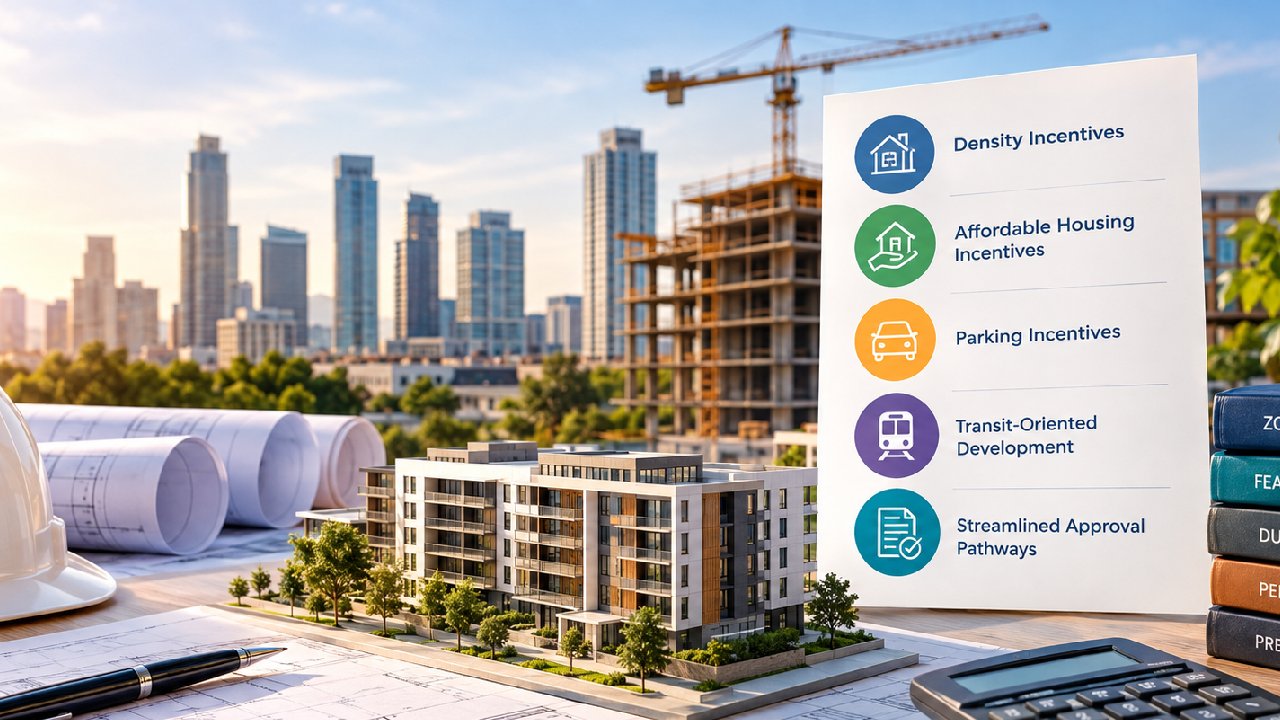
Fort Worth’s tax abatement program can exempt up to one hundred percent of the increase in appraised value from qualifying improvements for as long as ten years, and advanced manufacturing projects tend to be strong candidates given the scale of capital investment and business personal property involved.
Chapter 380 economic development agreements list manufacturing and aerospace manufacturing and design as target industries, evaluated on jobs, wages, benefits, capital investment, tax base impact and public cost. Fort Worth’s current guidance points to terms of up to ten years for projects reaching at least one hundred million dollars in investment or more than five hundred jobs, negotiated case by case with City Council retaining final approval.
Beyond direct abatement, the toolkit includes research and development grants tied to Fort Worth based R&D costs, tax increment financing for infrastructure in districts such as Walsh Ranch and Trinity Lakes, Enterprise Zone benefits in eligible areas, Foreign Trade Zone No. 196 for import and export heavy operations, and the Triple Freeport exemption for qualifying inventory in transit. Brownfield, Opportunity Zone and Neighborhood Empowerment Zone tools can apply in older industrial areas, and state and federal programs, from the Texas Enterprise Fund to Skills Development Fund training grants, are worth screening early.
One correction worth stating plainly for anyone still underwriting around it: Texas Chapter 313 expired on December 31, 2022, and should not be treated as an available program.
What Actually Kills These Projects Most Often?
- Treating the site as ordinary industrial space instead of starting from process engineering.
- Pulling a building permit before incentive agreements are secured, which can disqualify the project under Fort Worth’s guidance.
- Underestimating electrical capacity and the utility’s lead time to deliver it.
- Selecting a site near residential development without an external effects analysis for noise, odor and truck traffic.
- Assuming a clean manufacturing label eliminates environmental permitting obligations.
- Failing to reserve land for the second and third phase of production the operator already knows is coming.
The Sequence Is the Strategy
None of the individual steps here are unusual on their own. Zoning confirmation, platting, civil engineering, building permits and incentive negotiation are all familiar territory for experienced industrial developers in North Texas. What makes advanced manufacturing different is that a second, state level regulatory track runs in parallel with the municipal one, and the two have to be sequenced together rather than handed off in series. Projects that get this right tend to treat the pre-development conference, the TCEQ strategy and the utility conversation as one coordinated workstream rather than three separate approvals to check off.
For developers, architects and investors evaluating an advanced manufacturing site in Fort Worth, JDJ Consulting’s Fort Worth entitlement and permit expediting team works directly with Development Services, TCEQ, utility providers and Economic Development to keep these parallel approval tracks moving on a single timeline. Reach out through jdj-consulting.com to talk through a specific site or process before land goes under contract.
Frequently Asked Questions
Does advanced manufacturing in Fort Worth need a different zoning district than a standard warehouse?
Often, yes. Lower impact assembly and clean manufacturing can fit within I Light Industrial zoning, but processes involving greater emissions, chemical storage or material handling typically require J Medium Industrial or K Heavy Industrial, and the correct classification depends on the specific process narrative rather than the general use category.
Who issues environmental permits for a Fort Worth manufacturing facility?
The Texas Commission on Environmental Quality issues air, wastewater and stormwater authorizations under state and federal rules. A municipal building permit does not cover these approvals, and they are evaluated separately from zoning and building code review.
How long does entitlement take for an advanced manufacturing project in Fort Worth?
Timelines vary by process complexity and whether rezoning is required. Zoning and civil approvals often run three to six months, while TCEQ review can range from a few weeks for lower tier air permits to more than a year for major source or Title V permits, and utility capacity for large power loads can extend well beyond the building schedule.
What is the biggest incentive risk for these projects?
Starting construction, specifically pulling a building permit, before an incentive agreement is finalized. Fort Worth’s Chapter 380 guidance ties eligibility to the timing of the building permit relative to the incentive application, so sequencing incentive negotiation ahead of permitting is a strategic decision, not paperwork.
Which Fort Worth submarkets are best suited to advanced manufacturing today?
Alliance and North Fort Worth remain the most established cluster with airport, intermodal and Foreign Trade Zone infrastructure. South Fort Worth is absorbing capital intensive projects on larger tracts, while the NAS JRB corridor and Near Southside serve more specialized aerospace and research oriented uses respectively.