Table of Contents
Here’s the thing most people get wrong about built-to-rent in Tampa: there’s no special zoning track for it. A BTR community is entitled and permitted the same way any development of the same housing type would be, whether it’s headed for sale or lease. The city doesn’t ask about your business model. What actually changes when you’re building to rent instead of to sell is everything downstream of that: how you phase infrastructure, how you plan for decades of operations instead of a single closing, and how a site plan gets scrutinized once reviewers know fifty or a hundred households are moving in as one community rather than trickling in one closing at a time.
That distinction sounds small, but it shapes a lot of early decisions. It affects how a developer approaches due diligence, how an architect thinks about repeating floor plans versus designing for variety, and how realistic a timeline from acquisition to lease-up actually is.
Tampa Bay has ranked among the top ten national markets for built-to-rent activity since 2023, and nothing about that has slowed down. So the real question for developers, architects, GCs, and investors looking at the region isn’t whether BTR works here. It’s where it still pencils, which corridors are already crowded, and which entitlement path gets a project through review the fastest.
Built-to-Rent vs. Built-to-Own: What’s the Actual Difference?
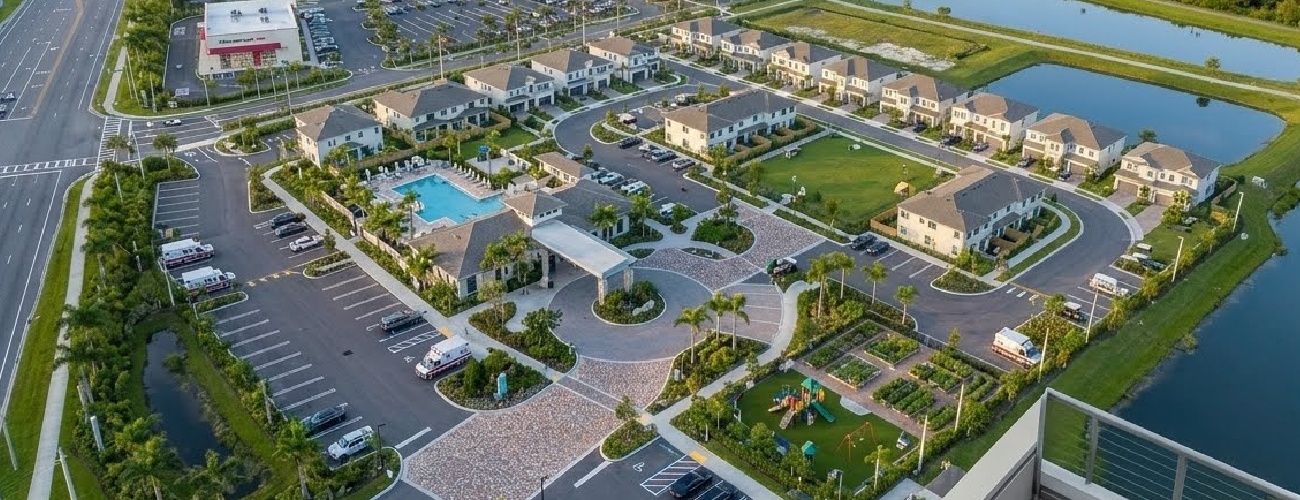
Built-to-rent is a purpose-built community, detached homes or townhomes, owned by a single entity and leased long-term, with on-site management and shared amenities. It’s meant to feel like homeownership: a yard, a garage, no neighbors overhead. Financially, though, it behaves like a multifamily asset.
Built-to-own is the model everyone already knows. Units get sold individually as they’re completed, and the developer exits once the last one closes.
A few things follow from that split:
- Ownership. BTR means one owner and one lease book. BTO means dozens or hundreds of individual mortgages.
- How you make money. BTR is valued on stabilized net operating income. BTO is valued on sales margin.
- Who maintains what. BTR bakes in a leasing office, pooled maintenance, and often a pool or clubhouse. BTO hands that off to an HOA once the community turns over.
- What gets built. BTR skews toward three and four bedroom homes aimed at families who want space without a mortgage. BTO chases whatever the buyer pool wants at a given price point, which shifts year to year.
How Entitlements and Permitting Actually Work for BTR in Tampa
A BTR community moves through three stages in Tampa, and almost every timeline problem traces back to the first one.
Pre-Application Due Diligence
Before anything else, you need to know what the site is actually zoned for. Detached single-family BTR generally needs RS zoning, RS-50, RS-60, RS-75, though bigger communities chasing higher density often need RM zoning or a Planned Unit Development to get there. Townhome BTR needs RM zoning outright, somewhere in the RM-16 through RM-35 range, and has to meet that district’s setback, height, coverage, and parking rules.
Because most BTR communities run 50 homes or more, with private streets and shared utilities, site plan review tends to dig deeper than it would for a smaller subdivision. Circulation, emergency access, stormwater, landscaping, all of it gets a closer look. If part of the plan involves attainable or workforce rents, it’s worth pre-certifying with Tampa’s Housing & Community Development department early. Certified affordable projects get priority review and can tap into fee relief, and there’s no upside to finding that out halfway through the process.
When You Actually Need Entitlements
If the site is already zoned for what you want to build, and the plan meets every standard in the Land Development Code, the project moves forward ministerially. No public hearing required. Rezoning or a PUD only becomes necessary when the site isn’t zoned for the density you want, when you need relief from a specific standard like lot size or height, or when it makes more sense to customize the whole set of standards through a PUD instead of chasing variances one at a time. Sites in historic districts can also trigger Architectural Review Commission review of massing, materials, and street-level design.
This is where timelines really split. A by-right project can be in permitting within weeks. A rezoning or PUD adds months, staff review, a Planning & Zoning Commission hearing, City Council readings, and it opens the door to political risk and neighborhood opposition that a by-right project simply doesn’t have to deal with.
Site Plan and Building Permits
Once entitled, the project goes through Tampa’s e-permitting system, with affordable or workforce-flagged submittals routed for priority review. Reviewers cover building, structural, fire, MEP, energy code, landscaping, parking, and whatever overlays apply, flood, evacuation, historic. Inspections follow in the usual phases, ending with a Certificate of Occupancy, and any affordable units get covenants or a Land Use Restriction Agreement recorded.
This is also where a lot of earlier decisions come back to bite. A rezoning that ran eight months long, a design standard nobody confirmed before construction drawings were finalized, a phasing plan that put vertical construction ahead of the utility work it depended on, all of it tends to surface here as delay and change orders. It’s exactly why teams that specialize in Tampa’s permitting sequence, JDJ Consulting’s Tampa permit expediting and entitlement services among them, tend to earn their fee. They’ve already seen where reviewers slow down, and they know how to keep a submittal moving instead of sitting in a queue.
Where Tampa Bay’s BTR Market Is Already Crowded
Wesley Chapel, New Tampa, and Riverview are the established BTR corridors at this point, with multiple large communities either delivered or under construction. Lutz, Land O’ Lakes, and the Waterset area near Apollo Beach have pulled in heavy builder interest too, mostly on the strength of family demand and school district reputation.
None of this is news to anyone paying attention, which is exactly the problem. Land costs in these corridors have climbed to match the demand, infrastructure is getting tighter in a few pockets, and new BTR supply is increasingly competing with itself for renters. These submarkets aren’t closed, but the easy inventory, large contiguous parcels with clean by-right zoning, is mostly gone. What’s left costs a premium or comes with entitlement complexity that the earlier movers never had to touch.
Where the Next Opportunity Actually Sits
The more interesting play right now is infill and redevelopment on larger RM or PUD-capable parcels closer to the urban core, where land can still be assembled without paying suburban-corridor prices.
East Tampa, Temple Crest, Sulphur Springs, Lowry Park Central, and Wellswood all have real redevelopment potential, and larger RM or PUD-suitable parcels in these areas could support smaller BTR clusters if the infrastructure can handle it. Edge parcels in Tampa Heights and Seminole Heights, the ones outside the historic core, can support townhome-style BTR where rental demand is already strong and design review isn’t overly burdensome. Channelside and Ybor City offer reduced parking requirements and easy access to jobs and transit, both of which favor townhome-style BTR if land pricing stays manageable. And city-owned or CRA-supported sites are worth watching closely. The Downtown CRA has already put money into workforce housing, and there’s no obvious reason that kind of public-private structure couldn’t extend to a BTR-style workforce community with the right affordability terms attached.
None of this comes free, though. Plenty of candidate parcels aren’t zoned RM by right, so public hearings and design review add months of uncertainty before anyone breaks ground. Historic and design overlays often require facade variation and pedestrian-oriented massing, which raises soft costs and can shrink the achievable unit count. Older neighborhoods frequently need drainage or utility upgrades, and flood zone requirements can add elevation and engineering costs that weren’t in the original underwriting. And even a fully code-compliant project can run into neighborhood pushback over traffic and parking, a risk that usually has less to do with the entitlement process itself and more to do with how early, and how well, a developer engages the people who already live there.
What Incentive Programs Actually Apply to BTR
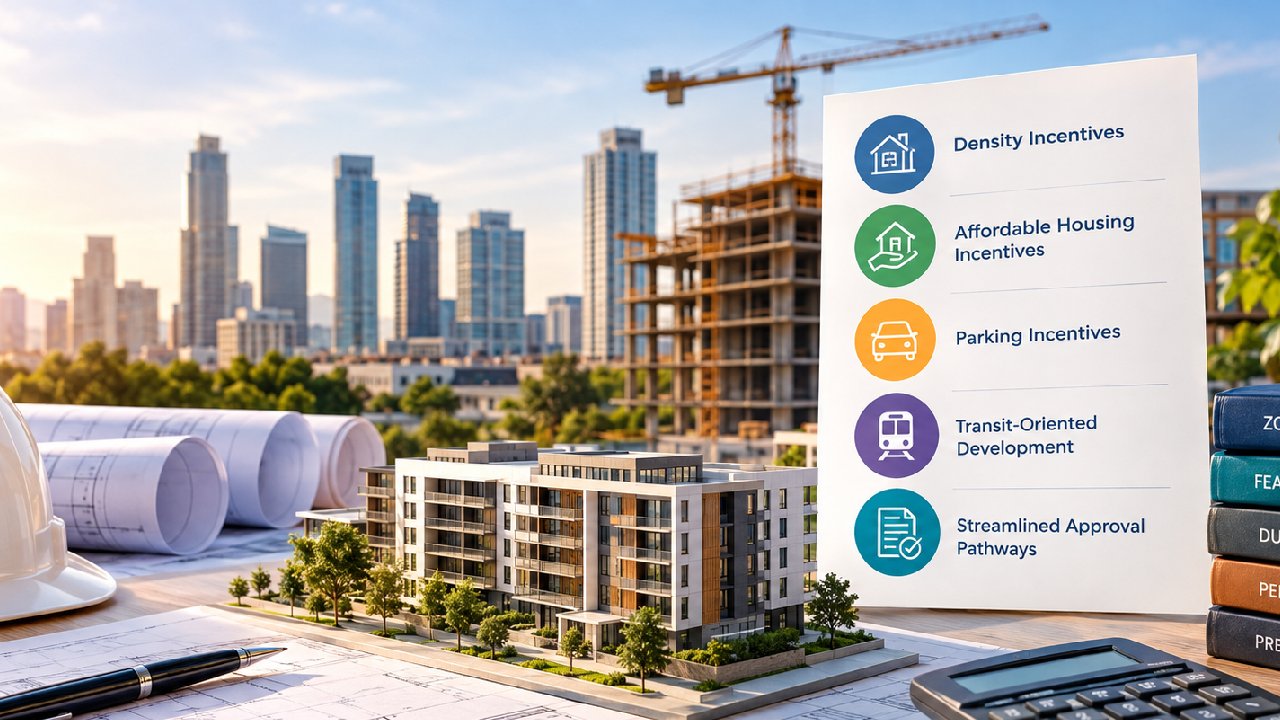
There’s no incentive program written specifically for built-to-rent. But any BTR community with an affordable or workforce component can tap into the same programs multifamily developers already use.
Through the State Housing Initiatives Partnership program, the City of Tampa can provide up to $150,000 per unit in deferred financing for developers building or rehabbing housing for income-eligible households, and in some cases will contribute city-owned vacant lots to the deal. Impact fee reimbursement is available on a sliding scale, up to $10,000 per unit at 50 percent of area median income, down to $5,000 per unit at 140 percent AMI, and it converts to a grant once the project reaches occupancy. Projects certified as affordable through Housing & Community Development also get priority review at every stage of permitting, which can shave real time off a schedule that would otherwise run at the same pace as any market-rate project.
Separately, the Downtown Community Redevelopment Area has invested millions into workforce rental housing in the 80 to 140 percent AMI range, with fifty-year affordability terms attached. There’s a reasonable case that the same kind of partnership could extend to a BTR-style workforce community, assuming the deal terms line up.
BTR or BTO: Which Actually Makes Sense?
Built-to-rent gives you stabilized, professionally managed cash flow and lets you keep control over design, materials, and the resident experience for as long as you own the asset, which matters in a family-driven market like Tampa Bay’s suburbs. It also scales cleanly, since one ownership structure can standardize operations and pricing across several communities at once. The cost of that is capital intensity. BTR needs significant upfront equity and debt, more complex phased financing, and it carries ongoing operating risk tied to rents, occupancy, insurance, and taxes, all of which shape the eventual exit value far more directly than a sale price would.
Built-to-own recycles capital faster, since the developer is out once the community sells out rather than carrying it through stabilization, and operations get simpler once the HOA takes over. The risk just moves earlier. Sales absorption depends on buyer demand and mortgage rates the developer has no control over, warranty exposure lingers well past each closing, and once a unit sells, there’s no more say in how it’s maintained or used.
Neither one wins outright. It comes down to the site, the capital stack, and how much operating risk a given team actually wants to carry once construction wraps.
A Practical Way to De-Risk a BTR Project in Tampa
The projects that move through Tampa’s process fastest tend to do a handful of things early rather than reactively. They target RM or PUD-capable sites in neighborhoods with real redevelopment potential, and they steer clear of the historic core unless they’ve already budgeted for Architectural Review Commission timelines. They pre-certify any affordable or workforce component with Housing & Community Development or the CRA before filing, so priority review is baked in from the start instead of requested after the fact. They line up SHIP financing and impact fee reimbursement early, along with any city-owned lot opportunities, instead of treating incentives as something to chase once entitlements are already secured. On the design side, they standardize floor plans and lock in durable, low-maintenance materials with property management input from the earliest schematic phase, not after an operator shows up post-construction. And they sequence infrastructure ahead of vertical construction every time, locking in trade capacity early and staying on top of warranty and punch list items so lease-up doesn’t stall.
None of this makes entitlement risk disappear. Tampa’s rezoning and PUD process still runs on the city’s calendar, not the developer’s. But teams that treat the pre-application phase with the same seriousness as the pro forma consistently get through review faster, and with fewer surprises, than teams that don’t.
For developers and investors sizing up a BTR site in Tampa, the entitlement pathway is usually the single biggest source of schedule and cost uncertainty in the whole project. JDJ Consulting works with development teams to navigate that process directly, from pre-application zoning analysis through permit issuance. You can read more about our approach on our services page, and see our Tampa-specific work on the Tampa permit expeditors and entitlement consultants page.