Table of Contents
And how developers, architects, and investors can get ahead of them
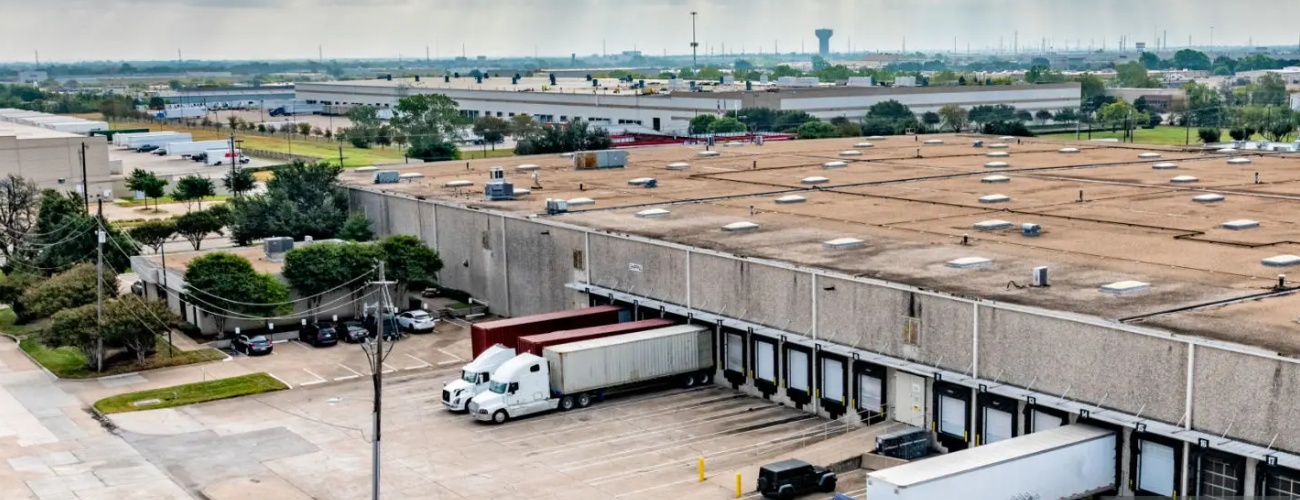
Drive I-20 or I-45 through South Dallas on any given week and you will pass at least one crane, one graded pad, and one “Available for Lease” sign the size of a billboard. Industrial and logistics real estate has been the quiet engine of North Texas development for the better part of a decade, and Dallas zoning code makes it look easy. Warehouses are permitted by right across most industrial districts. No rezoning battle required, no discretionary vote hanging over the deal. On paper, that is the pitch.
In practice, “by right” is where the story starts, not where it ends. The projects that break ground on schedule are the ones where someone mapped the site plan review, the utility coordination, the fire department sign-off, and the traffic study requirement before the land closed, not after. This guide walks through what that process actually looks like for a Dallas industrial or logistics project today, where the friction tends to show up, and what incentives are on the table for developers willing to work the system correctly.
Is Warehouse Development Really “By Right” in Dallas?
Mostly, yes, with a caveat worth underlining. Under Chapter 51A of the Dallas Development Code, warehouse, distribution, and logistics uses are permitted by right in Light Industrial (LI), Industrial Research (IR), and Industrial Manufacturing (IM) districts. That is the good news, and it is a genuine competitive advantage over metros where every warehouse permit invites a public hearing.
The caveat: if the site sits within roughly 500 feet of a lower-intensity use, most commonly residential, the City can classify the use as “potentially incompatible” and require a Special Use Permit. A few suburbs surrounding Dallas have started floating even tighter SUP triggers for warehouses near residential edges, so a parcel that looks clean on a zoning map still deserves a hard look at what sits across the property line. This is exactly the kind of detail that separates a 6-month entitlement from a 12-month one, and it is the first thing an experienced Dallas permit expediting and entitlement consultant checks before a site ever goes under contract.
Development standards matter just as much as the use table. Height limits, setbacks, parking ratios in the range of 1 space per 600 to 1,000 square feet for warehouse product, loading dock counts, and truck maneuvering geometry all get scrutinized during site plan review. Get those wrong at the schematic stage and the redesign costs more time than the zoning ever did.
What Does the Dallas Entitlement Timeline Actually Look Like?
A large-scale industrial facility in Dallas typically moves through six stages, and the honest range is 6 to 12 months for a site that is already correctly zoned. That range stretches considerably if a rezoning or SUP enters the picture.
1. Site Selection and Zoning Verification
Confirm the zoning classification, confirm that warehouse or distribution use is explicitly permitted in that district, and check proximity to residential or other lower-intensity uses that could trigger an SUP. If the zoning is not a clean fit, a rezoning application or Special Use Permit adds public hearings before the Plan Commission and City Council, typically 2 to 12 months depending on how contested the site is.
2. Pre-Application Meeting and Site Plan Approval
A pre-application meeting with the City of Dallas Planning and Development Department is not required, but skipping it is a mistake. It is the cheapest hour spent on the entire project, surfacing issues around drainage, access, or use compatibility before a full site plan is drafted. Site plan review itself runs 10 days to 6 weeks, longer if variances are requested. Facilities exceeding roughly 100,000 square feet, or those expected to generate heavy truck traffic, should plan for a traffic impact study as a standard line item, not a surprise.
3. Utility and Infrastructure Coordination
Water and wastewater capacity gets confirmed with Dallas Water Utilities, electric service gets confirmed with Oncor, and stormwater management has to comply with both the Dallas Drainage Design Manual and TCEQ requirements. Large facilities sometimes need substation upgrades or dedicated feeders, which can become the actual critical path on a project that otherwise looks straightforward on the zoning side.
4. Building Permit and Plan Review
Complete construction documents, architectural, structural, mechanical, electrical, plumbing, fire protection, and accessibility documentation, go in for review. First review takes a minimum of 3 weeks, and multiple revision cycles are the norm rather than the exception. Fire department review carries particular weight for warehouses given high-pile storage, sprinkler design, and any hazardous material storage.
5. Environmental and Operational Permits
Depending on the facility’s systems, this stage can pull in TCEQ air quality permits for boilers or refrigeration, stormwater discharge permits for construction and operational phases, and fire department permits for hazardous material storage.
6. Inspections and Certificate of Occupancy
Progressive inspections cover foundation, framing, electrical, plumbing, and fire sprinkler systems, followed by final sign-off from Building, Fire, and Public Works before the Certificate of Occupancy is issued. Nothing operates legally until that CO is in hand.
Entitlement Stage | Typical Duration |
Zoning verification and pre-application | 1 to 4 weeks (2 to 12 months if rezoning or SUP is required) |
Site plan submission and review | 10 days to 6 weeks |
Utility and infrastructure coordination | Runs concurrently, 4 to 12 weeks |
Building permit and plan review | 3 weeks minimum for first review, multiple revision cycles typical |
Environmental and operational permits | 2 to 8 weeks, depending on TCEQ scope |
Construction inspections through Certificate of Occupancy | Ongoing through project completion |
Where Are Developers, Architects, and Investors Actually Hitting Friction?
The entitlement checklist reads cleanly in a memo. The reality involves several parties with different pressure points, and the projects that stay on schedule are usually the ones where every party’s friction gets planned for in advance rather than discovered mid-permit.
Stakeholder | Where the Friction Shows Up |
Developers | Zoning conflicts near residential edges, traffic study requirements, community pushback at public hearings, scarcity of well-located infill sites with adequate power and fiber. |
Architects | Designing flexible shells that attract varied tenants while meeting code on clear heights, column spacing, and fire suppression, then coordinating shell and interior build-out so nothing gets re-cut later. |
General Contractors | Compressed schedules, equipment lead times on sprinklers and HVAC, and inspection failures when exterior and interior trades aren’t sequenced correctly. |
Investors | Regulatory uncertainty as suburbs weigh warehouse moratoriums, rising soft costs from permitting delays, and competition for land from residential and data center users. |
Tenants and Operators | A shortage of sub-100,000 square foot spaces as the market skews toward big-box product, plus high-pile storage and fire code compliance on retrofits. |
Which Dallas Submarkets Are Absorbing the Most Industrial Product?
Industrial demand in North Texas is not evenly distributed, and site selection has as much to do with entitlement risk as it does with rents.
- DFW Airport Corridor: the region’s dominant logistics hub, built around air cargo, rail, and highway convergence. Land here is largely built out, and remaining sites carry a premium.
- South Dallas, I-20 and I-45 corridors: an emerging hotspot with strong highway access, available land, and projects like DalParc Logistics Center anchoring the area.
- Northwest Dallas: commanding some of the higher rental rates in the market, close to $18 per square foot, with steady large-user activity.
- Alliance and North Fort Worth: consistently one of the strongest distribution submarkets in North Texas, backed by deep infrastructure investment.
- Stemmons Corridor, I-35E: dense infill positioning close to the CBD and Love Field, well suited to last-mile and local distribution.
- Southern Dallas Target Areas: the deepest incentive stacking in the city, paired with the most available land, but also the submarket where community engagement and infrastructure gaps need the most active management.
Brownfield and underutilized industrial sites with existing high-capacity power, water, and fiber are worth a second look across all of these corridors. Retrofitting infrastructure is expensive, but it is usually faster than waiting on new capacity from Oncor or Dallas Water Utilities in a growth corridor where every other developer is asking for the same upgrade.
What Incentives Are Available for Industrial Developers in Dallas?
Dallas has built a genuinely deep incentive stack for industrial development, particularly in Target Areas designated under the state Enterprise Zone framework. None of it is automatic. Every program below has eligibility thresholds around capital investment, job creation, and wage standards, and navigating the paperwork correctly is often the difference between capturing the incentive and leaving it on the table.
Program | What It Offers |
As-of-right tax abatement (Target Areas) | 10-year, 90% abatement on new real property taxes, or 5-year, 90% abatement on business personal property taxes, for projects at or under $25 million in designated Target Areas. |
Negotiated tax abatement | For projects above $25 million or outside Target Areas. Requires underwriting and City Council approval, weighed against job creation and public benefit. |
Chapter 380 loans and grants | Available where a project expands the tax base or serves a capital financing gap in low- and moderate-income areas. Can be layered with abatements. |
Predevelopment Assistance Fund | Up to $50,000 for market studies, site assessments, and early design work in Target Areas. |
Public Improvement Districts and TIF | Infrastructure costs, roads, and utilities, funded through the district rather than the developer’s up-front budget. |
Texas Enterprise Zone Program | State sales tax refunds on construction materials for projects located in designated Enterprise Zones. |
As-of-right abatements in Target Areas move through administrative approval rather than a City Council vote, which is a meaningfully faster path for projects at or under the $25 million threshold. Above that number, or outside a Target Area, the negotiated abatement route requires underwriting and Council approval, and the City weighs public benefit factors including workforce development, sustainability features, and transit connectivity alongside the raw financial ask.
This is where entitlement strategy and incentive strategy start to overlap, and where projects lose real money by treating them as separate workstreams. A Dallas permit expediting and entitlement consultant who is already coordinating the zoning and permitting timeline is positioned to flag incentive eligibility early enough to actually act on it, rather than discovering after groundbreaking that the project qualified for an abatement nobody applied for.
Key Takeaways for Developers, Architects, and Investors
- Zoning is favorable but not automatic. Confirm proximity to residential and other lower-intensity uses before assuming by-right status.
- Target Areas offer the fastest incentive path. As-of-right abatements skip the City Council vote for qualifying projects under $25 million.
- Traffic and utility coordination are frequently the real critical path. Not the zoning itself.
- Flexible design specs win tenants. Clear heights, column spacing, and power capacity matter more than finish quality in this asset class.
- Sequencing entitlement and incentive strategy together, rather than treating them as separate conversations, is where sophisticated developers create real basis advantage.
Frequently Asked Questions
Is warehouse and logistics development permitted by right in Dallas?
In most cases, yes. Warehouse, distribution, and logistics uses are allowed by right in Dallas’s Light Industrial (LI), Industrial Research (IR), and Industrial Manufacturing (IM) districts under Chapter 51A of the Dallas Development Code. A Special Use Permit can still be triggered if the site sits within roughly 500 feet of a lower-intensity use such as residential.
How long does industrial entitlement take in Dallas?
A straightforward project on correctly zoned land typically moves through site plan review, building permit review, and inspections in 6 to 12 months. Add a rezoning or Special Use Permit, and the public hearing process alone can add 2 to 12 months.
When is a traffic impact study required for a Dallas warehouse project?
The City generally requires one for facilities above roughly 100,000 square feet or those expected to generate significant truck traffic, to confirm road capacity, intersection safety, and site access design hold up under the added load.
What tax incentives are available for industrial projects in Dallas?
Projects in designated Target Areas can qualify for an as-of-right abatement, either a 10-year, 90% abatement on new real property taxes or a 5-year, 90% abatement on business personal property taxes, provided they meet minimum capital investment and job creation thresholds. Larger or out-of-area projects can pursue a negotiated abatement through City Council.
Which Dallas submarkets are seeing the most industrial and logistics activity?
The DFW Airport corridor, the South Dallas stretch along I-20 and I-45, Northwest Dallas, the Alliance and North Fort Worth submarket, and the Stemmons Corridor near Love Field all carry heavy industrial demand. Southern Dallas Target Areas offer the deepest incentive stacking for developers willing to work in emerging corridors.
Getting Your Dallas Industrial Project to Groundbreaking
Dallas remains one of the more development-friendly industrial markets in the country, but friendly zoning is not the same thing as a fast permit. The projects that hit their construction start dates are the ones where zoning verification, site plan strategy, utility coordination, and incentive eligibility get mapped together from day one, not handled as sequential surprises.
JDJ Consulting works with developers, architects, and investors on exactly this kind of coordinated entitlement strategy. Our Dallas permit expediting and entitlement consulting team manages the zoning verification, site plan submissions, and agency coordination that keep industrial and logistics projects moving, while flagging incentive opportunities before the window to apply for them closes. For a full look at how we support commercial and industrial development across our markets, visit our services overview.