Table of Contents
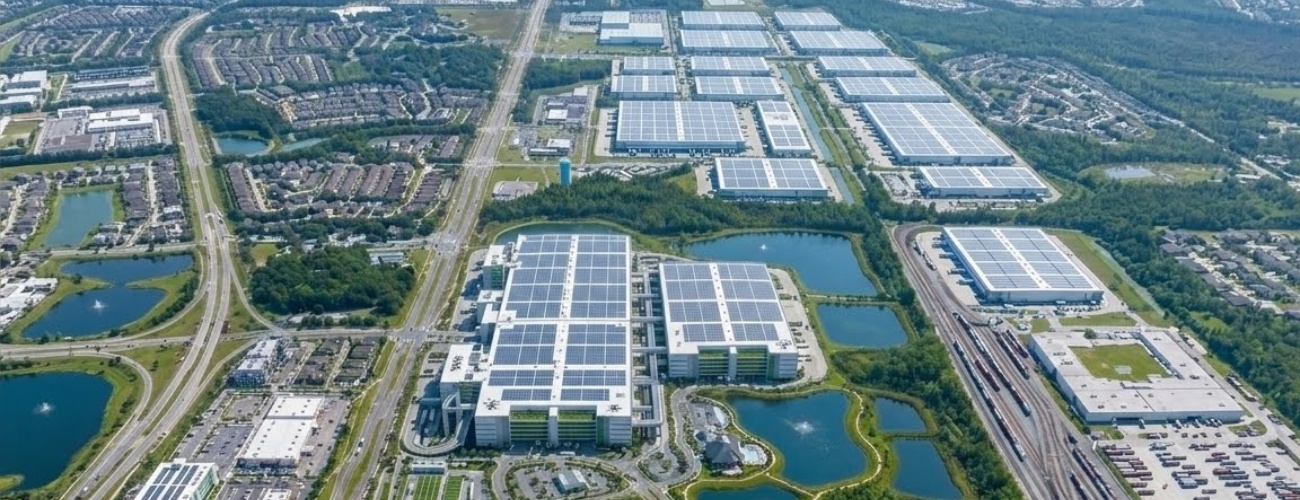
Miami-Dade County has spent the last decade building a case for itself as the logistics capital of the Southeastern United States. Between Miami International Airport, PortMiami, an expanding air cargo sector, and a population base that keeps demanding faster last-mile delivery, the fundamentals for industrial real estate remain sound. But the story developers and investors need to understand heading into 2026 is not “does Miami need more warehouses.” It is “does this specific building, on this specific parcel, in this specific jurisdiction, actually pencil and permit.”
That distinction matters more now than it did during the pandemic-era boom. Industrial vacancy across the county has settled into a range of roughly 6.8% to 7.6% depending on the reporting methodology, a meaningful shift from the near-zero vacancy years. Prime Airport West and Doral product still commands premium rents and leases quickly, but the market as a whole is no longer uniformly supply-constrained. That means underwriting decisions now hinge less on macro absorption trends and more on the granular, unglamorous details: clear height, loading configuration, trailer storage, power capacity, truck access, and, above all, entitlement risk.
This guide walks through the development landscape architects, developers, and institutional investors need to evaluate before committing capital to an industrial or logistics project in Miami-Dade.
What Counts as “Industrial” in Miami-Dade
Industrial and logistics is a broad category, and the classification a developer chooses at the outset determines the entire regulatory path that follows. Depending on program and tenant profile, a project might fall into one of several buckets:
- Regional distribution or e-commerce fulfillment centers
- Last-mile delivery facilities
- Air cargo and freight-forwarding warehouses
- Cold storage and food distribution facilities
- Small-bay industrial or flex space
- Truck terminals and cross-dock facilities
- Heavy equipment storage and service yards
- Light manufacturing, assembly, or product testing
- Building material yards and outdoor storage
- Data center or high-power logistics support uses
- Controlled-environment logistics (pharmaceutical, cannabis, or similar)
These are not interchangeable in the eyes of the County. A 100,000-square-foot dry warehouse, a refrigerated food facility, a truck terminal, and a heavy-equipment yard trigger substantially different zoning, fire, traffic, environmental, and stormwater review, even if the building footprint looks similar on paper. Getting the use classification right at the concept stage, before a site plan is drawn, is one of the most consequential decisions in the entire process.
Step One: Confirm Jurisdiction and Zoning
Before anything else, a developer needs to know exactly which jurisdiction governs the parcel. Miami-Dade industrial land sits across a patchwork of unincorporated county territory and municipalities including Doral, Medley, Hialeah, Miami Springs, Opa-locka, Homestead, and Florida City, each with its own zoning code, review timeline, and political temperature.
In unincorporated Miami-Dade, the IU-1 Industrial, Light Manufacturing district permits uses such as light industrial manufacturing, wholesale distribution, warehousing, and storage, subject to the applicable development standards and any use-specific restrictions attached to the district.
At this stage, a thorough zoning review should cover the future land use designation, position relative to the Urban Development Boundary, permitted use conditions, floor area ratio, height and setback requirements, landscaping and buffer standards, truck access and loading requirements, and any airport height or land use overlays that might apply. Sites near MIA in particular carry height restrictions that can quietly kill an otherwise promising program.
This is also where many projects lose time unnecessarily. Jurisdictional boundaries in Miami-Dade are not always intuitive, and the difference between an administrative approval and a public hearing can come down to a few hundred feet of parcel line. This is precisely the kind of jurisdictional and zoning verification our team at JDJ Consulting handles at the front end of a project, before land is under contract, so developers aren’t surprised six months into design.
Building the Operating Program
Zoning tells a developer what is theoretically allowed. The operating program tells the design team, and eventually the reviewing agencies, what the building actually needs to do. A serious operations memorandum should document building area, tenant type, shift counts, hours of operation, daily truck trips, dock door count, trailer storage needs, commodity type and storage height, refrigeration requirements, hazardous materials, waste streams, and expected future expansion.
This document is what separates a standard warehouse application from a fulfillment center, truck terminal, or higher-intensity industrial use in the eyes of reviewers. It is also what protects the developer later. Fire protection design, sprinkler classification, and smoke control are all driven by commodity type and storage height. Change the rack configuration after permits are drawn, and the entitlement work may need to be redone from a fire and life-safety standpoint.
Site Control and Feasibility Due Diligence
Before closing on land, a disciplined due diligence package should include an ALTA survey, title commitment, zoning verification, geotechnical and environmental site assessments, wetland and surface water delineation, flood and stormwater review, traffic and access analysis, utility availability confirmation, fire flow data, and, where relevant, airport height and rail or port access review.
The highest-risk industrial parcels in Miami-Dade often look inexpensive precisely because they require major road, drainage, sewer, fill, wetland mitigation, or power infrastructure investment that isn’t obvious from a satellite image. A parcel that appears to be a bargain per buildable square foot can quickly become the most expensive acquisition in a portfolio once infrastructure costs are priced in.
Choosing the Entitlement Route
Not every industrial project follows the same approval path. Depending on use intensity, site conditions, and jurisdiction, a project may proceed through:
- By-right development, where the use and site plan comply with existing zoning and move through administrative review
- Administrative site plan approval, where the use is allowed but the site must satisfy detailed civil, landscape, traffic, and fire requirements
- Special exception or conditional use, typically required for higher-intensity uses such as truck terminals, large fulfillment centers, or outdoor storage operations
- Variance or waiver, for relief from setback, access, or dimensional requirements
- Rezoning or comprehensive plan amendment, where the site is not industrially designated or the proposed intensity exceeds what the governing plan allows
- Urban Development Boundary amendment, the most contested route of all
UDB expansion deserves its own callout. The proposed South Dade Logistics and Technology District is a cautionary example. The project drew extensive opposition over wetland impacts, flood protection, infrastructure funding, and questions about whether the county already had sufficient industrial land within the urbanized area. A subsequent legal challenge reportedly invalidated the UDB expansion effort tied to that project. Any developer eyeing land near or beyond the UDB should treat that boundary as a legal and political fault line, not a formality.
Traffic, Access, and the Truck Turning Problem
Industrial entitlements live or die on truck access. A building can meet every dimensional zoning requirement and still fail in practice if tractor-trailers cannot enter, maneuver, dock, and exit the site without backing into a public street. Reviewing agencies increasingly expect site plans to demonstrate actual truck turning movements using templates matched to the intended fleet, not generic passenger vehicle assumptions.
Depending on the roadway classification, developers should expect to navigate a traffic impact study, driveway permitting, access management review, potential turn lane or signalization improvements, and, where state roads are involved, coordination with the Florida Department of Transportation. Sites near PortMiami or MIA may also require coordination with those facility operators directly.
Environmental and Stormwater Review
Environmental complexity in Miami-Dade scales directly with use intensity. A straightforward dry warehouse may clear environmental review relatively quickly. Cold storage, light manufacturing, equipment repair, chemical distribution, or food processing operations are a different matter entirely, often triggering review under the County’s Industrial Facilities permitting program and, where wastewater discharge is involved, the Industrial Waste Pretreatment program.
Stormwater, wetlands, wellfield protection, hazardous material storage, and fuel systems all factor into this stage. Developers should scope environmental review against the actual operating program, not the generic “warehouse” label, since the two can require entirely different levels of scrutiny.
Where the Opportunity Is (and Isn’t)
Not all Miami-Dade submarkets offer the same risk-reward profile, and this is where investment strategy and entitlement strategy start to overlap.
Airport West and Doral remain the county’s premier industrial corridor, driven by MIA proximity, Palmetto Expressway access, and deep air cargo and freight-forwarding demand. It is also the most competitive and expensive corridor, with high land costs, a substantial competing pipeline, airport height restrictions, and increasing pressure for residential or mixed-use redevelopment on adjacent parcels.
Medley and Hialeah offer a more accessible entry point for small-bay industrial, flex, wholesale distribution, and manufacturing users who cannot absorb Airport West rents. The tradeoff is older building stock, narrower streets, smaller parcels, and more constrained truck courts.
Southwest Miami-Dade provides larger parcels and a lower land basis in some pockets, with reasonable access to the Turnpike and a growing residential population to serve. It sits farther from MIA and PortMiami, and carries more exposure to flood-sensitive land and UDB constraints.
Opa-locka and North Dade offer lower acquisition costs and airport-adjacent positioning, but often come with older infrastructure, security considerations, and irregular parcel geometry.
South Dade and Homestead have attracted large logistics district proposals because of available land, but this is the corridor where UDB, wetland, and flood-protection risk is most acute. A South Dade project is far more defensible when it stays within the UDB, sits on already-designated industrial land, and can demonstrate genuine infrastructure capacity rather than relying on speculative demand.
Incentives Worth Investigating
Freight and logistics are identified as targeted sectors in the county’s transportation and economic development planning, which opens the door to a range of potential benefits including job creation grants, workforce training assistance, infrastructure participation, and site selection support. The exact package depends heavily on job creation, wages, capital investment, and location.
Developers working on sites with environmental history should also evaluate brownfield incentives, which can include tax credits, cleanup grants, low-interest financing, and fee waivers under state freight and logistics zone programs. Businesses handling imported goods, manufacturing, or re-export activity should investigate Foreign-Trade Zone benefits, which can defer or reduce customs duties, though activation and customs compliance are required before those benefits apply.
Additional tools worth scoping early include Community Redevelopment Agency benefits, Opportunity Zone structures, Commercial PACE financing for energy and resilience upgrades, and public-private infrastructure partnerships tied to roadway or utility capacity.
The Hurdles That Actually Kill Projects
Across dozens of industrial entitlements, the same categories of risk resurface again and again.
For developers and investors, the exposure tends to concentrate in land assemblage cost, construction cost escalation, infrastructure and roadway obligations, wetland mitigation, insurance, and the risk of overbuilding around a single anchor tenant whose credit or space needs later change.
For architects and civil engineers, the recurring mistake is maximizing building coverage at the expense of fire lanes, stormwater retention, truck courts, trailer parking, and future expansion space. A building that looks efficient on a site plan can become functionally unleasable if the yard cannot accommodate the tenant’s actual fleet.
For general contractors, poor soil conditions, high groundwater, long-lead switchgear and transformers, and late-stage high-piled storage redesigns are consistent sources of schedule and cost overruns.
For tenants and logistics operators, insufficient dock doors, weak highway connectivity, inadequate power, and restrictive operating hours can undermine a building’s leasing performance long after construction is complete.
And for communities and local officials, truck traffic, noise, night operations, lighting, and UDB-adjacent development remain the most politically sensitive flashpoints, particularly for truck terminals, outdoor storage operations, and large fulfillment centers.
Why Entitlement Strategy Belongs at the Start, Not the Middle
The pattern across nearly every successful industrial project in Miami-Dade is the same: entitlement strategy was built into the acquisition decision, not bolted on after closing. Developers who confirm jurisdiction, zoning, UDB status, and environmental exposure before land goes under contract consistently outperform those who discover a special exception requirement, a wetland issue, or an airport height restriction midway through design.
This is where a dedicated permit expediting and entitlement partner earns its fee many times over. Navigating unincorporated county review alongside municipal codes in Doral, Medley, Hialeah, and beyond requires knowledge of not just the written code but how each department actually interprets and applies it. JDJ Consulting works directly with developers, architects, and investors on Miami-Dade entitlements, from pre-application strategy through permit issuance. If a jurisdictional or entitlement question is standing between a site and a groundbreaking, our Miami-Dade permit expediting and entitlement consulting team is a useful place to start that conversation.
Frequently Asked Questions
What zoning district allows industrial warehousing in unincorporated Miami-Dade? The IU-1 Industrial, Light Manufacturing district permits light industrial manufacturing, wholesale distribution, warehousing, and storage uses, subject to applicable development standards and any use-specific conditions.
What is Miami-Dade’s current industrial vacancy rate? As of 2026, countywide industrial vacancy estimates range from approximately 6.8% to 7.6%, depending on the reporting source and methodology, with Airport West and Doral running tighter than the countywide average.
Which Miami-Dade submarket is strongest for industrial development? Airport West and Doral remain the strongest corridor for absorption and rent growth due to proximity to Miami International Airport, though land costs and competing supply are highest there as well.
Does an industrial project need a special exception in Miami-Dade? It depends on use intensity. Standard warehousing may qualify for by-right or administrative approval, while truck terminals, large fulfillment centers, and outdoor storage operations often require special exception or conditional use review through a public hearing.
What makes South Dade industrial sites higher risk? Many South Dade sites sit near or beyond the Urban Development Boundary, where wetland impacts, flood protection requirements, and infrastructure funding questions have historically triggered significant opposition and, in at least one recent case, litigation.
JDJ Consulting provides entitlement strategy, feasibility analysis, and permit expediting services for industrial, logistics, and commercial development throughout Miami-Dade County. Learn more about our full range of services.