
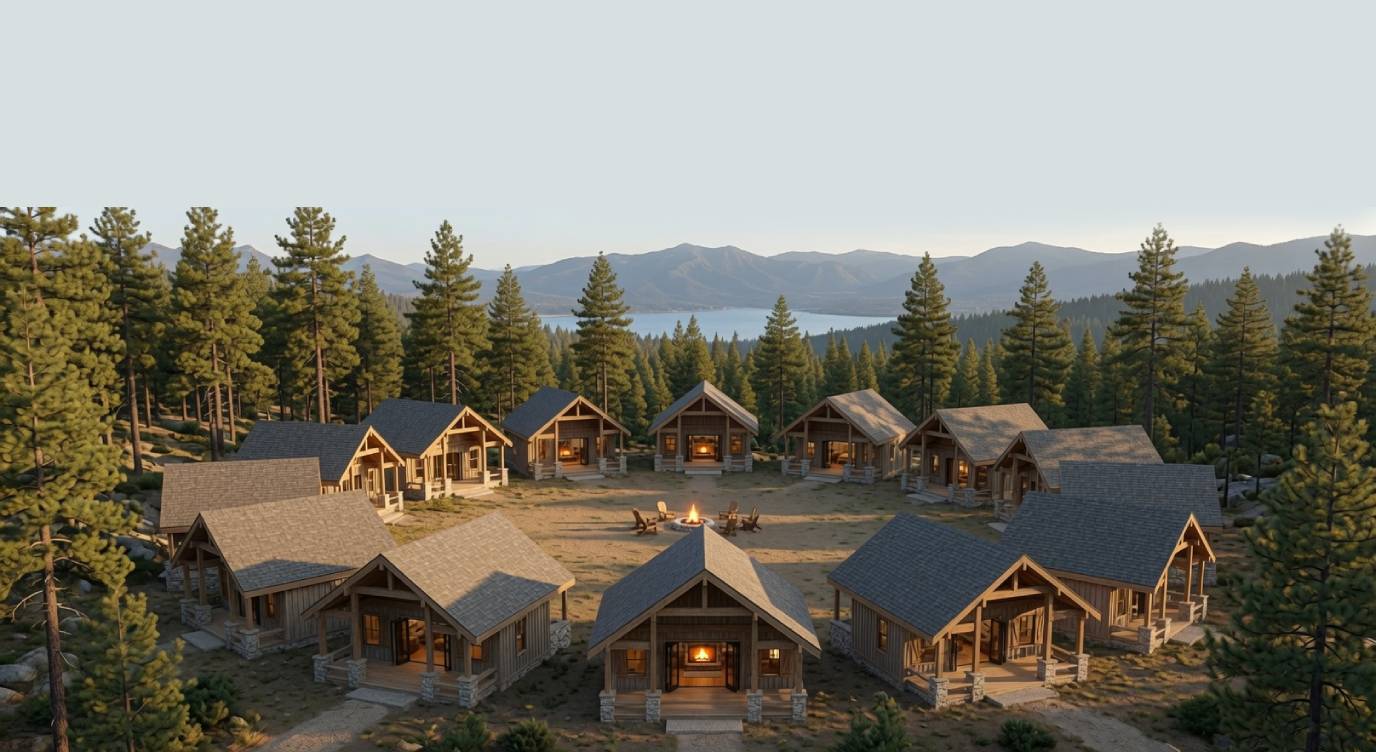
Tucked into the pines above San Bernardino, a project like this one tells a story that’s a little different from your typical mountain build. This isn’t a subdivision or a vacation rental cluster. It’s the kind of layout you see with organizational camps and retreat facilities, individual cabins arranged around a shared gathering space, built to host groups rather than individual homeowners. Projects like this come with their own set of entitlement challenges, and Rim of the World is a jurisdiction that takes them seriously.
Group Camps Are Their Own Permitting Category
San Bernardino County treats organizational camps differently than standard residential development. These facilities typically fall under a conditional use permit process rather than a straightforward building permit, since the county wants to understand occupancy loads, operational hours, and how the site functions when it’s full of people rather than just a family or two. A cluster of cabins meant to sleep groups, arranged around a central fire pit or common area like this one, reads to planning staff as an assembly use, and that triggers a different review track than a single family home would.
That means occupancy calculations matter early. How many people per cabin, how many cabins total, and what that adds up to across the whole site all factor into fire flow requirements, parking, and the number of exits and emergency access points the county will require.
Fire Safety Takes on Extra Weight
Rim of the World sits within a Very High Fire Hazard Severity Zone, and for a group facility, fire and life safety review gets more involved than it would for a private residence. Because you’re talking about housing groups, often including minors, the county and Cal Fire look closely at evacuation routes, road width for fire apparatus, and defensible space around every structure, not just the perimeter of the property. Assembly occupancies also tend to draw closer attention on fire sprinkler requirements and secondary access, since a single road in and out isn’t always going to satisfy reviewers when you’re talking about dozens of people on site at once.
Septic and Water for Group Use
Wastewater and water supply calculations for a camp facility are based on peak occupancy, not average daily use, which changes the math considerably. A septic system sized for a handful of cabins used occasionally by a family looks very different from one designed to handle full occupancy during a busy summer season. Percolation testing, soil reports, and capacity studies all have to reflect that higher demand, and county environmental health will want to see it documented clearly before anything moves forward.
CEQA and the Forested Setting
Given the wooded, sloped terrain typical of this area, most group camp projects will need some level of California Environmental Quality Act review. Tree removal is often the biggest flashpoint, since mature pines and oaks are protected under county ordinance, and a site plan built around preserving as many trees as possible, like the layout shown here, tends to go over better with reviewers and the community alike.
Accessibility and Building Code Layers
Because organizational camps serve the public in some capacity, ADA accessibility requirements often apply differently than they would to private residential cabins. Pathways between structures, at least one accessible cabin, and accessible routes to shared spaces like a dining hall or gathering area typically need to be built into the site plan from the start rather than added on later.
Where These Projects Tend to Get Stuck
The slowdowns on group camp entitlements usually aren’t about the big picture. They’re about details that fall through the cracks: an occupancy count that doesn’t line up with the septic design, a fire access road that meets residential standards but not assembly standards, or a CUP application missing an operational narrative the county needs to evaluate impacts. Each of these is manageable on its own, but they add up fast if nobody is tracking how they all connect.
This is the kind of work our team at JDJ Consulting spends a lot of time on. We’ve worked through San Bernardino County’s mountain jurisdictions enough to know that conditional use permits for group facilities move a lot faster when the fire, water, septic, and occupancy pieces are coordinated together instead of addressed piecemeal as the county raises questions.
Getting a Camp Facility From Concept to Reality
A layout like this one, cabins circling a shared fire pit with mountain and lake views in the background, is a great fit for organizations looking to create a lasting retreat space for the people they serve. Getting there takes an understanding of how the county evaluates assembly uses differently from residential ones, and having that groundwork laid before the application goes in makes all the difference.
If your organization is exploring a camp or retreat facility on mountain property, it’s worth having a conversation about occupancy and use early, since that’s usually what shapes everything else that follows.