
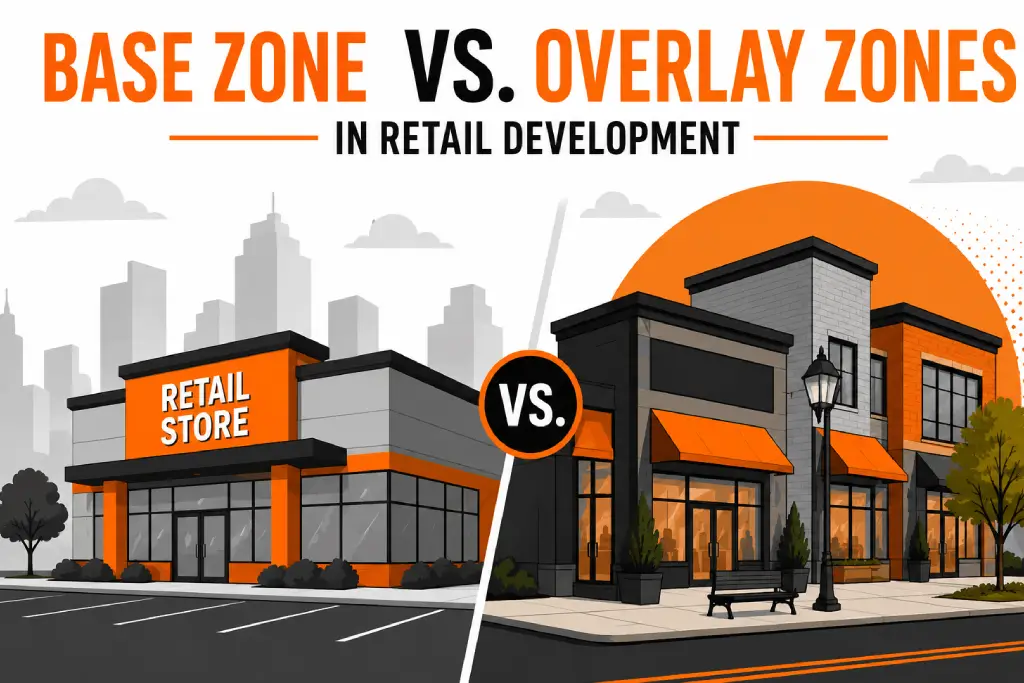
Retail development is not just about finding the right location. It is also about understanding the zoning rules that control what can be built, how properties can be used, and what restrictions apply.
Two of the most important zoning concepts developers, investors, retailers, and property owners must understand are base zones and overlay zones.
While these terms may sound technical, they directly impact site selection, permitting, development costs, project timelines, and long-term profitability. Many retail projects face delays because stakeholders fail to understand how overlay regulations interact with existing zoning requirements.
This guide explains the differences between base zones and overlay zones, how each affects retail development, and why understanding both is essential before investing in commercial property.
Table of Contents
What Is a Base Zone?
A base zone, sometimes called an underlying zoning district, is the primary zoning classification assigned to a piece of land by a local government. It establishes the basic rules for land use and development within a specific area.
Base zoning determines:
Permitted land uses
Building height limits
Lot coverage requirements
Setback requirements
Parking standards
Floor area ratios
Density limitations
Think of a base zone as the foundation of zoning regulations. Every property is assigned a base zoning classification, and all development must comply with those standards. Overlay zones, if present, are applied on top of this foundation.
Example of a Base Zone
Imagine a parcel of land designated as a Commercial Retail District.
The base zone may allow:
Retail stores
Restaurants
Service businesses
Shopping centers
The zoning code might also specify:
Maximum building height of 50 feet
Minimum parking requirements
Required setbacks from roads and neighboring properties
Any development proposal must first comply with these base zoning standards.
What Is an Overlay Zone?
An overlay zone is an additional zoning layer applied over one or more base zoning districts. Instead of replacing the existing zoning, it adds new requirements, restrictions, incentives, or design standards.
Overlay zones are commonly used when local governments want to address specific planning goals without completely rewriting their zoning ordinances.
Overlay zones can be created to:
Protect historic districts
Preserve environmental resources
Improve corridor development
Encourage mixed-use projects
Promote transit-oriented development
Enhance urban design standards
Protect flood-prone areas
Properties located within an overlay zone must comply with both the base zone regulations and the overlay requirements.
Example of an Overlay Zone
A retail property may have a Commercial Base Zone but also fall within a Downtown Design Overlay District. In addition to standard commercial regulations, the property may need to meet requirements related to:
Building materials
Storefront design
Signage standards
Landscaping
Pedestrian-friendly features
The developer must satisfy both sets of rules before obtaining approvals.
The most important distinction is that a base zone controls what can generally happen on a property, while an overlay zone addresses specific community goals or site conditions.
Why Overlay Zones Matter for Retail Development
Many retailers focus heavily on demographics, traffic counts, and visibility. While those factors are important, overlay regulations can significantly affect whether a project succeeds.
Overlay zones can influence:
Construction costs
Approval timelines
Site design
Building appearance
Tenant mix
Parking layouts
Signage opportunities
Ignoring overlay regulations early in the process can result in expensive redesigns later.
Retail Design Requirements
Many retail corridors use overlay zones to create a consistent visual identity.
Requirements may include:
Architectural standards
Façade improvements
Streetscape enhancements
Outdoor seating requirements
Sign restrictions
These standards often improve customer experience and strengthen local branding.
Environmental Protection Requirements
Environmental overlay districts often regulate development near:
Wetlands
Rivers
Floodplains
Protected habitats
Retail developers may face additional studies, permits, or construction requirements in these areas.
Historic Preservation Standards
Retail projects located in historic districts frequently encounter overlay regulations designed to preserve community character.
Requirements may affect:
Building renovations
Exterior materials
Signage
Lighting
Building height
While these restrictions can increase costs, they often enhance long-term property value and community appeal.
Advantages of Base Zones for Retail Projects
Base zoning provides predictability. Developers can evaluate a property’s development potential based on established regulations. Benefits include:
- Clear Development Standards
Developers know exactly what uses are permitted and what standards must be met.
- Easier Due Diligence
Base zoning allows investors to quickly assess project feasibility.
- Reduced Regulatory Uncertainty
Because base zoning tends to remain stable over time, investors can make long-term decisions with greater confidence.
- Consistent Property Valuation
Lenders and investors often rely on base zoning classifications when determining property value and financing opportunities.
Advantages of Overlay Zones for Retail Projects
Although some developers view overlay regulations as restrictions, they often create significant benefits.
Improved Area Quality
Overlay zones help maintain consistent development standards.
This can enhance:
Property values
Consumer perception
Tenant demand
Better Customer Experience
Pedestrian-friendly overlays often create more attractive shopping environments.
Features may include:
Wider sidewalks
Public gathering spaces
Improved landscaping
Enhanced walkability
Stronger Economic Development
Many municipalities use overlays to encourage investment in targeted areas. Incentives may include development flexibility, density bonuses, or streamlined approvals.
Long-Term Community Growth
Overlay zones support broader planning objectives while helping maintain quality development patterns.
Challenges Retail Developers Face with Overlay Zones
Despite their benefits, overlay districts can create challenges.
- Additional Compliance Requirements
Projects may require:
Extra permits
Design reviews
Public hearings
Specialized consultants
- Increased Development Costs
Architectural standards and infrastructure improvements can raise project expenses.
- Longer Approval Timelines
Additional reviews often extend entitlement and permitting processes.
- Regulatory Complexity
Developers must understand how overlay requirements interact with base zoning regulations. Failing to identify conflicts early can delay projects significantly.
Common Types of Overlay Zones Affecting Retail Properties
- Historic Overlay Districts
Protect historic structures and neighborhood character.
- Transit-Oriented Development Overlays
Encourage higher-density development near transit stations.
- Corridor Overlay Districts
Improve development quality along major roads and commercial corridors.
- Environmental Overlay Districts
Protect natural resources and environmentally sensitive areas.
- Downtown Overlay Districts
Support walkable mixed-use retail environments.
- Economic Development Overlays
Promote investment and redevelopment in strategic growth areas.
How Retailers Can Evaluate Zoning Before Choosing a Site
Before signing a lease or purchasing property, retailers should complete a zoning review.
- Step 1: Confirm Base Zoning
Identify the property’s primary zoning designation.
- Step 2: Check for Overlay Districts
Determine whether overlay regulations apply.
- Step 3: Review Permitted Uses
Verify that the proposed retail use is allowed.
- Step 4: Assess Design Requirements
Understand building, signage, and parking standards.
- Step 5: Consult Zoning Experts
Work with zoning consultants, planners, and legal advisors to identify risks early.
The Role of Professional Zoning Consultants
Navigating zoning regulations can be challenging, especially for multi-site retail expansion projects.
Professional zoning consultants help by:
Conducting zoning due diligence
Identifying development constraints
Coordinating with municipalities
Managing entitlement processes
Reducing project risk
Accelerating approvals
Organizations such as JDJ Consulting help retailers, developers, architects, and property owners understand zoning regulations and streamline development approvals through strategic planning and entitlement support.
- Future Trends in Retail Zoning
Retail zoning continues to evolve. Several trends are shaping the future:
- Mixed-Use Development
Communities increasingly support retail integrated with residential and office uses.
- Walkability and Urban Design
Overlay districts are encouraging pedestrian-focused environments.
- Sustainability Requirements
Environmental overlays are becoming more common as municipalities prioritize resilience and climate adaptation.
- Adaptive Reuse
Many cities are using overlay tools to support the redevelopment of underutilized commercial properties.
Conclusion
Understanding the difference between base zones and overlay zones is essential for successful retail development. Base zones establish the fundamental rules that govern land use and development. Overlay zones add targeted requirements, protections, or incentives that address specific community goals and planning objectives. Together, they shape how retail projects are designed, approved, and operated.
For retailers, developers, investors, and property owners, early zoning due diligence can prevent costly delays and uncover valuable development opportunities. By understanding both zoning layers and working with experienced consultants, businesses can make informed decisions, reduce risk, and position projects for long-term success.
Frequently Asked Questions
What is the difference between a base zone and an overlay zone?
A base zone establishes the primary zoning regulations for a property, while an overlay zone adds additional standards, restrictions, or incentives without replacing the underlying zoning.
Can a property have multiple overlay zones?
Yes. Some properties may be subject to more than one overlay district, depending on local regulations and planning objectives.
Do overlay zones override base zoning?
Not entirely. Overlay zones typically supplement base zoning requirements, although certain overlay provisions may take precedence when conflicts exist.
Why are overlay zones used in retail development?
Overlay zones help municipalities achieve specific goals such as historic preservation, corridor enhancement, environmental protection, economic development, and improved urban design.
How can retailers determine whether a property has an overlay zone?
Retailers should review municipal zoning maps, zoning ordinances, and planning documents or consult zoning professionals before acquiring or leasing a property.