
Table of Contents
The real estate market is changing faster than ever. In 2026, developers, investors, architects, and property owners are navigating a market shaped by housing demand, evolving zoning regulations, construction costs, permitting challenges, and new technology.
The biggest shift is that market trends and development feasibility can no longer be viewed separately.
A property may appear attractive because of its location or purchase price. However, its true development potential depends on zoning, allowable density, site constraints, approval pathways, construction economics, and current market demand.
For developers, the question is no longer simply:
“Is this a good property?”
The better question is:
“What can this property realistically become?”
That is where market intelligence, feasibility analysis, and entitlement strategy become critical.
2026 Real Estate Market Trends Are Becoming More Data-Driven

Real estate development has traditionally relied on a combination of experience, market research, broker opinions, financial projections, and zoning analysis.
Today, developers have access to far more information.
Market data, zoning information, demographic trends, construction costs, housing demand, and regulatory changes can all influence the viability of a project.
However, having more information does not automatically make decisions easier.
The challenge is turning that information into an actionable development strategy.
JDJ Consulting’s approach combines market intelligence with zoning, entitlement, feasibility, and permitting considerations to help developers understand the opportunities and risks associated with a property.
1. Zoning Reform Is Reshaping Development Opportunities
One of the most important real estate market trends in 2026 is the continued evolution of zoning and land-use regulations.
Across major markets, policymakers are looking for ways to increase housing supply, encourage more efficient land use, and respond to affordability pressures.
For developers, these changes can create both opportunities and challenges.
A property that previously supported one development scenario may now have additional possibilities because of changes involving:
- Density
- Multifamily housing
- Accessory dwelling units
- Lot configurations
- Mixed-use development
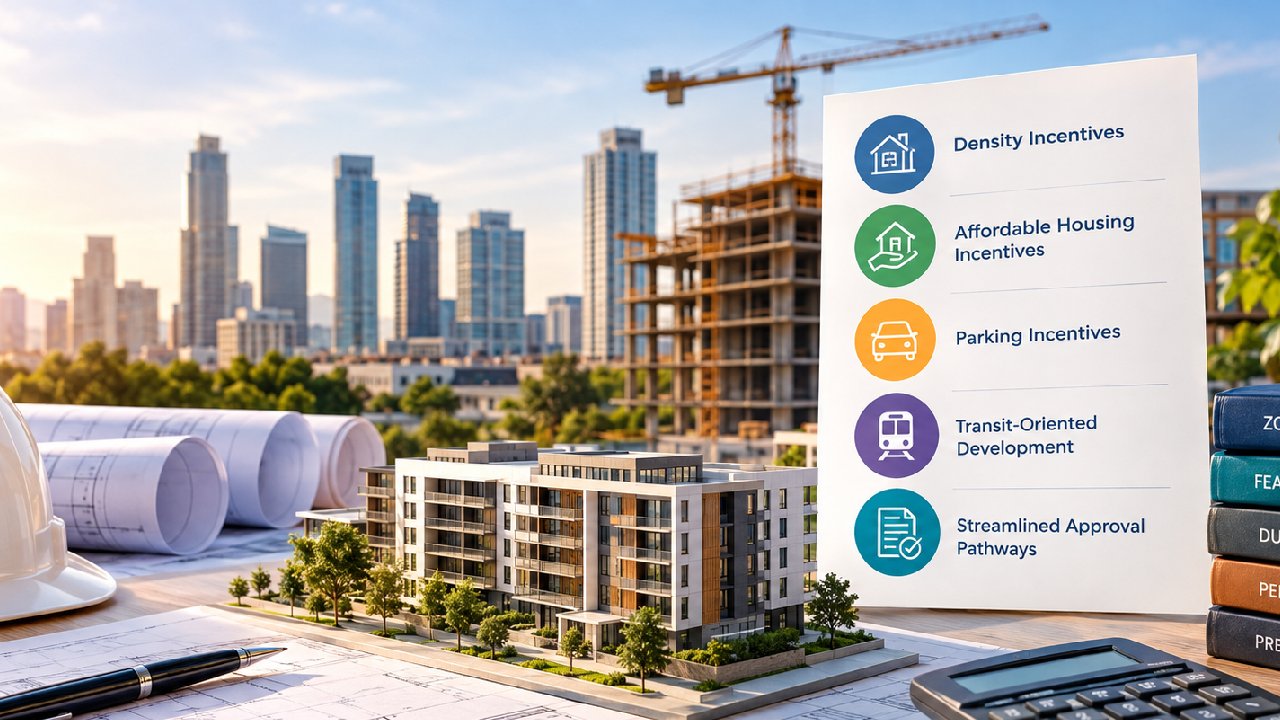
- Affordable housing incentives
- Density bonus programs
- Transit-oriented development
- Development standards
At the same time, changing regulations can make traditional assumptions unreliable.
JDJ Consulting’s analysis of 2026 zoning reform highlights how evolving policies can influence project feasibility, development density, approval timelines, and investment strategy.
Explore JDJ Consulting’s Land-Use & Entitlement Strategy services.
2. Housing Demand Continues to Influence Highest-and-Best Use
A property’s highest-and-best use is not determined by zoning alone.
Developers must also consider what the market actually needs.
For example, a site may technically allow a particular development type. Yet if local demand does not support that product, the project may not produce the expected returns.
Market analysis can examine factors such as:
- Housing demand
- Rental demand
- Sales activity
- Population growth
- Household demographics
- Comparable properties
- Rental rates
- Vacancy
- Consumer preferences
- Local employment trends
These factors help developers compare different development scenarios.
A site that appears ideal for a single-family project may potentially produce greater value through townhomes, multifamily housing, mixed-use development, or another permitted use.
That is why market trends should be evaluated alongside zoning and feasibility—not after the project concept has already been selected.
3. Feasibility Analysis Is Becoming More Important
Higher development costs and regulatory complexity make early feasibility analysis increasingly valuable.
Before acquiring land or committing significant capital, developers need to understand whether a project is legally possible, physically achievable, financially reasonable, and aligned with market demand.
A comprehensive feasibility study can evaluate:
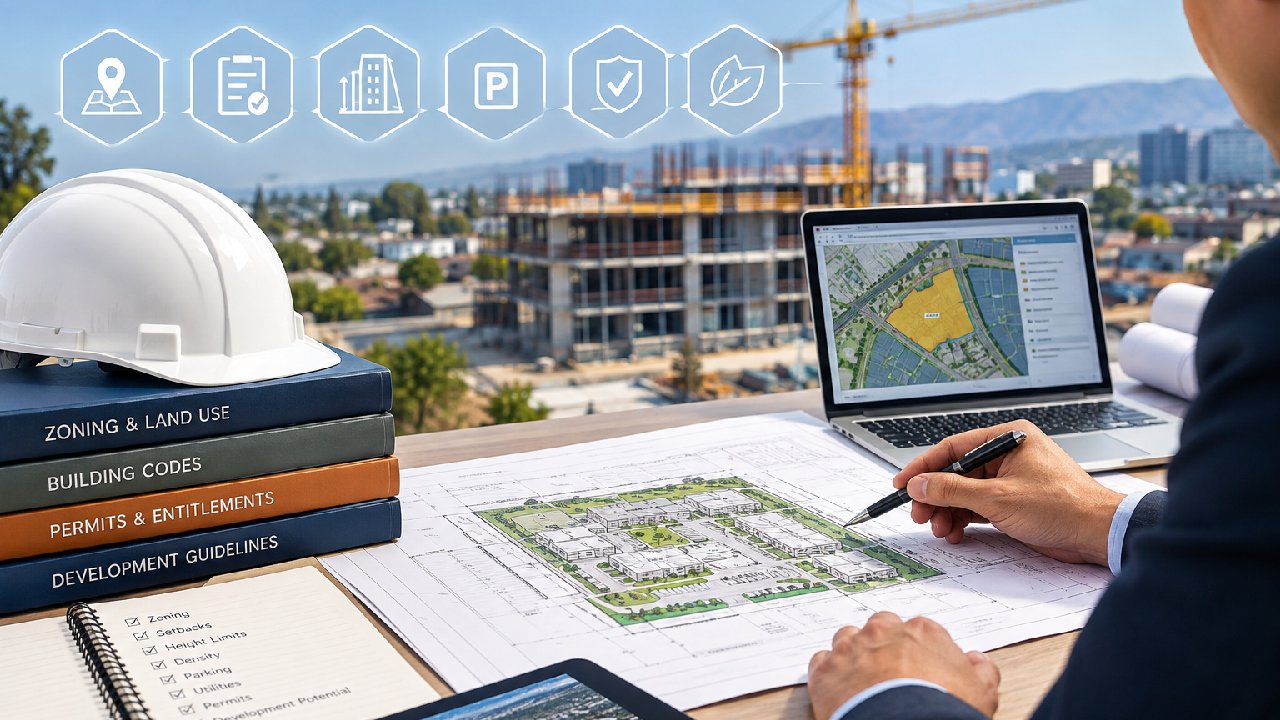
- Current zoning
- Permitted uses
- Development standards
- Lot size
- Setbacks
- FAR
- Building height
- Parking requirements
- Density opportunities
- Overlay districts
- Entitlement requirements
- Permit requirements
- Market conditions
- Development scenarios
JDJ Consulting’s feasibility services are designed to identify what can be built, which approvals may be required, and which development options may make sense for a specific property.
Read the Land Development Feasibility Study Guide for a deeper look at the process.
4. AI Is Changing Real Estate Development Analysis
Artificial intelligence is becoming one of the most interesting emerging trends in real estate development.
Instead of spending days manually collecting and organizing information, AI-powered systems can help process large amounts of property, zoning, and regulatory information much faster.
This can be especially valuable during the earliest stage of development.

• AI-POWERED
Know your SITE in seconds
Address IN, Feasibility OUT
AIEntitle brings AI-powered feasibility analysis into the property evaluation process.
Developers can enter an address and receive an analysis designed to evaluate potential development strategies, zoning considerations, density, FAR, parking, setbacks, affordability requirements, and other entitlement factors.
The platform states that its feasibility workflow evaluates multiple entitlement strategies and produces a detailed report from an address-based analysis.
The value of this technology is not simply speed.
The bigger opportunity is using faster analysis to make better decisions earlier.
Instead of waiting until substantial time and money have been invested in design, developers can investigate a property’s potential before moving deeper into the development process.
5. Developers Are Looking Beyond Basic Zoning
A zoning designation only tells part of the story.
Two properties with the same zoning designation can have very different development potential because of differences in:
- Lot dimensions
- Existing structures
- Topography
- Easements
- Access
- Parking requirements
- Overlay districts
- Historic restrictions
- Environmental conditions
- Setbacks
- Height limitations
- Density programs
This is why site-specific due diligence matters.
A development strategy should consider the actual physical and regulatory characteristics of the property rather than relying solely on a general zoning classification.
Learn more about Due Diligence Consulting before purchasing or developing property.
6. Development Timelines Are Becoming a Strategic Consideration
Time has always mattered in real estate.
In today’s environment, however, development timelines can directly affect project economics.
Delays may increase:
- Interest expenses
- Carrying costs
- Consultant fees
- Construction costs
- Insurance expenses
- Opportunity costs
Approval complexity can also influence whether a development strategy remains attractive.
For this reason, developers should evaluate the entitlement and permitting pathway before finalizing a project strategy.
Understanding whether a project can proceed by-right—or whether it requires discretionary approvals—can significantly affect the development timeline.
JDJ Consulting works across zoning, entitlements, feasibility, and permit expediting to help developers identify and manage these approval challenges.
Explore Permit Expediting Services for support navigating the approval process.
7. Location Still Matters—But It Is Not Enough
Location remains one of the fundamental drivers of real estate value.
However, today’s development decisions require a more detailed understanding of what the location can support.
Developers should consider:
- Population growth
- Employment centers
- Transportation access
- Infrastructure
- Neighborhood development
- Housing demand
- Nearby projects
- Local regulations
- Development incentives
- Future planning changes
A strong location with poor development potential may not be a strong investment.
Conversely, an overlooked property may become significantly more attractive when zoning changes, new infrastructure, housing demand, or entitlement opportunities are taken into account.
8. Highest-and-Best-Use Analysis Is More Strategic
Highest-and-best-use analysis helps developers compare what is legally permissible, physically possible, financially viable, and supported by market demand.
For example, consider a property that could potentially support several development concepts.
Instead of immediately selecting the most obvious option, developers can compare scenarios based on:
| Factor | Scenario A | Scenario B | Scenario C |
|---|---|---|---|
| Permitted use | ✓ | ✓ | ✓ |
| Density | Low | Medium | High |
| Development cost | Lower | Medium | Higher |
| Market demand | Medium | High | High |
| Entitlement complexity | Low | Medium | High |
| Potential value | Medium | High | High |
This approach allows investors to make decisions based on evidence rather than assumptions.
JDJ Consulting’s feasibility work specifically focuses on evaluating zoning, development options, market conditions, and potential highest-and-best-use scenarios.
9. Construction Costs Still Influence Market Decisions
Market trends cannot be separated from construction economics.
Even when land values and housing demand appear favorable, rising construction costs can change the financial viability of a project.
Developers should consider:
- Labor costs
- Material costs
- Financing
- Insurance
- Permit fees
- Utility requirements
- Professional services
- Construction timelines
- Contingencies
A project that looked profitable during acquisition may require redesign or a different development strategy if costs change significantly.
This makes early feasibility analysis even more important.
10. The Future of Real Estate Development Is Entitlement-Led
The traditional development process often begins with a property and a concept.
Increasingly, successful developers are starting with a different question:
What does the site allow—and what strategy unlocks the most value?
That means understanding entitlements before investing heavily in design.
An entitlement-led approach can help identify:
- What is allowed today?
- What additional density may be available?
- Which incentives may apply?
- What approvals are required?
- What development scenarios are realistic?
- What does the market demand?
- Which strategy offers the strongest risk-adjusted opportunity?
This approach connects market intelligence, zoning, feasibility, and execution.
How Developers Can Prepare for 2026 Market Trends
Developers do not need to predict every market change.
Instead, they should build a process that allows them to respond quickly.
Before acquiring or developing a property, consider the following checklist:
Real Estate Market Trends Checklist
1. Review the market
Understand local housing demand, rents, sales activity, demographics, and competing projects.
2. Analyze the site
Review zoning, lot dimensions, setbacks, FAR, height, parking, overlays, and physical constraints.
3. Identify development opportunities
Look beyond the existing use and determine whether additional density, housing programs, or alternative uses may apply.
4. Evaluate entitlement risk
Determine whether the project is permitted by-right or requires discretionary approvals.
5. Complete feasibility analysis
Compare potential development scenarios before committing significant capital.
6. Consider AI-powered analysis
Use technology to accelerate early-stage research and identify potential opportunities faster.
7. Build a realistic approval strategy
Understand the agencies, permits, reviews, and timelines involved.
8. Recheck assumptions
Market conditions and regulations can change. Development strategies should be updated when important market or policy changes occur.
The Bottom Line
The biggest real estate market trend in 2026 is not simply higher or lower prices.
It is the increasing importance of information-driven development decisions.
Zoning is changing. Housing demand is evolving. Construction economics remain important. Approval processes can be complex. At the same time, AI is creating new ways to analyze properties and development opportunities.
The developers who adapt are not necessarily the ones who predict the market perfectly.
They are the ones who can evaluate opportunities quickly, understand risk early, and adjust their strategy before significant capital is committed.
That starts with understanding the site.

• AI-POWERED
Know your SITE in seconds
Address IN, Feasibility OUT
Use AIEntitle to explore property feasibility and potential development strategies faster.
For more guidance, explore JDJ Consulting’s Feasibility Studies, Land-Use & Entitlement Strategy, and Pre-Construction Analysis services.
Frequently Asked Questions
What are the biggest real estate market trends in 2026?
Major trends include evolving zoning regulations, continued housing demand, greater focus on development feasibility, changing construction economics, longer-term entitlement strategy, and increasing use of AI in property analysis.
Why are market trends important for real estate development?
Market trends help developers understand demand, competition, rental or sales potential, demographics, and changing investment conditions. Combining market analysis with zoning and feasibility creates a more complete development strategy.
What is a real estate feasibility study?
A feasibility study evaluates whether a proposed development is legally, physically, and financially viable. It can include zoning, development standards, site constraints, market conditions, and potential development scenarios.
How can AI help with real estate feasibility?
AI can accelerate the collection and analysis of property and regulatory information. AIEntitle, for example, provides address-based feasibility analysis that evaluates multiple entitlement and development factors.
Why should developers analyze zoning before purchasing property?
Zoning determines important aspects of what can be developed, including permitted uses, density, setbacks, height, and other development standards. Reviewing zoning before acquisition can help identify opportunities and avoid costly surprises.
What is highest-and-best-use analysis?
Highest-and-best-use analysis identifies the most appropriate legally permissible, physically possible, financially viable, and market-supported use of a property.
How can developers reduce development risk?
Developers can reduce risk by completing site due diligence, reviewing zoning, analyzing market demand, evaluating development scenarios, understanding entitlement requirements, and completing feasibility analysis before committing substantial capital.