Table of Contents
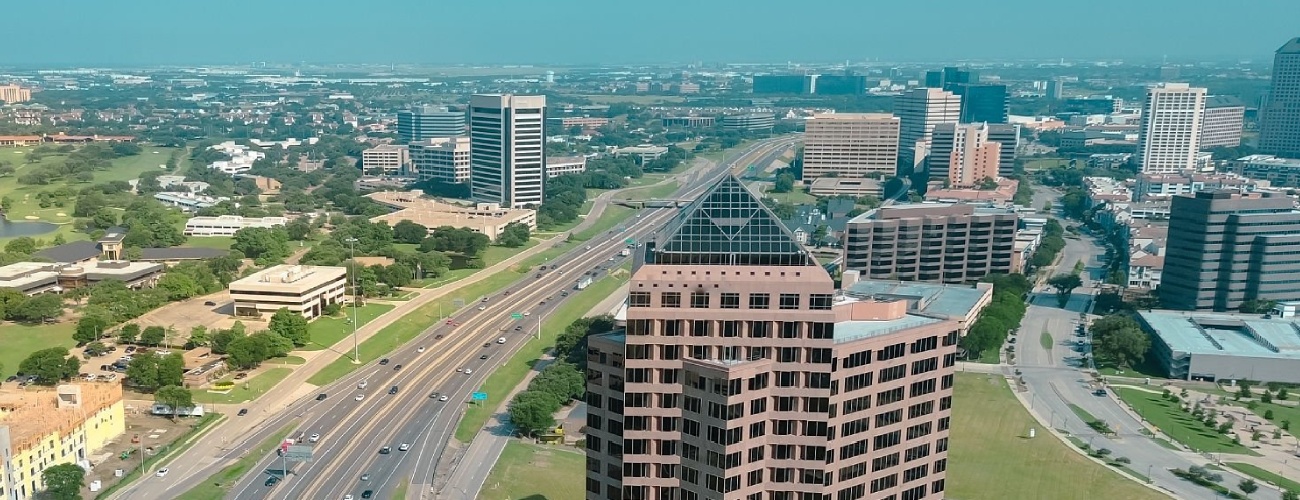
Drive north on I-45 past the Beltway and something changes. Houston’s skyline recedes into the mirror, but the office cranes don’t disappear. They just get pickier.
That’s the story Houston’s own numbers are quietly telling. Citywide office vacancy sat near 24% in early 2026, a figure that has haunted headlines and spooked capital for three straight years. Older Class A and commodity buildings are bleeding tenants to newer, better, more amenitized space, and that bleeding shows no sign of stopping soon.
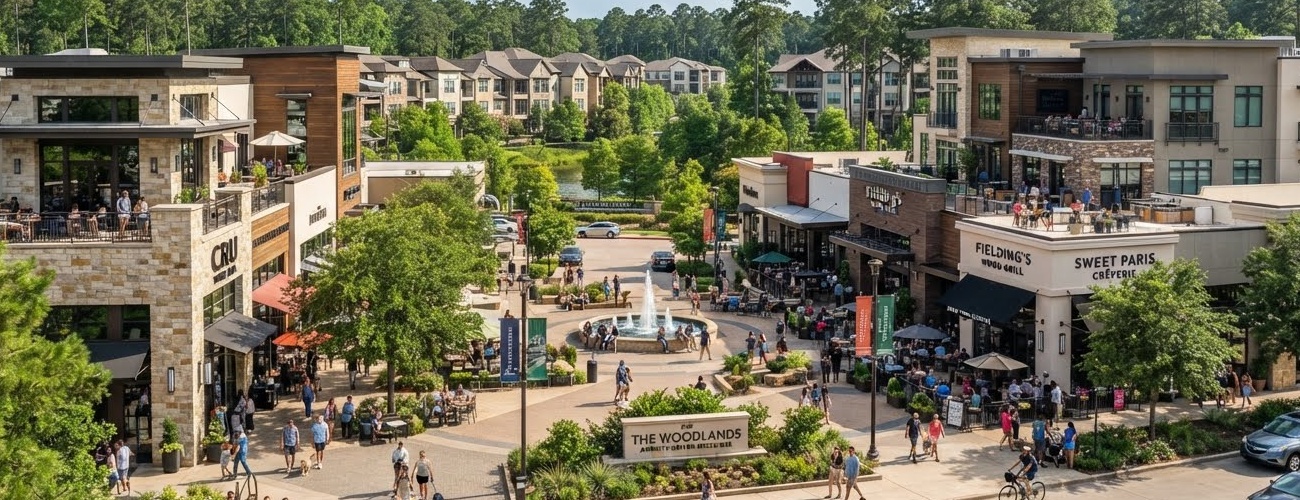
But walk the trails around Lake Woodlands, tour the glass-and-limestone campuses at Hughes Landing, or sit in on a leasing call for Research Forest, and you’ll hear a different market described entirely. Developers, architects, and institutional capital aren’t avoiding office in The Woodlands. They’re being more disciplined about which office they build, and that discipline is exactly what’s keeping the submarket alive while much of Houston struggles.
This is not a broad speculative construction market. It’s a flight-to-quality market with a narrow, well-defined runway. Understanding where that runway is, and where it isn’t, is now the difference between a project that leases and one that sits dark for three years.
The Numbers Behind the Divide
Start with what’s actually happening across greater Houston. Overall office vacancy hovered around 24% in early 2026, and by Q2 2026 CBRE was still reporting the market in the mid-24% range, with Class B space running notably higher than Class A. The gap isn’t marginal. It’s structural.
Regional bifurcation data tells the same story with sharper numbers. Trophy and Class A+ space has been running vacancy in the single digits to low teens across major Houston submarkets, while Class B assets languish closer to 25 to 30% vacant. Tenants aren’t leaving the market. They’re leaving old buildings for new ones, and they’re willing to pay a premium to do it.
The Woodlands sits on the favorable side of that divide, but not automatically. It earns that position through product quality, amenity depth, and a development culture that has, so far, resisted the temptation to build generic speculative office just because land is available.
Tenant improvement costs reinforce the discipline required here. Recent market reporting places office build-out allowances at roughly $75 to $90 per square foot in older buildings and $110 to $120 per square foot in new or recently delivered product. That is real capital a developer has to underwrite before the first rent check clears, and it means the margin for error on design, location, and tenant fit has narrowed considerably.
The Office Ecosystem Nobody Outside Houston Talks About
The Woodlands doesn’t have a downtown office tower district in the traditional sense. What it has is better described as an ecosystem of purpose-built clusters, each with its own identity, tenant profile, and competitive position.
- Town Center and Hughes Landing, the highest-visibility, highest-amenity nodes
- Research Forest Lakeside, the market’s flagship planned office campus
- Technology Forest Boulevard and the emerging life-science corridor
- Research Forest Drive, a mixed office, medical, and research zone
- Hospital-adjacent medical office clusters near I-45 and SH 242
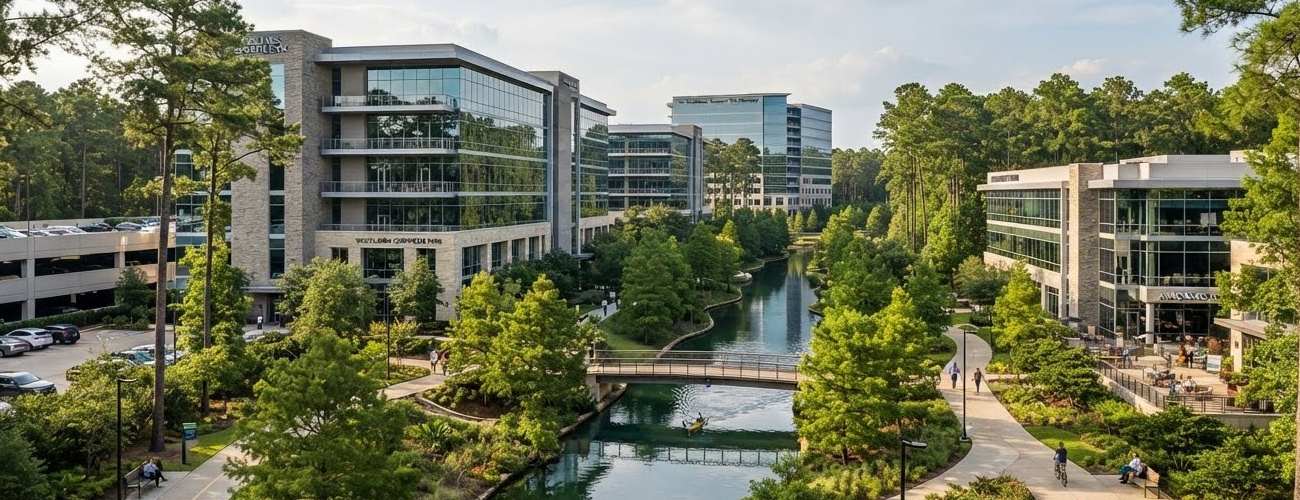
Research Forest Lakeside deserves particular attention. The roughly 77-acre campus overlooking Lake Woodlands was master-planned around a live-work-play framework, with trails, restaurants, and open space woven directly into the office program rather than tacked on afterward. Reporting places the campus at approximately 1.8 million square feet of Class A office and related amenities, with individual buildings historically ranging from around 40,000 square feet of flex space up to 360,000-square-foot traditional office towers.
That range matters. It tells you the campus was designed to accommodate everything from a boutique professional-services tenant to a full corporate headquarters, which is precisely the kind of flexibility Houston’s bifurcated market now rewards.
Where the Real Opportunity Sits
Preleased Corporate Headquarters
This remains the lowest-risk path into new office construction in The Woodlands. Life-science firms, healthcare companies, financial services, technology, and energy and infrastructure tenants are the strongest candidates. Building around a committed anchor tenant solves the two hardest problems in this market simultaneously: financing and absorption.
Medical and Healthcare Office
Medical office should never be underwritten like conventional office. Physician groups, specialty clinics, diagnostics, rehabilitation, and hospital-affiliated practices bring their own plumbing density, parking, patient drop-off, and life-safety requirements. The corridors along I-45 and SH 242, Pinecroft, and Research Forest are the strongest locations, particularly near senior housing and active-adult communities where demand is durable and less exposed to hybrid-work volatility.
Life Science and Research Office
The Woodlands’ emerging Innovation District and its existing biotech cluster represent one of the more differentiated opportunities in the entire Houston region. In 2023, relocations from companies including Nurix Therapeutics, Obagi Cosmeceuticals, SmartDraw, and SI Group signaled that corporate and research users see something here that generic office parks can’t offer. The tradeoff is real: lab space is expensive, less fungible, and often requires build-to-suit commitments, but the tenant pool, while narrower, is far less commoditized.
Adaptive Reuse of Underperforming Class B Assets
Given Houston’s structural Class B vacancy problem, repositioning existing buildings into medical office, life-science lab, flex office, or even senior housing can outperform new construction on both cost and speed to market, provided floor-to-floor heights, structural grids, and utility capacity support the conversion.
What the Data Says to Avoid
Every strong market has a shadow opportunity that looks tempting and performs poorly. In The Woodlands, that shadow is the large, speculative, conventional suburban office building without an anchor tenant or specialized demand driver.
Generic Class B office, speculative construction chasing broad corporate demand, and single-tenant buildings with no expansion or subdivision flexibility all face the same headwind: Houston’s overall market has too much undifferentiated space already. Building more of it, even in a strong submarket like The Woodlands, simply adds inventory to a category that’s already losing tenants to something better.
The Entitlement Path Nobody Warns You About Early Enough
The single most common mistake developers make in The Woodlands isn’t a design flaw or a market miscalculation. It’s underestimating how layered the approval process is before a shovel ever touches the ground.
The Woodlands Township’s commercial standards govern building design, signage, landscaping, lighting, and parking, and every commercial exterior improvement requires review and approval before construction begins. That’s on top of Montgomery County’s development regulations covering drainage, traffic engineering, and construction plan coordination for large commercial projects.
Layer in plat status, recorded covenants, shared-access and cross-parking agreements, tree and greenbelt obligations, and utility commitments, and you have a process that can quietly consume months before a building permit application is even submitted. For medical or life-science projects, add process utilities, medical gases, hazardous-material screening, and specialized accessibility review to that list.
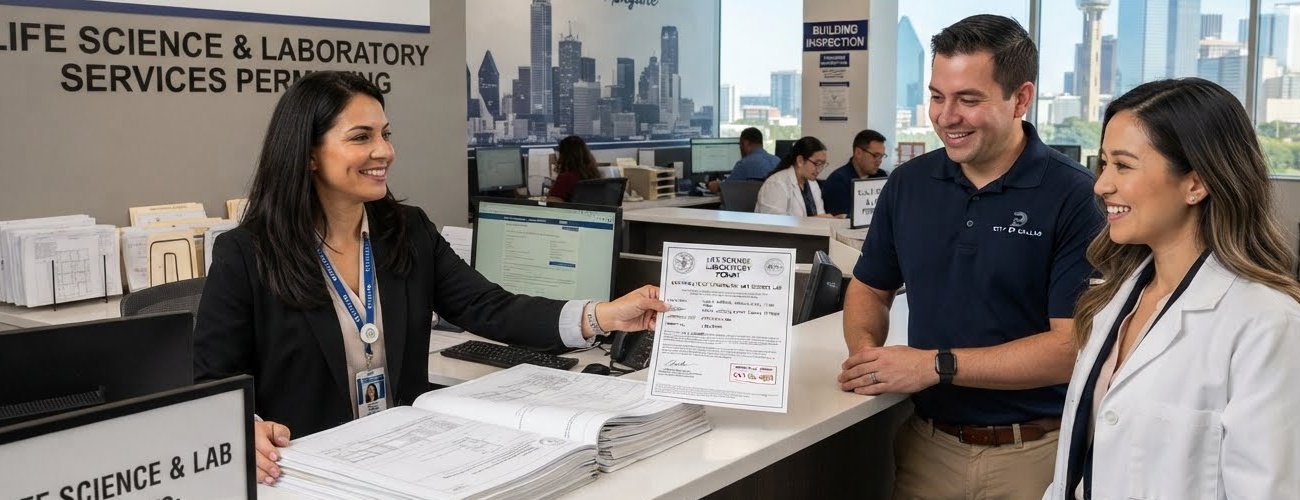
This is precisely where projects lose time and, more expensively, lose financing windows. Coordinating Township design review, County engineering, plat approvals, and specialty permitting in parallel rather than sequentially is the difference between a predictable schedule and a stalled one, which is exactly the kind of coordination JDJ Consulting’s permit expediting and entitlement team in The Woodlands is built to manage, from initial jurisdiction review through certificate of occupancy.
Table: Office Product Fit by Submarket
| Submarket | Best-Fit Uses | Primary Risk |
|---|---|---|
| Town Center / Hughes Landing | Headquarters, boutique Class A, finance, tech | High land cost, limited sites, congestion |
| Research Forest Lakeside | Class A headquarters, life science, professional services | Existing supply, lease-up competition |
| Technology Forest / Life-Science Corridor | Biotech HQ, pharma R&D, diagnostics, healthtech | Expensive lab buildout, specialized tenant pool |
| I-45 / SH 242 Corridor | Medical office, flex office, regional headquarters | Highway noise, competition from Spring and Conroe |
Incentives Worth Underwriting Into the Deal
Development-stage economics improve meaningfully when incentives are pursued before, not after, a location decision. The Woodlands Area Economic Development Partnership offers site-selection support and market intelligence at no cost, which is particularly valuable for corporate headquarters and life-science recruitment.
Montgomery County’s tax abatement policy specifically covers qualifying office and research facilities, though it excludes housing and hotel accommodations, giving office and lab projects a structurally stronger eligibility position than residential or hospitality development in the same corridor. The Texas Enterprise Fund can also support build-to-suit headquarters projects competing against out-of-state sites, provided the operating company, not the developer, meets the job and wage thresholds.
Frequently Asked Questions
Is office development still a viable investment in The Woodlands in 2026?
Yes, but selectively. Preleased headquarters, medical office, life-science space, and adaptive reuse of underperforming Class B buildings show the strongest fundamentals. Large speculative Class A construction without an anchor tenant carries significant lease-up risk given Houston’s citywide vacancy near 24%.
What is the strongest office campus currently in The Woodlands?
Research Forest Lakeside is widely regarded as the market’s flagship office campus, with approximately 1.8 million square feet of Class A office and amenities planned around Lake Woodlands, trails, and retail.
How long does office entitlement typically take in The Woodlands?
Timelines vary by project complexity, but Township commercial design review, County plat and engineering approvals, and specialty permitting for medical or lab uses can add significant time if not coordinated in parallel. Engaging a local permit expediting team early is the most effective way to compress that timeline.
Why is medical office considered a stronger opportunity than conventional office?
Medical office demand is less exposed to hybrid-work volatility than conventional corporate leasing, and Montgomery County’s growing population and healthcare infrastructure support sustained demand, particularly near senior housing and hospital corridors.
What incentives are available for office and research development?
Montgomery County tax abatements, Township economic development support, and the Texas Enterprise Fund for competitive corporate relocations are the primary tools, though most require engagement before construction begins or a location decision is finalized.
The Bottom Line
The Woodlands is not immune to Houston’s office correction. It is, however, one of the few submarkets positioned to benefit from it. As tenants across the region continue fleeing older, undifferentiated buildings for higher-quality space, The Woodlands’ campus-style, amenity-rich product is exactly what that flight to quality is flying toward.
The developers who win here won’t be the ones who build the most square footage. They’ll be the ones who read the entitlement map correctly, secure the right anchor tenant, and move through Township and County approvals without losing a construction season to process. That last part, the permitting and entitlement sequencing, is where experienced local guidance pays for itself many times over. JDJ Consulting has guided developers, architects, and investors through exactly this process across Texas and Florida markets, and its full range of permit expediting and entitlement services is built for projects exactly like the ones outlined above.