Table of Contents
A rare regulatory window is open for advanced manufacturing in Orange County. Lawmakers in Sacramento are already trying to close it.
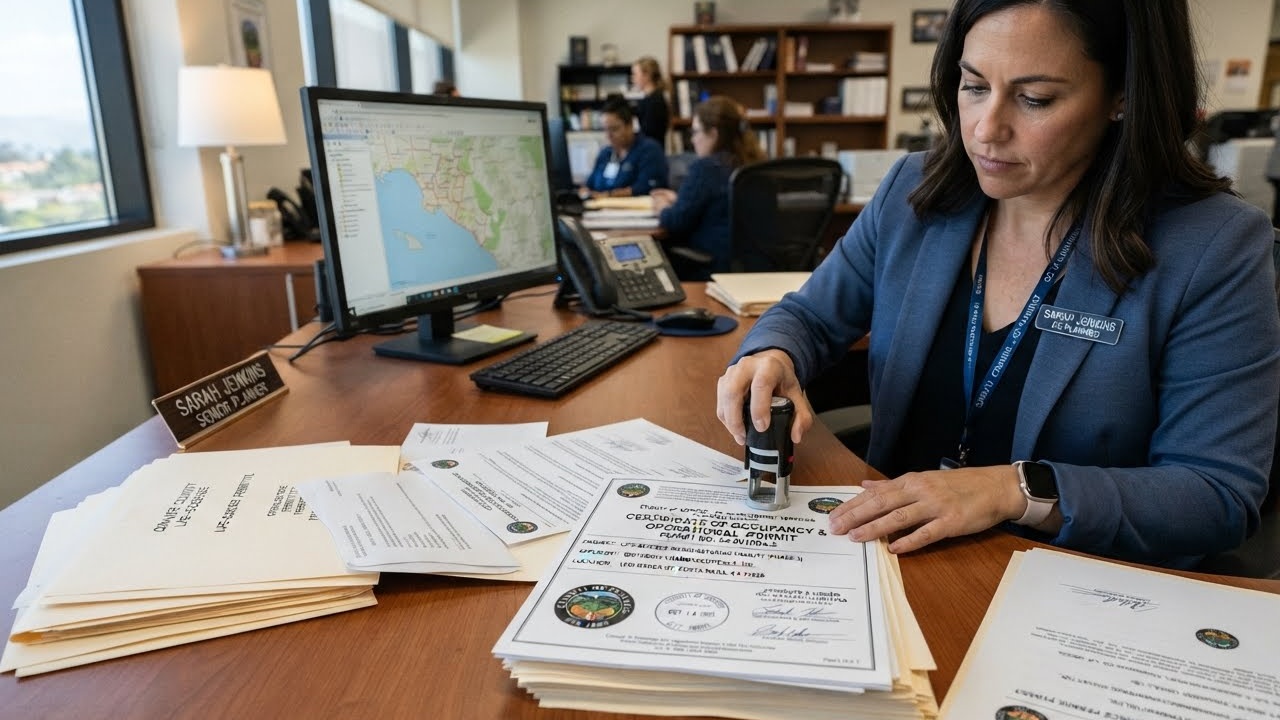
In the summer of 2025, a quiet clause buried inside a state budget bill did something California had not done in fifty years. It told manufacturers building on industrially zoned land they no longer needed to run the CEQA gauntlet at all. No negative declaration. No environmental impact report. No years-long window for opposition groups to file suit. Just a ministerial approval, typically inside sixty to ninety days, for a category of project the state now calls “advanced manufacturing.”
Two facilities have already used it. A quantum computing plant in Goleta. A fusion research site in Livermore. Orange County, with its dense cluster of aerospace, semiconductor, and life science manufacturers, is exactly the kind of market this exemption was written for. And yet the same legislature that created SB 131 is now trying to walk part of it back, under Senate Bill 954 and a competing proposal, Assembly Bill 1083, that would narrow the exemption to semiconductor facilities alone.
For developers, architects, and investors underwriting industrial projects in Orange County right now, that timing matters more than almost anything else in this article. This is a guide to what SB 131 actually allows today, where in the county the opportunity is real, and why the firms moving fastest through entitlement are the ones treating this window as temporary rather than permanent.
What Is the SB 131 CEQA Exemption and Does My Project Qualify?
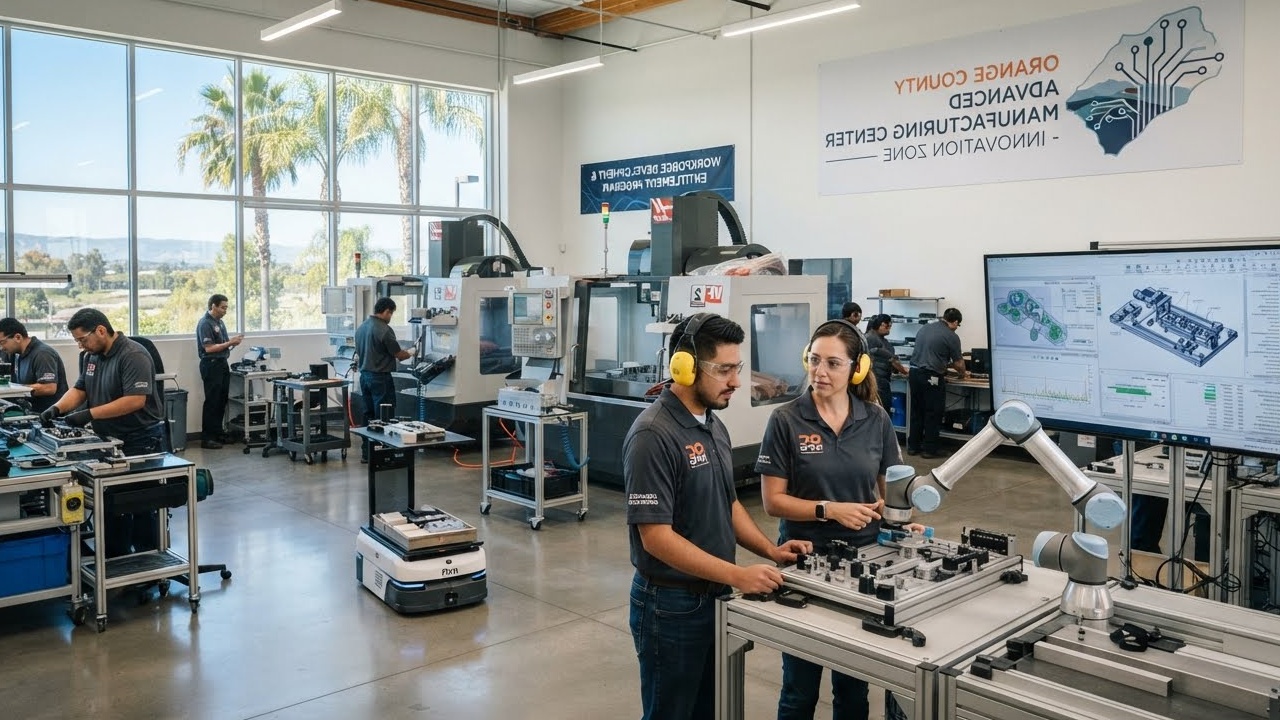
SB 131, signed by Governor Newsom on June 30, 2025, created a statutory CEQA exemption for projects that consist exclusively of advanced manufacturing on land zoned solely for industrial use. “Advanced manufacturing,” as defined under Public Resources Code Section 26003, covers a wide band of activity: semiconductors and microelectronics, additive manufacturing, nanotechnology, advanced materials, and industrial biotechnology. It also extends to sectors most people would not immediately associate with the term, including battery and energy storage production, aerospace and defense manufacturing, and select chemical and materials processing.
Three conditions determine eligibility.
- Exclusive use. The project must be used entirely for advanced manufacturing. Mixed-use buildings, ancillary retail, or residential components disqualify the site.
- Exclusive industrial zoning. The parcel must carry zoning dedicated solely to industrial use, with no residential or mixed-use overlay layered on top.
- No sensitive land conflicts. The site cannot sit on natural or protected lands, and full CEQA review still applies to projects located near disadvantaged communities or areas with existing air quality burdens.
Meet those three tests and the payoff is significant: ministerial approval instead of a discretionary hearing, no CEQA document to defend in court, and a materially lower litigation profile. Miss on any one and the project falls back into a standard Conditional Use Permit or Minor Use Permit pathway, with full CEQA review potentially running twelve to eighteen months on its own.
Why the Exemption May Not Look the Same by Next Year
This is the detail too many pro formas leave out. SB 131 has become one of the more contested pieces of land use legislation in recent California history. Polling conducted by FM3 Research in early 2026 found that roughly two-thirds of California voters oppose the advanced manufacturing exemption once they understand what it covers, and a majority said they would be less likely to support a legislator who backed it. That political pressure has produced two live bills worth tracking.
- SB 954 (Blakespear) would add environmental guardrails, strengthen habitat protections for endangered species, and narrow the scope of what counts as advanced manufacturing, without eliminating the exemption outright.
- AB 1083 goes further, proposing to strip the exemption down to semiconductor facilities only and remove eligibility for the broader set of industrial uses SB 131 currently covers.
Neither bill has passed as of this writing. Both are live. For a developer with a qualifying site today, that is not a reason to hesitate. It is a reason to move. Projects that are already in the pipeline under current law are generally protected by vested rights principles once entitlements are secured, which is precisely why site selection and early zoning verification carry more weight this cycle than in a typical market year.
What Are the Entitlement Pathways for Industrial Projects in Orange County?
SB 131 is the fastest route, but it is not the only one, and most industrial projects in the county will fall into one of four categories.
By-Right Industrial Development
Cities across the county, including Irvine, Santa Ana, Anaheim, and Fullerton, maintain M, M1, M2, and IG industrial zones where standard manufacturing, warehousing, and R&D uses are permitted outright. Light manufacturing under 10,000 square feet typically proceeds by right. Heavy manufacturing above that threshold may trigger a Minor or Conditional Use Permit depending on the jurisdiction, and warehousing and distribution are permitted by right across most M-zoned parcels.
Conditional Use Permit or Minor Use Permit
For projects that fall outside SB 131 eligibility or sit in zones requiring discretionary review, the sequence runs through a pre-application meeting with city planning staff, a formal CUP or MUP application with supporting site plans and traffic studies, a Planning Commission hearing with public notice, standard CEQA review if no exemption applies, and approval with conditions covering parking, landscaping, and noise. Expect twelve to eighteen months from application to entitlement.
Specific Plan or Master Plan Approval
Large industrial parks, brownfield redevelopments, and former military base sites typically require a Specific Plan establishing land use, density, and infrastructure standards, generally paired with a full EIR and City Council approval. Once adopted, individual projects within the plan area can often proceed with streamlined, ministerial review, which makes Specific Plan areas worth identifying early even if the upfront lift is heavier.
Typical Permit Sequence for Industrial and Advanced Manufacturing Projects
Step | Description | Timeline |
|---|---|---|
Site due diligence | Verify industrial zoning and SB 131 eligibility; Phase I ESA; wetlands and hazardous materials screening | 2–4 weeks |
Pre-application meeting | Confirm entitlement pathway with city planning staff | 1–2 weeks |
Application submittal | Site plan, architectural drawings, traffic study, environmental documentation as needed | Varies |
CEQA review, if applicable | Exempt under SB 131; otherwise Negative Declaration or EIR | 0–12 months |
Discretionary review, if applicable | Planning Commission hearing for CUP or MUP with public notice | 3–6 months |
Approval | CUP, MUP, or SB 131 ministerial clearance | — |
Building permit | Construction drawings, fees, structural, mechanical, electrical, and fire review | 2–4 months |
Construction and occupancy | Build-out, inspections, Certificate of Occupancy | 12–24 months |
What Are the Biggest Risks for Each Stakeholder in an OC Industrial Deal?
Every party in an industrial transaction is reading this market through a different lens, and the friction points rarely overlap neatly.
Stakeholder | Primary Risk |
|---|---|
Developers | Severe land scarcity, with new inventory additions historically running well under 1 percent of stock annually; SB 131 eligibility uncertainty amid pending legislation; CEQA litigation exposure for non-exempt projects |
Architects and engineers | Complex fire and life safety code compliance for H-2 and H-3 hazardous occupancies; seismic design requirements; utility capacity constraints for power-intensive advanced manufacturing |
General contractors | Specialized build requirements including clean rooms, vibration control, and hazardous material handling systems; tight labor availability for welders, machinists, and electricians |
Investors | Elevated vacancy relative to the historic lows of 2022; softening rents; longer lease-up timelines for speculative product; compressed but still resilient cap rates |
Lenders | Environmental liability tied to Phase I and Phase II findings; tenant credit risk in a cooling leasing market; construction cost overruns on specialized facility types |
Where Does Orange County’s Industrial Market Stand in 2026?
Orange County remains one of the most supply-constrained and expensive industrial markets in the country, but conditions have shifted meaningfully since the ultra-tight cycle of 2022. Vacancy has climbed from a record low near 1.8 percent to a range generally reported between 5 percent and 6.5 percent through the first half of 2026, depending on methodology and submarket mix, with some brokerages tracking overall availability closer to 8 percent once sublease space and construction pipeline are included. Asking rents have pulled back roughly 6 to 10 percent from their 2023 peak, landing in the high 1-dollar range per square foot on a triple net basis in most reports.
The correction has not erased the county’s structural scarcity. Land availability remains tight enough that most reports show new supply additions running below 1 percent of existing inventory in recent years, and the market continues to command some of the highest industrial rents in the western United States. Cap rates have held in a relatively narrow band through the correction, generally in the mid-5 to mid-6 percent range, which suggests investors still view Orange County’s fundamentals as durable even as near-term leasing metrics soften.
Because these figures move quarter to quarter and vary by data provider, they should be verified against the most current brokerage report before being used in an investment memo or underwriting model.
Which Orange County Submarkets Offer the Best Opportunities for Advanced Manufacturing?
Higher-Vacancy Submarkets Worth Watching for Value
- North County, including Fullerton, Brea, and Placentia, has seen some of the county’s softest absorption and carries meaningfully elevated vacancy, which creates negotiating leverage for tenants and value-add opportunities for buyers willing to underwrite lease-up risk.
- South County, including Irvine and Lake Forest, commands the county’s highest rents but also shows elevated availability against limited new supply, a combination that favors well-capitalized developers over speculative builders.
Emerging Opportunity Areas
- Santa Ana and the South Coast Metro area are actively redeveloping older industrial stock, with proximity to ports and freeway access making the submarket a target for advanced manufacturing users and a city government that has publicly courted this sector.
- Anaheim, particularly east of I-5 near SR-91, has available land and active large-format development, including projects exceeding 130,000 square feet currently under construction.
- Irvine Business Complex retains meaningful land capacity for large-scale advanced manufacturing, benefits from higher power infrastructure capacity, and sits close to UC Irvine’s research base, a genuine advantage for life science and semiconductor tenants.
What Incentive Programs Are Available for Advanced Manufacturing in Orange County?
Beyond the SB 131 exemption itself, several state and federal programs can materially improve project economics.
- California Competes Tax Credit: a performance-based credit tied to job creation and capital investment, with statewide awards that have reached into the tens of millions of dollars for qualifying advanced manufacturing and clean technology projects.
- Federal Advanced Manufacturing Production Credit (Section 45X): a per-unit credit under the Inflation Reduction Act for domestic production of battery cells, solar components, and other qualifying advanced energy technology.
- Federal Advanced Energy Project Credit (Section 48C): a credit covering roughly 30 percent of qualified investment in advanced energy manufacturing facilities, subject to a competitive nationwide allocation cap.
- Local incentives: several Orange County cities, including Anaheim and Santa Ana, have offered deferred impact fees for qualifying industrial projects, and regional community colleges maintain workforce training partnerships aimed at the advanced manufacturing labor pipeline.
Federal credit programs are subject to periodic legislative and agency revision, so eligibility and award amounts should be confirmed directly with current program guidance before being built into a capital stack.
What Systemic Constraints Should Developers Plan Around?
- Land scarcity. Orange County adds new industrial inventory at a fraction of the rate of comparable Southern California markets, which keeps land basis high and makes site control the single most valuable asset in a deal.
- Power capacity. Advanced manufacturing, particularly semiconductor and battery production, draws significant electrical load, and grid capacity in some submarkets has not kept pace with demand. Early utility coordination is not optional.
- Environmental equity carve-outs. The SB 131 exemption does not apply near disadvantaged communities or areas with existing air quality burdens, which rules out otherwise-qualifying sites in parts of the county and should be checked before a site is ever put under contract.
- Labor availability. Skilled trades including welders, machinists, and electricians remain in high demand across the region, with wages running above the regional living wage baseline, a cost factor general contractors are building into bids earlier in the process.
How JDJ Consulting Helps Industrial Developers Move Through This Window
The gap between a project that qualifies for SB 131’s ministerial pathway and one that gets pulled into a twelve-to-eighteen-month CUP process often comes down to zoning verification and documentation done correctly on day one. With two competing bills currently working through the legislature that could narrow or restructure the exemption, the margin for error on eligibility determinations is thinner than it was a year ago.
JDJ Consulting’s Orange County permit expediting and entitlement team works directly with developers, architects, and general contractors to confirm SB 131 eligibility before land is acquired, manage the pre-application relationship with city planning staff, and keep multi-agency approvals, building, fire, and utility, moving in parallel rather than in sequence. For projects that fall outside the exemption, the firm’s full range of entitlement and permit expediting services covers CUP and MUP processing, CEQA coordination, and Specific Plan navigation across every major Southern California industrial submarket.
In a market where the underlying regulation could look different by the next legislative session, the developers moving first are the ones treating entitlement strategy as a live variable rather than a fixed assumption.
Frequently Asked Questions
Does SB 131 apply to all manufacturing projects in Orange County?
No. The exemption applies only to projects used exclusively for advanced manufacturing, as defined under Public Resources Code Section 26003, located on parcels zoned exclusively for industrial use. Mixed-use development, sites with residential overlays, and projects on natural or protected lands do not qualify.
How long does SB 131 ministerial approval take compared to a standard CUP?
SB 131 approvals typically move in sixty to ninety days because they bypass CEQA review and discretionary hearings entirely. A standard Conditional Use Permit paired with CEQA review generally takes twelve to eighteen months, and can run longer if litigation follows approval.
Is the SB 131 exemption at risk of being repealed?
The exemption itself has not been repealed, but two bills are currently pending in the legislature. SB 954 would add environmental safeguards and narrow the definition of advanced manufacturing without eliminating the exemption. AB 1083 would restrict eligibility to semiconductor facilities only. Neither had passed as of mid-2026, and developers should confirm current status before relying on the exemption for a specific project.
Which Orange County submarkets are best suited for advanced manufacturing?
The Irvine Business Complex, Santa Ana’s South Coast Metro area, and parts of Anaheim near SR-91 currently offer the strongest combination of available land, power infrastructure, and local government support for advanced manufacturing users, though each carries different rent and vacancy profiles worth underwriting separately.
What happens if a project does not qualify for the SB 131 exemption?
Projects that fall outside SB 131 eligibility proceed through the standard entitlement pathway for their zoning designation, typically a Conditional Use Permit or Minor Use Permit process that includes standard CEQA review, a Planning Commission hearing, and conditions of approval covering issues such as parking, landscaping, and noise mitigation.