Table of Contents
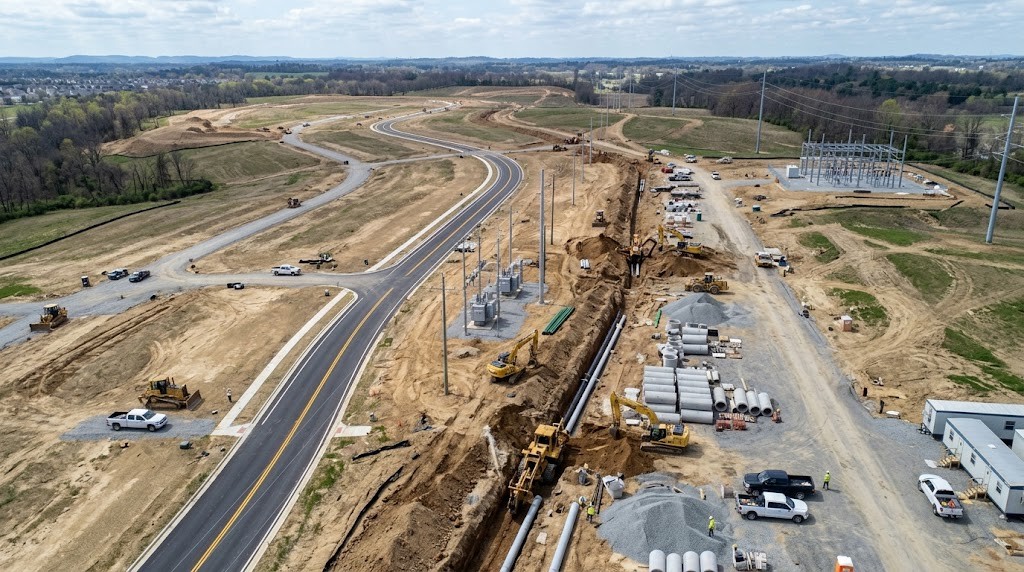
A property may be appropriately zoned for a proposed development and still face significant obstacles before construction can begin. Limited utility capacity, drainage requirements, inadequate roadway access, and infrastructure improvement obligations can affect project feasibility, approval schedules, and overall development costs.
For real estate developers, investors, and property owners, infrastructure readiness for real estate development is an important part of determining whether a project can move efficiently from concept to construction.
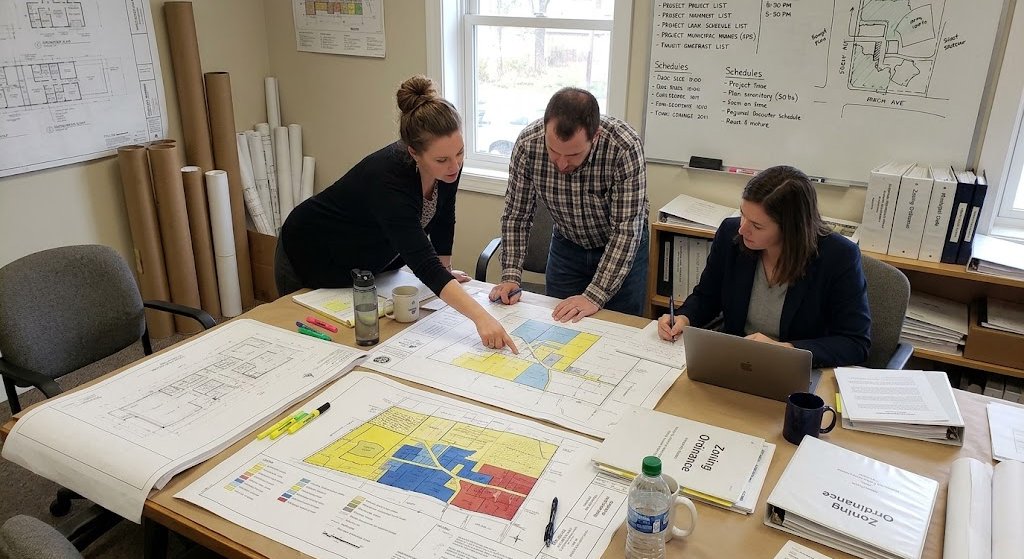
Before committing substantial capital to a development site, it is important to understand not only what the local zoning code allows, but also whether the property can support the proposed use and what improvements may be required.
JDJ Consulting Group helps property owners and development teams evaluate land-use requirements, development constraints, feasibility considerations, and approval pathways before moving forward with a project.
What Is Infrastructure Readiness in Real Estate Development?
Infrastructure readiness refers to the extent to which a property has the physical systems, public services, and access needed to support a proposed development.
Depending on the project, these systems may include:
- Water supply and distribution
- Sanitary sewer capacity
- Stormwater drainage and flood management
- Electrical service and other utilities
- Roadway access and transportation connections
- Fire department access and emergency services
- Sidewalks, pedestrian routes, and accessibility improvements
- Telecommunications and other supporting infrastructure
Infrastructure readiness does not necessarily mean every improvement is already in place. A site may be developable if the necessary upgrades can be completed, funded, and approved within an acceptable timeframe.
The key is identifying these requirements early enough to incorporate them into the development strategy.
1. Verify Water and Sewer Capacity
Water and sewer service are fundamental considerations for many residential, multifamily, commercial, and mixed-use projects.
A property located near existing utility lines is not automatically guaranteed sufficient service capacity. The applicable utility provider or public agency may need to confirm whether the proposed project can be accommodated.
Developers should investigate:
- The location of existing water and sewer connections
- Available system capacity and service requirements
- Potential off-site extensions or upgrades
- Connection fees and applicable development charges
- Easements and rights-of-way needed for utility infrastructure
- Utility provider review and approval procedures
For multifamily developments, increased residential density may require additional utility capacity. Commercial projects may also have specialized water, wastewater, or fire-flow requirements depending on their intended use.
Why this matters: Utility improvements can introduce costs and coordination requirements that are not immediately apparent from a property’s purchase price or zoning designation.
2. Evaluate Stormwater Drainage and Flood Management
Stormwater management can influence how much of a site is available for development and how the project must be designed.
Local regulations may require drainage calculations, detention or retention facilities, infiltration measures, grading plans, or other stormwater controls. The appropriate requirements depend on the jurisdiction, site conditions, project size, and applicable environmental regulations.
Before finalizing a site layout, developers should review:
- Existing drainage patterns and low-lying areas
- Flood hazard designations and available flood studies
- Impervious surface coverage
- Potential detention or retention requirements
- Connections to existing drainage infrastructure
- Grading and drainage easements
- Applicable stormwater management standards
Drainage improvements may compete with parking, landscaping, building footprints, and other site requirements. Coordinating these elements during early planning can reduce the likelihood of substantial redesign later.
For properties with complex grading or drainage conditions, a civil engineer may need to conduct a more detailed evaluation.
3. Determine Whether Roadway Access Meets Project Needs
A development must provide appropriate access for residents, employees, customers, deliveries, and emergency responders.
An existing driveway or adjacent street does not necessarily establish that a proposed development’s access arrangements will be approved. Depending on the project, transportation review may address traffic generation, driveway locations, turning movements, sight distance, pedestrian circulation, and roadway improvements.
Developers should determine whether the project may require:
- New or modified driveways
- Curb cuts or access permits
- Traffic impact analysis
- Turn lanes or roadway improvements
- Sidewalks and pedestrian connections
- Fire apparatus access
- Loading and delivery areas
- Coordination with transportation or public works agencies
Projects generating substantial vehicle traffic may require additional transportation studies or mitigation measures.
The objective is to understand the access requirements before the architectural layout becomes too advanced to accommodate them easily
4. Identify Utility Easements and Infrastructure Conflicts
Recorded easements, underground utility lines, drainage channels, and public rights-of-way can restrict where buildings and other improvements may be placed.
These constraints are particularly important when evaluating infill properties, irregularly shaped parcels, redevelopment sites, and properties with limited frontage.
A development team should coordinate a review of available title information, property surveys, utility records, and preliminary site plans.
Important questions include:
- Are there recorded easements crossing the proposed building area?
- Do existing utility lines conflict with planned foundations or underground parking?
- Will utility relocation be necessary?
- Is additional land or an easement required to provide service?
- Are there restrictions affecting construction access or future maintenance?
Resolving these issues may require coordination among the property owner, surveyor, civil engineer, utility provider, and relevant public agencies.
Early identification helps prevent avoidable conflicts during design review or construction.
5. Understand Off-Site Improvement Obligations
Some development projects require improvements beyond the property boundary.
Depending on local requirements and the project’s characteristics, these improvements may include sidewalk construction, street frontage work, drainage upgrades, utility extensions, or transportation-related mitigation.
Off-site improvements can affect both the development budget and the approval schedule.
Before proceeding, developers should clarify:
- Which agencies will review the proposed improvements?
- What technical studies or plans may be required?
- Who is responsible for the improvements and associated costs?
- Are improvements dependent on approvals or work by third parties?
- Will easements, right-of-way dedication, or additional permits be necessary?
The answers may vary by jurisdiction and project type. Requirements should be confirmed with the appropriate agencies rather than assumed from neighboring developments.
For additional guidance on evaluating development constraints before committing capital, see JDJ Consulting’s Urban Planning and Development: A Practical Guide for Property Developers.
6. Coordinate Infrastructure Review With Zoning and Entitlements
Infrastructure planning should not be treated as a separate task that begins only after land-use approvals.
Zoning determines important aspects of a proposed development, including permitted uses, density, height, setbacks, and other development standards. Infrastructure requirements help determine whether the proposed concept can be supported in practice.
These reviews should inform one another.
For example, a multifamily project may appear feasible under the applicable zoning regulations, but its layout could change if the site needs additional drainage facilities, utility easements, or emergency access improvements.
Similarly, a commercial property may permit the intended use but require additional transportation analysis or utility upgrades before the project can advance.
A coordinated review can help the development team identify constraints, assess potential alternatives, and determine the appropriate approval strategy.
Explore JDJ Consulting’s zoning review and compliance resources for related guidance on regulatory requirements.
7. Incorporate Infrastructure Costs Into Development Feasibility
Infrastructure improvements can materially affect the financial assumptions behind a development project.
Potential expenses include engineering studies, utility connections, system upgrades, roadway work, drainage facilities, permit fees, and construction-related coordination.
The actual costs depend on local conditions, agency requirements, project scope, and the extent of existing infrastructure.
A preliminary feasibility assessment should consider the following:
| Evaluation area | Questions to address |
|---|---|
| Utilities | Are connections available, and is capacity sufficient? |
| Drainage | What stormwater improvements may be required? |
| Transportation | Will access improvements or traffic studies be necessary? |
| Easements | Could property rights restrict the planned improvements? |
| Agency review | Which departments or utility providers must approve the work? |
| Budget | What infrastructure costs remain uncertain? |
| Schedule | Which approvals or improvements could affect the project timeline? |
At the early planning stage, some costs may remain estimates rather than confirmed figures. Developers should document assumptions, identify information gaps, and update the financial model as technical reviews progress.
For a broader evaluation of site constraints and development potential, review JDJ Consulting’s Urban Planning and Development guide.
8. Build an Infrastructure Due Diligence Checklist
Before acquiring a property or finalizing a development concept, the project team should establish a clear process for evaluating infrastructure readiness.
A practical checklist includes:
- Review zoning, land-use designations, and applicable development standards.
- Obtain available property surveys and title information.
- Identify utility providers and existing service connections.
- Confirm preliminary water, sewer, and fire-flow requirements where applicable.
- Review drainage conditions and potential flood-related constraints.
- Evaluate access, circulation, and transportation requirements.
- Identify potential utility conflicts and easement restrictions.
- Determine whether off-site improvements may be required.
- Contact relevant agencies and service providers for preliminary guidance.
- Incorporate identified costs, uncertainties, and approval dependencies into the feasibility analysis.
The depth of the review should reflect the project’s scale, complexity, and investment risk. A small commercial improvement may require a different level of investigation than a large multifamily development or a subdivision.
How JDJ Consulting Helps Developers Evaluate Infrastructure Readiness
Infrastructure questions often overlap with zoning, land use, due diligence, feasibility, and entitlement strategy. Coordinating these considerations early can help developers establish a more realistic path toward approval.
JDJ Consulting Group works with developers, investors, property owners, and project teams on development planning and regulatory coordination.
Depending on project needs, consulting support may include:
- Preliminary development and regulatory reviews
- Zoning and land-use analysis
- Due diligence coordination
- Identification of potential approval requirements
- Entitlement strategy and agency coordination
- Permit planning and development process guidance
Technical engineering, surveying, utility design, and other specialized services may need to be provided by appropriately qualified professionals.
The goal is to help project teams understand the requirements that may affect development feasibility and determine what needs to be resolved before moving forward.
The Bottom Line
A property’s development potential depends on more than zoning. Water and sewer capacity, stormwater management, transportation access, utility easements, and off-site improvements can all influence whether a proposed project is practical.
Evaluating these factors early gives developers a better basis for assessing acquisition risks, refining project concepts, and preparing more realistic budgets and schedules.
Before purchasing land or committing to a final design, make infrastructure readiness part of the development due diligence process.
Planning a real estate development project? Contact JDJ Consulting Group to discuss your property’s zoning, land-use requirements, feasibility considerations, and entitlement pathway.
Frequently Asked Questions
1. What does infrastructure readiness mean in real estate development?
Infrastructure readiness describes whether a property has, or can reasonably obtain, the utility services, drainage systems, access, and supporting infrastructure needed for its proposed development.
2. Why should developers check infrastructure before buying land?
Early infrastructure review can identify potential utility upgrades, off-site improvements, access restrictions, easement conflicts, and other costs that may affect project feasibility. It helps developers evaluate risks before committing significant capital.
3. Does zoning approval mean a property is ready for construction?
No. Zoning approval addresses land-use permissions and development standards, but additional engineering reviews, utility approvals, site development permits, building permits, and infrastructure improvements may still be required.
4. What infrastructure issues can delay a development project?
Potential issues include insufficient utility capacity, drainage concerns, unresolved easements, roadway access requirements, utility relocation, environmental constraints, and delays in obtaining approvals from multiple agencies.
5. Who evaluates infrastructure requirements for a development site?
The project team may include civil engineers, surveyors, architects, utility providers, transportation consultants, and land-use or entitlement consultants. Each professional addresses the relevant technical or regulatory requirements.
6. How do infrastructure requirements affect development costs?
Costs may include utility connection fees, system upgrades, drainage facilities, roadway improvements, engineering studies, and off-site construction. The amount varies by property, jurisdiction, and proposed project.
7. Can a property be developed if infrastructure is not currently available?
Potentially. A project may proceed if the necessary infrastructure can be extended, upgraded, or otherwise provided and the required approvals and funding can be secured. Feasibility should be evaluated on a site-specific basis.
8. When should infrastructure due diligence begin?
Infrastructure due diligence should begin during the preliminary property evaluation or acquisition due diligence period, before the development team finalizes the site design or makes substantial financial commitments.