Table of Contents
Ask someone outside Florida what Orlando builds, and theme parks are still the reflex answer. Inside the industry, that answer has been out of date for a while. Over the past decade, the metro has put together the pieces of a real advanced manufacturing hub: an international airport with genuine global cargo reach, an aerospace and simulation cluster that keeps deepening, a research and medical corridor at Lake Nona, and a labor pool being fed steadily by the region’s universities and technical colleges. For architects, developers, and investors deciding where to put capital next, Orlando is worth a serious look. It has the fundamentals of a targeted-industry market. What it doesn’t have is a single, predictable entitlement path.
That’s really the point of this piece. An aerospace component fabricator, an optics and photonics shop, a med-tech assembler, and a light industrial flex user all move through a different regulatory sequence than a typical office, retail, or residential project would. Jurisdiction matters. Zoning district matters. Whatever sector plan governs the parcel matters, sometimes more than anything else. Get one of these wrong during early due diligence, and it tends to show up later as a schedule delay or a line item nobody budgeted for.
Why Orlando Is Becoming an Advanced Manufacturing Market
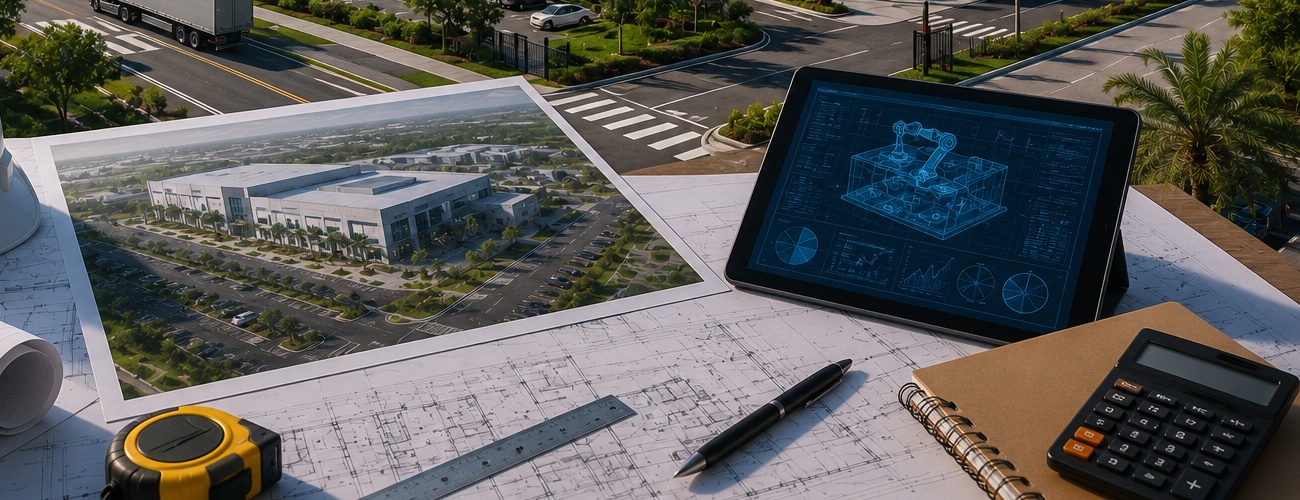
The activity in this metro clusters around a few identifiable anchors: the airport employment corridor, the aerospace and simulation ecosystem near Lake Nona, and the broader Southeast Orlando growth footprint. Orlando International Airport has become more than a passenger hub in that story. Regional economic development groups are actively positioning it as a gateway for industrial and advanced aviation development, including test facilities and high-bay manufacturing space tied to air cargo access. For manufacturers running just-in-time component shipping or export-heavy supply chains, that kind of proximity to global logistics infrastructure is a real edge, not a marketing line.
Lake Nona adds a second dimension. What started as a medical and research district has grown into a broader innovation corridor, with employment and mixed-use nodes able to absorb clean, high-wage advanced manufacturing that wants to sit near research and medical partners. Further east, the Sunbridge master-planned community, spanning tens of thousands of acres across Orange and Osceola counties, is being built with employment and industrial nodes baked in from the start, extending the Lake Nona model across a much larger footprint over the next two to three decades.
The Entitlement Process, Step by Step
1. Define the Product Before You Chase a Site
Every advanced manufacturing project should start with a product decision, because that decision drives everything downstream: the zoning district you need, the utility loads you’ll be carrying, the incentive programs you’ll actually qualify for. A 150,000-square-foot light industrial flex building is a different animal, entitlement-wise, than a 300,000-square-foot advanced manufacturing campus with cleanroom space or heavy process equipment. Nailing this down before site selection even begins can save months later in the process.
2. Confirm Jurisdiction and Zoning First
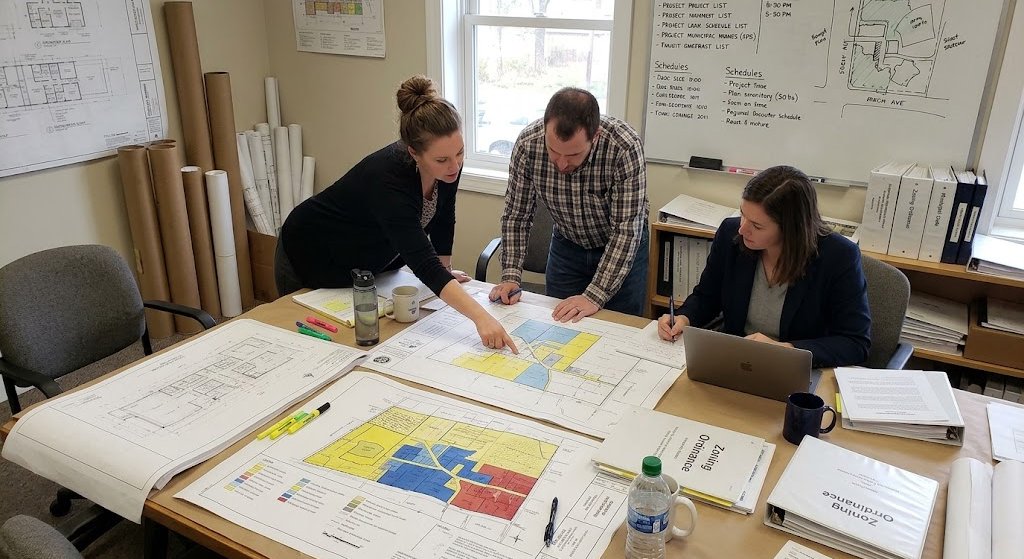
This is where otherwise well-capitalized projects lose time, more often than people expect. Land use decisions across the Orlando metro are split between the City of Orlando, smaller incorporated cities like Winter Park and Sanford, and unincorporated Orange, Osceola, Seminole, and Polk counties. Each one runs its own zoning code, its own planning board, its own fee schedule, and its own review timeline. A parcel that reads as industrial on a map can sit in a jurisdiction with an entitlement sequence nothing like the one next door.
Once jurisdiction is confirmed, check the Future Land Use designation and zoning district. Advanced manufacturing typically lands in Industrial General or Industrial Light districts, in Activity Center designations that blend industrial and office uses, or under Planned Development zoning built for custom industrial campuses. Some parcels also sit inside employment or innovation corridors carved out by sector-specific planning documents, and those can unlock density or use flexibility that standard industrial zoning simply doesn’t offer.
3. Work Through Rezoning, Special Exceptions, and Site Plan Review
If the use is permitted by right, the path runs fairly directly to site plan and building permit review. If the project needs more density, height, or use flexibility than the base zoning allows, expect a rezoning or Planned Development application, reviewed first by a municipal or county planning board and then by the elected body. Special exceptions or variances can also come into play for parking reductions, height allowances, or design departures that don’t fit the standard code.
For larger campuses, many developers pursue a Planned Development or development agreement from the outset. It locks in phasing, building envelopes, and infrastructure commitments before vertical construction starts, which matters a lot when a project is going to be built out in stages over several years rather than all at once.
4. Layer In Environmental, Safety, and Infrastructure Review
Advanced manufacturing draws regulatory scrutiny that most other commercial development simply doesn’t face. Depending on the processes involved, coating, chemical handling, emissions, projects may need air, water, and waste permits. Sites near sensitive hydrology, and that describes a lot of southeast Orlando, often require stormwater and wetland review at the local level and, past certain thresholds, from the St. Johns River Water Management District too. Facilities near Orlando International Airport or active rail lines face additional compatibility review for height, noise overlays, and safety zones.
Infrastructure capacity is usually the gating issue on greenfield sites, and power tends to be the first constraint anyone runs into. Large advanced manufacturing users often need dedicated feeders or new substation capacity, and that work can be slow and expensive if it isn’t flagged during early due diligence rather than after the site is already under contract. Water, sewer, gas, and fiber extensions carry similar risk. Traffic and level-of-service analysis rounds things out, particularly for truck-heavy operations that may need off-site road improvements before a certificate of occupancy is even on the table.
Where Future Plans Are Shaping the Map
A handful of planning documents will decide, more than anything else, where advanced manufacturing can realistically go in this metro over the next generation.
The Southeast Orlando Sector Plan covers more than 19,000 acres east of the airport, including Lake Nona and the surrounding employment corridor, and it names aerospace, simulation, optics and photonics, and advanced manufacturing as core intended uses, not an afterthought. For developers, that translates into strong policy support, Planned Development-style review expectations, and future land use maps that will shape how rezoning applications get evaluated in that sector for years.
The Airport Industrial Park and MCO growth strategy covers land zoned Industrial General with an Aircraft Noise overlay, and regional partners are actively marketing the area for advanced aviation and industrial uses tied to air cargo. Height and noise compatibility rules will drive building form here more than almost anywhere else in the metro.
Sunbridge, the large-scale master-planned community extending southeast from the airport corridor into Osceola County, is being built around employment and innovation nodes alongside residential and amenity space. It’s a long-horizon play for campus-style advanced manufacturing with real room to expand, though it will run under master plan and Planned Development controls, so early coordination with the master developer isn’t optional.
Countywide, Orange, Osceola, Seminole, and Polk all treat advanced manufacturing as a targeted industry in their comprehensive plans. In practice, that means industrial and employment corridor designations along major highways, rail lines, and airport access routes, paired with incentive programs tied to job creation and capital investment thresholds.
Where the Opportunity Sits, and Where It’s Already Priced In
The Airport Industrial Park and the established I-4 industrial corridor running from west Orlando toward Lake Mary and Heathrow are already dense with warehouse, distribution, and industrial users. Land in those areas is scarce and priced like it, with few large parcels left for new ground-up campuses.
The more interesting opportunity, from a site selection standpoint, is in the Southeast Orlando Sector Plan area and the emerging Sunbridge corridor. Both still have sizable developable parcels and explicit policy support for high-wage industrial job creation. Further out, corridors in Apopka and northwest Orange County, St. Cloud in Osceola County, and parts of Polk County offer more land, lower basis, and meaningful county-level incentives, which makes them a fit for larger footprints and heavier power users where sitting right next to the airport matters less than raw site capacity does.
Financing, Incentives, and the Hurdles Worth Planning Around
Florida and the Orlando region treat advanced manufacturing as a targeted industry, and that opens access to Job Growth Grant Fund infrastructure support, Quick Response Training workforce funding, and local property tax exemptions on qualifying capital improvements and equipment, in some cases up to full abatement for a defined period. Impact fee mitigation and matching grants for permit fees and right-of-way infrastructure show up in several jurisdictions too, usually tied to job creation and wage thresholds.
The catch is that these programs are performance-based and there’s real competition for them across counties. Lenders will often want pre-leasing or an anchor tenant commitment before financing speculative advanced manufacturing product. Stack the entitlement complexity, the environmental permitting layers, and the infrastructure capacity questions on top of that, and it’s easy to see why the projects that move smoothly in this metro tend to be the ones where the team front-loaded due diligence instead of finding out about a jurisdictional or utility constraint halfway through.
Workforce and community fit round out the list. Sites too far from technical college and university training pipelines can run into recruitment friction once a facility is operational. And industrial uses proposed near newer residential development can draw pushback over traffic, noise, and perceived environmental impact, even when the zoning technically supports the use.
Getting the Entitlement Path Right From the Start
If there’s one throughline here, it’s that advanced manufacturing development in the Orlando metro tends to get won or lost early, in the jurisdiction check, the zoning read, and the sequencing of rezoning, environmental, and infrastructure approvals long before a shovel goes into the ground. That’s detailed, jurisdiction-specific work, and it’s exactly the terrain JDJ Consulting’s Orlando permit expediting and entitlement services are built to handle, from confirming the right zoning path and coordinating agency review to keeping a phased industrial campus on schedule against its financing timeline.
For developers and investors still weighing product type and submarket, whether that’s a light industrial flex building along the I-4 corridor or a full advanced manufacturing campus in the Southeast Sector Plan area, the smarter next move is a jurisdiction-specific entitlement read before land goes under contract, not after.