
Table of Contents
Building a mixed-use property in Texas requires careful planning long before construction begins. Based on our experience working with developers and property owners, permit delays often occur due to zoning issues, incomplete plan sets, or missing agency approvals. Understanding the permit process early can help reduce delays, avoid unnecessary costs, and keep your project on schedule.
A mixed-use building combines different types of spaces within a single property. For example, a building may have shops on the ground floor and apartments above. Some projects combine offices, restaurants, hotels, or medical clinics with homes.
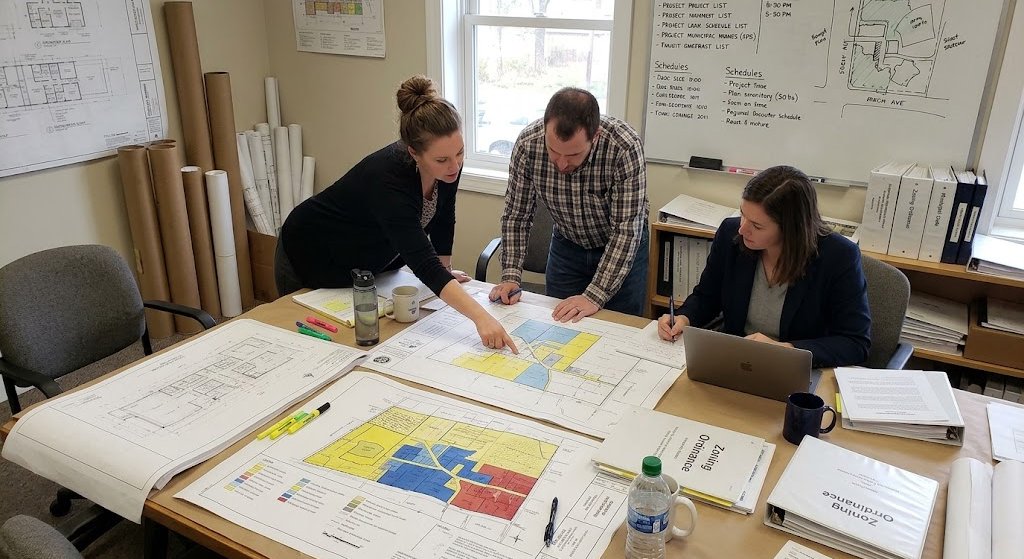
In Texas, there is no single state office that issues building permits. Instead, each city or county manages its own permit process. That means the exact steps may be different in Dallas, Austin, Houston, San Antonio, or smaller cities. However, every project must meet local zoning rules, building codes, and state requirements for safety and accessibility.
This guide explains the permit process in simple language. You will learn what documents you need, how the approval process works, and what you can do to avoid delays.
JDJ Consulting Group Insight: In many Texas mixed-use projects, the top reasons for permit delays are incomplete architectural plans and unresolved zoning issues. Likewise, accessibility corrections and missing civil engineering documents are considered important reasons. Addressing these items before submission can significantly reduce review cycles.
What Is a Mixed-Use Building?
A mixed-use building is a property with more than one type of use. Instead of serving one purpose, it combines residential and commercial spaces in the same development.
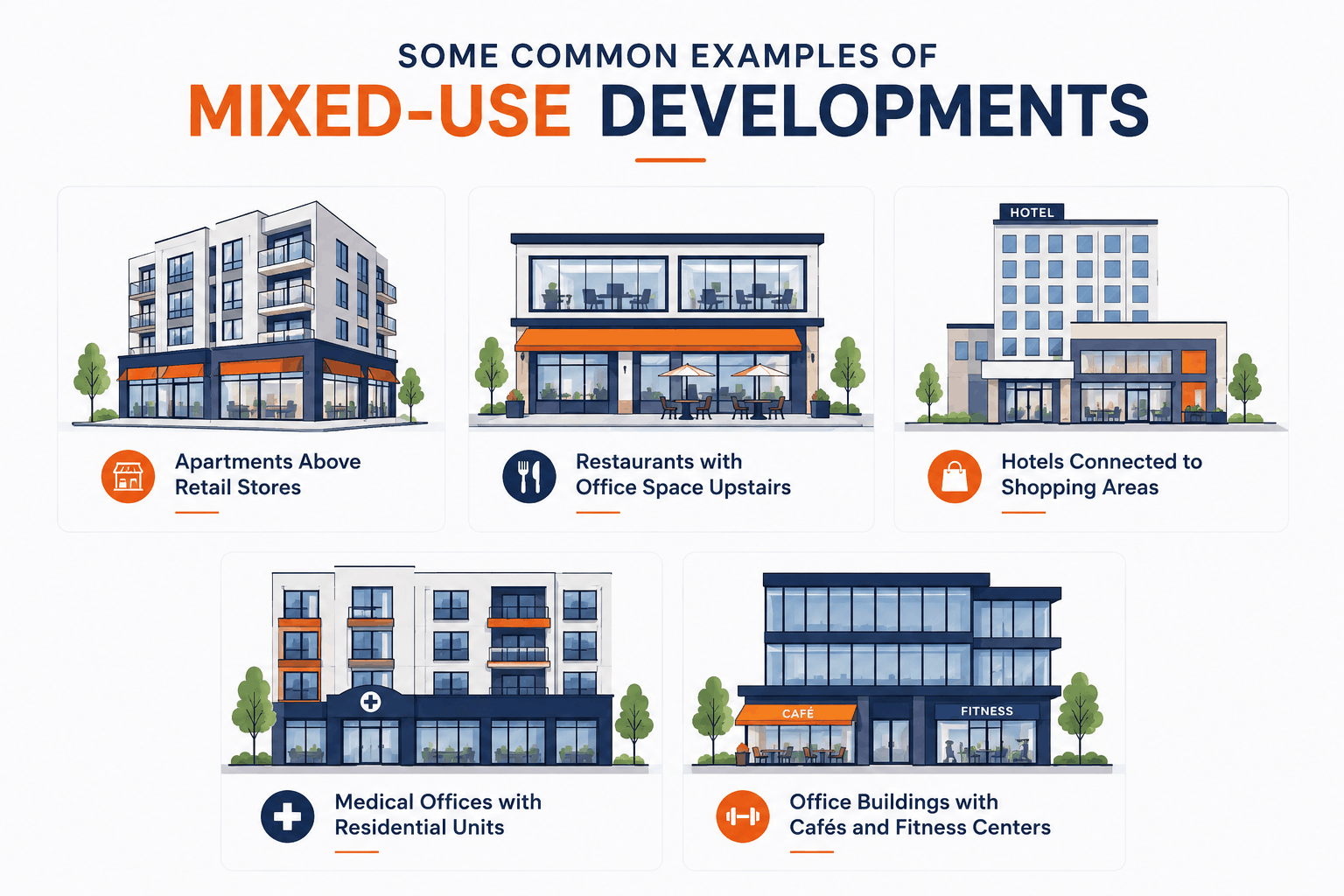
Some common examples include:
- Apartments above retail stores
- Restaurants with office space upstairs
- Hotels connected to shopping areas
- Medical offices with residential units
- Office buildings with cafés and fitness centers
Many Texas cities, including Austin, Dallas, Houston, and San Antonio, actively encourage mixed-use development. The reasons are: it increases land efficiency, supports economic growth, improves walkability, and helps meet growing housing demand. These projects also create walkable neighborhoods where people can live, work, shop, and spend time without driving long distances.
Do You Need a Building Permit?
In almost every case, yes. If you are building a new mixed-use property, adding a new structure, making major structural changes, or changing how a building will be used, you will usually need a building permit before work begins.
A building permit confirms that your project complies with adopted building codes, fire and life safety regulations, accessibility standards, structural requirements, and local development ordinances. Permit review helps protect public safety and reduces future legal and construction risks.
During the review, the city checks whether your plans follow building codes, fire safety rules, plumbing, electrical, mechanical systems, energy codes, and accessibility requirements. Remember, a building permit is not the same as zoning approval. Zoning decides what can be built on the property. A building permit checks how it will be built.
If your property is not zoned for mixed-use development, you may need a zoning change or a special approval before the city reviews your building permit application.
Who Reviews Your Permit Application?
A mixed-use project is usually reviewed by several departments. Each one looks at a different part of the project.
Building Department
The Texas building department checks your construction plans. It makes sure the building follows the adopted building code and other safety requirements. This department also performs inspections during construction.
Planning and Zoning Department
This department checks whether your project follows local zoning rules. It reviews land use, building height, setbacks, parking, and other development standards.
Fire Department
Fire officials review your plans to make sure the building is safe during emergencies. They check fire alarms, sprinkler systems, exits, fire lanes, and emergency access.
Engineering Department
The engineering team reviews site-related work. This may include drainage, sidewalks, utility connections, stormwater systems, and road access.
Texas State Agencies
Some projects also need approval from state agencies. For example, many commercial projects must comply with the Texas Accessibility Standards (TAS). These projects are registered with the Texas Department of Licensing and Regulation (TDLR) for accessibility review.
Because several departments review the same project, it is important to submit complete and accurate plans the first time. This can save weeks of review time.
Example: How Incomplete Plans Delayed Approval
Our consultants discussed JDJ’s Texas mixed-use development project that involved retail space and residential units. The initial permit review was delayed by several weeks because accessibility documents and drainage reports were submitted separately from the architectural plans.
After completing the missing documentation, the project moved through subsequent reviews more efficiently. This example shows why complete submissions are necessary for faster approvals.
| Agency | What They Review | Phone Number | Official Website |
| Texas Department of Licensing and Regulation (TDLR) | Texas Accessibility Standards (TAS), Architectural Barriers | (512) 463-6599 or (800) 803-9202 | Texas Department of Licensing and Regulation (TDLR) |
| Texas Accessibility Standards (TAS) Program | Accessibility plan review and registration | (877) 278-0999 or (512) 463-6599 | Texas Accessibility Standards (TAS) Program |
| State Fire Marshal’s Office (Texas Department of Insurance) | Fire and life safety reviews | (512) 676-6800 or (800) 578-4677 | Texas State Fire Marshal’s Office |
Documents Needed for a Mixed-Use Building Permit Application
A complete application gives your project the best chance of moving through the review process without unnecessary delays. Based on industry experience, permit reviewers typically issue correction notices when applications are missing one or more of the following:
- Accessibility documentation
- Site drainage plans
- Structural calculations
- Energy compliance reports
- Utility approval letters
- Fire protection plans
While every Texas city has its own requirements, most mixed-use projects require similar documents. Before you apply, contact your local building department to confirm its checklist. Some cities may ask for additional reports depending on the size or location of the project.
Building Permit Application
Every project starts with a permit application. This form includes basic information about the property, owner, contractor, and the type of work being planned. The city uses this information to create your project record and begin the review process.
Download the building permit application form here.
Site Plan
A site plan shows how the project fits on the property. It helps the city review the overall layout before construction begins.
A typical site plan includes:
- Property boundaries
- Building location
- Parking areas
- Driveways
- Sidewalks
- Utility connections
- Landscaping
- Stormwater or drainage features
The planning department uses the site plan to check that the project follows local zoning and development rules.
Go through the site plan review checklist here.
Architectural Plans
Architectural drawings explain how the building will be constructed.
These plans usually include:
- Floor plans
- Building elevations
- Roof plan
- Building sections
- Door and window schedules
- Room layouts
The city reviews these drawings to make sure the building meets adopted building codes and local regulations.
Structural Plans
Structural drawings show how the building will safely support its weight and resist wind and other loads. These plans are normally prepared and sealed by a licensed structural engineer. They include details for the foundation, framing, beams, columns, and other structural elements.
Mechanical, Electrical, and Plumbing (MEP) Plans
Most mixed-use projects must include separate plans for building systems.
These cover:
- Heating and air conditioning (HVAC)
- Electrical wiring
- Lighting
- Plumbing systems
- Water supply
- Sewer connections
Each system is reviewed to make sure it meets the applicable building codes and safety requirements.
Accessibility Documents
Many commercial and mixed-use projects in Texas must comply with the Texas Accessibility Standards (TAS). Depending on the project, you may need to register it with the Texas Department of Licensing and Regulation (TDLR) before construction begins. Accessibility documents help show that the building can be safely used by people with disabilities.
Energy Code Compliance
Texas cities often require documents showing that the building meets the adopted energy code. For commercial buildings, this usually includes energy calculations or a COMcheck report prepared during the design process. These documents show that the building is designed to use energy efficiently.
Other Supporting Documents
Some projects may also require:
- Property survey
- Landscape plan
- Fire sprinkler plans
- Soil or geotechnical report
- Drainage report
- Utility approval letters
- Contractor license information, if required by the city
The exact list depends on your project’s size, location, and local regulations.
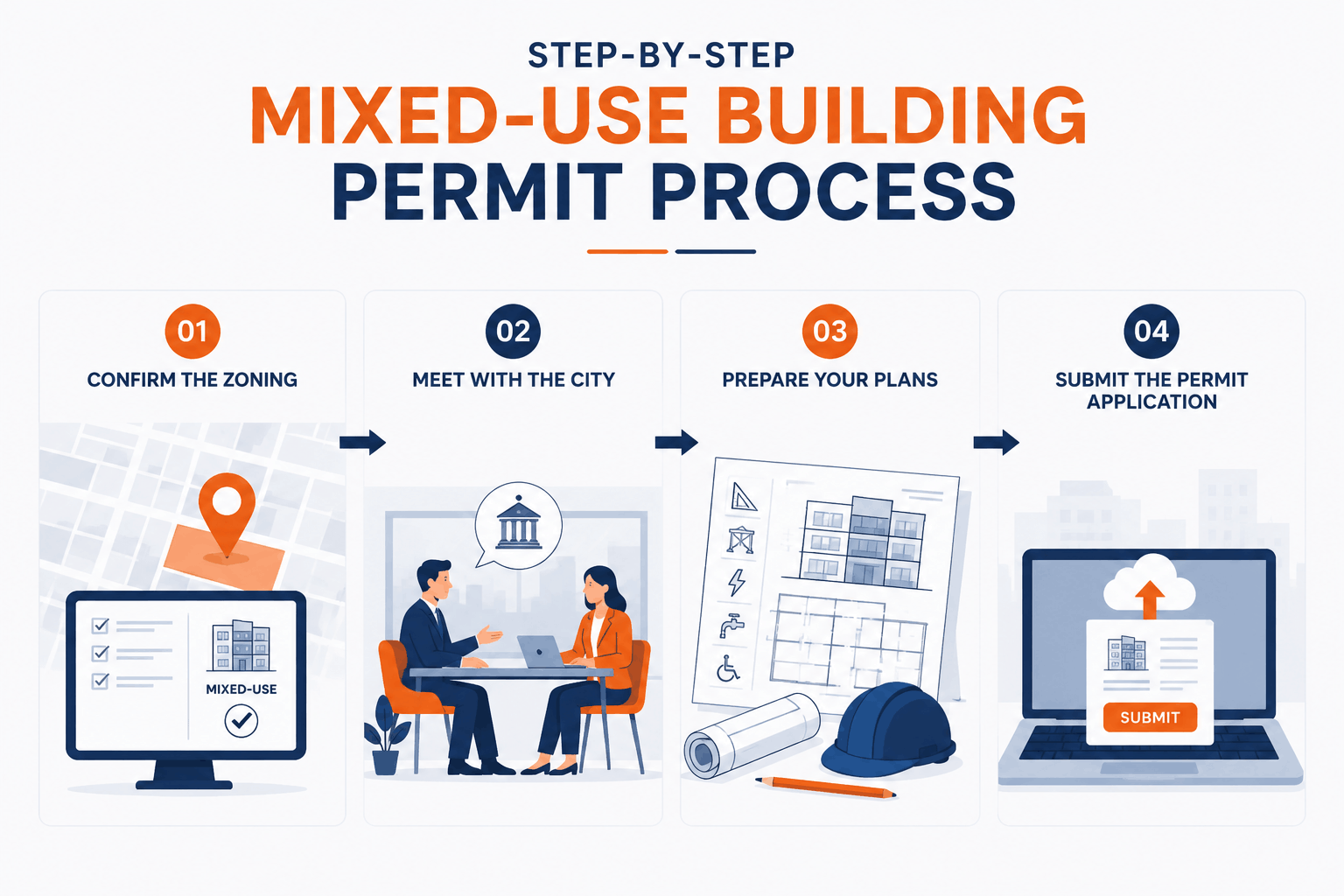
Step-by-Step Mixed-Use Building Permit Process
Although every city has its own process, most mixed-use developments follow the same general steps.
Step 1: Confirm the Zoning
Before preparing construction drawings, confirm that the property allows mixed-use development. If the current zoning does not allow your project, you may need a rezoning request, planned development approval, or a special use permit before applying for a building permit.
Step 2: Meet With the City
Many cities encourage a pre-application meeting. During this meeting, city staff explain the review process, identify required documents, and point out possible issues before you submit your application. This early discussion can often save several weeks during plan review by identifying zoning conflicts, utility concerns, accessibility issues, and development requirements before formal submission.
Step 3: Prepare Your Plans
Your architect and engineers prepare the complete drawing set. The plans should include all required architectural, structural, mechanical, electrical, plumbing, site, and accessibility information before submission. Submitting complete plans reduces the chance of multiple review cycles.
Step 4: Submit the Permit Application
Once your documents are ready, submit the application to the local building department. Most Texas cities now allow electronic plan submissions, while some still accept paper copies for certain projects.
What Happens After You Submit Your Application?
After you submit your permit application, the city begins reviewing your plans. Different departments check different parts of the project. Their goal is to make sure the building is safe, follows local rules, and meets all required codes.
If the reviewers find missing information or code issues, they will send comments. This is often called a plan review correction.
Your architect or engineer must update the drawings and submit them again. The review continues until every department approves the project. The more complete your plans are, the fewer review cycles you will usually have.
Building Inspections
Getting a permit does not mean construction can continue without checks. As work progresses, the city performs inspections at different stages. These inspections help confirm that the work matches the approved plans and follows the building code.
Depending on the project, inspections may include:
- Foundation inspection
- Structural framing inspection
- Electrical inspection
- Plumbing inspection
- Mechanical (HVAC) inspection
- Fire protection inspection
- Final building inspection
If an inspection fails, the contractor must correct the problem before work can continue. Some work cannot be covered until it has been inspected and approved.
Certificate of Occupancy
After construction is complete and all final inspections have passed, the city may issue a Certificate of Occupancy (CO).
A Certificate of Occupancy confirms that the building meets the approved plans and applicable building codes. In most cases, a new mixed-use building cannot be occupied until the local authority issues this certificate.
Building Codes That Apply to Mixed-Use Projects
Most Texas cities adopt national model building codes with local amendments. The exact code edition depends on the city, but mixed-use developments are commonly reviewed under:
- International Building Code (IBC)
- International Fire Code (IFC)
- International Plumbing Code (IPC)
- International Mechanical Code (IMC)
- International Energy Conservation Code (IECC)
- National Electrical Code (NEC)
Always check which code edition your city has adopted before starting the design process. Local amendments may change some requirements.
Texas Accessibility Standards (TAS)
Most commercial and mixed-use projects must also meet the Texas Accessibility Standards (TAS). These standards help ensure that buildings can be safely used by people with disabilities. Depending on the project, plans may need to be registered with the Texas Department of Licensing and Regulation (TDLR) before construction begins.
Accessibility requirements may cover:
- Accessible entrances
- Parking spaces
- Elevators
- Restrooms
- Ramps
- Door widths
- Accessible routes throughout the building
Planning for accessibility early helps avoid expensive changes later in the project.
How Long Does the Permit Process Take?
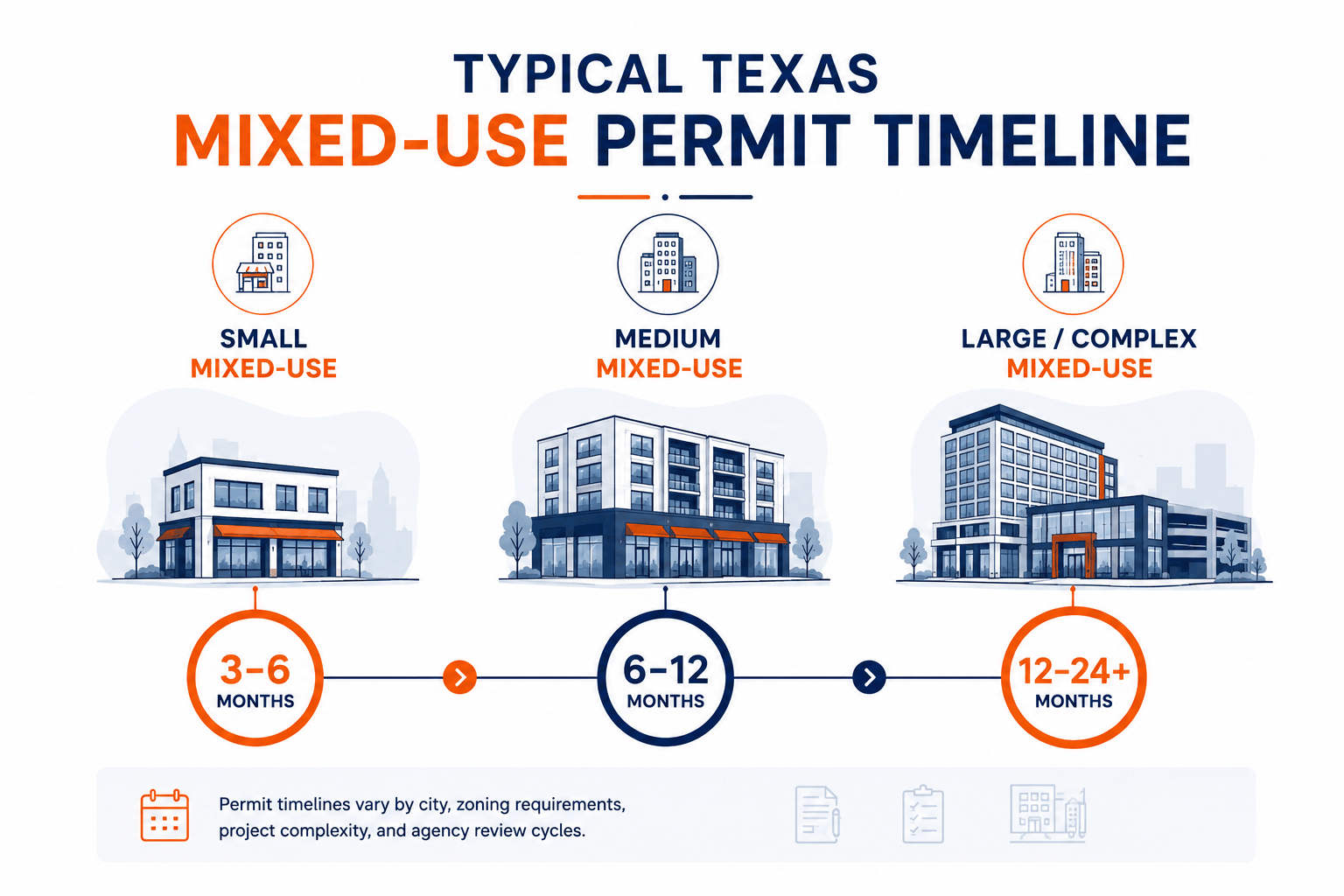
There is no single timeline for every project. The review time depends on several factors, including:
- Project size
- Building complexity
- Number of review departments
- Whether plans are complete
- How quickly corrections are submitted
- Local government workload
Simple projects may move through the process faster, while large mixed-use developments often require several rounds of review before approval. The complete building permit timeline in Texas is discussed in this blog.
What Affects Permit Costs?
Permit fees are different in every Texas city. In addition to permit fees, developers should budget for plan review fees, impact fees, accessibility registration costs, utility connection charges, consultant fees, and potential resubmittal costs if corrections are required.
The total cost often depends on:
- Project value
- Building size
- Type of construction
- Plan review fees
- Inspection fees
- Utility connection fees
- Development or impact fees, when required
Before submitting your application, ask the local building department for its current fee schedule. Check the detailed guide on Texas building permit costs.
Common Mistakes That Delay Approval
Based on industry experience, most permit delays occur because project teams underestimate the complexity of the approval process or submit incomplete documentation. Some of the most common problems include:
- Applying before confirming zoning
- Missing drawings or reports
- Incomplete permit forms
- Plans that do not meet building codes
- Accessibility issues
- Slow responses to review comments
- Starting construction before receiving a permit
Checking your application carefully before submission can save both time and money.
Tips for a Faster Approval
A few simple steps can make the permit process smoother.
- Confirm zoning before designing the project.
- Meet with city staff early if a pre-application meeting is available.
- Hire experienced architects and engineers.
- Submit complete and accurate plans.
- Respond to review comments as quickly as possible.
- Keep good communication between the owner, design team, and contractor.
These steps reduce revisions and help keep the project on schedule.
According to permit expediters and development consultants, successful mixed-use projects usually begin permit planning during the early design phase rather than after construction drawings are complete. Early coordination between owners, architects, engineers, and city staff often reduces revisions and accelerates approvals.
Conclusion
A mixed-use building permit is more than just paperwork. It helps make sure your project is safe, meets building codes, and follows local development rules.
Although every Texas city has its own permit process, most projects follow the same path. You confirm the zoning, prepare detailed plans, submit the application, complete the plan review, pass inspections, and receive a Certificate of Occupancy before the building can be used.
Starting with complete plans and understanding the requirements early can reduce delays and help your project move forward with fewer surprises. Whether you are a developer, investor, business owner, or property owner, careful planning is one of the best ways to achieve a successful mixed-use project in Texas.
Frequently Asked Questions
Do all mixed-use projects need a building permit?
Most new construction, major additions, structural changes, and changes in building use require a permit from the local authority.
Who issues building permits in Texas?
Building permits are usually issued by the city or county where the project is located, not by the State of Texas.
Can I start construction before getting a permit?
No. Starting construction without the required permit can lead to fines, stop-work orders, and project delays.
What is the final step before using the building?
In most cases, the final step is receiving a Certificate of Occupancy after all required inspections have been completed.
What is the biggest cause of permit delays in Texas?
Incomplete plans, unresolved zoning issues, accessibility corrections, and missing engineering documents are among the most common causes of permit delays.
Need Help With Your Mixed-Use Building Permit?
Mixed-use developments involve multiple regulatory agencies, overlapping building codes, and extensive plan reviews. Working with experienced permit consultants can help identify potential issues early. They help you coordinate agency reviews and improve project timelines. Professional guidance is particularly valuable for large, complex, or first-time mixed-use developments.
Every project is different, and the permit process can quickly become confusing. If you have questions about zoning, permits, or city approvals, we’re here to help.
Schedule your FREE consultation with our permit expediters at JDJ Consulting Group. Get clear, practical guidance for your project.
Call us: (818) 793-5058
Email: sales@jdj-consulting.com