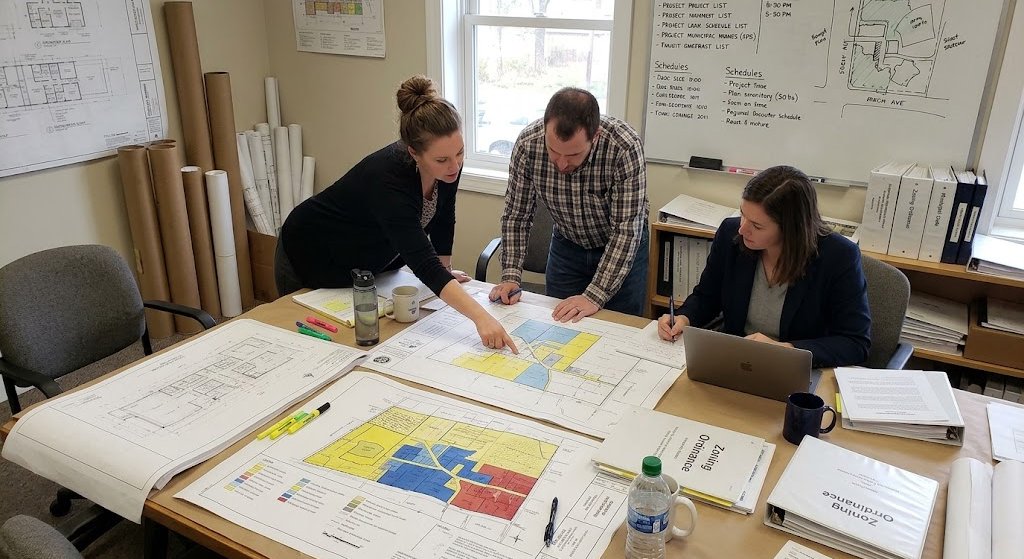
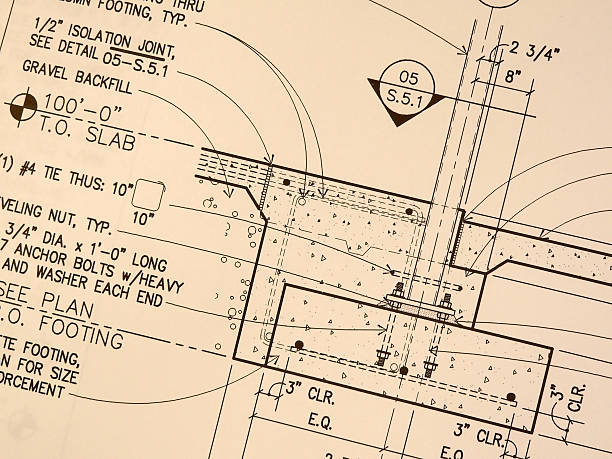
Opening a construction project involves more than just design plans and approvals. Before any materials are ordered or installed, there is a critical step that often gets overlooked—submittal drawings. These documents help turn design intent into real-world execution.
Submittal drawings play a key role in keeping projects organized, compliant, and on schedule. They ensure that materials, systems, and installation methods match what was approved during the design phase. Without them, even small misunderstandings can lead to delays, rework, or failed inspections.
In fast-moving projects like retail tenant improvements or commercial buildouts, there is little room for error. Every detail matters. That is why a clear and structured submittal process is essential from the start.
In this guide, we will break down submittal drawing requirements in simple terms. You will learn what they include, why they matter, and how to manage them effectively to avoid costly mistakes.
Table of Contents
What Are Submittal Drawings in Construction?
Submittal drawings are a key part of any construction project. They help move a design from paper to reality. Before any work begins, contractors must submit these drawings for review and approval.
In simple terms, submittal drawings show how something will actually be built or installed. They go beyond basic design plans. They include detailed information about materials, dimensions, and installation methods.
Think of them as a checkpoint. They confirm that everyone involved in the project understands what will be built.
Simple Definition
Submittal drawings are documents prepared by contractors, subcontractors, or suppliers. These documents are sent to the design team for approval before construction starts.
They usually include:
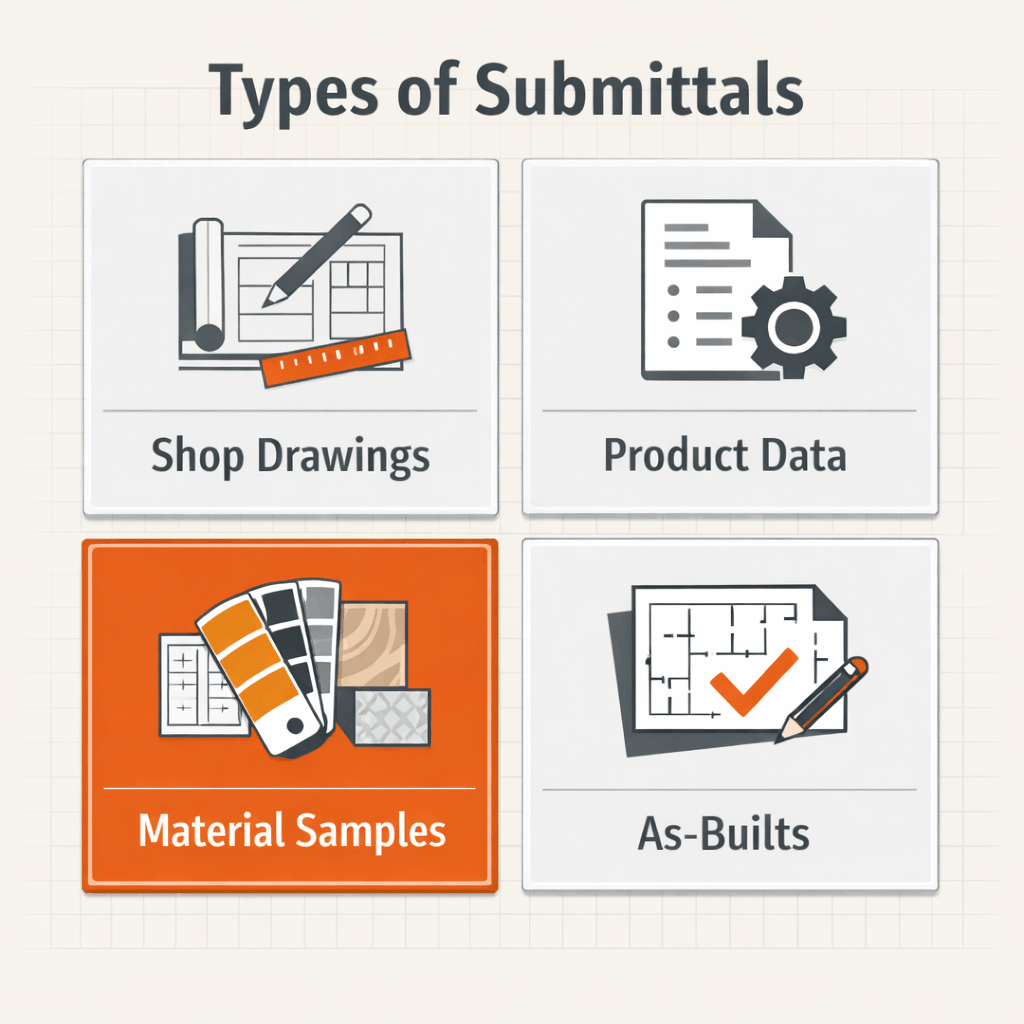
Shop drawings
Product data sheets
Material samples
Equipment details
Each submittal answers one simple question: “Does this match the design and project requirements?” If the answer is yes, the work can move forward. If not, it must be revised. This process may feel slow. However, it helps prevent bigger problems later.
Why Submittals Exist in Every Project
Construction projects involve many moving parts. Different teams work on different systems. Without clear communication, mistakes can happen. Submittals help avoid that.
They ensure:
Materials match project specifications
Systems fit together correctly
Everyone is aligned before installation
For example, a lighting plan may look correct in design drawings. But the actual fixture model must still be approved through a submittal. This step confirms performance, size, and compatibility. Because of this, submittals act as a quality control layer before work begins.
Submittal Drawings vs Construction Drawings
Many people confuse these two. They are related, but not the same. Here is a simple comparison:
| Construction Drawings | Submittal Drawings |
|---|---|
| Created by architects/engineers | Created by contractors or suppliers |
| Show design intent | Show how work will be executed |
| Less detailed | Highly detailed and specific |
| Used for permits and planning | Used for approval before installation |
- Construction drawings answer: “What should be built?”
- Submittal drawings answer: “How will it be built?”
Both are important. However, submittals provide the detail needed to actually carry out the work.
Why Submittal Drawing Requirements Matter (Cost, Compliance & Risk)
Submittal drawings are not just paperwork. They directly affect cost, timelines, and project success. Skipping or rushing this step often leads to delays and expensive fixes.
Quality Control Before Construction Starts
Submittals act as the final review before materials are ordered or installed. This step helps:
Catch errors early
Confirm correct products
Avoid rework
For example, if a wrong HVAC unit is approved and installed, replacing it later can delay the entire project. Submittals help prevent that. They allow teams to fix issues on paper instead of in the field.
Code Compliance & Permit Approval
In many cases, submittals also support compliance. While permit drawings focus on code approval, submittals ensure that installed materials meet those same standards. This is especially important for:
Retail tenant improvements
Electrical systems
Plumbing installations
Fire safety systems
If installed materials do not match approved documents, inspections may fail. That leads to delays, fines, or redesign.
Real-World Risk Example
History has shown what can go wrong without proper review. In some well-known construction failures, poor communication and lack of proper submittal review played a role. Small changes made during fabrication were not fully reviewed. Over time, those changes led to serious structural issues.
While most projects are not that extreme, the lesson is clear: details matter, and review processes exist for a reason.
Impact on Project Timeline & Budget
Submittals have a direct impact on both schedule and cost.
Here’s how:
| Issue | Impact on Project |
|---|---|
| Late submittals | Delays in approvals and construction start |
| Incorrect submittals | Revisions and resubmissions |
| Missing information | Review rejection |
| Poor coordination | Field conflicts and rework |
Each delay adds pressure to the timeline. In fast-paced projects like retail buildouts, even a small delay can affect opening dates. That is why experienced teams treat submittals as a priority, not an afterthought.
Types of Submittal Drawings (Complete Breakdown)
Not all submittals are the same. Different types serve different purposes. Understanding each type helps you prepare complete and accurate packages.
Shop Drawings (Most Important)
Shop drawings are the most detailed type of submittal. They show exactly how a specific component will be fabricated and installed.
These drawings include:
Dimensions and measurements
Material specifications
Installation details
Connection points
Shop drawings are commonly used for:
Structural steel
Millwork and cabinetry
HVAC ductwork
Electrical systems
They must match the design intent while adding real-world detail. Because of their importance, shop drawings often go through multiple review cycles.
Product Data Submittals
Product data submittals focus on materials and equipment. They include manufacturer-provided information such as:
Technical specifications
Performance ratings
Model numbers
Finishes and colors
These submittals confirm that selected products meet project requirements. For example, a lighting fixture must meet both design and energy code requirements. Product data helps verify that.
Material Samples & Mockups
Some decisions cannot be made from drawings alone. That is where samples and mockups come in.
Material samples may include:
Paint finishes
Flooring materials
Exterior cladding
Mockups go a step further. They show a full or partial installation before final approval.
This helps teams evaluate:
Appearance
Fit and alignment
Performance
It also reduces surprises during construction.
As-Built Drawings
As-built drawings are prepared after construction is complete. They show what was actually installed, including any changes made during the project.
These drawings are important for:
Future maintenance
Renovations
Facility management
They provide a clear record of the final condition of the building.
Specialty Submittals (MEP & Systems)
Some systems require more technical submittals.
These include:
Mechanical systems (HVAC layouts)
Electrical systems (panel schedules, load data)
Plumbing systems (pipe layouts, fixture details)
Fire protection systems (sprinkler layouts)
These submittals often require coordination between multiple trades. Any mismatch can cause conflicts in the field.
What Should Be Included in Submittal Drawings? (Checklist)
A strong submittal package is clear, complete, and easy to review. When information is missing, the review process slows down. In many cases, incomplete submittals are rejected right away. To avoid delays, each submittal should follow a consistent structure.
Core Information Required
Start with the basics. Every submittal must clearly identify the project and the document.
Include:
Project name and address
General contractor and subcontractor details
Submittal number or reference ID
Drawing title and description
Date of submission
Revision number (if resubmitted)
This information may seem simple. However, it helps reviewers track and organize documents. Without it, confusion can happen quickly—especially on large projects.
Technical Details
Next comes the technical content. This is the most important part of the submittal.
It should include:
Exact dimensions and measurements
Material types and specifications
Installation methods
Tolerances and clearances
For example, if you are submitting a storefront system, the submittal should show frame sizes, glass type, anchoring details, and connection points.
The goal is simple: Give enough detail so the reviewer can confirm it meets the design.
Compliance Documentation
Submittals should also show that materials meet required standards.
Include:
Applicable building codes
Safety standards (UL, ASTM, etc.)
Manufacturer certifications
Energy compliance data (if required)
This is especially important for systems like electrical, HVAC, and fire protection. If compliance is not clear, the submittal may be rejected—even if the product itself is acceptable.
Visual Components
Clear visuals make a big difference. Reviewers rely on drawings to understand the details quickly.
Typical visual elements include:
Plan views
Elevations
Sections
Detail callouts
Diagrams and schedules
Well-organized drawings reduce back-and-forth communication. They also speed up approvals.
Quick Submittal Checklist
Here is a simple checklist to keep your submittals complete:
| Category | What to Include |
|---|---|
| Identification | Project info, contractor details, submittal number |
| Technical Data | Dimensions, materials, installation details |
| Compliance | Codes, certifications, standards |
| Visuals | Plans, sections, elevations, diagrams |
| Revisions | Clear version tracking and updates |
Using a checklist like this helps avoid missed details. It also improves consistency across projects.
Submittal Drawing Requirements by Project Type
Submittal requirements can vary depending on the type of project. While the process stays similar, the level of detail and focus areas change.
Understanding these differences helps you prepare better submittals.
Retail Tenant Improvement (TI) Projects
Retail projects often move fast. Timelines are tight, and opening dates are fixed. Because of this, submittals must be accurate and submitted early.
Common requirements include:
Interior layout adjustments
Lighting and electrical plans
Ceiling and fixture details
Storefront and signage drawings
Retail spaces also require coordination between design and branding. Even small changes, like fixture placement, can affect both layout and customer flow.
Commercial Construction Projects
Larger commercial projects involve more systems and more coordination.
Submittals typically include:
Structural steel shop drawings
HVAC system layouts
Electrical distribution plans
Equipment specifications
These projects often involve multiple subcontractors working at the same time. As a result, coordination between trades becomes critical. Even a small mismatch between systems can cause field conflicts.
EV Charging Station Installations
EV projects are becoming more common. However, they come with specific requirements.
Typical submittals include:
Electrical load calculations
Equipment specifications (chargers, panels)
Site layout and parking plans
Trenching and conduit details
Power capacity and code compliance are key concerns. If calculations are incorrect, the system may not pass inspection.
Multi-Family & Mixed-Use Developments
These projects combine residential and commercial elements. This increases complexity.
Submittals often focus on:
Life safety systems (fire alarms, sprinklers)
Accessibility compliance (ADA requirements)
Plumbing and mechanical systems
Unit layouts and finishes
Because these buildings serve different uses, they must meet multiple code requirements at once.
Submittal Drawing Approval Process (Step-by-Step)
The submittal process follows a structured workflow. Each step ensures accuracy and accountability. Skipping steps or rushing the process often leads to rejections.
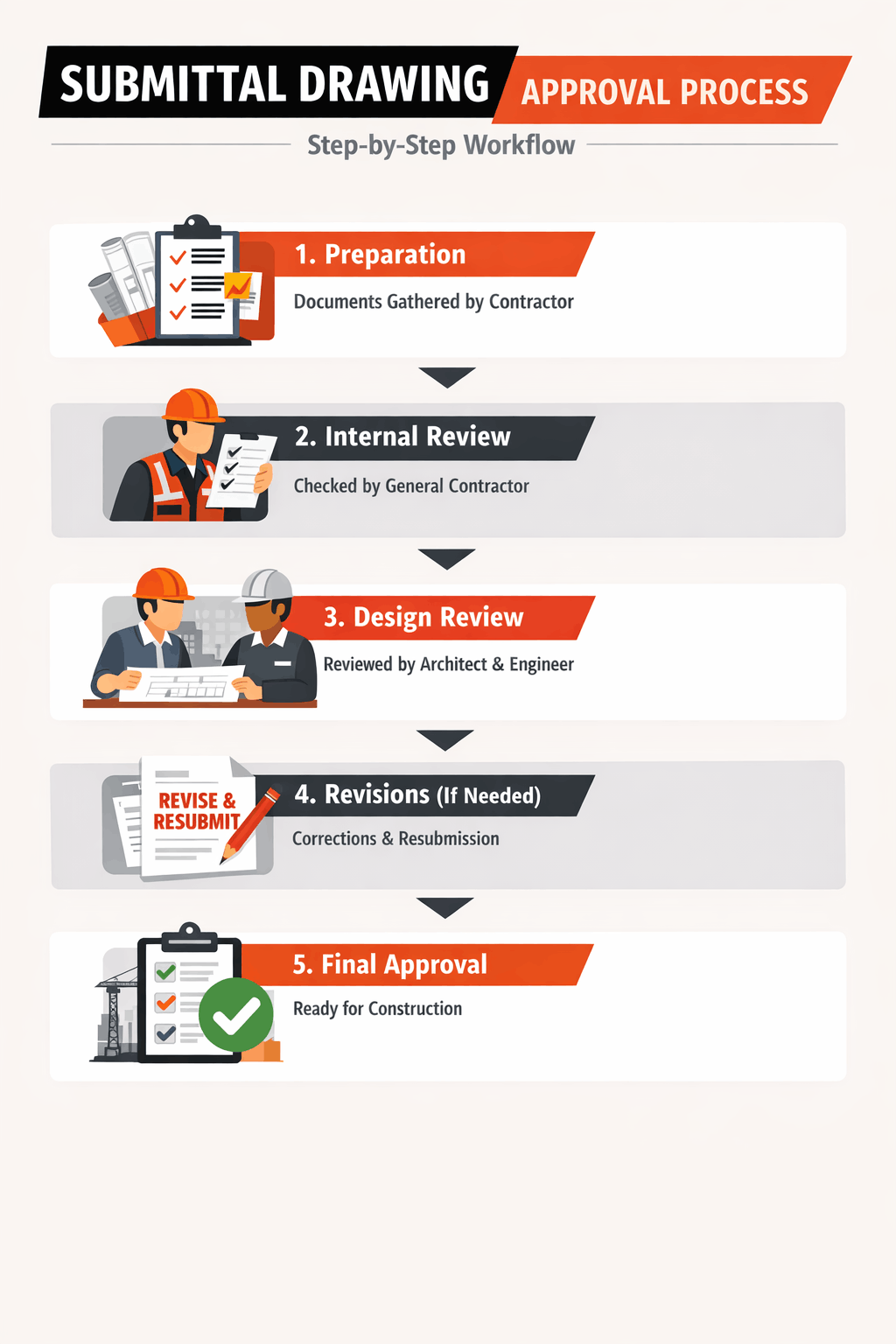
Step 1: Preparation by Contractor or Subcontractor
The process begins with the contractor or subcontractor.
They gather:
Shop drawings
Product data
Samples (if required)
At this stage, accuracy is critical. Errors here will carry forward into the review process.
Step 2: Internal Review by General Contractor
Before sending the submittal to the design team, the general contractor reviews it.
This step checks:
Completeness
Coordination with other trades
Alignment with project specifications
A strong internal review reduces the chances of rejection later.
Step 3: Design Team Review (Architect & Engineer)
Once submitted, the design team reviews the documents.
They check:
Compliance with design intent
Code requirements
Material suitability
After review, the submittal is marked as:
Approved
Approved with comments
Revise and resubmit
Rejected
Most submittals come back with comments. That is normal.
Step 4: Resubmission (If Required)
If changes are needed, the contractor must revise the submittal.
This includes:
Addressing all review comments
Updating drawings or data
Resubmitting for approval
Clear responses to comments help speed up the second review.
Step 5: Final Approval and Release for Construction
Once approved, the submittal becomes part of the construction process.
At this point:
Materials can be ordered
Fabrication can begin
Installation can proceed
Only approved submittals should be used in the field. Using unapproved documents can lead to serious issues during inspection.
Submittal Workflow Summary
| Step | Description |
|---|---|
| Preparation | Contractor gathers and prepares documents |
| Internal Review | General contractor checks accuracy |
| Design Review | Architect/engineer reviews for compliance |
| Resubmission | Revisions made if needed |
| Final Approval | Approved for construction use |
Common Mistakes in Submittal Drawings (And How to Avoid Them)
Even experienced teams make mistakes with submittals. Most issues are not complex. They come from missing details, poor coordination, or rushing the process.
The good news is that these mistakes are avoidable.
Incomplete Documentation
One of the most common issues is missing information.
This includes:
Missing product data
Incomplete drawings
No specifications listed
Lack of supporting documents
When a submittal is incomplete, reviewers cannot approve it. It gets sent back, and the timeline slips.
How to avoid it:
Use a checklist before submission
Confirm all required documents are attached
Review specification sections carefully
A few extra minutes of review can save days of delay.
Mismatch with Construction Drawings
Another frequent issue is inconsistency.
For example:
A product that does not match the approved design
Dimensions that differ from construction drawings
Materials that are not specified in the contract
These mismatches create confusion. In some cases, they lead to rework in the field.
How to avoid it:
Cross-check submittals against construction drawings
Review specification sections before selecting materials
Confirm with the design team if unsure
Consistency is key. Every document should tell the same story.
Poor Coordination Between Trades
Modern projects involve many systems working together.
Common conflicts include:
HVAC ducts clashing with structural elements
Electrical conduits interfering with plumbing
Equipment not fitting in allocated space
These issues often appear during installation. At that point, fixing them is costly.
How to avoid it:
Coordinate submittals across trades early
Use overlay drawings or coordination meetings
Review clearances and space requirements
Good coordination prevents field conflicts.
Late Submittals
Timing matters as much as accuracy.
Late submittals delay:
Material approvals
Fabrication
Installation
In fast-paced projects, this can affect the entire schedule.
How to avoid it:
Follow the project submittal schedule
Prioritize long-lead items
Submit early, even if revisions are expected
Early submissions give room for corrections.
Ignoring Review Comments
Sometimes, submittals are returned with comments, but not all comments are addressed. This leads to repeated rejections.
How to avoid it:
Respond to every comment clearly
Highlight revisions in resubmissions
Keep communication open with reviewers
A clear response speeds up approval.
Common Mistakes Overview
| Mistake | Result | Solution |
|---|---|---|
| Incomplete submittal | Immediate rejection | Use a checklist |
| Design mismatch | Confusion and rework | Cross-check drawings |
| Poor coordination | Field conflicts | Coordinate early |
| Late submission | Project delays | Follow schedule |
| Ignored comments | Repeated rejection | Address all feedback |
Submittal Drawing Requirements for Permits (City Approval Focus)
Submittals and permits are closely related, but they serve different purposes. Permit drawings are submitted to the city for approval. Submittals are reviewed by the design team before construction. However, both must align. If they do not, problems arise during inspection.
What Building Departments Typically Require
For permits, cities usually require:
Complete plan sets (architectural, structural, MEP)
Code-compliant drawings
Energy compliance documents
Professional stamps (architect or engineer)
These documents focus on safety and code requirements.
They answer one main question: “Does this project meet local regulations?”
Differences Between Permit Drawings and Submittals
Here is a clear comparison:
| Permit Drawings | Submittal Drawings |
|---|---|
| Submitted to city | Submitted to architect/engineer |
| Focus on code compliance | Focus on materials and execution |
| Prepared by design team | Prepared by contractors/suppliers |
| Used for permit approval | Used before installation |
Even though they are different, they must stay consistent. If a submittal introduces changes that were not approved in permit drawings, the project may fail inspection.
Why Permit Rejections Happen
Permit rejections are common, especially in tenant improvement projects.
Typical reasons include:
Missing details in drawings
Non-compliance with building codes
Incomplete documentation
Conflicts between systems
These issues often start at the submittal stage. If submittals are not aligned with code requirements, problems carry forward.
How to reduce rejections:
Ensure submittals match approved permit drawings
Verify code compliance early
Work with experienced professionals
Submittal Logs, Tracking & Management
Managing submittals is just as important as preparing them. On large projects, there can be hundreds of submittals. Without proper tracking, it is easy to lose control.
What Is a Submittal Log?
A submittal log is a central list of all required submittals for a project.
It tracks:
What needs to be submitted
Who is responsible
Current status
It acts as a roadmap for the submittal process.
Key Elements in a Submittal Register
A well-structured log includes:
Submittal number
Description of item
Responsible party
Submission date
Review status
Approval date
This information helps teams stay organized and accountable.
Example Submittal Log Structure
| Submittal No. | Description | Responsible Party | Status | Date |
|---|---|---|---|---|
| S-001 | Storefront system | Subcontractor | Pending | Mar 10 |
| S-002 | HVAC equipment | Mechanical contractor | Approved | Mar 12 |
| S-003 | Lighting fixtures | Electrical contractor | Revise & Resubmit | Mar 14 |
Importance of Tracking
Without tracking, issues can quickly build up.
A proper system helps:
Prevent missed submittals
Track approvals and delays
Keep the project on schedule
It also improves communication between teams. When everyone knows the status of each submittal, decision-making becomes faster.
Tools & Software for Managing Submittals
Managing submittals manually can quickly become overwhelming. Emails get lost. Versions get mixed up. Approvals take longer than expected. That is why many teams now use software to manage the process. These tools help keep everything organized in one place.
Construction Management Platforms
Several platforms are widely used in the industry. Each one helps track submittals, approvals, and communication.
Common tools include:
Procore
Autodesk Construction Cloud
eSUB
These platforms allow teams to:
Upload and review submittals in one system
Track approval status in real time
Store revision history
Assign responsibilities
This reduces confusion and keeps everyone aligned.
Benefits of Digital Submittals
Switching from manual to digital systems brings clear advantages.
Here are the main benefits:
Faster review cycles
Better document control
Fewer errors and missing files
Easier collaboration across teams
Digital tools also create a clear record of all actions. This helps resolve disputes and improves accountability.
Manual vs Digital Submittal Management
| Feature | Manual Process | Digital Process |
|---|---|---|
| Document storage | Emails and folders | Centralized platform |
| Tracking | Spreadsheets | Automated tracking |
| Review time | Slower | Faster |
| Version control | Difficult | Clear and organized |
| Collaboration | Limited | Real-time updates |
When to Use Software
Not every project needs complex tools. However, software becomes valuable when:
Projects involve multiple trades
There are many submittals to track
Timelines are tight
Teams work across different locations
In these cases, digital systems help avoid delays and miscommunication.
Best Practices for Submittal Drawings
Strong submittals come from good habits. When teams follow a clear process, approvals become faster and smoother. Below are some practical best practices used in successful projects.
Start Early in the Project Timeline
Submittals should begin as early as possible. Waiting too long creates pressure and increases the risk of mistakes.
Focus first on:
Long-lead materials
Critical systems
Items that affect multiple trades
Early submission gives enough time for review and revisions.
Follow Specification Sections Carefully
Project specifications clearly define submittal requirements.
They outline:
What needs to be submitted
Required formats
Review timelines
Ignoring specifications leads to incomplete submittals. Always review these sections before preparing documents.
Coordinate Across All Trades
Coordination is one of the most important steps. Different systems must fit together without conflict.
To improve coordination:
Share submittals across teams
Hold coordination meetings
Review layouts together
This helps catch issues early and avoids field changes.
Maintain Clear Communication
Good communication keeps the process moving.
Make sure:
Questions are raised early
Comments are clearly addressed
Updates are shared with all stakeholders
Clear communication reduces back-and-forth and speeds up approvals.
Use Standardized Templates
Templates help create consistency. They ensure every submittal includes the required information.
Benefits of using templates:
Faster preparation
Fewer missing details
Easier review process
Consistency also makes it easier for reviewers to check documents quickly.
Best Practices Summary
| Practice | Why It Matters |
|---|---|
| Start early | Prevents delays |
| Follow specs | Ensures completeness |
| Coordinate trades | Avoids conflicts |
| Communicate clearly | Speeds up approvals |
| Use templates | Improves consistency |
Submittal Drawings vs RFIs vs Shop Drawings
Construction projects use many types of documents. It is important to understand how they differ. This helps avoid confusion and ensures the right process is followed.
Submittals vs RFIs
Submittals and RFIs serve different purposes.
Submittals are used to get approval for materials and systems
RFIs (Requests for Information) are used to ask questions
For example:
If you need approval for a lighting fixture → submit a submittal
If a drawing detail is unclear → send an RFI
Both are important, but they solve different problems.
Submittals vs Shop Drawings
Shop drawings are often confused with submittals.
The key difference is simple:
Shop drawings are a type of submittal
All shop drawings are submittals, but not all submittals are shop drawings.
Here is a quick comparison:
| Document Type | Purpose |
|---|---|
| Submittal | Approval of materials and systems |
| Shop Drawing | Detailed fabrication and installation drawing |
| RFI | Clarification of design or information |
Why This Distinction Matters
Using the wrong process can slow down a project.
For example:
Sending an RFI instead of a submittal delays approval
Submitting incomplete shop drawings leads to rejection
Understanding these differences helps teams:
Communicate clearly
Follow the correct workflow
Avoid unnecessary delays
How JDJ Consulting Helps with Submittal & Permit Drawings
Submittals and permit drawings can slow a project down if not handled correctly. Many teams struggle with unclear requirements, repeated revisions, and missed details. This is where the right support makes a difference.
JDJ Consulting focuses on helping projects move faster with clear, accurate documentation.
End-to-End Submittal Support
JDJ Consulting works through the full submittal process.
This includes:
Preparing detailed drawing packages
Reviewing for code compliance
Coordinating with project teams
Aligning submittals with permit drawings
Instead of reacting to issues later, the goal is to prevent them early. This approach reduces confusion and keeps projects on track.
Faster Approvals, Fewer Revisions
One of the biggest delays in construction comes from repeated rejections.
JDJ Consulting helps reduce that risk by:
Ensuring submittals match design intent
Verifying technical details before submission
Addressing common review concerns upfront
When submittals are clear and complete, approvals come faster.
That means:
Less back-and-forth
Fewer delays
More predictable timelines
Expertise in Retail, EV, and Commercial Projects
Different project types have different requirements.
JDJ Consulting has experience in:
Retail tenant improvement projects
EV charging station installations
Commercial construction and buildouts
This experience helps identify issues early. It also ensures that submittals meet both design and permit expectations.
Where JDJ Adds Value
| Area | How It Helps |
|---|---|
| Submittal preparation | Reduces missing details |
| Code compliance review | Prevents permit issues |
| Coordination support | Avoids trade conflicts |
| Permit alignment | Ensures consistency |
| Revision management | Speeds up approvals |
FAQs About Submittal Drawing Requirements
What are submittal drawings in construction?
Submittal drawings are documents submitted by contractors or suppliers for approval before construction begins. They show how materials and systems will be built and installed.
What is included in a submittal package?
A typical submittal package includes:
Shop drawings
Product data
Material samples (if required)
Technical specifications
All documents must match the project requirements.
Who prepares submittal drawings?
Submittal drawings are usually prepared by:
Contractors
Subcontractors
Manufacturers or suppliers
The design team then reviews and approves them.
Are submittals required for permits?
Submittals are not always directly required for permits. However, they must align with approved permit drawings. If they do not match, issues may arise during inspections.
What happens if a submittal is rejected?
If a submittal is rejected, it must be revised and resubmitted. This can delay the project if not handled quickly.
How long does the submittal process take?
The timeline varies by project. However, each review cycle can take several days or weeks. Submitting early helps avoid delays.
Why are submittals important in tenant improvement projects?
Tenant improvement projects often have tight deadlines.
Submittals help ensure:
Correct materials are used
Systems are coordinated
Work meets code requirements
This reduces delays and helps projects stay on schedule.
Final Thoughts: Why Getting Submittal Drawings Right Saves Time and Money
Submittal drawings are more than just a requirement. They are a key part of project success.
When done right, they:
Prevent costly mistakes
Improve coordination between teams
Support code compliance and inspections
Keep projects on schedule
On the other hand, poor submittals lead to delays, rework, and frustration. That is why it is important to treat submittals as a priority from the start.
With the right process and support, submittals become a tool that keeps your project moving forward—not holding it back.
Need help with submittal drawings or permit approvals?
Our team can simplify the process and keep your project moving. Schedule your free consultation today! Call (818) 793-5058, email sales@jdj-consulting.com, or click here: https://jdj-consulting.com/book-consultation/