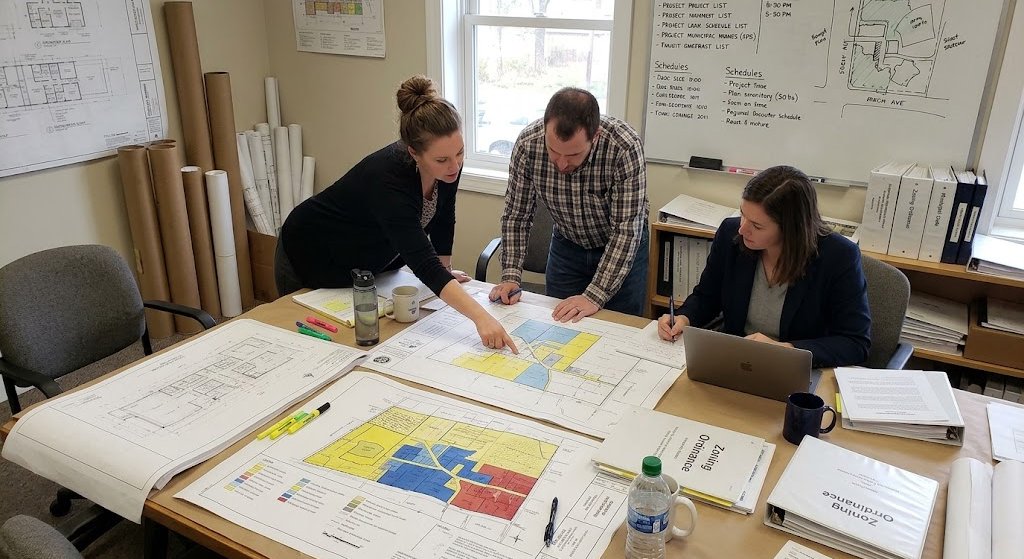

Commercial construction in Texas moves fast. At the same time, permit approvals can slow a project before work even starts. Many developers, contractors, and property owners run into delays because they miss a city requirement, submit incomplete plans, or overlook inspection rules.
Texas also handles commercial permitting differently than many other states. There is no single statewide permit office for every project. Instead, most approvals happen at the local level. Cities and counties each enforce their own codes, review systems, and timelines.
Because of that, a project approved in Dallas may follow a different process in Houston or Austin. Even smaller municipalities may have separate zoning rules, utility requirements, and fire department reviews.
For commercial builders, this creates extra pressure during pre-construction planning. A missed approval can delay financing, inspections, contractor scheduling, and final occupancy.
This guide explains how the Texas commercial construction permit process works from start to finish. It also covers common permit types, approval timelines, inspections, zoning reviews, and practical ways to reduce delays.
By the end, you will have a clearer understanding of:
Commercial building permit requirements
Texas approval processes
Inspection stages
Certificate of Occupancy requirements
Common permit mistakes
Ways to speed up approvals
Table of Contents
Understanding Commercial Construction Permits in Texas
Commercial construction permits are official approvals that allow a project to move forward legally. These permits confirm that the proposed work meets local building codes, zoning laws, fire safety standards, and accessibility requirements.
In Texas, commercial permits apply to both new construction and renovation projects. This includes office buildings, retail spaces, restaurants, warehouses, medical facilities, and industrial properties.
Without permits, a project may face:
Stop-work orders
Failed inspections
Fines and penalties
Delays in occupancy
Insurance problems
Legal issues during property sales
For most commercial developments, permits are required before site work, demolition, utility installation, or structural construction begins.
What Is a Commercial Construction Permit?
A commercial construction permit is a formal authorization issued by a city or county building department. It allows contractors and developers to begin approved work on a commercial property.
The permit review process checks whether the project follows:
Fire codes
Electrical standards
Plumbing regulations
Mechanical system requirements
Accessibility laws
Land use regulations
Commercial permits are more detailed than residential permits because commercial buildings have higher occupancy loads, stricter safety standards, and more complex systems.
For example, a commercial restaurant project may require:
Building permits
Plumbing permits
Mechanical permits
Grease trap approvals
Fire suppression permits
Health department approvals
Sign permits
Each approval may involve separate reviews and inspections. The complexity increases further for larger projects such as hospitals, warehouses, hotels, or mixed-use developments.
Why Texas Commercial Projects Require Multiple Approvals
Many people assume a single permit covers the entire construction process. In reality, commercial projects usually require several approvals from different departments. This happens because each department reviews a separate part of the project.
For example:
| Approval Type | Purpose |
|---|---|
| Building Permit | Reviews structural and architectural compliance |
| Fire Department Approval | Checks life safety and fire protection systems |
| Zoning Approval | Verifies land use and development rules |
| Plumbing Permit | Reviews water and drainage systems |
| Electrical Permit | Reviews power distribution and electrical safety |
| Mechanical Permit | Reviews HVAC systems and ventilation |
| Health Department Approval | Required for restaurants and healthcare spaces |
| Utility Approval | Confirms water, sewer, and electrical service availability |
Some Texas cities combine reviews into one digital portal. Others still process approvals separately. This often creates delays when one department requests revisions while another review is already in progress.
For example, a fire marshal may require changes to an exit corridor after the architectural review is complete. That revision can affect structural drawings, occupancy calculations, and electrical layouts. As a result, commercial permit coordination becomes just as important as the construction work itself.
Projects involving restaurants, industrial facilities, or medical spaces usually face the most complex approval processes because they involve additional health, ventilation, and life safety requirements.
Who Regulates Commercial Construction in Texas?
Texas commercial construction follows both state and local regulations. However, local municipalities handle most permitting and inspections.

This means the city where the project is located usually controls:
Permit reviews
Inspections
Building code enforcement
Zoning approvals
Occupancy approvals
At the same time, some state agencies oversee specific compliance areas.
Local Building Departments
Most commercial permits are reviewed through city permitting departments. Major Texas cities such as Dallas, Houston, Austin, and San Antonio each have their own:
Online permit systems
Submission requirements
Review timelines
Fee structures
Inspection procedures
Smaller municipalities may still use manual submissions or require in-person reviews. Because local rules vary, contractors cannot assume the same process applies across every Texas city.
For example:
Houston has strict floodplain review requirements
Austin often includes environmental review steps
Dallas may require additional development approvals
Historic districts may require design review boards
This local variation is one reason permit planning should begin early in the project lifecycle.
State Agencies Involved in Commercial Construction
Although cities manage most approvals, Texas state agencies still play an important role. Several agencies may become involved depending on the project type.
Texas Department of Licensing and Regulation (TDLR)
The Texas Department of Licensing and Regulation oversees accessibility compliance for commercial properties.
This includes:
ADA requirements
Accessible parking
Building access routes
Restroom accessibility
Entryway compliance
Projects that fail accessibility standards may face delays before receiving a Certificate of Occupancy.
Texas Commission on Environmental Quality (TCEQ)
Projects involving environmental impact may require review through the Texas Commission on Environmental Quality.
This can include:
Stormwater permits
Wastewater approvals
Air quality concerns
Industrial discharge permits
Large commercial developments often require additional environmental coordination during site development.
Need help with commercial construction permits in Texas? Call JDJ Consulting today at (818) 793-5058 for fast permit and entitlement support.
Common Commercial Projects That Require Permits
Nearly all commercial construction projects in Texas require permits in some form. This includes new developments, interior renovations, and tenant improvements.
Common examples include:
Office buildings
Retail stores
Restaurants
Shopping centers
Warehouses
Manufacturing facilities
Hotels
Medical offices
Apartment complexes
Mixed-use developments
Even smaller upgrades may require approvals if they involve:
Structural modifications
HVAC replacement
Plumbing changes
Electrical upgrades
Occupancy changes
Fire system modifications
For example, converting a retail suite into a restaurant usually triggers major permit reviews because occupancy type, ventilation systems, plumbing demand, and fire safety requirements all change. Similarly, warehouse office additions may require new accessibility upgrades throughout the building.
Because permit requirements vary by scope, many owners consult architects, engineers, or permit expeditors before submitting plans. Early planning often reduces costly revisions later in the approval process.
Texas Commercial Permit Process Step by Step
Commercial construction projects in Texas move through several approval stages before work can begin. Each step helps cities confirm that the project meets local codes, safety rules, and development standards. The process may look different from one city to another. Still, most commercial projects follow the same general sequence.
Missing one step can create major delays later. That is why developers, contractors, and design teams usually begin permit planning early in pre-construction.
Pre-Construction Planning and Feasibility
Before submitting permit applications, project teams first evaluate whether the property can support the planned development. This stage helps identify issues before design work begins.
A typical feasibility review includes:
Property zoning verification
Utility availability
Drainage conditions
Floodplain restrictions
Parking requirements
Easement conflicts
Site access limitations
Environmental concerns
For example, a warehouse project may require additional drainage studies if the property sits within a flood-prone area. A restaurant project may need grease trap planning before plumbing design starts.
Early feasibility analysis often prevents expensive redesigns later. It also helps owners estimate permit timelines and construction costs more accurately.
Zoning Verification Before Permit Submission
Zoning approval is one of the first major steps in the Texas commercial permit process. Cities use zoning laws to control how land can be used. Even if a building already exists, a new business type may still require approval.
For example:
| Property Use Change | Possible Additional Review |
|---|---|
| Retail to restaurant | Parking and fire review |
| Warehouse to office | Occupancy and ADA upgrades |
| Office to medical clinic | Health and accessibility review |
| Industrial to retail | Zoning compatibility review |
During zoning review, cities may evaluate:
Land use compatibility
Parking counts
Building setbacks
Traffic flow
Landscape requirements
Building height limits
Signage restrictions
If the proposed use does not match current zoning, the owner may need:
Conditional use approval
Rezoning approval
Planning commission review
These approvals can extend project timelines significantly. Because of that, zoning research should happen before lease agreements or property purchases whenever possible.
Preparing Commercial Construction Documents
After zoning confirmation, the design team prepares construction drawings for permit submission. Commercial permit sets are detailed. They include technical information used by multiple reviewing departments.
A complete permit package often contains:
Architectural drawings
Structural engineering plans
Civil engineering plans
Mechanical layouts
Electrical drawings
Plumbing plans
Accessibility details
Fire protection layouts
Energy compliance reports
The level of detail depends on project complexity. For example, a small office renovation may only require architectural and MEP drawings. A ground-up development usually needs extensive engineering documentation. Cities also require professional seals on many commercial drawings.
This often includes:
Architects
Structural engineers
Civil engineers
Mechanical engineers
Electrical engineers
Incomplete drawings are one of the most common reasons permit reviews stall.
Submitting Commercial Permit Applications
Most major Texas cities now use online permit portals for commercial submissions.
These systems allow applicants to:
Upload plans
Pay permit fees
Track review comments
Schedule inspections
Submit revisions
However, submission requirements still vary by city.
Typical permit application requirements include:
Completed application forms
Construction drawings
Site surveys
Engineering reports
Contractor registration documents
Owner authorization forms
Energy compliance reports
Some municipalities also require pre-development meetings before accepting large commercial projects.
This is common for:
Multifamily developments
Industrial facilities
Large retail centers
Mixed-use developments
During submission, cities assign the project to multiple reviewing departments. This begins the formal plan review process.
Plan Review Process Explained
Commercial permit reviews involve several departments working together. Each department checks different parts of the project.
The review process may include:
| Reviewing Department | Main Focus |
|---|---|
| Building Department | Structural and code compliance |
| Fire Marshal | Life safety and fire systems |
| Planning Department | Zoning and site compliance |
| Utilities Department | Water and sewer access |
| Health Department | Food service and medical compliance |
| Engineering Department | Drainage and civil infrastructure |
Reviewers often issue correction comments after the first review cycle.
These comments may request:
Drawing revisions
Additional calculations
Clarification notes
Code corrections
Design adjustments
The design team must then revise plans and resubmit documents. Some projects go through several review rounds before approval. This is why coordination between architects, engineers, and contractors matters so much during commercial permitting.
Permit Approval and Issuance
Once all departments approve the plans, the city issues the commercial building permit.
The permit package usually includes:
Approved drawing sets
Permit documents
Inspection requirements
Conditions of approval
Permit fees must normally be paid before issuance.
Commercial permit fees vary based on:
Project size
Construction value
Building type
Trade permits required
Site development scope
After approval, construction may begin legally. Most cities require permits to remain posted onsite during active construction. Approved drawings must also stay available for inspectors throughout the project.

Construction Inspections During the Project
Permit approval does not end the city review process. Commercial construction projects continue through multiple inspection stages while work is underway. Inspections help verify that construction matches approved plans and building codes. Skipping inspections can delay occupancy approval later.
Common Commercial Construction Inspections
Commercial inspections happen in phases as construction progresses.
Typical inspections include:
Site and erosion control inspection
Foundation inspection
Underground plumbing inspection
Structural framing inspection
Electrical rough-in inspection
Mechanical system inspection
Fire sprinkler inspection
Fire alarm inspection
Insulation inspection
Ceiling inspection
Final building inspection
Some cities require third-party testing reports before inspections can pass.
This may include:
Concrete testing
Soil compaction reports
Structural steel inspections
Fireproofing verification
Inspection scheduling often affects construction timelines directly. Missed inspections or failed inspections can delay subcontractors and create additional labor costs.
Why Commercial Inspections Fail
Failed inspections are common during commercial construction.
Most failures happen because:
Work differs from approved plans
Safety clearances are missing
Fire stopping is incomplete
Accessibility dimensions are incorrect
Electrical installations violate code
Mechanical systems lack proper ventilation
Sometimes field changes happen during construction without updated city approval. This creates problems during final inspections.
Contractors usually reduce inspection issues by:
Keeping approved plans onsite
Coordinating subcontractors carefully
Performing internal quality checks before inspections
Communicating with inspectors early
Strong inspection management helps projects stay on schedule and reduces rework costs.
Certificate of Occupancy (CO) Requirements
The Certificate of Occupancy is one of the final approvals in a Texas commercial construction project. A CO confirms that the building is safe for occupancy and meets code requirements.
Without it, businesses usually cannot open legally.
Cities issue a CO only after:
Final inspections pass
Fire approvals are complete
Accessibility standards are verified
Utility connections are active
Permit conditions are satisfied
Temporary vs Final Certificate of Occupancy
Some cities issue temporary COs before full project completion. A temporary CO may allow limited occupancy while minor remaining work gets completed.
For example:
Parking striping may still be unfinished
Landscaping may remain incomplete
Minor exterior work may continue
However, life safety systems must still function properly before temporary occupancy approval.
Common Reasons CO Approvals Get Delayed
Final occupancy approvals often face delays because of unresolved issues late in construction.
Common causes include:
| CO Delay Issue | Typical Impact |
|---|---|
| Failed fire inspection | Occupancy blocked |
| Missing ADA compliance items | Re-inspection required |
| Incomplete site work | Delayed final approval |
| Open permit corrections | CO withheld |
| Utility connection delays | Building cannot operate |
Many contractors begin final inspection preparation weeks before project completion to reduce these risks. Careful planning during the permit and inspection process usually leads to faster occupancy approval and smoother project delivery.
Types of Commercial Permits Required in Texas
Commercial construction projects in Texas rarely move forward with a single permit alone. Most developments require multiple approvals based on the type of work involved.
The number of permits depends on:
Building size
Occupancy type
Construction scope
Mechanical systems
Site development work
Fire protection systems
For example, a small office remodel may only require basic building and electrical permits. A restaurant or industrial facility may require several additional approvals before construction begins. Understanding permit categories early helps contractors avoid delays during plan review and inspections.
Commercial Building Permits
The building permit is the main approval for commercial construction work. Cities issue this permit after reviewing architectural and structural plans for code compliance.
Commercial building permits typically apply to:
Ground-up construction
Building additions
Interior renovations
Tenant improvements
Structural modifications
Occupancy changes
The building department reviews:
Structural safety
Occupancy classifications
Exiting requirements
Accessibility compliance
Construction materials
Life safety systems
Most cities calculate permit fees based on project valuation or square footage. Larger commercial developments usually require more extensive reviews and longer approval timelines.
Mechanical, Electrical, and Plumbing (MEP) Permits
Commercial projects often require separate trade permits for mechanical, electrical, and plumbing systems. These permits help cities review technical systems independently.
Mechanical Permits
Mechanical permits cover HVAC systems and ventilation equipment.
This includes:
Rooftop units
Exhaust systems
Ductwork
Commercial kitchen ventilation
Refrigeration systems
Restaurants, medical facilities, and industrial buildings often face stricter mechanical review standards because of ventilation and air quality requirements.
Electrical Permits
Electrical permits cover power distribution and electrical safety systems.
This may include:
Service panels
Interior wiring
Emergency lighting
Backup generators
Fire alarm power systems
Exterior lighting
Commercial electrical reviews focus heavily on occupant safety and code compliance.
Plumbing Permits
Plumbing permits apply to:
Water supply systems
Sewer connections
Drainage systems
Grease traps
Commercial restrooms
Water heaters
Food service facilities often require additional plumbing reviews due to grease waste management and health department requirements.
Fire Department and Life Safety Approvals
The fire department reviews are critical for commercial construction projects in Texas. Fire marshals review plans to confirm that buildings meet life safety standards.
This review often includes:
Fire alarm systems
Sprinkler systems
Occupant loads
Exit pathways
Emergency lighting
Fire-rated assemblies
Smoke control systems
Projects with high occupancy loads usually receive more detailed fire reviews.
Examples include:
Restaurants
Hotels
Event spaces
Schools
Healthcare facilities
Multifamily buildings
Fire protection contractors may also need separate permits for sprinkler and alarm installations. Final fire inspections are normally required before a Certificate of Occupancy can be issued.
Planning a commercial project in Texas? JDJ Consulting helps developers simplify permits, zoning, and approvals. Call (818) 793-5058.
Site Development and Civil Permits
Commercial developments often require separate permits for site work and infrastructure improvements.
These permits apply to:
Grading work
Drainage systems
Stormwater management
Parking lots
Sidewalks
Utility connections
Retaining walls
Civil permits become especially important for large developments with extensive land disturbance. Texas cities pay close attention to drainage because heavy rainfall and flooding can create major infrastructure problems.
Some municipalities also require:
Detention pond approvals
Erosion control plans
Floodplain studies
Traffic impact studies
Projects located within flood-prone areas may face additional engineering reviews before approval.
Sign Permits for Commercial Properties
Commercial signs usually require separate permits from the local municipality.
Sign permits may apply to:
Monument signs
Wall signs
Illuminated signs
Digital displays
Directional signage
Cities often regulate:
Sign height
Illumination levels
Placement
Size limits
Design standards
Historic districts and downtown zones may have stricter sign rules. Installing signage without approval can lead to fines or removal orders.
Health Department Permits
Certain commercial projects require health department approvals before operations can begin.
This commonly applies to:
Restaurants
Cafes
Commercial kitchens
Grocery stores
Medical facilities
Food processing spaces
Health departments review:
Food preparation areas
Plumbing layouts
Handwashing stations
Grease interceptors
Ventilation systems
Sanitation requirements
Restaurant projects often involve both city permit reviews and separate health department approvals. This can extend overall permit timelines.
Commercial Construction Codes Used in Texas
Commercial construction in Texas follows several building and safety codes adopted at the local level. Although many cities use similar code systems, local amendments may still change requirements. Because of that, contractors should always confirm which code versions apply in the project jurisdiction.
International Building Code (IBC)
Most Texas cities use versions of the International Building Code for commercial construction.
The IBC establishes standards for:
Structural safety
Occupancy classification
Fire resistance
Means of egress
Accessibility
Construction materials
Commercial projects must follow IBC requirements during both design and construction.
The code also determines occupancy categories such as:
| Occupancy Type | Example |
|---|---|
| Business Group B | Offices |
| Mercantile Group M | Retail stores |
| Assembly Group A | Restaurants and event spaces |
| Industrial Group F | Warehouses and factories |
| Residential Group R | Multifamily housing |
Occupancy classification directly affects fire protection requirements, exiting rules, and allowable building sizes.
International Fire Code Requirements
The International Fire Code works alongside the IBC to regulate fire safety systems.
Fire code reviews often focus on:
Fire alarms
Sprinkler systems
Occupant loads
Exit signs
Emergency lighting
Fire lane access
Buildings with higher occupancy counts usually face stricter fire requirements.
For example, restaurants and entertainment venues often require:
Additional exits
Higher fire suppression standards
Emergency evacuation systems
Fire code violations discovered during inspections can delay occupancy approval significantly.
Energy Code Compliance
Texas cities also enforce energy efficiency standards for commercial buildings.
Energy reviews may evaluate:
HVAC efficiency
Building insulation
Lighting systems
Window performance
Energy calculations
Many jurisdictions require formal energy compliance reports during permit submission. Energy-efficient design has become more important in commercial development because operating costs continue rising across Texas markets.
ADA Accessibility Requirements
Commercial buildings must comply with accessibility standards under the Americans with Disabilities Act.
Accessibility reviews usually cover:
Parking spaces
Entry access
Restroom layouts
Door clearances
Ramps
Accessible routes
Counter heights
Accessibility compliance applies to both new construction and many renovation projects. Even smaller tenant improvements may trigger ADA upgrades depending on project scope. Projects that fail accessibility inspections may require corrective work before occupancy approval.
Texas-Specific Commercial Construction Requirements
Although national codes form the foundation of commercial construction standards, Texas also has state-specific requirements.
These may include:
TDLR accessibility reviews
Asbestos surveys for renovations
State licensing rules
Local engineering standards
Older buildings undergoing renovation often require asbestos inspections before demolition begins. Failure to complete required environmental reviews can delay permits and create legal issues later in construction.
Commercial Permit Timelines in Texas
Commercial permit timelines vary widely across Texas. Some small tenant improvement projects receive approval within a few weeks. Larger developments may spend months in review before construction begins.
Several factors affect permit speed, including:
Project complexity
City workload
Completeness of drawings
Zoning issues
Engineering requirements
Utility coordination
Typical Commercial Permit Timelines
The table below shows common commercial permit ranges in Texas cities.
| Project Type | Average Timeline | Review Complexity |
|---|---|---|
| Small office remodel | 2–4 weeks | Low |
| Retail tenant improvement | 4–8 weeks | Medium |
| Restaurant build-out | 6–12 weeks | High |
| Warehouse construction | 2–5 months | High |
| Multifamily development | 4–9 months | Very High |
These timelines may increase if revisions are required during review.
Common Causes of Permit Delays
Commercial permits often get delayed because of incomplete or conflicting information.
Frequent delay causes include:
Missing engineering details
Incorrect occupancy classification
Incomplete ADA documentation
Fire code conflicts
Drainage review problems
Utility coordination issues
Inconsistent plan sheets
Many projects also slow down because teams submit drawings before full coordination between consultants. For example, mechanical layouts may conflict with structural framing or fire sprinkler locations. This creates additional review cycles and resubmissions.
Fast-Track Permit Options in Texas Cities
Some Texas municipalities offer expedited review programs for commercial projects.
These programs may include:
Priority review fees
Third-party plan reviews
Phased permitting
Early foundation permits
Fast-track options help some projects begin site work while later review stages continue. However, cities still require full compliance before final occupancy approval.
Developers often use expedited reviews on large commercial projects where construction schedules directly affect financing and lease agreements.
Commercial Permit Requirements by Texas City
Commercial permitting rules are not identical across Texas. Each city manages its own approval process, review timelines, and inspection standards. Because of this, contractors who work across multiple Texas markets often face different requirements on every project.
Some cities focus heavily on drainage and infrastructure. Others place more attention on zoning, environmental reviews, or fire protection systems. Understanding local requirements early can reduce delays during permitting and construction.
Dallas Commercial Permit Process
Dallas handles commercial permitting through its online development services system.
The city reviews commercial projects through several departments, including:
Building inspection
Planning and urban design
Fire prevention
Public works
Water utilities
Dallas commercial projects often require detailed site reviews before permit approval.
This commonly includes:
Parking compliance
Landscape requirements
Accessibility review
Utility coordination
Stormwater review
Larger developments may also require civil engineering approvals before vertical construction permits are issued. Dallas inspections are usually scheduled online. However, review timelines can increase during periods of high construction activity. Projects located in redevelopment districts or downtown zones may face additional design requirements.
Houston Commercial Construction Approvals
Houston has one of the busiest commercial permitting systems in Texas. The city uses online permitting for many project types, but large commercial developments still involve multiple review departments.
Houston places major focus on:
Floodplain management
Drainage compliance
Utility infrastructure
Fire safety systems
Flood-related regulations are especially important because of Houston’s storm history.
Projects within flood hazard areas may require:
Elevation studies
Drainage reports
Floodplain mitigation plans
Additional civil engineering review
Houston also performs detailed life safety reviews for high-occupancy buildings. Restaurants, hotels, healthcare facilities, and assembly spaces often receive additional fire department scrutiny during plan review.
Austin Commercial Permit Requirements
Austin commercial permitting is known for its detailed development review process.
The city places strong emphasis on:
Environmental protection
Water quality
Energy efficiency
Site development compliance
Commercial projects in Austin may require approvals from multiple city divisions before permit issuance.
These can include:
| Austin Review Area | Purpose |
|---|---|
| Site Development Review | Land development compliance |
| Environmental Review | Water quality and protected areas |
| Building Review | Structural and code compliance |
| Utility Review | Water and wastewater coordination |
| Fire Review | Life safety systems |
Austin projects located near protected environmental zones often face longer approval timelines. The city also enforces strict energy and sustainability standards for many commercial developments.
Because of this, early coordination between civil engineers, architects, and environmental consultants becomes especially important.
San Antonio Commercial Building Permits
San Antonio manages commercial permits through its Development Services Department.

The city reviews projects for:
Building code compliance
Zoning regulations
Fire safety
Site development
Historic preservation requirements
Historic districts create additional review steps for some commercial projects. Buildings located within protected historic areas may require approval from preservation boards before permits are issued.
San Antonio also reviews commercial signage carefully in downtown and historic corridors. Inspection scheduling is typically handled online, though larger projects may involve coordination meetings with city officials throughout construction.
Permit Differences Between Texas Cities
Although most Texas cities use similar building codes, local amendments still create major differences between jurisdictions.
Commercial permit differences often include:
Review timelines
Permit fees
Inspection procedures
Drainage standards
Environmental requirements
Fire protection rules
Parking requirements
The table below shows common variations between major Texas cities.
| City | Common Permit Focus | Typical Complexity |
|---|---|---|
| Dallas | Site development and utilities | Medium to High |
| Houston | Floodplain and drainage review | High |
| Austin | Environmental and energy compliance | High |
| San Antonio | Historic review and zoning | Medium |
Because local processes vary so much, many developers hire consultants or permit expeditors familiar with specific municipalities. This often helps projects move through approvals more efficiently.
Commercial Renovation and Tenant Improvement Permits
Not all commercial projects involve new construction. Many permits in Texas apply to renovations, remodels, and tenant improvements inside existing buildings.
Even smaller upgrades can trigger permit requirements if they affect:
Structural systems
Plumbing
Electrical work
HVAC systems
Fire protection
Accessibility
Occupancy classifications
Some owners mistakenly assume interior work does not require approval. In many cases, cities still require permits for renovation projects.
When Commercial Renovations Require Permits
Permit requirements usually depend on the scope of work.
Commercial renovations commonly require permits when they involve:
Wall removal
Structural modifications
New plumbing fixtures
HVAC replacement
Electrical upgrades
Fire sprinkler modifications
Occupancy changes
For example, replacing flooring or painting walls may not require permits. However, moving walls or modifying restrooms usually does. Cities also review whether renovations trigger additional code upgrades. Older buildings often require accessibility improvements when major renovations occur.
Tenant Improvement Permit Requirements
Tenant improvement projects are among the most common commercial permits in Texas. These projects customize interior spaces for new tenants or business operations.
Typical tenant improvement projects include:
Office remodels
Retail build-outs
Restaurant conversions
Medical office renovations
Salon build-outs
Fitness studio construction
Tenant improvements usually require:
Architectural drawings
MEP plans
Accessibility compliance review
Fire protection coordination
Restaurants and medical spaces often involve more extensive reviews because of plumbing, ventilation, and health code requirements.
Change of Occupancy Challenges
Occupancy changes create some of the most complicated renovation permit situations. An occupancy change happens when a building shifts from one use category to another.
Examples include:
| Previous Use | New Use | Possible Review Impact |
|---|---|---|
| Retail store | Restaurant | Fire and plumbing upgrades |
| Warehouse | Office | Accessibility and HVAC changes |
| Office | Medical clinic | Health and life safety review |
| Retail | Fitness center | Occupant load review |
Occupancy changes may trigger:
Additional exits
Fire sprinkler upgrades
ADA improvements
Parking recalculations
Ventilation upgrades
These requirements can increase both project cost and approval timelines.
Common Renovation Permit Mistakes
Commercial renovation projects often face delays because owners underestimate permit complexity.
Common mistakes include:
Starting work before permits are issued
Failing to update old building records
Ignoring accessibility requirements
Skipping fire protection review
Submitting incomplete drawings
Some contractors also make field changes during construction without city approval. This often creates problems during inspections or occupancy review. Careful permit planning helps renovation projects avoid expensive corrections later.
Commercial Construction Inspections Explained
Inspections continue throughout every stage of commercial construction in Texas. These inspections verify that work matches approved plans and building code requirements.
Inspectors review both safety and workmanship before allowing projects to continue. Failed inspections can slow construction schedules quickly, especially when multiple subcontractors depend on sequential approvals.
Required Inspections During Commercial Construction
Commercial projects usually move through inspections in phases. The sequence depends on project type and construction scope.
Typical inspections include:
Site grading inspection
Foundation inspection
Underground utility inspection
Structural framing inspection
Plumbing rough-in inspection
Electrical rough-in inspection
Mechanical inspection
Insulation inspection
Fire sprinkler inspection
Fire alarm inspection
Ceiling inspection
Final inspection
Inspectors may also require engineering reports or testing documentation during certain stages.
For example:
Soil compaction reports
Concrete testing
Structural steel inspections
Fireproofing verification
Larger projects usually involve more inspection coordination between contractors and city departments.
What Inspectors Look for on Commercial Projects
Commercial inspectors review more than just basic construction quality.
They also verify:
Code compliance
Occupant safety
Accessibility standards
Fire protection systems
Structural integrity
Emergency exits
Proper material installation
Inspectors compare field conditions directly against approved permit drawings. If work differs from approved plans, the project may require revised permits before inspections can pass.
Common Reasons Commercial Inspections Fail
Inspection failures happen frequently in commercial construction.
The most common issues include:
Incomplete work
Missing fire stopping
Incorrect accessibility dimensions
Improper electrical installations
Unapproved field modifications
HVAC clearance violations
Plumbing code violations
Some failures happen because subcontractors work ahead before inspections occur. For example, walls may get covered before rough-in inspections are completed. This can require demolition and re-inspection later.
Final Building Inspection Checklist
Final inspections are one of the last steps before occupancy approval.
Cities typically verify:
| Final Inspection Area | Purpose |
|---|---|
| Fire alarm systems | Emergency notification compliance |
| Sprinkler systems | Fire suppression verification |
| ADA compliance | Accessibility confirmation |
| Emergency lighting | Life safety compliance |
| Exit signage | Occupant evacuation safety |
| Plumbing fixtures | Operational verification |
| HVAC systems | Ventilation and airflow checks |
Contractors often perform internal walkthroughs before final city inspections. This helps identify issues early and reduces the risk of failed occupancy inspections. Strong inspection coordination usually leads to faster project closeout and fewer construction delays.
Common Texas Commercial Permit Problems and Solutions
Commercial construction permits in Texas often take longer than expected. Even experienced contractors and developers run into approval issues during planning, review, or inspections.
Some delays are minor. Others can stop construction entirely until corrections are completed. Understanding the most common permit problems helps project teams prepare earlier and avoid unnecessary setbacks.
Incomplete Permit Applications
Incomplete submissions are one of the biggest causes of permit delays. Commercial projects involve many documents, drawings, and technical reports. Missing even one item can pause the review process.
Cities commonly reject permit packages because of:
Missing architectural sheets
Incomplete engineering plans
Unsigned documents
Incorrect permit forms
Missing energy reports
Incomplete accessibility details
Contractor registration problems
In some cases, reviewers place applications on hold until revised documents are submitted. This can add weeks to the timeline.
Project teams reduce these delays by using submission checklists before uploading plans. Many contractors also schedule internal design reviews before permit submission to catch missing information early.
Zoning and Land Use Issues
Zoning conflicts can delay commercial projects long before construction starts. Even if a building already exists, the proposed business type may not match current zoning regulations.
Common zoning problems include:
Insufficient parking
Restricted land use
Building height limitations
Setback violations
Signage restrictions
Traffic access concerns
For example, converting retail space into a restaurant may trigger parking and occupancy conflicts.
Cities may require:
Variance approvals
Conditional use permits
Planning commission hearings
Site redesigns
These approvals can extend project schedules significantly. Early zoning verification helps avoid costly redesigns later in the process.
Utility and Infrastructure Delays
Utility coordination becomes a major issue on many commercial developments.
Projects often depend on approvals from:
Water departments
Sewer utilities
Electrical providers
Gas companies
Storm drainage divisions
Large developments sometimes require infrastructure upgrades before service connections are approved.
This may include:
| Infrastructure Issue | Potential Impact |
|---|---|
| Limited sewer capacity | Delayed occupancy |
| Drainage deficiencies | Site redesign required |
| Electrical transformer shortages | Construction delays |
| Water pressure issues | Fire system revisions |
Infrastructure improvements can increase both project cost and approval timelines. Because of that, many developers begin utility coordination during early design stages.
Failed Inspections and Rework
Inspection failures are another common source of project delays. Commercial inspections often involve multiple departments reviewing the same project. If one inspection fails, other trades may also get delayed.
Common reasons inspections fail include:
Work differs from approved plans
Fire systems are incomplete
Accessibility dimensions are incorrect
Electrical systems violate code
Plumbing installations fail pressure testing
Mechanical systems lack proper clearance
Field changes during construction also create problems. For example, moving walls or changing layouts without permit revisions may trigger re-inspections and redesign costs. Strong communication between subcontractors helps reduce these issues.
Permit Expiration Problems
Commercial permits do not stay active forever. Most Texas cities set expiration deadlines if construction does not begin or progress within a certain timeframe.
Permits may expire because of:
Financing delays
Contractor scheduling issues
Design revisions
Material shortages
Project pauses
Expired permits often require:
Renewal applications
Additional fees
Updated code reviews
Revised inspections
In some cases, projects must restart the approval process entirely. Monitoring permit deadlines carefully helps avoid unnecessary administrative delays.
How to Speed Up Commercial Permit Approvals in Texas
Although permit reviews can be complex, several strategies help commercial projects move faster through approvals. Good planning is usually the biggest factor. Projects with organized submissions and early coordination often experience fewer review cycles and inspection issues.
Hire Experienced Commercial Design Professionals
Commercial permits require detailed technical coordination between multiple disciplines.
Experienced project teams often include:
Architects
Civil engineers
Structural engineers
MEP engineers
Permit expeditors
Construction managers
Professionals familiar with local city requirements usually prepare stronger permit packages. This reduces correction comments during review. Local experience also helps teams anticipate city-specific concerns before submission.
For example:
Houston projects may require detailed flood planning
Austin projects may need environmental coordination
Dallas developments may involve utility review complexity
Experienced consultants help address these issues early.
Submit Complete Permit Packages
Well-organized permit applications move through review faster than incomplete submissions.
Strong permit packages usually include:
Coordinated drawings
Accurate code references
Complete engineering details
Proper seals and signatures
Consistent sheet information
Updated project data
Cities often delay projects when reviewers find conflicting information between plan sheets.
For example:
Mechanical layouts may conflict with structural framing
Plumbing fixtures may not match architectural plans
Occupancy counts may differ between sheets
Internal quality reviews before submission help reduce these problems.
Communicate Early With City Departments
Early communication with reviewing departments often prevents major surprises later.
Many Texas cities offer:
Pre-development meetings
Concept reviews
Preliminary site discussions
Fire department consultations
These meetings help identify potential problems before full permit submission.
Topics commonly discussed include:
Zoning restrictions
Drainage requirements
Fire access
Utility availability
Environmental concerns
Occupancy classifications
Early coordination is especially helpful for complex commercial projects.
Use Permit Expediting Services
Some developers hire permit expeditors to help manage approvals.
Permit expeditors typically assist with:
Submission coordination
Correction tracking
Department communication
Permit status monitoring
Inspection scheduling
Expeditors do not replace architects or engineers. Instead, they help projects move through administrative processes more efficiently. Large commercial developments often benefit most from permit coordination services.
Avoid Scope Changes During Review
Design changes during permit review frequently slow approvals. Even small revisions can restart portions of the review process.
Common late-stage changes include:
Layout modifications
Equipment substitutions
Occupancy changes
Structural revisions
HVAC redesigns
Each revision may trigger additional comments from multiple departments. Whenever possible, project teams should finalize design decisions before permit submission. This helps avoid repeated review cycles and extended approval timelines.
Costs Associated With Texas Commercial Permits
Commercial permit costs vary widely across Texas. Some small renovation permits cost only a few thousand dollars. Large developments may spend tens of thousands on approvals, inspections, and impact fees.
Permit expenses depend on:
Project size
Construction value
Occupancy type
Site development scope
Utility infrastructure needs
Understanding these costs early helps developers create more accurate project budgets.
Commercial Permit Fee Structures
Most Texas cities calculate commercial permit fees using one or more of the following methods:
Construction valuation
Square footage
Trade permit count
Occupancy classification
Site development scope
The table below shows common commercial permit cost ranges.
| Permit Type | Typical Cost Range |
|---|---|
| Building permit | $2,000–$50,000+ |
| Electrical permit | $300–$5,000 |
| Mechanical permit | $300–$5,000 |
| Plumbing permit | $300–$5,000 |
| Fire alarm permit | $500–$10,000 |
| Site development permit | $1,000–$25,000+ |
Larger projects usually require separate fees for multiple trade permits.
Additional Approval Costs
Permit fees are only one part of commercial approval expenses.
Projects may also face:
Utility connection fees
Drainage impact fees
Traffic review fees
Fire review fees
Environmental review costs
Accessibility review fees
Some cities also charge technology or processing fees for online permit systems. Infrastructure upgrades can increase costs even further.
For example, developments may need:
Sewer line extensions
Water main improvements
Storm drainage upgrades
Electrical transformer installation
These costs can significantly affect project feasibility.
Soft Costs Caused by Permit Delays
Permit delays often create indirect financial impacts beyond city fees.
Common soft costs include:
Contractor downtime
Extended financing expenses
Delayed tenant occupancy
Material storage costs
Rescheduling subcontractors
Additional architectural revisions
For commercial developers, approval delays may also affect lease agreements and project revenue timelines. Because of that, efficient permitting becomes an important financial factor, not just an administrative task.
Budgeting for Commercial Permits Early
Many first-time developers underestimate permit-related expenses. A better approach is to include permit planning during early budgeting stages.
This often includes:
Permit fees
Engineering costs
Survey expenses
Testing fees
Inspection coordination
Utility review costs
Contingency funds for revisions
Early budgeting helps projects avoid funding gaps later in development. It also creates more realistic construction schedules and financing expectations.
Digital Permitting and Online Approval Systems in Texas
Many Texas cities now use digital permit systems for commercial construction approvals. These systems help cities process applications faster and improve communication between reviewers, contractors, and project teams. Online permitting has become more common in large cities because commercial development activity continues growing across Texas.
Instead of submitting paper drawings in person, applicants can now upload plans digitally, track review comments online, and schedule inspections through web portals. However, each city still uses its own permitting platform and submission process.
How Texas Cities Are Moving Toward Online Permitting
Cities such as Dallas, Houston, Austin, and San Antonio now process many commercial permits electronically.
Digital systems usually allow users to:
Upload permit drawings
Submit engineering reports
Pay permit fees
Receive correction comments
Track review status
Schedule inspections
Download approved plans
Online systems also improve coordination between departments because multiple reviewers can access plans at the same time. This often reduces delays compared to older paper-based review systems.
For large commercial developments, digital permitting also makes document management easier since projects may involve hundreds of drawing sheets and revisions.
Benefits of Digital Permit Systems
Online permit systems create several advantages for commercial projects. The biggest benefit is usually improved tracking visibility.
Project teams can often monitor:
Review progress
Open corrections
Inspection status
Approval milestones
Payment records
Digital systems also reduce paperwork and printing costs. This is especially helpful for large projects with multiple revision cycles.
Additional benefits include:
| Digital Permit Benefit | Project Impact |
|---|---|
| Faster submissions | Reduced administrative time |
| Online correction tracking | Better review coordination |
| Digital inspections | Easier scheduling |
| Electronic records | Improved document storage |
| Remote access | Faster communication |
Some cities also offer automated notifications when permit statuses change. This helps contractors respond to review comments more quickly.
Common Challenges With Online Permit Portals
Although digital systems improve efficiency, they still create challenges for many applicants.
Common issues include:
File size limitations
Incorrect naming conventions
Upload errors
Software compatibility problems
Incomplete digital forms
Revision tracking confusion
Some municipalities also require very specific formatting standards for uploaded plans.
For example:
Sheet numbering rules
PDF formatting standards
Digital signature requirements
File organization structures
If submissions do not meet these requirements, cities may reject the application before review even begins. Because of that, many firms assign dedicated permit coordinators to manage online submissions.
Digital Inspections and Virtual Reviews
Some Texas cities now offer partial virtual inspection options for certain commercial projects.
These may include:
Video inspections
Remote walkthroughs
Digital photo documentation
Virtual correction reviews
However, most major commercial inspections still require in-person verification for safety reasons. Structural, fire protection, and final occupancy inspections are usually completed onsite by city officials.
As permitting technology continues improving, digital coordination will likely become an even larger part of Texas commercial construction approvals.
Texas Commercial Permit Checklist Before Construction Starts
Commercial projects move more smoothly when teams prepare properly before construction begins. A pre-construction permit checklist helps contractors avoid delays, failed inspections, and missing approvals later in the project. Good preparation also improves coordination between architects, engineers, subcontractors, and city departments.
Essential Documents to Prepare
Most commercial projects require a large amount of documentation before permits can be approved.
Typical permit documents include:
Architectural drawings
Structural engineering plans
Civil engineering reports
Mechanical plans
Plumbing drawings
Electrical layouts
Site surveys
Energy compliance reports
Accessibility documentation
Fire protection plans
Projects may also require:
Soil reports
Drainage studies
Environmental reports
Traffic studies
Utility coordination documents
Missing documents are one of the most common causes of delayed permit reviews.
Pre-Construction Approval Checklist
Before construction begins, project teams should confirm that all required approvals are complete.
A commercial pre-construction checklist often includes:
| Approval Item | Status to Confirm |
|---|---|
| Zoning approval | Approved |
| Building permit | Issued |
| Trade permits | Active |
| Fire department approval | Completed |
| Utility coordination | Confirmed |
| Environmental review | Cleared |
| Accessibility review | Approved |
Contractors should also verify that permit conditions are fully understood before work starts.
Some permits include special requirements for:
Inspection sequencing
Temporary utilities
Erosion control
Traffic management
Fire watch procedures
Ignoring permit conditions can create inspection failures later.
Contractor Coordination Checklist
Commercial construction projects involve many subcontractors working together across different phases. Strong coordination helps reduce field conflicts and permit problems.
Before work begins, teams should confirm:
Inspection responsibilities
Approved drawing distribution
Permit posting requirements
Material lead times
Utility scheduling
Safety compliance procedures
Revision communication protocols
Many contractors also hold pre-construction coordination meetings before mobilization begins. These meetings help identify scheduling conflicts early.
Final Readiness Checklist Before Breaking Ground
Before site work starts, contractors should verify that the project is fully prepared for construction.
Final readiness checks often include:
Approved permits posted onsite
Temporary power arranged
Site access confirmed
Safety barriers installed
Erosion controls in place
Approved plans available onsite
Inspection procedures reviewed
Strong pre-construction planning usually leads to smoother inspections, fewer delays, and better schedule control throughout the project.
Frequently Asked Questions About Texas Commercial Permits
Do All Commercial Renovations Require Permits?
No. Minor cosmetic work such as painting or flooring replacement may not require permits.
However, permits are usually required when projects involve:
Structural changes
Plumbing modifications
Electrical upgrades
HVAC work
Occupancy changes
Fire system modifications
Cities may also require accessibility upgrades during larger renovations.
How Long Does It Take to Get a Commercial Permit in Texas?
Commercial permit timelines vary by city and project scope.
Small tenant improvement projects may take a few weeks. Larger developments can take several months.
Typical factors affecting approval speed include:
Project complexity
Drawing quality
City workload
Zoning issues
Utility coordination
Revision cycles
Can Construction Start Before Permit Approval?
In most cases, no.
Starting commercial construction before permit issuance can lead to:
Stop-work orders
Fines
Failed inspections
Legal liability
Occupancy delays
Some cities allow limited early work through phased permits, but formal approval is still required.
What Happens if You Build Without a Permit?
Unpermitted commercial work creates serious risks.
Possible consequences include:
Penalties and fines
Required demolition
Delayed occupancy
Insurance complications
Legal disputes
Difficulty selling the property later
Cities may also require completed work to be exposed for inspection.
Are Commercial Permit Requirements Different in Each Texas City?
Yes.
Although many Texas cities follow similar building codes, local amendments and review procedures vary significantly.
Differences may include:
Permit fees
Drainage standards
Inspection procedures
Environmental reviews
Floodplain requirements
Fire department processes
Because of this, local experience matters during permit planning.
Who Is Responsible for Obtaining Commercial Permits?
Responsibility depends on the project structure and contract agreements.
Permits are commonly handled by:
General contractors
Architects
Developers
Permit expeditors
Trade contractors may also pull separate permits for electrical, plumbing, mechanical, or fire protection work.
What Is the Difference Between a Building Permit and a Certificate of Occupancy?
A building permit allows construction work to begin legally. A Certificate of Occupancy confirms that the completed building is safe for use and meets code requirements. Projects usually cannot open for business until the Certificate of Occupancy is issued.
Final Thoughts on Texas Commercial Construction Permits and Approvals
Commercial construction permits play a major role in every Texas development project. From zoning approvals to final inspections, each stage affects project timelines, budgets, and occupancy schedules.
Although the process can feel complex, strong planning makes a major difference.
Projects typically move more efficiently when teams:
Verify zoning early
Prepare complete permit drawings
Coordinate consultants carefully
Communicate with city departments
Schedule inspections properly
Avoid late-stage design changes
Texas cities continue seeing strong commercial growth, especially in office, industrial, retail, healthcare, and multifamily development sectors. As construction activity increases, permit departments often face heavier workloads and stricter review standards.
Because of that, developers and contractors benefit from approaching permitting as a core part of project management instead of a simple administrative step. Careful preparation, organized submissions, and experienced coordination usually lead to faster approvals, smoother inspections, and fewer construction delays.