Table of Contents
Due diligence consulting assesses property before buying, selling, or developing. A property consultant reviews the legal, financial, and physical condition. This helps identify risks and confirms that the property matches the buyer’s goals (Royal Institution of Chartered Surveyors [RICS], 2023).
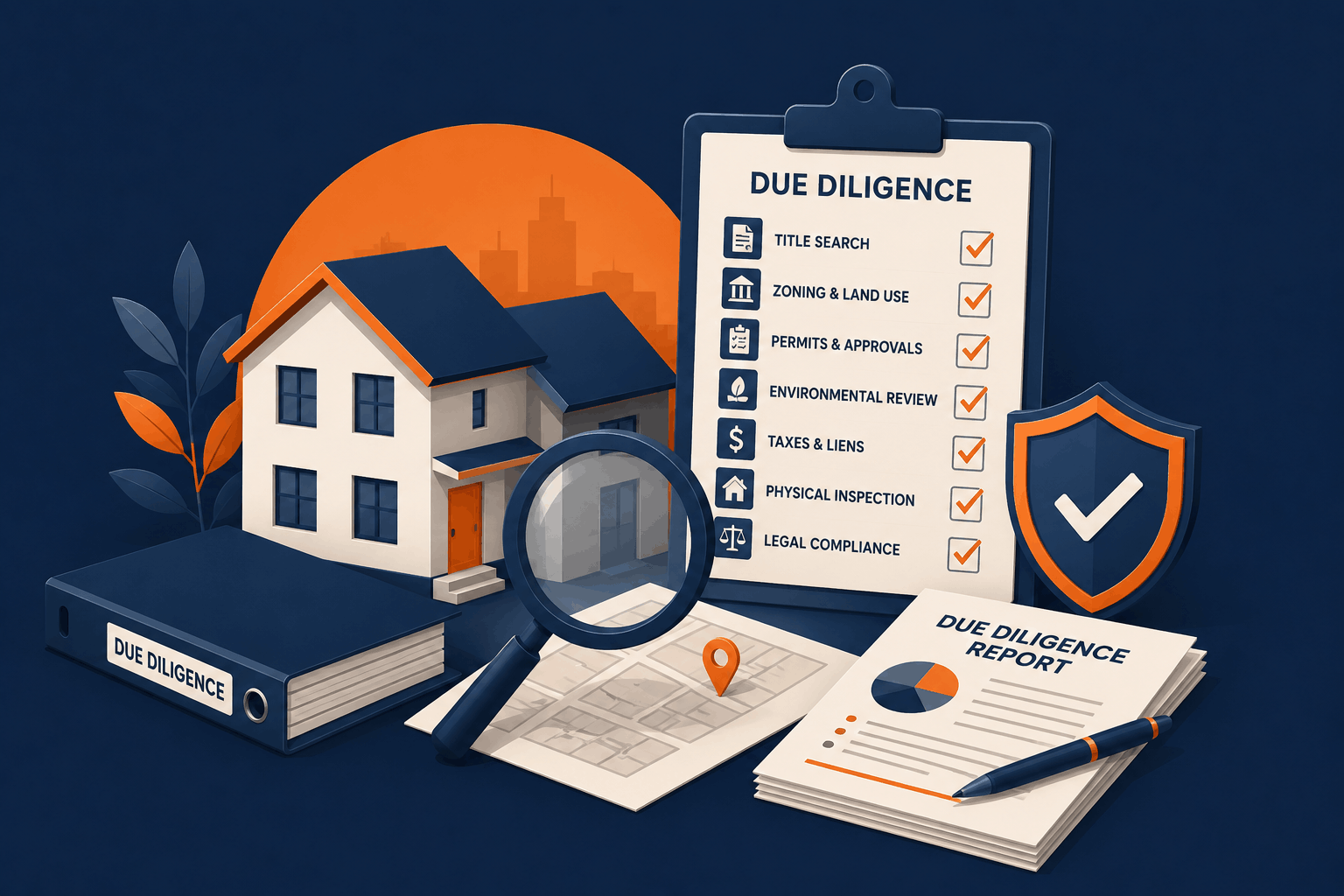
The consultant checks ownership records and title documents. They review zoning laws and planning permissions. They also assess boundaries, easements, environmental issues, taxes, and legal disputes (RICS, 2019).
The main purpose is to find hidden problems early, before the transaction is completed. As a result, buyers make informed decisions. They avoid costly mistakes, negotiate better terms, and reduce investment risks.
Due diligence is essential in every real estate transaction. It applies to vacant land, residential homes, and development sites. Consultants perform detailed research, confirm legal transferability, and verify that the property suits its intended use (Organisation for Economic Co-operation and Development [OECD], 2022).
The review can reveal unpaid taxes, boundary disputes, restrictive easements, environmental contamination, and zoning restrictions. These issues may reduce the property’s value or limit future development.
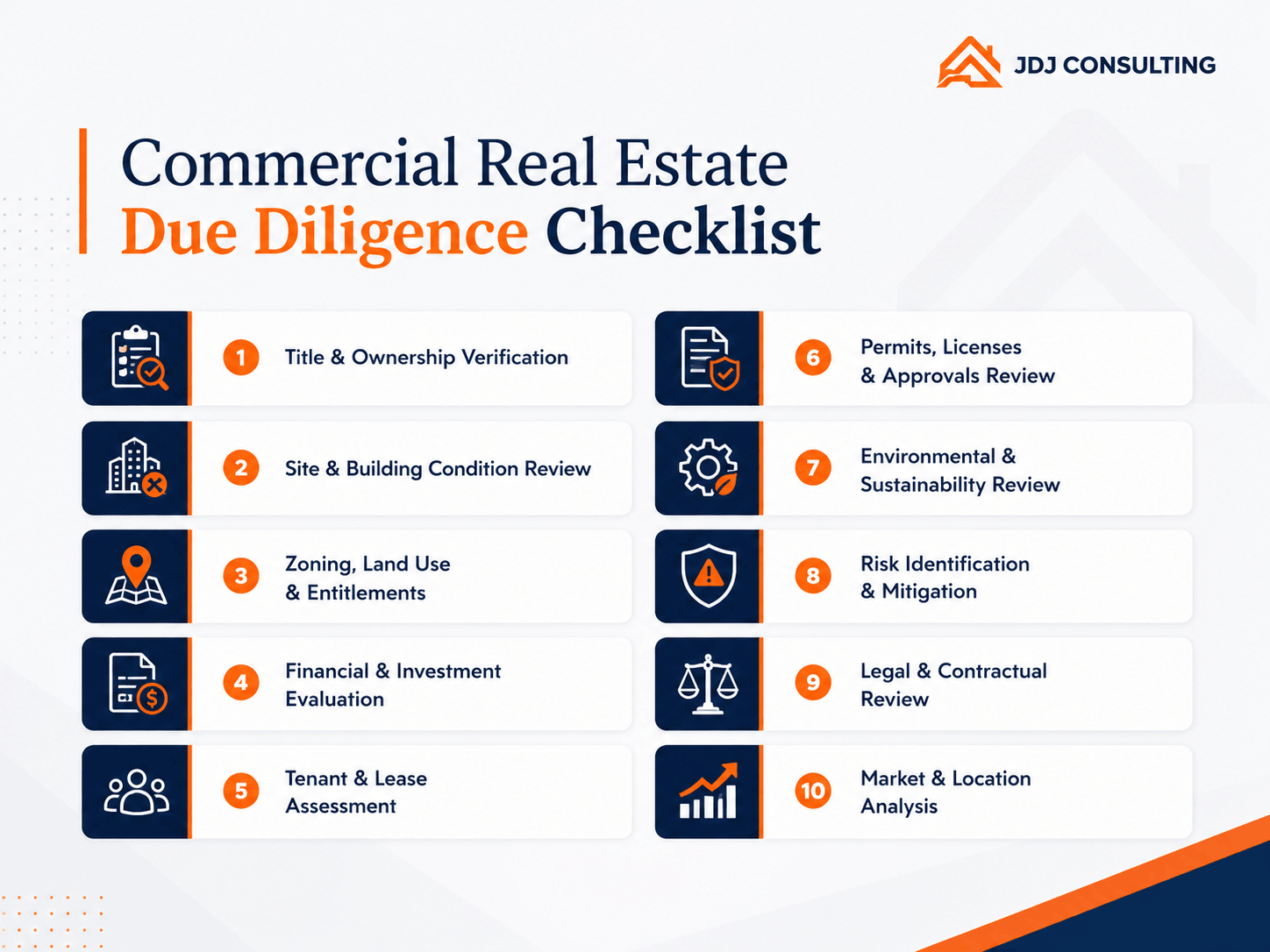
Download the commercial real estate due diligence checklist (Partner Engineering and Science, Inc, 2024).
What Does Property Due Diligence Include?
The process depends on the property type. However, most consultants perform similar checks, such as verifying ownership through title searches. They also review the property’s legal history, including liens, mortgages, and legal disputes.
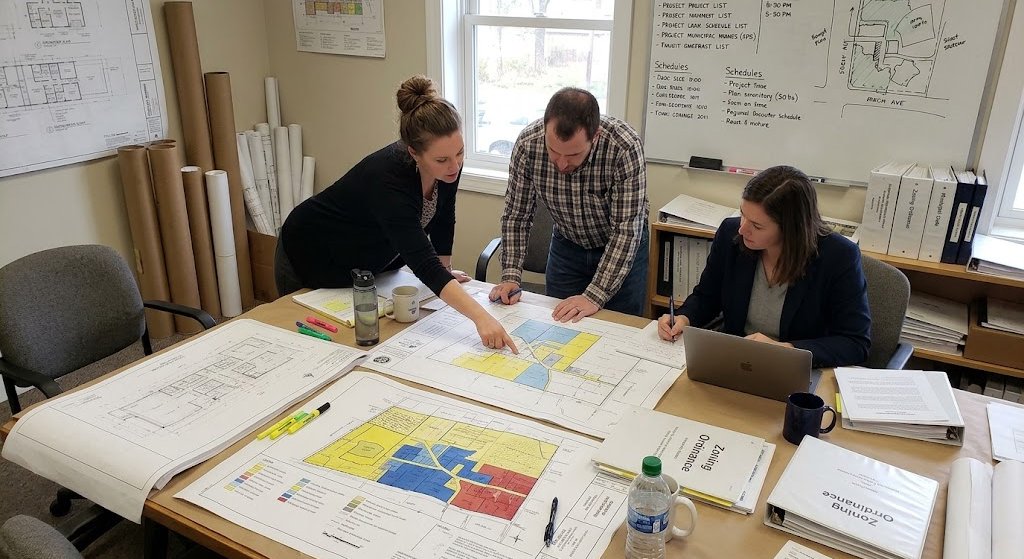
Next, they confirm zoning regulations and planning permissions. They also review land-use restrictions to ensure the property can be used legally.
Finally, consultants assess physical and financial factors. They inspect access roads, boundaries, utilities, drainage, soil conditions, and flood risk. They also review property taxes, service charges, and outstanding payments that can be transferred to the buyer.
Why Is Due Diligence Important?
Skipping due diligence creates legal and financial risks. A property may look attractive. However, hidden issues may exist. These problems can reduce its value and may also prevent future development.
For example, land may lack legal access. It may fail environmental requirements and could also have restrictive covenants. Commercial properties may have compliance issues, and they may also require expensive repairs.
A thorough review reveals these problems early, before the purchase is completed. As a result, buyers understand the property’s true condition. They also avoid unexpected costs after closing. Due diligence also benefits lenders, investors, and property developers. It reduces uncertainty and improves investment decisions (OECD, 2022).
Who Carries Out Property Due Diligence?
Property due diligence is usually coordinated by a property consultant. However, several professionals may be involved. Their roles depend on the transaction.
Real estate lawyers verify ownership and contracts. Surveyors confirm boundaries and site conditions. Engineers inspect structures for defects. Environmental specialists assess contamination and flood risks. Financial advisers review investment performance (RICS, 2023).
Together, these experts provide a complete assessment. Buyers gain a complete understanding of the property’s risks and potential opportunities before the transaction is finalised.
According to the World Bank’s Business Ready methodology, transparent land administration and legal verification reduce transaction uncertainty and improve investment confidence (World Bank, 2026).
Frequently Asked Questions
What is the purpose of property due diligence?
The purpose is to identify property risks before purchase. These include legal, financial, environmental, and physical risks. As a result, buyers make informed decisions.
How long does property due diligence take?
The process usually takes 30 to 90 days. The timeline depends on the property’s complexity. It also depends on document availability. Required inspections can affect the schedule.
Can you buy property without due diligence?
Yes, but it is highly risky. Buyers may inherit legal disputes. They may also inherit unpaid debts. Zoning restrictions may exist. Costly repairs may also become the buyer’s responsibility (OECD, 2022).
Contact the Consultants at JDJ Consulting Group for Property Due Diligence
Buying or developing property is a big investment. Before you move forward, make sure you know exactly what you’re buying. At JDJ Consulting Group, we review the property, identify potential risks, and explain everything in clear, simple terms. Our goal is to help you avoid costly surprises and make informed decisions.
Book a free consultation to discuss your project, call (818) 793-5058, or email sales@jdj-consulting.com. We’re here to help you every step of the way. Our team serves in three major US markets – Texas, Florida, and California.
References
Organisation for Economic Co-operation and Development. (2022). Responsible business conduct due diligence for project and asset finance transactions. OECD Publishing. https://www.oecd.org/en/publications/responsible-business-conduct-due-diligence-for-project-and-asset-finance-transactions_952805e9-en.html
Royal Institution of Chartered Surveyors. (2023). Technical due diligence of commercial property (1st ed.). https://www.rics.org/profession-standards/rics-standards-and-guidance/sector-standards/real-estate-standards/technical-due-diligence-of-commercial-property
Royal Institution of Chartered Surveyors. (2019). International Land Measurement Standard (ILMS): Due diligence for land and real property surveying (1st ed.). https://www.rics.org/profession-standards/rics-standards-and-guidance/sector-standards/land-standards/international-land-measurement-standard
World Bank. (2026). Business Ready (B-READY) methodology handbook.
https://thedocs.worldbank.org/en/doc/6364c306d685203c859c60a075df5c3a-0540012026/original/B-READY-MH-2026.pdf