
Table of Contents

A property can look like a great investment on paper and still become an expensive development headache.
The asking price may be attractive. The location may be perfect. The lot may appear large enough for the project you have in mind. But there is one question that matters before you spend serious money:
What can you actually build on the site?
That is where a site feasibility analysis becomes one of the most valuable tools for developers, investors, architects, and property owners.
At JDJ Consulting, our approach is simple:
Know your SITE in seconds
Address IN, Feasibility OUT
Instead of starting with assumptions, start with the property.
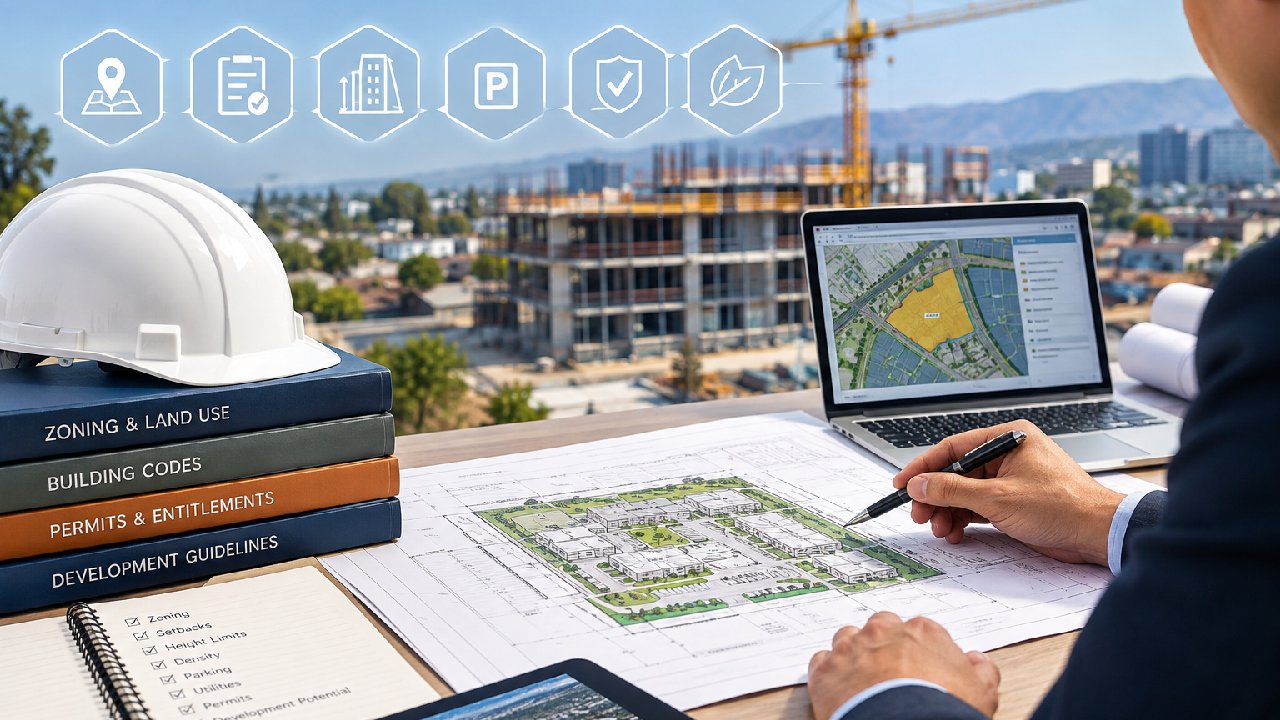
A professional feasibility analysis can help uncover zoning requirements, development limitations, potential entitlements, density opportunities, and risks that may not be obvious from a listing or basic property search.
Explore JDJ Consulting’s Feasibility Studies

Why Site Feasibility Matters in 2026
Development regulations continue to evolve, while cities increasingly use multiple layers of zoning, overlays, community plans, incentives, and development standards.
In Los Angeles, for example, zoning can determine permitted uses, building size and scale, parking, open space, and other development standards. Properties may also be subject to additional overlays or specific planning regulations.
That means the question is no longer simply:
“Is this property zoned residential?”
The better question is:
“What is the highest and best development strategy that this specific site can realistically support?”
That distinction can change the entire investment decision.
1. Start With the Address — Not the Concept
One of the biggest mistakes in development is falling in love with a project concept before understanding the property.
You might envision:
- A multifamily development
- An ADU or JADU
- A single-family redevelopment
- A commercial building
- A mixed-use project
- A subdivision
- A lot split
- An addition or major renovation
But the site determines which of those concepts may actually work.
A feasibility review starts with the property’s location and evaluates the regulations and physical characteristics that influence development potential.
For Los Angeles properties, the City’s Zone Information and Map Access System (ZIMAS) can provide property-specific information including zoning, land use, planning cases, and building permit history.
This is why the address should be the starting point—not an architect’s sketch or an optimistic assumption.
2. Zoning Is Only the Beginning
Finding the base zoning is important, but it is rarely the entire story.
A site may also be affected by:
- Overlay districts
- Specific Plans
- Community Plans
- Historic regulations
- Development standards
- Parking requirements
- Height limitations
- Setbacks
- Lot coverage
- Density regulations
- Environmental requirements
- Access and site constraints
- Existing structures
- Previous planning cases
Los Angeles City Planning specifically notes that many properties have additional layers of planning controls beyond base zoning.
In other words, two properties with similar zoning can have very different development potential.
That is why a serious feasibility review needs to examine the whole regulatory picture.
3. Find the Development Opportunity — Not Just the Restrictions
A feasibility study should not simply tell you what you cannot build.
It should help identify what may be possible.
For example, depending on the property and jurisdiction, the analysis may explore opportunities involving:
- Increased density
- ADU development
- Lot splits
- Affordable housing incentives
- Density bonus programs
- Variances
- Conditional Use Permits
- Other entitlement pathways
JDJ Consulting specializes in identifying entitlement strategies and development opportunities before moving into the application process.
Explore Land Use & Entitlement Strategy
This is where feasibility becomes more than a zoning lookup.
It becomes a development strategy.
4. Understand Entitlement Risk Before You Invest
A project may technically be possible but still require a complicated approval process.
That difference matters.
Some projects can move through relatively straightforward permitting. Others may require discretionary approvals, agency coordination, public hearings, environmental review, or additional entitlement work.
The timeline and complexity can significantly affect project costs and investment returns.
JDJ Consulting’s entitlement strategy process is designed to identify the appropriate path for a site and help clients understand what is involved before moving into applications.
For investors, this means you can make decisions with a clearer understanding of the potential risk.
5. Test the Site Before Designing the Building
A beautiful architectural concept is not useful if the site cannot support it.
Before investing heavily in design, developers should understand questions such as:
How much can I build?
How many units might be possible?
What setbacks apply?
What is the potential building envelope?
Are there parking or access constraints?
Will an entitlement be required?
Are there alternative development scenarios?
A feasibility study can help answer these questions early.
JDJ Consulting’s feasibility services include zoning analysis, development options, density calculations, entitlement risk assessment, and buildable-area considerations.
That early information can help architects design around real-world constraints instead of discovering them halfway through the project.
6. Due Diligence Can Protect Your Investment
Site feasibility is also closely connected to real estate due diligence.
Before acquiring a property, you want to understand the risks associated with the land—not just the purchase price.
Important questions may include:
- Does the existing use comply with zoning?
- What can be developed?
- Are there existing permits or planning cases?
- Are there restrictions affecting the property?
- What approvals may be necessary?
- Could the intended project require discretionary review?
- Are there alternative uses that create better value?
JDJ Consulting provides due diligence consulting to help clients evaluate zoning, entitlement, and development risks before committing capital.
Explore Due Diligence Consulting
7. Don’t Confuse “Possible” With “Profitable”
This is one of the most important distinctions in real estate development.
A project can be legally possible without being financially attractive.
For example, a property might technically support additional units, but the costs associated with parking, construction, entitlement processing, site improvements, or other requirements could change the economics.
That is why feasibility should connect zoning potential with the development strategy.
The goal is not simply to answer:
“Can I build something here?”
The better question is:
“What development scenario makes the most sense for this site?”
That is where a site feasibility analysis can become a powerful acquisition and planning tool.
8. Turn an Address Into a Development Strategy
Imagine having a property address and quickly moving toward answers about:
Zoning → Development Potential → Constraints → Entitlements → Next Steps
That is the value behind the idea:

Know your SITE in seconds

Address IN, Feasibility OUT
Try AIEntitle
Instead of spending weeks researching scattered regulations, property records, zoning documents, and approval pathways before knowing whether a project makes sense, start with a structured feasibility process.
JDJ Consulting combines land-use expertise, entitlement strategy, zoning analysis, and permitting knowledge to help developers understand their options before moving forward.
View JDJ Consulting’s Services
What Should You Do Before Buying a Development Property?
Before signing the purchase agreement—or committing significant design dollars—consider completing these steps:
Step 1: Identify the Property
Start with the exact address and parcel information.
Step 2: Review Zoning
Determine the property’s zoning designation and applicable development regulations.
Step 3: Check Overlays and Planning Controls
Look beyond base zoning for additional restrictions or opportunities.
Step 4: Define Development Scenarios
Evaluate what you actually want to build and whether alternative concepts may produce better results.
Step 5: Analyze Entitlements
Determine whether the project can proceed administratively or may require additional approvals.
Step 6: Evaluate Development Risk
Identify potential obstacles before they become expensive redesigns or delays.
Step 7: Make the Investment Decision
Use the feasibility findings to decide whether to proceed, renegotiate, redesign, or walk away.
The Best Development Decisions Start Before Construction
The most expensive development problems are often discovered too late.
A zoning conflict discovered during early due diligence may be manageable.
The same conflict discovered after purchasing the property, completing architectural plans, and investing heavily in engineering can become a major financial problem.
That’s why feasibility belongs at the front of the development process.
Whether you’re evaluating a vacant lot, an existing residential property, a multifamily opportunity, or a commercial site, understanding the property’s development potential before committing capital can give you a significant advantage.

Ready to Know What Your Site Can Do?
Your next development opportunity starts with an address.
Know your SITE in seconds.
Address IN, Feasibility OUT.
Try AIEntitle
JDJ Consulting can help evaluate zoning, development potential, entitlement pathways, and permitting considerations so you can move forward with greater clarity.
Or, if you want to discuss your project first:
Book a Consultation with JDJ Consulting
Reference Links
For additional property and zoning research, these official resources are useful: