Table of Contents
A developer closes on 800 acres west of Fort Worth. The zoning entitles three homes per acre. The pro forma pencils out at roughly 2,400 lots. Eighteen months later, after roads, floodplain, drainage easements, a school site, and two collector road dedications, the realistic number lands closer to 1,600 lots. The land basis has not changed. The math has.
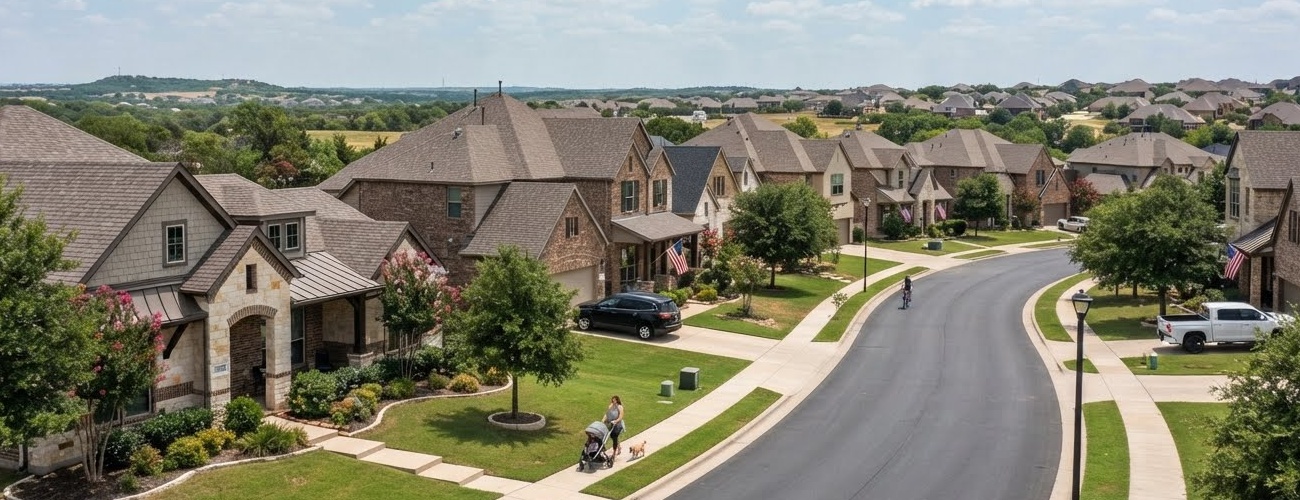
That gap between what a zoning map promises and what a site can actually deliver is the single most expensive miscalculation in Fort Worth single-family development. It is not a legal failure. It is an arithmetic one, and it shows up on subdivisions from Walsh Ranch to the Trinity Lakes corridor with almost mechanical regularity. Fort Worth is adding rooftops faster than almost any large city in the country, but the developers who win are the ones who treat lot yield as an engineering question long before it becomes a marketing one.
How Many Homes Can a Fort Worth Site Actually Support?
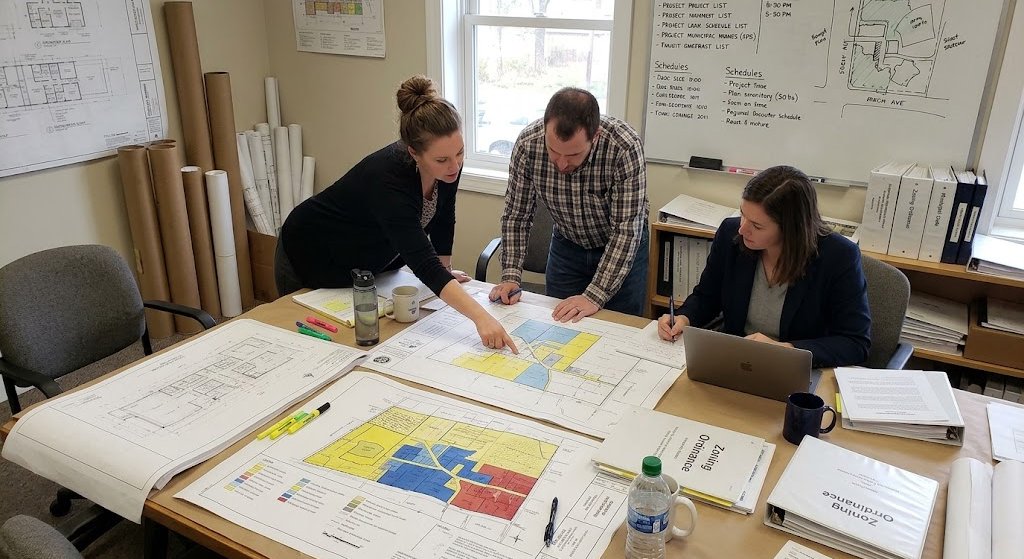
The honest answer is almost always lower than the zoning map suggests. Zoning sets a ceiling on density. It says nothing about roads, drainage, floodplain, parkland dedication, school sites, utility easements, or the buffers a site needs against adjacent uses. Net buildable lot count is what remains after all of that is subtracted from gross acreage, and on a large western Fort Worth tract, that deduction routinely runs from fifteen to thirty percent of the site.
The most common underwriting error on a Fort Worth subdivision is treating the zoning district’s permitted density as the buildable density. It rarely is. A civil engineer working from an actual grading, drainage, and street plan will produce a materially different lot count than a broker working from a zoning map and a calculator, and the difference between those two numbers is usually the difference between a deal that pencils and one that does not.
What Does the Fort Worth Single-Family Entitlement Process Actually Involve?
A Fort Worth subdivision moves through a defined sequence before a single foundation is poured. The city is explicit that land must be zoned and platted before development can proceed, and its Development Services Department runs pre-development conferences, zoning checks, platting review, engineering review, permitting, and inspections through the same office.
For a subdivision of any real size, the sequence generally runs through site feasibility, zoning confirmation or rezoning, a pre-development conference, a concept plan where the ownership tract exceeds 640 acres or will be phased, a preliminary plat, a final plat, a Community Facilities Agreement covering public infrastructure, and then individual building permits released lot by lot.
Phase | What It Establishes |
|---|---|
Site feasibility | Jurisdiction, zoning, floodplain, utility capacity, and constraints before land is priced. |
Zoning entitlement | Confirms or rezones the district; sets lot size, setbacks, height, and coverage standards. |
Pre-development conference | City identifies required studies: traffic, drainage, water/sewer, floodplain, annexation. |
Concept plan | Required for phased projects or ownership tracts over 640 acres; frames the full build-out. |
Preliminary plat | City Plan Commission approval of lots, streets, easements, and drainage before final platting. |
Final plat | Creates legally recordable lots and public dedications; can be administratively approved. |
CFA and infrastructure | Governs construction, financing, and acceptance of streets, water, sewer, and drainage. |
Individual home permits | Building, mechanical, electrical, plumbing, and trade permits released lot by lot. |
The jurisdictional layer is where most timelines actually break. Whether a site sits inside city limits, in the extraterritorial jurisdiction, or across a county line changes which studies apply, which agency signs off, and in what order. This is precisely where a permit expediting and entitlement consulting partner earns its fee: sequencing zoning, platting, and infrastructure approvals so a project is not waiting on one department while another sits idle. Firms that work Fort Worth’s entitlement process daily, including
JDJ Consulting’s Fort Worth permit expediting and entitlement consulting team, exist because that sequencing, not the zoning application itself, is usually what determines whether a subdivision hits its first lot delivery on schedule.
Texas Senate Bill 15 has added a real variable to this math. In zoning districts that already allow single-family housing, Fort Worth must generally permit lots as small as 3,000 square feet on an unplatted parcel of at least five acres, with exemptions for airport, clear-zone, and certain development-agreement areas. Lots under 4,000 square feet also carry limits on how far the city can regulate parking and lot coverage. The law does not remove platting, infrastructure, drainage, fire, or building code requirements. It changes what density is available without a traditional rezoning, which is a meaningfully different question.
Where Are the Strongest Opportunities for Single-Family Development in Fort Worth?
The largest opportunity sits on the western edge of the city, across Walsh Ranch, Veale Ranch, and Brown Ranch. These three master-planned platforms cover roughly 13,800 combined acres and are structured around long-horizon tax increment financing districts built to fund regional roads, water, sewer, and drainage ahead of vertical construction. Walsh Ranch’s TIF runs through 2107. Veale Ranch covers approximately 5,200 acres. Brown Ranch, at roughly 1,476 acres near the Parker County line, moved forward under a development agreement approved by the city in mid-2026.
North Fort Worth and the Alliance corridor remain the most liquid submarket for conventional production homes, backed by employment growth, I-35W and SH 114 access, and an established builder base. That liquidity comes with competition: multiple master-planned communities are chasing the same buyer, so product differentiation on price point, lot size, or school access matters more there than almost anywhere else in the market.
South Fort Worth, along I-35W, U.S. 287, and Chisholm Trail Parkway, offers a lower land basis and a large remaining supply, but water and sewer extension costs and floodplain conditions can erode that basis quickly on greenfield sites. East Fort Worth, the Trinity Lakes corridor, East Berry, and Woodhaven are better suited to infill, small-lot, and attainable product, supported by tax increment financing districts built specifically to fund corridor redevelopment rather than greenfield expansion.
Central Fort Worth and the inner-ring neighborhoods carry the highest per-lot cost and the most fragmented ownership, but they also carry the strongest case for build-to-rent detached product, patio homes, and infill subdivisions where a Neighborhood Empowerment Zone designation applies
What Incentives Are Available for Fort Worth Single-Family Developers?
The Neighborhood Empowerment Zone program is the most directly usable city incentive for most single-family projects. Depending on the specific zone, NEZ certification can waive building permit, plan review, platting, demolition, and zoning application fees, and release qualifying city liens. City Council-approved municipal property tax abatement, on the increase in appraised value attributable to improvements, can run up to five years and applies only to City of Fort Worth taxes, not the full tax bill.
Tax increment financing does not subsidize individual homes, but it funds the roads, drainage, utilities, and parks that make a subdivision feasible in the first place. Fort Worth currently runs residential and mixed-use relevant TIF districts across Walsh Ranch, Veale Ranch, Trinity Lakes, East Berry Renaissance, Woodhaven, and the Southside and Near West Side, among others. Public improvement districts can layer on top of a TIF to fund ongoing maintenance, landscaping, and amenities, though the assessment has to be underwritten against buyer affordability and appraisal comparables.
Why Do Fort Worth Subdivisions Fail Before They Reach the Market?
The failures are rarely dramatic. They are almost always compounding underestimates that surface eighteen to thirty-six months after closing, once the entitlement bill comes due.
- Overestimating lot yield by underestimating road, drainage, floodplain, park, and easement deductions from gross acreage.
- Treating zoning-permitted density as buildable density instead of engineered density.
- Underpricing water, sewer, and lift station extensions, which can shift phase economics by hundreds of thousands of dollars.
- Treating drainage as a late-stage engineering task rather than an early feasibility constraint, particularly outside FEMA-mapped floodplain in the city’s own flood risk areas.
- Planning only the first phase and failing to preserve arterial alignments, drainage corridors, and school sites for later phases.
- Starting vertical construction before public infrastructure is accepted, which stalls permits and inspections.
Stakeholder | Primary Friction Point |
|---|---|
Developer | Land basis, entitlement timing, infrastructure cost, and phased financing risk. |
Homebuilder | Lot takedown timing, cycle times, and competition from existing inventory. |
Civil engineer | Drainage, detention, grading, and fire flow across a phased street network. |
Architect / designer | Small-lot compliance, setbacks, garage placement, and repeatable plan efficiency. |
General contractor | Lot release sequencing tied to incomplete civil infrastructure. |
Investor / lender | Absorption risk, land carry, and infrastructure completion timing. |
City staff | Application completeness, code compliance, and long-term maintenance obligations. |
Every row in that table represents a different party with a different reason to slow a project down. The developments that stay on schedule are the ones where a single team is tracking all of these dependencies against one another, not managing them as separate workstreams.
Frequently Asked Questions
How long does it take to entitle a single-family subdivision in Fort Worth?
Timelines vary by site, but a phased subdivision requiring a concept plan, preliminary plat, and final plat typically runs twelve to twenty-four months before the first lots are released, longer where rezoning, annexation, or major traffic and drainage studies are required.
Does Texas Senate Bill 15 allow smaller lots in Fort Worth?
In districts that already allow single-family housing, SB 15 generally requires Fort Worth to permit lots as small as 3,000 square feet on an unplatted parcel of at least five acres, subject to airport, clear-zone, and certain development-agreement exemptions, and it limits city regulation of parking and coverage on lots under 4,000 square feet.
What triggers a concept plan requirement in Fort Worth?
A concept plan is required when preliminary plats will be submitted in phases, or when the contiguous ownership tract exceeds one square mile, or 640 acres, and is located in or proposed for annexation into Fort Worth.
What is a Community Facilities Agreement?
A Community Facilities Agreement, or CFA, is the infrastructure agreement governing construction, financing, inspection, and acceptance of a subdivision’s streets, water lines, sewer lines, storm drains, and related public improvements before homes can be reliably permitted and occupied.
Which Fort Worth submarket has the strongest opportunity for single-family development right now?
The western growth platform across Walsh Ranch, Veale Ranch, and Brown Ranch offers the largest long-horizon opportunity given coordinated infrastructure financing, while East Fort Worth, East Berry, and Woodhaven offer the strongest infill and attainable-housing opportunity supported by existing tax increment financing districts.
Building the Next Fort Worth Subdivision
Lot yield, jurisdictional sequencing, and infrastructure timing are what actually decide whether a Fort Worth subdivision hits its pro forma, not the number printed on a zoning map. The developers who consistently deliver on schedule are the ones who bring in permit expediting and entitlement expertise before land closes, not after the first plat gets kicked back.
JDJ Consulting works with developers, architects, and general contractors across Texas and Florida to move projects through zoning, platting, and permitting without the delays that erode a pro forma. Explore JDJ Consulting’s full range of permitting and entitlement services to see how the right sequencing at the front end protects the timeline at the back end.