Table of Contents
Los Angeles has quietly rewritten the rules for multifamily infill. On paper, the city now offers one of the most generous by-right development frameworks in California. In practice, the path from a vacant lot or underused parcel to a finished building still runs through a maze of overlays, tenant protections, and procedural checkpoints that catch even experienced sponsors off guard.
That gap between what the code promises and what the process delivers is where most infill projects gain or lose months, and where margins are made or broken. For architects, developers, and investors evaluating Los Angeles infill in 2026, understanding that gap is no longer optional. It is the difference between a project that pencils and one that stalls in plan check for a year.
Why Infill Is the Center of Gravity in LA Housing Policy
Los Angeles has committed, through its Housing Element and a series of state-mandated reforms, to unlocking density on parcels that were previously constrained by outdated zoning. The city’s own planning department frames this shift as central to meeting state housing targets, and it has built an entire ministerial infrastructure to support it, from sites-inventory flags to streamlined review tracks for qualifying projects. planning.lacity.gov
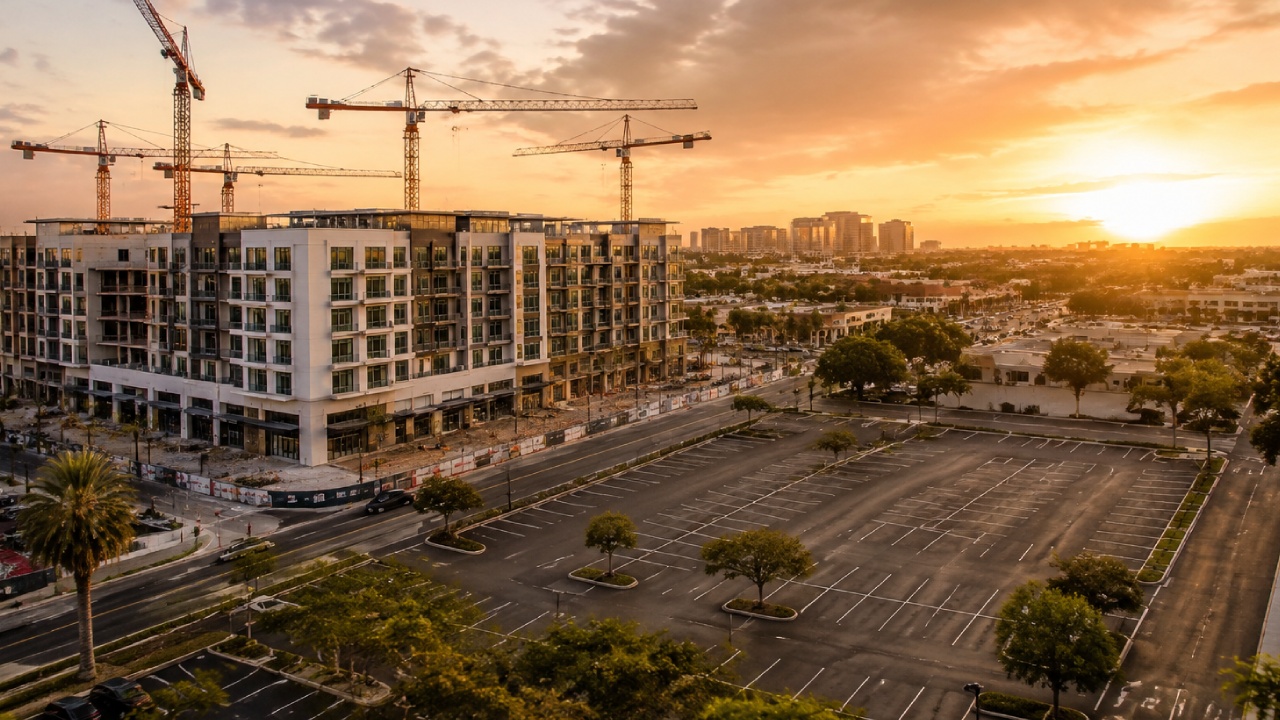
For infill specifically, this matters because most opportunity sites in Los Angeles are not vacant land. They are underutilized commercial strips, small merged lots, aging low-density parcels, and parking-heavy retail sites sitting on corridors the city now wants to densify. Understanding which of these qualifies for a ministerial path, and which will trigger discretionary review, is the first and most consequential decision in any deal.
The Workflow, From Due Diligence to Certificate of Occupancy
Site due diligence comes first, and it is not optional
Before a single entitlement application is filed, a serious sponsor needs to confirm zoning, General Plan land-use designation, and whether the parcel sits within a Historic Preservation Overlay Zone, Specific Plan, or Community Design Overlay. A ZIMAS search will surface existing entitlements, restrictions, and whether the site is flagged under the city’s ministerial affordable pathways, referenced internally as ZI-2534 and ZI-2535. planning.lacity.gov
This is also the stage to screen for tenant protections. The Rent Stabilization Ordinance, Ellis Act history, and replacement-unit obligations under the city’s “no net loss” policy can reshape a project’s economics before a single design line is drawn. Infrastructure capacity, sewer, water, and power, deserves the same early scrutiny, particularly in older neighborhoods where systems were never sized for added density. jchs.harvard.edu
Choosing the right entitlement path
Los Angeles now channels most density-bonus projects through the Citywide Housing Incentive Program, or CHIP, which consolidates three distinct tracks into a single framework. planning.lacity.gov
The State Density Bonus Program, grounded in Government Code section 65915, rewards projects that include on-site affordable units with additional density, height, FAR, and parking concessions, including bonuses of up to 50 percent under AB 2345. The Affordable Housing Incentive Program serves projects that are 80 to 100 percent affordable, along with certain publicly owned or faith-owned sites, layering local incentives on top of the state framework. The Mixed Income Incentive Program has effectively replaced the old Transit Oriented Communities program across three geographies, Opportunity Corridors, Corridor Transition areas, and Transit Oriented Incentive Areas, offering larger bonuses near transit and in higher-opportunity neighborhoods. planning.lacity.gov
Beyond CHIP, several state laws offer their own ministerial routes worth evaluating early. SB 35 provides streamlined, CEQA-exempt approval for eligible affordable projects, provided there are no historic or tenant conflicts. SB 9 opens a path for two-unit projects and lot splits, while SB 684 allows up to ten units on qualifying multifamily-zoned urban infill parcels under five acres. Smaller infill sponsors in particular should not overlook these tracks, since they can bypass discretionary review entirely. planning.lacity.gov
Filing, and the discretionary trap
Ministerial applications, where plans and affordability covenants are submitted for approval within statutory timelines and without a public hearing, are the fastest route available. But any project that requires a Zone Change, General Plan Amendment, Specific Plan compliance, or Historic-Cultural Monument clearance falls into discretionary review. That triggers CEQA and public hearings, and it can add twelve to twenty-four months or more to a timeline that sponsors often underestimate at the underwriting stage. yimbylaw.org
Parallel processing and permitting
Once an application file is complete, the city’s Parallel Processing System allows entitlement, design, and permit review to move concurrently rather than sequentially, meaningfully compressing overall cycle time. c40knowledgehub.org Coordination with LADBS for building permit plan check, along with fire, public works, and utility agencies, still needs to happen in lockstep. For fully affordable and shelter projects, Executive Directive 1 offers an additional expedited track through city clearances. planning.lacity.gov
From there, the project moves into building permits, bidding, and construction, where inspections, utility upgrades, and off-site improvements such as sidewalks, curb cuts, and street trees can still surface depending on site context. bsbdesign.com
Where Each Stakeholder Feels the Pressure
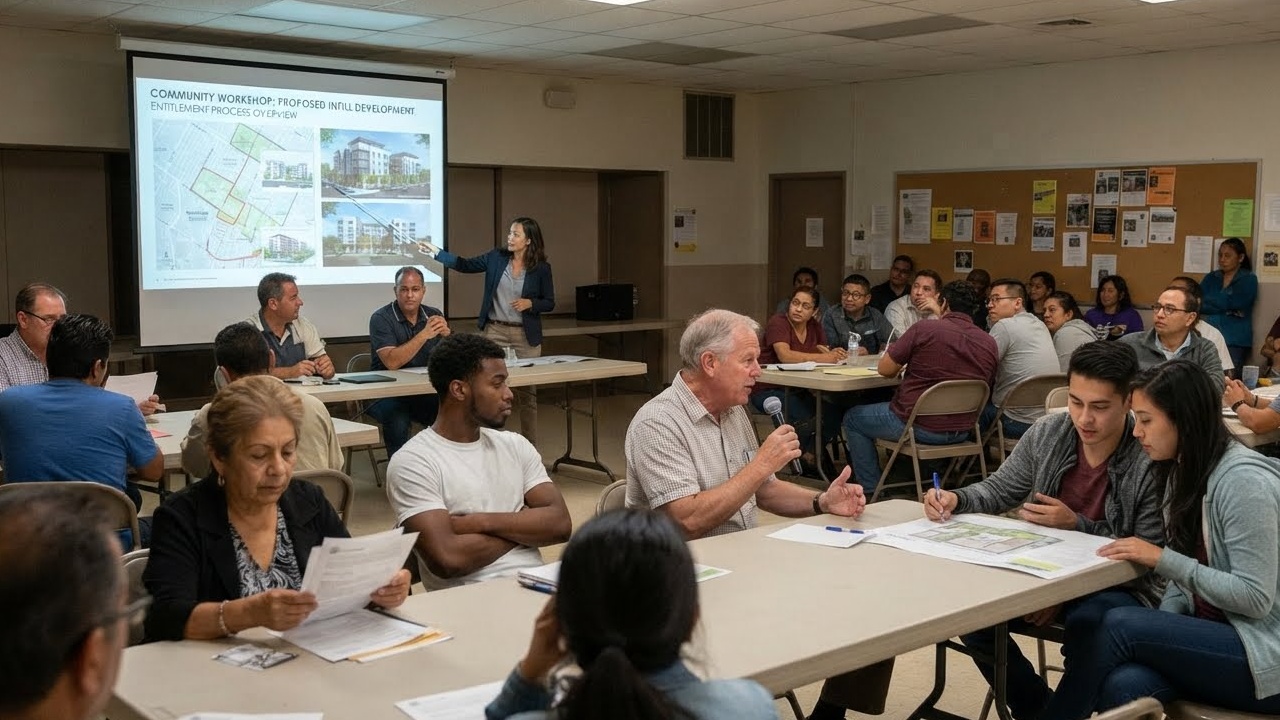
Developers and sponsors carry the entitlement risk most directly. Even projects that appear by-right can stall over tenant protections, historic review, or conflicting overlays that were not obvious during initial due diligence. Demolishing existing units often triggers replacement obligations, relocation costs, and affordability covenants that can run 99 years under the city’s Resident Protections Ordinance, all of which reshape exit assumptions long before a shovel hits the ground. planning.lacity.gov Financing feasibility is equally sensitive to prevailing wage requirements on certain programs and to construction cost volatility, which can quickly erode the thin margins that make infill work in the first place. multihousingnews.com Community opposition remains a live risk too. Even ministerial projects face pushback over height, massing, parking, and shadows in lower-density contexts. urban.org
Architects and designers face a different kind of complexity, one rooted in navigating overlapping zoning frameworks. CHIP, MIIP, and legacy TOC maps intersect with FAR limits, height restrictions, setbacks, and design guidelines that vary by Specific Plan and Historic Preservation Overlay Zone, making early code research as important as early design work. method.group AB 2097 eliminates parking minimums within half a mile of major transit, which sounds like a straightforward win, but many sites still face practical loading, drop-off, and fire-access constraints that force design compromises regardless of what the zoning code technically allows. planning.lacity.gov HPOZ and Historic-Cultural Monument status add further iterations around façade treatment, massing, and materials. yimbylaw.org
General contractors absorb much of the cost volatility inherent to infill construction. Tight urban sites often demand more complex structural systems, shoring, and logistics than suburban builds, and older neighborhoods frequently need sewer, water, and electrical upgrades that must be priced and coordinated early rather than discovered mid-construction. bsbdesign.com Labor shortages and material price swings remain persistent sources of overrun risk across the sector. multihousingnews.com
Investors and lenders are underwriting a different set of variables entirely. Statewide rent caps under AB 1482 and local rent control measures shape pro formas directly, and buildings under fifteen years old are generally treated as safer, more predictable targets. allviewrealestate.com Long-term affordability covenants tied to density-bonus and CHIP incentives, often 99 years, affect valuation and exit strategy in ways that require careful modeling upfront rather than after closing. planning.lacity.gov In certain submarkets, heavy new supply is already pressuring rents and absorption, which is pushing underwriting toward more conservative assumptions across the board. matthews.com
Where the Market Is Crowded, and Where Room Still Exists
Some Los Angeles submarkets have become genuinely competitive for infill investment. Koreatown, West Adams, and Inglewood show strong sales volume and rent growth expectations, while Echo Park, East Hollywood, Los Feliz, and pockets of the San Fernando Valley have emerged as active value-add and infill hotspots. matthews.com kidder.com Santa Monica, for its part, has long carried a dense concentration of well-designed infill buildings on single and merged lots, a pattern that reflects decades of sustained demand. altaonline.com These areas remain attractive, but land pricing, entitlement scrutiny, and construction costs are all more competitive as a result.
The more interesting opportunity sits along corridors where zoning allows higher density, transit access is improving, and land remains assemble-able. Opportunity Corridors and major boulevards citywide, including stretches of Wilshire, Ventura, Sepulveda, Crenshaw, Figueroa, and Western, now fall under MIIP and its associated density bonuses. planning.lacity.gov Transit Oriented Incentive Areas near Metro rail and bus rapid transit corridors offer meaningful parking reductions and density bonuses that materially improve project feasibility. Commercial and retail parcels eligible under AB 2011 and SB 6 for residential conversion represent another underexplored category, particularly along corridors where retail buildings sit underutilized. And parcels flagged within the Housing Element sites inventory, where a project with at least 20 percent lower-income units qualifies for ministerial approval, remain some of the most reliable entitlement paths available in the city today. planning.lacity.gov
None of this comes without friction. Older neighborhoods frequently lack the sewer, water, and electrical capacity to support significant density increases, and upgrading that infrastructure is expensive. reddit.com Infill parcels are also often small or irregularly shaped, complicating unit counts, circulation, and basic project economics in ways that sometimes require lot assembly to solve. jchs.harvard.edu Tenant and historic protections can reshape or block a project outright, and even ministerial projects continue to face political pressure and appeals that affect both timeline and final yield. urban.org
The Incentive Programs Worth Knowing Cold
CHIP is the primary local mechanism for infill density bonuses in Los Angeles, and its three component programs, the State Density Bonus Program, AHIP, and MIIP, each unlock a slightly different set of tools depending on the affordability mix a project offers. Across all three, the incentives available typically include density bonuses of up to 50 percent, height and FAR increases, parking reductions that often eliminate minimums entirely within half a mile of major transit under AB 2097, setback and lot-coverage waivers, and expedited ministerial review when qualifying criteria are met. planning.lacity.gov
Outside CHIP, SB 35 remains one of the more powerful tools available for infill where tenant and historic conflicts are absent, since it offers ministerial, CEQA-exempt approval for eligible affordable projects. SB 9 and SB 684 provide ministerial paths for smaller-scale infill, covering two-unit projects and lot splits up to ten units on qualifying multifamily-zoned parcels. Executive Directive 1 expedites processing for fully affordable and shelter projects, and Measure JJJ requires affordable housing or in-lieu fees for certain General Plan Amendment, zone, or height changes, a requirement sponsors often coordinate directly with their density-bonus strategy. Projects approved under MIIP can also qualify for exemption from the Affordable Housing Linkage Fee, a detail that materially improves feasibility on marginal deals. planning.lacity.gov
The Real Variable Is Execution
Los Angeles has built a genuinely sophisticated set of tools for unlocking multifamily infill. CHIP, MIIP, SB 35, and the smaller-scale state pathways together give sponsors more by-right options than the city has offered in decades. But the incentive framework only pays off when a project is positioned correctly from the start, screened against overlays and tenant protections before acquisition, filed under the right track, and processed in parallel rather than sequentially.
That is where the gap between the code and the calendar tends to open up, and it is the reason experienced sponsors bring in local entitlement and permit expertise before, not after, they file. JDJ Consulting works with developers, architects, and investors across Los Angeles to navigate exactly this process, from initial zoning and CHIP eligibility screening through ministerial and discretionary filings to permit issuance, with a focus on keeping infill projects moving on a timeline that matches the underwriting. Sponsors evaluating a specific site can review JDJ Consulting’s Los Angeles permit expediting and entitlement services to understand how a project-specific entitlement path and timeline would look in practice.
If you have a specific neighborhood or parcel type in mind, a corridor commercial site, a multifamily-zoned small lot, or an RSO building, the most useful next step is usually a site-specific read on which CHIP or MIIP tier applies, what the realistic timeline looks like, and where the process is likely to get stuck before it starts.