
Table of Contents
Real estate development incentive programs can change what is possible on a property. Depending on the jurisdiction, a qualifying project may receive additional development capacity, reduced parking requirements, streamlined approvals, affordability incentives, or other regulatory benefits.
For developers, investors, architects, and property owners, the important question is not simply “What incentives are available?” It is “Which programs apply to this site, what are the requirements, and how could they affect the development strategy?”
Incentive programs should be evaluated early—ideally during site acquisition, feasibility, and pre-construction planning—because program requirements can influence project design, unit count, affordability commitments, parking, timelines, and entitlement strategy.
JDJ Consulting Group helps development teams evaluate zoning, entitlement pathways, density opportunities, and applicable development requirements across California, Texas, and Florida.
What Are Real Estate Development Incentive Programs?
Real estate development incentive programs are government-created programs intended to encourage specific types of development or achieve public policy objectives.
Depending on the jurisdiction and program, incentives may support:
- Affordable housing
- Increased residential density
- Mixed-use development
- Transit-oriented development
- Adaptive reuse
- Infill development
- Workforce or income-restricted housing
- Redevelopment of underutilized properties
- Certain community or economic development objectives
The benefits and eligibility requirements vary significantly by city, county, state, and program. Developers therefore need to review the applicable local zoning regulations and program requirements before assuming that an incentive applies to a property.
Why Incentives Should Be Reviewed During Feasibility
An incentive program can affect the basic assumptions used to evaluate a development opportunity.
For example, a preliminary feasibility study may normally examine:
- Zoning
- Allowable density
- Floor area
- Height
- Setbacks
- Parking
- Site constraints
- Development costs
- Entitlement requirements
An applicable incentive program can change some of those assumptions.
A project may potentially qualify for additional units, modified parking requirements, increased development capacity, or a different approval pathway depending on the applicable regulations.
That is why incentive analysis should be incorporated into the feasibility and highest-and-best-use analysis rather than treated as an afterthought. JDJ’s feasibility work reviews zoning, density, development constraints, and entitlement risk before capital is committed.
Common Types of Development Incentives
1. Density Incentives
Density incentives can allow qualifying projects to develop more residential units than would otherwise be permitted under the base zoning regulations.
These programs can be particularly relevant to multifamily and affordable housing projects.
However, developers should evaluate the complete program—not just the potential increase in unit count. Additional requirements may apply to affordability, unit mix, design, parking, or other project characteristics.
JDJ specifically evaluates density bonus opportunities as part of its land-use and entitlement strategy services.
2. Affordable Housing Incentives
Some programs provide development benefits when a project includes affordable or income-restricted housing.
Potential benefits can include increased density, modified development standards, or streamlined approval pathways depending on the jurisdiction and applicable program.
The analysis should consider both sides of the equation:
Potential benefit: additional development capacity or regulatory flexibility.
Project obligation: affordability restrictions and compliance requirements.
A developer should understand both before incorporating the incentive into a project’s financial model.
3. Parking Incentives
Parking requirements can have a significant impact on development feasibility, particularly on smaller urban sites.
Certain programs may provide reduced parking requirements or other parking-related flexibility when specific eligibility criteria are met.
Reducing required parking can potentially affect:
- Site planning
- Building configuration
- Construction costs
- Unit count
- Basement or structured parking requirements
- Overall development efficiency
Parking incentives should therefore be evaluated alongside zoning and site feasibility rather than independently.
4. Transit-Oriented Development Incentives
Properties located near qualifying transit may be eligible for programs that encourage higher-density or transit-supportive development.
The exact requirements depend on the jurisdiction, transit location, zoning designation, and applicable regulations.
A transit-related incentive may affect the initial development concept, making it important to identify potential eligibility before the site plan is finalized.
5. Streamlined or Ministerial Approval Pathways
Some development programs can provide a more predictable approval process when a project satisfies specific statutory and local requirements.
This does not mean every qualifying project is automatically approved. Developers still need to verify eligibility, prepare the required documentation, and comply with applicable development standards.
Understanding the approval pathway early can help a development team plan its schedule and coordinate design, entitlement, and permitting activities.
How Developers Should Evaluate an Incentive Program
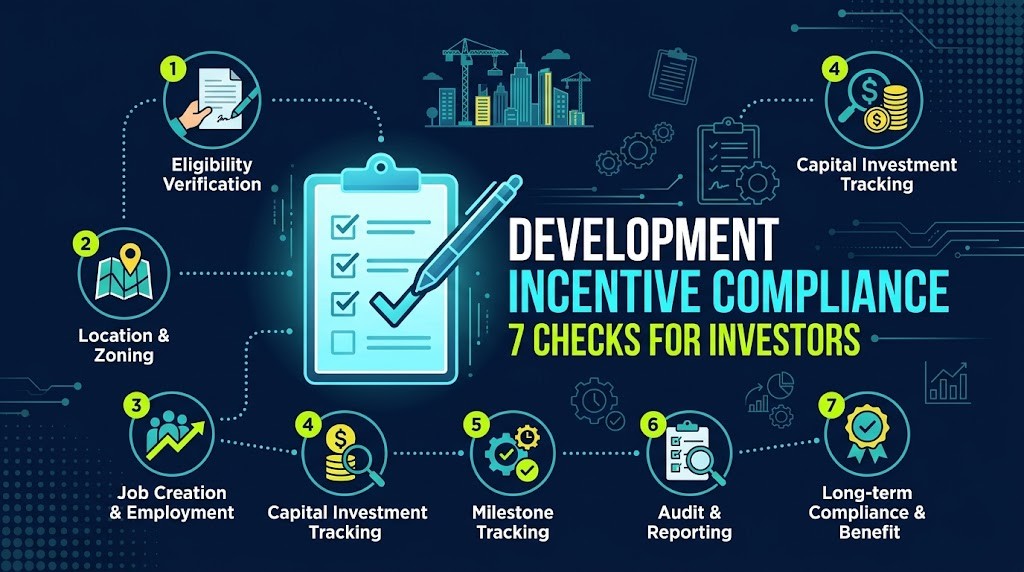
Before relying on an incentive, review at least these six areas.
1. Site Eligibility
Start with the property.
Review:
- Zoning designation
- Parcel characteristics
- Existing use
- Overlay zones
- Transit proximity
- Existing restrictions
- Applicable local regulations
An incentive is only useful if the property and proposed project satisfy the program’s eligibility requirements.
2. Development Requirements
Next, determine what the project must provide in exchange for the incentive.
Requirements may include:
- Affordable units
- Income restrictions
- Specific unit configurations
- Design standards
- Parking provisions
- Minimum project size
- Affordability periods
- Reporting or compliance obligations
3. Development Capacity
Compare the base zoning scenario with the incentive scenario.
For example:
Base scenario
- Existing zoning
- Base density
- Base parking
- Standard development standards
Incentive scenario
- Potential additional units
- Modified parking requirements
- Additional development flexibility
- Applicable affordability requirements
This comparison helps the development team understand whether the program materially changes the project’s potential.
4. Entitlement and Approval Path
Determine how the incentive interacts with the jurisdiction’s approval process.
JDJ’s Land-Use & Entitlement Strategy services include zoning and entitlement analysis, density bonus considerations, and coordination through the applicable approval process.
5. Financial Impact
An incentive should also be evaluated financially.
The additional development potential may increase project revenue, but the project may also have additional costs or obligations.
Developers should consider:
- Construction costs
- Design costs
- Entitlement costs
- Affordable housing requirements
- Parking changes
- Financing assumptions
- Potential additional revenue
- Compliance costs
The goal is to understand whether the incentive changes the overall development feasibility—not simply whether it increases the number of units.
6. Compliance and Long-Term Obligations
Some incentive programs create obligations that continue beyond project approval or construction.
Depending on the program, these may involve affordability restrictions, documentation, monitoring, reporting, or other requirements.
Understanding these obligations early can help prevent unexpected issues later in the development process.
Incentive Programs and Due Diligence
Incentive analysis should be part of broader real estate due diligence.
Before acquiring a property, developers can evaluate:
- What is allowed under the base zoning?
- What incentives could potentially apply?
- What additional development capacity could be available?
- What conditions must be satisfied?
- What approvals are required?
- How could the incentive affect project economics?
- Are there restrictions or obligations that continue after development?
This approach provides a more complete picture of the property’s development potential.
JDJ’s due diligence and feasibility services are designed to identify zoning, entitlement, and development issues before capital is committed.
How Incentive Analysis Fits Into Pre-Construction
Incentive programs should not be analyzed in isolation.
They can affect the entire development process, from initial site acquisition through permitting.
A typical workflow may look like this:
Site Acquisition → Feasibility → Incentive Analysis → Entitlement Strategy → Design Coordination → Permitting → Construction
During pre-construction analysis, the development team can use the incentive analysis to inform the project concept, entitlement strategy, and permitting approach.
This early coordination can help reduce the risk of designing a project around assumptions that later prove incompatible with the applicable regulations.
Incentive Programs Are Not One-Size-Fits-All
One of the biggest mistakes developers can make is assuming that an incentive available in one city automatically applies somewhere else.
California, Texas, and Florida have different regulatory frameworks, while individual cities and counties may have their own zoning codes, development standards, and incentive programs.
Even within the same state, eligibility requirements can differ substantially.
JDJ Consulting works across California, Texas, and Florida and coordinates land-use, entitlement, feasibility, and permitting requirements according to the jurisdiction where the project is located.
When Should Developers Review Incentive Programs?
The best time to evaluate potential incentives is before the project is fully designed and before major acquisition assumptions are finalized.
An early review can help developers determine:
- Whether the property has additional development potential
- Whether an affordability component makes sense
- Whether a density program could affect unit count
- Whether parking requirements can change
- Which entitlement pathway may apply
- What project conditions must be satisfied
- Whether the opportunity warrants additional due diligence
The earlier these questions are answered, the easier it is to incorporate them into the project’s development strategy.
How JDJ Consulting Can Help
JDJ Consulting Group works with developers, investors, architects, and project teams on land-use and development strategy.
Our services include:
- Land-Use & Entitlement Strategy
- Feasibility & Highest-and-Best-Use Studies
- Due Diligence Consulting
- Pre-Construction Analysis
- Permit Expediting
- Agency liaison and stakeholder coordination
Our process begins with understanding the property and project objectives, followed by zoning and entitlement research, feasibility analysis, strategy development, application coordination, and permitting support where required.
Frequently Asked Questions
What are real estate development incentive programs?
Real estate development incentive programs are government programs that provide regulatory or development benefits to qualifying projects. Depending on the jurisdiction, they may address density, affordable housing, parking, approvals, or other development requirements.
How do I know if my property qualifies for an incentive program?
Eligibility depends on factors such as zoning, location, project type, affordability commitments, site characteristics, and the specific requirements of the program. A zoning and feasibility review can help determine which programs may apply.
Can incentive programs increase the number of units I can build?
Some programs can provide additional development capacity, including increased residential density. However, eligibility and requirements vary by program and jurisdiction.
Can an incentive reduce parking requirements?
Some programs may provide parking reductions or other parking flexibility when specific requirements are met. The applicable local regulations should be reviewed before relying on a parking reduction in a project plan.
Should I evaluate incentives before buying a property?
Yes. Evaluating potential incentives during due diligence can help you understand the property’s development potential before committing capital.
Do incentive programs apply to every city?
No. Incentive programs and eligibility requirements vary by state, city, county, zoning district, and project type. A program available in one jurisdiction may not be available in another.
Can JDJ Consulting help evaluate development incentives?
Yes. JDJ Consulting provides feasibility, land-use, entitlement, due diligence, and pre-construction services that can help development teams evaluate zoning opportunities and applicable entitlement pathways.
Final Takeaway
Development incentives can affect more than the number of units a project can build. They can influence parking, affordability requirements, development standards, entitlement strategy, project economics, and the overall approval process.
For that reason, incentive programs should be evaluated as part of the property’s feasibility and development strategy, not after the project has already been designed.
Before purchasing land or committing to a development concept, determine what the base zoning allows, identify potential incentive programs, understand the requirements, and compare the resulting development scenarios.
Need help evaluating a development opportunity? Contact JDJ Consulting to discuss your site, zoning, and development objectives.