
Subdivisions & Lot Splits in Los Angeles
Create more value from your land.
JDJ Consulting helps property owners, developers, and investors evaluate SB 9, SB 684, SB 1123, parcel maps, tract maps, and subdivision approvals in the City and County of Los Angeles.
◇
Land Potential
▤
Mapping Strategy
✓
Agency Coordination
Subdivision & Lot Split Services
From early feasibility to final map recordation, we help navigate complex Los Angeles subdivision requirements.
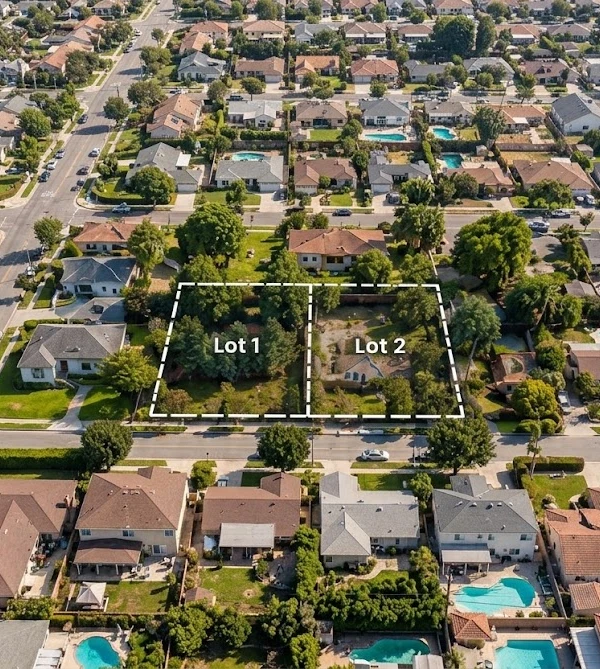
Why JDJ Consulting
Turn Land Opportunities into Real Results.
Subdivision feasibility is more than drawing a new property line. We evaluate land use regulations, existing improvements, easements, utilities, fire access, and the approvals needed to create viable lots.
The Process
From Feasibility to Final Map
Initial Consultation
Identify goals, ownership, jurisdiction, and proposed lot configuration.
Feasibility Analysis
Review zoning, eligibility, utilities, access, easements, and constraints.
Applications & Maps
Coordinate survey and mapping professionals and prepare submittals.
Agency Review
Track Planning, Engineering, Fire, and utility reviews and conditions.
Final Map Recordation
Coordinate final clearances and recording requirements.
Illustrative Development Scenarios

Two-Lot Residential Feasibility
Example of evaluating lot geometry, existing structures, access, and SB 9 eligibility.

Urban Infill Subdivision Strategy
Example of comparing qualifying small-lot housing pathways and infrastructure requirements.

Hillside Subdivision Due Diligence
Example of evaluating slope, emergency access, utilities, and map approval constraints.

Which Program Is Right for Your Site?
SB 9 Urban Lot Split
A potential ministerial two-parcel split for qualifying single-family properties, subject to statutory and local standards, occupancy and tenancy rules, and parcel restrictions.
SB 684 Small-Lot Subdivision
A streamlined pathway for certain small multifamily subdivision projects. Eligibility, parcel count, site characteristics, and housing requirements must be verified.
SB 1123 Expanded Opportunities
Expands certain streamlined subdivision provisions, including pathways for eligible vacant single-family-zoned sites. Program-specific criteria apply.
Parcel Map Process
A mapping process often used for smaller subdivisions and lot adjustments, involving local review, conditions, technical map preparation, and recordation.
Tract Map Process
Typically used for larger or more complex subdivisions, involving tentative map review, conditions, engineering clearances, and final map recordation.
FREQUENTLY ASKED QUESTIONS
Los Angeles Permit Expediting FAQs
Answers to common questions about subdivision eligibility, maps, and agency approvals in Los Angeles.
Can I split my lot in Los Angeles?
What is the difference between SB 9, SB 684, and SB 1123?
Do I need a parcel map or tract map?
How long does a subdivision take?
Can I keep my existing house after a lot split?
Do utility easements affect a proposed lot split?
Does a hillside lot qualify for a split?
Talk to a Subdivision & Lot Split Consultant.
Get strategic guidance on your property’s subdivision options and approval pathway.