
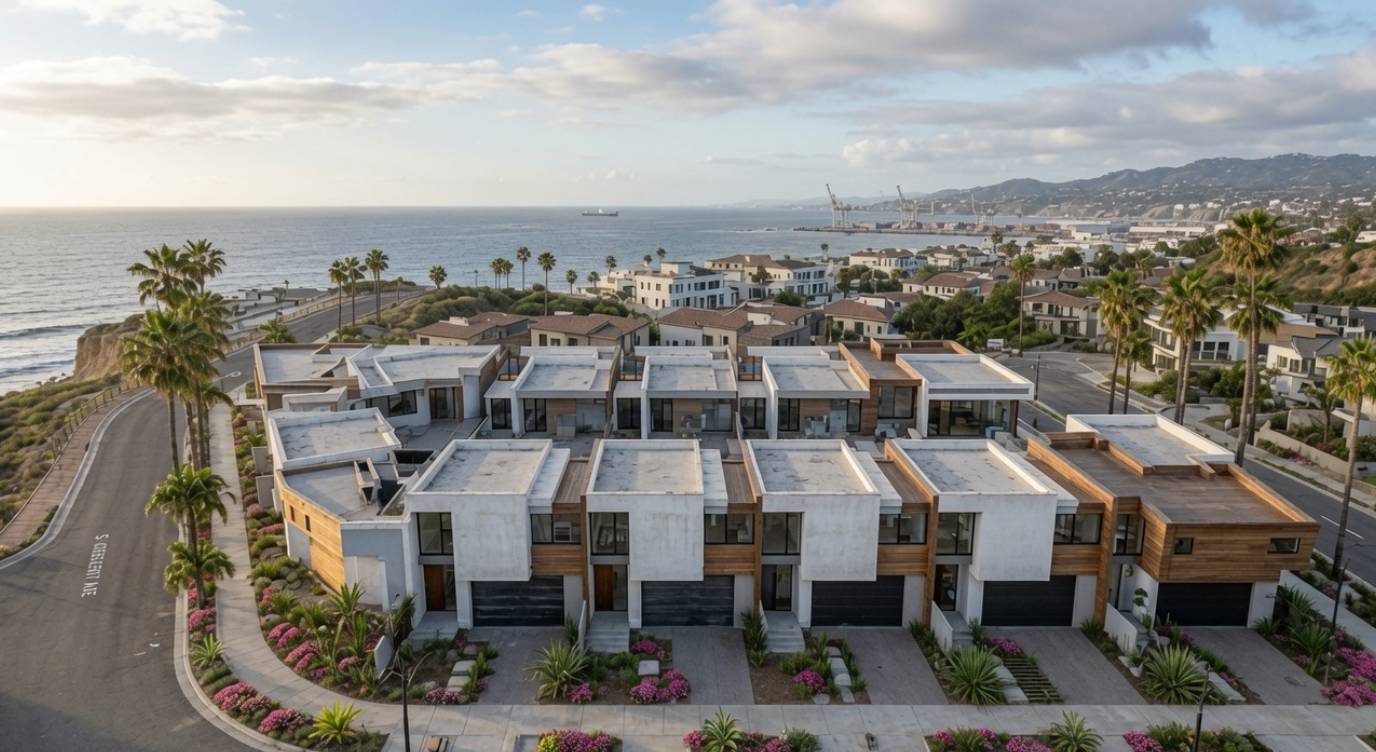
Along the bluffs of San Pedro, where new townhomes now catch the morning light off the harbor, the path from vacant lot to finished subdivision rarely follows a straight line. Coastal development in Los Angeles carries a level of scrutiny that inland projects simply don’t encounter, and for good reason. The California Coastal Act, the city’s own Local Coastal Program, and a patchwork of zoning overlays all converge on parcels like these, and each layer adds its own timeline, its own set of conditions, and its own opportunity for thoughtful refinement.
Subdivision projects in this corridor typically begin long before a single foundation is poured. A developer or landowner has to secure a tentative tract map, work through environmental review under CEQA, and in many cases obtain a coastal development permit on top of the standard entitlements required by the city. Because San Pedro sits within the coastal zone, even modest projects can trigger additional review for public access, viewshed protection, and habitat considerations near the bluffs. What might be a six month entitlement process elsewhere can stretch well past a year here, and that extra time often becomes the reason a project ends up better suited to its site.
The hurdles aren’t always about the rules themselves. Community input sessions, neighborhood council reviews, and coastal commission hearings all introduce a human element that no checklist can fully anticipate. A project that meets every technical standard on paper still benefits from listening to how a neighborhood feels about density, parking, or the view from a nearby street. Successful applicants learn to treat these conversations as part of the entitlement process itself, an opportunity to build support rather than a hurdle to clear.
Then there’s the sequencing. Entitlements and building permits are often treated as separate phases, but on coastal parcels they tend to overlap in ways that reward early planning. Grading permits, drainage plans, and geotechnical reports for bluff-adjacent sites frequently need to be resolved before final map recordation, which means the building permit conversation is already underway while the entitlement is still being finalized. Recognizing that overlap early is one of the clearest ways a coastal subdivision stays on track.
This is the kind of terrain JDJ Consulting has spent years working through with clients across the Los Angeles coastal zone. Every parcel in San Pedro carries its own combination of zoning history, easement conditions, and community dynamics, and untangling that early on tends to set the whole project up for a smoother path forward. Whether it’s coordinating with the Coastal Commission, structuring a phased permit strategy, or simply knowing which department to call first, the difference between a smooth entitlement and a stalled one often comes down to groundwork laid before the application is ever submitted.
Projects like the crescent-shaped subdivision now standing above the harbor are proof that coastal entitlement, however demanding, isn’t a barrier to good design. It’s simply a process that rewards patience, local knowledge, and a willingness to treat every stakeholder, from the Coastal Commission to the neighbor next door, as part of getting it right.