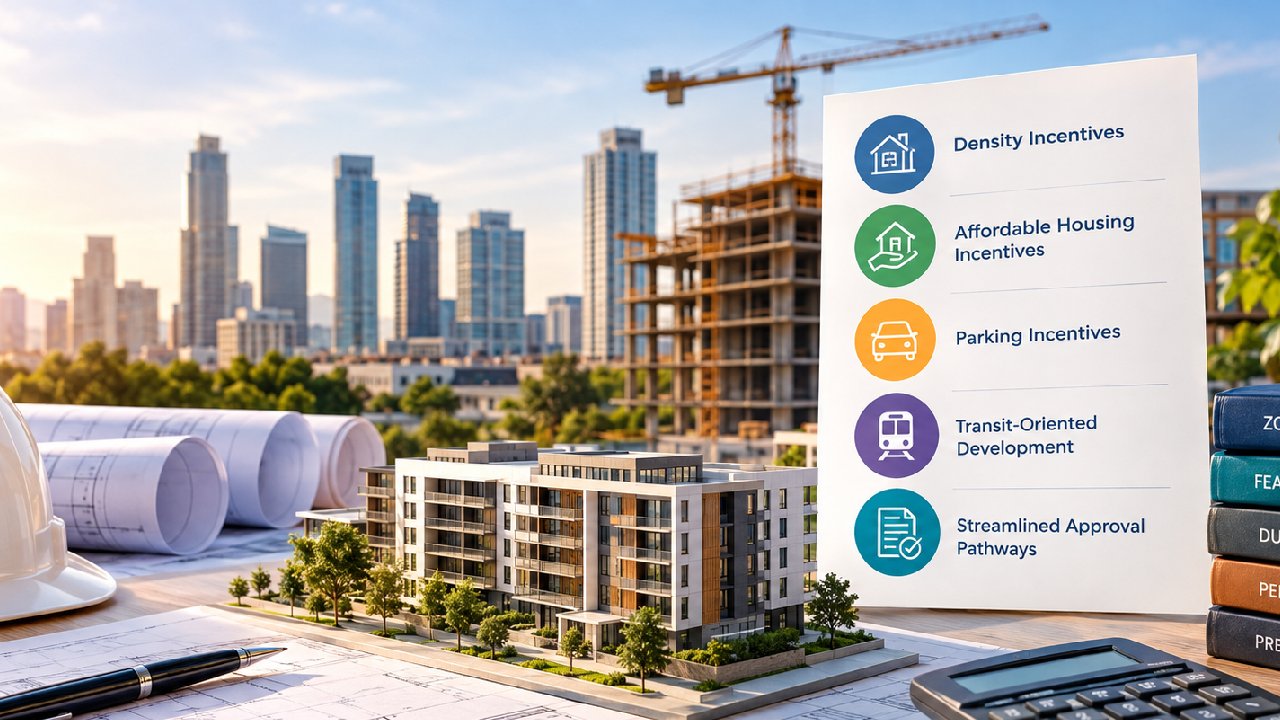

California is in a deep housing crisis. More than 170,000 people are homeless across the state, and the average home costs over $800,000. To fix this, California is trying bold new solutions. Two of the most promising efforts are ED1 and CHIP ministerial approvals. These programs make it faster and easier to build 100% affordable housing.
Table of Contents
They remove red tape, speed up approvals, and set clear rules—helping cities build homes for those who need them most.
What Is Executive Directive 1 (ED 1)?
The Los Angeles Model
Mayor Karen Bass issued Executive Directive 1 (ED 1) on December 16, 2022. It speeds up the approval process for 100% affordable housing and shelter projects in Los Angeles. The goal is simple: build more affordable homes, faster.
Key Parts of ED 1
Fast Review Deadlines
City departments must review 100% affordable housing projects within 60 days.
Building permits must be issued within 5 days.
Projects get priority status through every step of the review process.
Ministerial Approval
Eligible projects skip many of the usual approval delays.
There are no public hearings or discretionary reviews for qualifying developments.
This means fewer roadblocks and faster results.
Real Results from ED 1
In just 18 months, ED 1 helped push forward plans for 18,000+ deed-restricted affordable rental units in Los Angeles. This shows how much faster things can move when rules are clear and streamlined.
Example: Anderson Hotel Apartments
One great example is the Anderson Hotel Apartments. The 101-year-old building was turned into 66 homes for very low-income seniors. The fast-track process made it possible to preserve the historic building while creating housing people urgently need.
What Is CHIP?
The Citywide Housing Incentive Program
While ED 1 focuses on 100% affordable housing, the Citywide Housing Incentive Program (CHIP) takes a broader approach. It supports both mixed-income and fully affordable housing while reducing tenant displacement. CHIP is designed for long-term change.

CHIP Has Three Main Programs
1. State Density Bonus Program
Works with California’s state density bonus law.
Offers base perks like more units, more floor space, and fewer parking rules.
Includes extra bonuses for projects that meet added goals.
2. Mixed-Income Incentive Program (MIIP)
Encourages building near public transit.
Focuses on major streets known as “Opportunity Corridors.”
Creates smooth transitions between tall apartment buildings and nearby homes.
3. Affordable Housing Incentive Program (AHIP)
Only for 100% affordable housing.
Allows building in more zones, even some parking lots.
Offers special support for churches and public agencies building on their land.
📘 Housing Element Rezoning Program: 3 Key Ordinances
In response to LA’s 2021–2029 Housing Element, the city is advancing a three-part rezoning effort to address high rents, overcrowding, and housing instability across Los Angeles.
🏙️ CHIP Ordinance
The Citywide Housing Incentive Program (CHIP) provides zoning-based incentives for mixed-income and 100% affordable housing projects.
- Density & height bonuses
- Ministerial approvals for eligible projects
- Transit-oriented and faith-based site incentives
📌 Housing Element Sites & Minimum Density
This ordinance ensures the city meets its state-mandated housing targets by requiring minimum densities and rezoning identified sites.
- Supports 2021–2029 Housing Element goals
- Encourages infill in high-opportunity areas
- Aligns with SB 35 and RHNA requirements
🛡️ Resident Protections Ordinance
This ordinance strengthens tenant protections during new housing development and rezoning processes, minimizing displacement and promoting equity.
- Anti-displacement safeguards
- Support for low-income renters
- Fair relocation and right-of-return policies
Source: Los Angeles City Planning – Housing Element Rezoning Program
CHIP Ministerial Approval: Why It Matters
Faster Processing
If a project meets clear, written standards, it gets ministerial approval—no guesswork, no delays.
No public hearings or opinion-based reviews.
What used to take months now takes weeks.
Better Incentives
Some areas allow 100% to unlimited density bonuses.
Builders can go up to 60 feet high in some zones.
Parking rules are reduced or even removed.
Projects get more allowed floor space (FAR).
By combining ED 1’s urgent response with CHIP’s long-term vision, Los Angeles is showing how cities can break through housing barriers—without breaking budgets. These tools are changing how the state builds homes—and who gets to live in them.
Key Differences: ED1 vs CHIP Ministerial Approvals
| Feature | ED1 | CHIP |
|---|---|---|
| Geographic Scope | Los Angeles City | Los Angeles City (with statewide influence) |
| Timeline | 60 days review + 5 days permit | 90-180 days (based on project size) |
| Eligible Projects | 100% affordable + shelters | Mixed-income + 100% affordable |
| Processing Method | Ministerial only | Ministerial + administrative options |
| Incentive Types | Timeline-focused | Comprehensive zoning incentives |
The Ministerial Approval Process: A Game-Changer
Traditional vs. Ministerial Approval
Traditional Approval Process:
18–36 months to approve
Multiple public hearings
Subjective decisions by planning boards
Long environmental reviews
Ministerial Approval Process:
2–6 months on average
No public hearings for qualified projects
Based on objective, written standards
Streamlined environmental review
Why Ministerial Approval Works
For Developers:
Lower holding and legal costs
Faster project starts
More certainty for lenders
Less risk of delays
For Communities:
More affordable homes, built sooner
Lower rents from reduced costs
More predictable development timelines
Better planning across neighborhoods
Real-World Case Studies
Case Study 1: Transit-Oriented Development in Hollywood
A mixed-income development near the Hollywood/Highland Metro station used both ED1 and CHIP.
Project Highlights:
150 units total: 75 affordable, 75 market-rate
7 stories with retail on the ground floor
No parking due to proximity to public transit
120% density bonus through CHIP
Timeline:
Traditional process: 42 months
With ED1 and CHIP: 14 months
Time saved: 28 months
Financial Impact:
$2.3 million in development savings
$51,000 saved per affordable unit
Project value: $89 million
Case Study 2: 100% Affordable Housing on Faith-Based Land
A local church partnered with a nonprofit to develop deeply affordable housing.
Project Highlights:
84 units (100% affordable)
Mix of 1-, 2-, and 3-bedroom homes
Space for onsite community services
Used CHIP faith-based zoning provisions
Innovative Features:
Shared equity and land trust model
Social services included
Designed with energy-saving materials
Data Snapshot: ED1 and CHIP by the Numbers

ED1 Performance (2022–2024)
180+ applications submitted
18,000+ affordable units in pipeline
94% success rate
Average approval time: 43 days
CHIP Projections (2024–2029)
500+ projects expected
50,000+ new housing units
65% projected to be affordable
Geographic coverage: citywide
Cost and Economic Benefits
Project Cost Savings
Soft cost reductions: 15–25%
Approval timeline savings: 60–70%
Financing savings: $25K–$75K per unit
Total projected savings: $2.1 billion over 5 years
Economic Growth
45,000+ construction jobs
12,000+ permanent jobs
$340 million in annual tax revenue
$2.8 billion in local business impact
Challenges and Solutions
Common Roadblocks
Outdated sewer and water systems
Traffic and school impact concerns
Neighborhood resistance to new buildings
Parking and property value worries
What’s Working
Infrastructure Fixes:
Discounted impact fees
Citywide coordination for public utilities
Incentives for transit-first design
Green infrastructure built in from day one
Community Engagement:
Early outreach to local groups
Transparent timelines and updates
Community benefit agreements
Prioritizing local hiring
How These Projects Get Funded
ED1 Funding Sources
Low-Income Housing Tax Credits (LIHTC)
Local and state housing trust funds
Federal HOME grants
Private investment
Typical Cost Breakdown:
Land: 25–35%
Construction: 50–65%
Soft costs: 15–25%
Contingency: 5–10%
CHIP Financial Incentives
Direct Savings:
Reduced development fees
Lower property tax assessments
Faster processing timelines
Utility hookup discounts
Indirect Advantages:
Fewer legal and consultant fees
Lower holding costs
Faster lease-up periods
Leveraging Technology and Innovation
Digital Tools That Speed Up Approvals
24/7 application portals
Real-time tracking dashboards
Auto-check compliance systems
Online document uploads
GIS Mapping Integration
Find best project sites
Map transit access and zoning overlays
Identify flood zones and air quality issues
Flag environmental constraints early
Smarter, Greener, and More Connected Buildings
Green Design Requirements
Energy-efficient HVAC and lighting
Water-saving fixtures
Solar panels and green roofs
Recycled materials in construction
Smart Tech Features
High-speed internet throughout buildings
Smart energy monitoring
Secure digital entry and resident portals
Central systems for building-wide alerts
Environmental and Social Equity Standards
Environmental Justice Rules
Required environmental site reviews (Phase I & II)
Oil well buffers increased from 500 ft to 1,000 ft
Air quality and soil tests required
Flood, wildfire, and earthquake risk protections
Advancing Fair Housing
Bonuses for building in High Opportunity Areas
Mixed-income goals
Anti-displacement protections
Local community benefit agreements
Workforce Inclusion:
Local hiring mandates
Paid apprenticeships
Small business contractor goals
Minority-owned business participation

What’s Next for ED1 and CHIP Ministerial Approval
Statewide and National Growth
15 California cities exploring ED1-style policies
Supportive bills in Sacramento
Interest from federal housing leaders
Global attention from urban planning experts
Key Expansion Challenges
Local political pushback
Varying rules across cities
Staffing and training needs
Technology gaps in smaller municipalities
Long-Term Targets (by 2030)
100,000 affordable units built
50% cut in approval times
25% drop in cost per unit
80% of projects using ministerial approval
Projected Economic Impact
$15 billion in new development
150,000 total jobs created
$5 billion in annual local output
Stronger competitiveness across the region
Best Practices and Lessons Learned
What Makes These Programs Work
Strong leadership from mayors and city councils
Skilled staff and well-funded departments
Clear, consistent policies
Meaningful partnerships with developers and nonprofits
Mistakes to Avoid
Skipping staff training
Failing to involve the public
Promising faster timelines without the tools
Poor tech systems or no tech at all
Policy Tips:
Keep eligibility rules simple
Build in real incentives
Enforce rules fairly
Provide appeals for rejected applicants
Conclusion: The Future of Affordable Housing in California
ED 1 and CHIP aren’t just new policies—they mark a major shift in how California treats housing. These programs focus on housing as a human need, not just a financial product. By cutting red tape and keeping standards high, they help cities build faster while still protecting communities.
The success in Los Angeles shows what’s possible. From 18,000 new affordable homes in the ED1 pipeline to CHIP’s wide-reaching tools, these programs offer a blueprint for other cities across California and beyond.
As the housing crisis continues, the mix of ministerial approvals, real incentives, and strong community safeguards offers a better path forward. These programs prove we can build faster without sacrificing quality, fairness, or the environment.
California’s future looks brighter—and more affordable—because of programs like ED1 and CHIP.
Key Takeaways
ED1 and CHIP are reshaping how affordable housing gets approved
Ministerial approvals cut wait times by 60–70%
Over 18,000 affordable homes are already moving forward under ED1
Costs are down, legal risks are lower, and financing is easier
Environmental rules and community protections still apply
Political support, skilled staff, and strong partnerships are critical for success
Other cities across California are now working to adopt similar models
Resources and Further Reading
- Los Angeles City Planning – Executive Directive 1
- California Department of Housing and Community Development
- Los Angeles Housing Department
- UCLA Lewis Center for Regional Policy Studies
- California Housing Partnership
- Urban Land Institute
- California Government Code Section 65915-65918
- Los Angeles Municipal Code
- State Housing Element Law
- California Association of Housing Authorities
- Non-Profit Housing Association of Northern California
- Southern California Association of Governments
Disclaimer
This article is for informational purposes only. It does not provide legal, financial, or professional advice. Housing laws can change, and they often vary by location. Always check with qualified experts or local officials before starting a project.
Information shared here is based on public data and current policies as of publication. We strive for accuracy, but we cannot guarantee that all details remain up to date or complete. Local rules may differ, so always confirm requirements with the right agency or legal counsel.
Connect with JDJ Consulting
Need help with California’s affordable housing rules?
At JDJ Consulting, we guide developers, nonprofits, and public agencies through ED1 and CHIP approvals. Whether you’re planning a new project or scaling up, we’re here to help.
Our Services:
Regulatory Navigation – Step-by-step support through ED1 and CHIP
Financial Structuring – Help securing and structuring funding
Community Engagement – Outreach, meetings, and public input strategies
Policy Analysis – Compliance checks and regulatory updates
Project Management – Oversight from idea to ribbon cutting
Are you seeking to fast-track your affordable housing project under Executive Directive 1 (ED 1) or the Citywide Housing Incentive Program (CHIP) framework in Los Angeles?
At JDJ Consulting Group we specialise in zoning analysis, entitlement strategy, and ministerial/permit-expedited approvals for 100% affordable developments.
📞 Call us at (818) 793-5058 or email sales@jdj-consulting.com to explore how we can help deliver your project quickly and compliantly.
📍 Visit our office at 12925 Riverside Dr Suite 302, Sherman Oaks, CA 91423.
👉 Book your free consultation now: https://jdj-consulting.com/book-consultation/
📄 See our full service list: https://jdj-consulting.com/services/
⏱️ Traditional vs. Ministerial Approval: Timeline Comparison
Ministerial approvals under ED1 and CHIP slash project timelines by removing hearings, subjective reviews, and lengthy CEQA delays.
🚫 Traditional Approval Process
- Multiple public hearings
- Subjective planning commission review
- Extensive CEQA environmental assessments
- Average approval time: 18–36 months
- Higher legal and carrying costs
✅ Ministerial Approval (ED1 / CHIP)
- Objective standards-based review
- No public hearings for qualifying projects
- Streamlined environmental compliance
- Average approval time: 2–6 months
- Lower risk and faster financing
Source: Executive Directive 1 (ED1) and CHIP Ordinance
FAQs About ED1 and CHIP Ministerial Approvals
What is the difference between ministerial and discretionary housing approvals?
Ministerial approval is based on clear, objective rules and does not require public input, while discretionary approval involves case-by-case decisions, public hearings, and environmental reviews. Ministerial approvals offer a faster, more predictable process.
Key differences include:
No public hearings for ministerial projects
Shorter timelines (2–6 months vs. 18–36 months)
Less risk of legal delays or appeals
Based on written, measurable standards
Learn more in California Government Code §65913.4, which outlines ministerial housing approvals.
How does Executive Directive 1 (ED1) help speed up affordable housing development in Los Angeles?
Executive Directive 1 (ED1) requires Los Angeles city departments to fast-track 100% affordable housing projects. It removes discretionary reviews and shortens permit timelines, making it easier for developers to move forward quickly.
Key ED1 benefits:
60-day pre-construction review deadline
5-day building permit issuance window
No discretionary reviews or hearings
Over 18,000 units submitted under ED1
Explore how ED1 enabled the Anderson Hotel Apartments to be converted into senior affordable housing while preserving its historic character.
What kinds of projects qualify under CHIP’s ministerial approval?
The Citywide Housing Incentive Program (CHIP) allows certain affordable and mixed-income housing projects to skip discretionary approvals if they meet zoning, location, and design standards.
Projects that may qualify include:
Projects using the State Density Bonus Program
Transit-adjacent mixed-income developments
100% affordable housing on faith-based or public land
Projects complying with city incentive menus
What are the cost and timeline savings from using ED1 and CHIP?
Projects using ED1 or CHIP often save developers millions in soft costs and reduce approval timelines by more than half. These savings are especially important for nonprofits and affordable housing providers.
Typical savings include:
60–70% shorter approval timelines
$2.3 million in savings per large project
$25,000–$75,000 saved per affordable unit
Reduced legal, financing, and design costs
See a full breakdown in our guide on real construction costs in Los Angeles.
Are community protections and environmental standards still enforced under ED1 and CHIP?
Yes. While ED1 and CHIP simplify the approval process, they do not remove essential environmental, zoning, or safety regulations. Projects must still comply with all applicable health, safety, and environmental laws.
Standards still required include:
Buffers near oil wells and hazardous uses
Compliance with wildfire, flood, and seismic codes
Anti-displacement and fair housing protections