Table of Contents
Ask most Tampa townhome developers where their schedule actually broke, and the answer rarely traces back to construction. It traces back to zoning. In the City of Tampa, townhomes fall under the Land Development Code as multi-family residential, which means most projects need RM zoning to move forward. If the land already carries that designation and the design fits within the district’s rules, permitting is a fairly quick, ministerial process. If it doesn’t, a rezoning becomes part of the timeline, and rezonings in Tampa mean public hearings, staff review cycles, and a level of political exposure that doesn’t show up in a pro forma until it’s already eating into the schedule.
That distinction, by-right versus discretionary, is the single biggest variable in whether a townhome deal in Tampa Bay closes on time or drags for the better part of a year. For architects, developers, and investors sizing up sites across the region, land price and construction costs tend to get modeled carefully from the start. Entitlement timing gets modeled loosely, or not at all, and that’s usually where deals lose their margin. This guide walks through how the process actually plays out in Tampa, which neighborhoods are already crowded, where the room to build still exists, and which incentive programs are worth structuring into the capital stack from day one.
How the Townhome Entitlement Process Actually Works in Tampa
Tampa’s code doesn’t carve out a separate category for townhomes. They’re grouped with attached single-family housing under the broader multi-family classification, and that one decision shapes nearly everything that follows: which zoning districts allow the product outright, what parking ratio applies, and whether the project needs a hearing before anyone can pull a permit.
Start With the Zoning and Future Land Use Check
Before a site is worth serious diligence, confirm its zoning and Future Land Use designation. Townhomes are generally permitted by right in RM districts. Outside of RM, in RS or mixed-use zones, they often require a special use approval or a full rezoning. This is the fork in the road that separates a fast-moving deal from a six-to-twelve-month entitlement case, and it needs to be resolved before a letter of intent goes out, not after.
Each RM district carries its own envelope, and the differences matter more than they might look on paper:
- RM-16: 20-foot front setback, 7-foot side setback, 20-foot rear setback, 45-foot (4-story) height cap, 60 percent maximum lot coverage
- RM-24: 15-foot front setback, 7-foot side setback, 15-foot rear setback, 60-foot (5-story) height cap, 65 percent maximum lot coverage
- RM-35, RM-50, RM-75: Progressively higher density and height allowances, reaching 7 to 10 stories depending on the district and any overlay in play
Parking tends to get less attention than setbacks, but it’s often the tighter constraint. The base standard across RM zones is 1.5 spaces per unit, with reductions in transit-oriented corridors like Channelside and Ybor. On a narrow infill lot, that ratio alone can be the difference between a 12-unit project and a 9-unit one.
Figure Out Whether Entitlements Are Even Needed
If a parcel is already zoned RM and the design fits the district’s standards, there’s no rezoning to fight through. The project goes straight to site plan and building permit review, ministerially, which is by far the fastest and most predictable route available in Tampa.
A rezoning, special use approval, or PUD comes into play when the site isn’t RM, when the design needs relief from setback, height, or coverage limits beyond what an administrative adjustment covers, or when a developer is pursuing a PUD to negotiate custom standards in exchange for public benefits, which shows up fairly often on larger mixed-use townhome sites.
In historic or design-sensitive pockets of the city, Tampa Heights among them, the Architectural Review Commission can also weigh in on massing, materials, and how buildings meet the street. Projects here have moved forward after being redesigned to add walk-up entrances and preserve more green space, but that redesign cycle takes real time, and it needs to be built into the schedule from the start rather than treated as a late surprise
Site Plan and Building Permit Review
Submissions run through Tampa’s e-permitting system, and anything flagged as affordable through Housing and Community Development gets priority review at every stage. Reviewers look at building, structural, fire, and MEP systems, plus energy code, landscaping, parking layout, and whatever flood, evacuation, or historic overlay requirements apply to the site.
Timelines vary widely depending on the path. A ministerial RM townhome permit can turn around in weeks. A rezoning or PUD, with staff review, a Planning and Zoning Commission hearing, and City Council readings, routinely adds months. From there it’s standard phased inspections and a Certificate of Occupancy at completion, with affordable units requiring recorded covenants at the point of sale.
Where the Process Creates Risk, Depending on Who You Are
Developers absorb most of the exposure to rezoning timelines and the unpredictability of public hearings, especially when a hearing calendar happens to fall across an election cycle. Rising construction costs, insurance premiums, and impact fees can also push a townhome product above attainable price points if there’s no subsidy layered into the capital stack.
Architects and designers are the ones working within the tightest margins on paper. RM-16’s 20-foot front setback and 60 percent coverage limit can squeeze massing on narrow sites, while RM-24 offers more room but still demands careful planning to hit target unit counts. Design review in historic areas adds another layer on top, often calling for facade articulation, roofline variation, and pedestrian-facing entries that ripple into unit mix and cost.
General contractors deal with permit review cycles that, even with affordable-housing priority status, can still bounce back for resubmittal on code, energy, or flood details. Because townhomes are attached, coordination across fire separation, acoustics, and shared walls carries more weight than it would on detached product.
Investors and lenders are watching appraisal and absorption risk on mid-market townhome projects that often compete directly with new apartment supply or single-family rentals in the same submarket. There’s also policy risk sitting in the background, since the ongoing Tampa Forward LDC rewrite could shift multifamily standards between the concept stage and the permit stage.
Where Townhome Development Is Already Crowded
A handful of corridors have absorbed most of Tampa’s townhome activity over the past few years. Downtown, Channelside, and Water Street are dominated by high-density multifamily and luxury condo-style townhome product, with several large mixed-use projects underway or recently delivered. Westshore keeps adding to its multifamily and townhome pipeline alongside its ongoing commercial growth. Tampa Heights and Seminole Heights show up again and again in recent proposals, everything from nine-unit to eighteen-unit projects, most of them requiring a rezoning and an Architectural Review Commission sign-off. Riverside Heights has its own momentum too, with major redevelopment plans pulling townhome-scale infill into the broader mix.
What these areas share, beyond demand, is friction: land cost, design review or historic overlay requirements, parking pressure, and neighborhood pushback on scale and character. Any feasibility analysis on a site in these corridors should price all four in before the land goes under contract.
Where the Next Opportunities Are Actually Opening Up
The more realistic near-term opportunities sit in infill and redevelopment on underused RM or transitional parcels in centrally located neighborhoods, along with a handful of corridor sites where transit overlays ease the parking burden.
East Tampa, Temple Crest, Sulphur Springs, Lowry Park Central, and Wellswood have aging housing stock and genuine redevelopment potential, with RM or mixed-FLU parcels that could support small townhome clusters where the infrastructure can handle it. Edge parcels in Tampa Heights and Seminole Heights, outside the historic core, still have room even as demand and policy attention in those neighborhoods continue to build. Channelside and Ybor City’s transit corridors bring reduced parking requirements and proximity to jobs, which makes attainable attached product more feasible if land costs stay in check. City-owned vacant lots factor in as well, since Tampa’s affordable housing strategy includes conveying municipal parcels for infill where zoning allows.
None of this comes without friction of its own. Rezoning and entitlement timelines remain the biggest wildcard, since a lot of these candidate parcels aren’t RM by right and require hearings that add months of uncertainty. Historic and design overlays raise soft costs through facade and massing requirements. Older neighborhoods often need drainage or utility upgrades, and flood zones bring their own elevation and engineering costs. And even a fully code-compliant project can still run into neighborhood opposition over traffic, parking spillover, or perceived scale.
Incentive Programs Worth Building Into the Deal
Tampa’s main incentive tools for attainable attached housing run through the State Housing Initiatives Partnership, structured for both owner-occupied and developer-led projects.
Under the Acquisition, Rehabilitation, and New Construction strategy, developers can pull up to $150,000 per unit in deferred financing to acquire land and build or rehab homes for resale to income-eligible buyers. The City sometimes contributes vacant lots for infill, and up to $50,000 of the subsidy can be passed along to the homebuyer to bring the sales price down. Getting into this program means going through an RFP selection process and demonstrating experience, financial capacity, site control, and a design plan that meets City standards.
The Impact Fee Reimbursement program, under Homeowner Code 8, reimburses part of the impact fees, plus up to $5,000 toward homeowners insurance, for affordable units sold to eligible buyers. The reimbursement is tiered by income, ranging from $5,000 up to $10,000 depending on where the buyer falls on the AMI scale, and it becomes a grant to the buyer at closing once the project is certified affordable by Housing and Community Development.
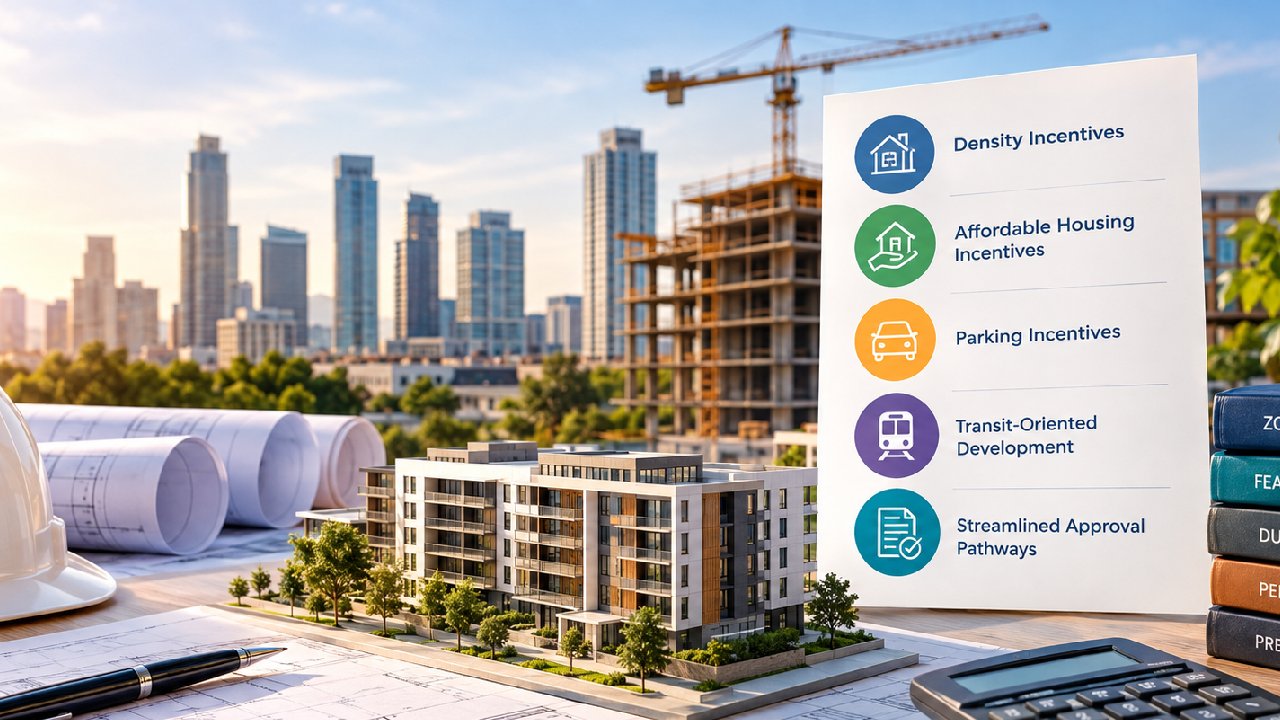
Affordable-flagged projects also get expedited permitting, meaning priority review at each stage of plan check and inspection. That doesn’t guarantee approval, but it noticeably compresses the timeline compared to the standard queue. A few other flexibilities, fee waivers and reduced parking or setback standards among them, show up in Tampa’s incentive policy framework, though what’s actually available depends on certification and direct coordination with HCD.
A Practical Sequence for De-Risking a Tampa Townhome Project
- Target RM-zoned or RM-FLU parcels in East Tampa, Temple Crest, Sulphur Springs, and Wellswood, or edge sites in Tampa Heights and Seminole Heights, and treat the historic core as a longer, ARC-dependent path rather than a default choice.
- Pre-certify affordability with Housing and Community Development before submitting for permits, so the project can access expedited review and fee programs from the start.
- Apply for SHIP developer financing early and line up impact fee reimbursement alongside it, taking advantage of city-owned lot opportunities where they exist.
- Design to RM minimum standards on setbacks, height, and coverage to keep variance exposure low, and check transit overlay eligibility in Channelside and Ybor if reduced parking would help the numbers.
- Lock in trade capacity and insurance pricing early, and treat SHIP subsidies as a bridge to keep final sales prices within AMI limits, not as a bonus layered on at the end.
Frequently Asked Questions
Does a townhome project in Tampa always require a rezoning?
No. If the parcel is already zoned RM and the design meets the district’s setback, height, coverage, and parking standards, the project can move through ministerial site plan and building permit review without a public hearing.
How long does townhome entitlement take in Tampa if a rezoning is required?
Ministerial RM permits can be issued in weeks. Rezonings, special use approvals, and PUDs typically add several months because of staff review, a Planning and Zoning Commission hearing, and City Council readings.
What is the base parking requirement for Tampa townhomes?
The base standard in RM zones is 1.5 spaces per unit, with reductions available in transit-oriented corridors such as Channelside and Ybor City.
Which Tampa neighborhoods have the most near-term townhome opportunity?
Infill and redevelopment parcels in East Tampa, Temple Crest, Sulphur Springs, Wellswood, and the edges of Tampa Heights and Seminole Heights currently offer the strongest mix of available land and workable entitlement paths.
The Real Variable Is Time, Not Just Land
Nearly everything covered here, from RM zoning eligibility to ARC review to SHIP certification, comes down to managing timeline risk against a fixed capital clock. The developers who move fastest through Tampa’s process usually aren’t sitting on the best sites. They’re the ones who nail down zoning, entitlement path, and incentive eligibility before the land is under hard contract, not after.
That kind of upfront diligence, reading the zoning and FLU designation correctly, anticipating whether a hearing is coming, and building HCD certification into the schedule from the outset, is where JDJ Consulting’s Tampa permit expeditor and entitlement consulting team works alongside developers, architects, and investors to keep projects on track. For a broader look at how the firm supports feasibility, entitlements, and permitting across Tampa Bay, visit jdj-consulting.com.