Table of Contents
Development incentives can create valuable opportunities for property owners, investors, and real estate developers. Depending on the program and jurisdiction, qualifying projects may benefit from tax credits, grants, affordable housing assistance, reduced development requirements, or other forms of public support.
However, identifying an incentive is only the beginning. A successful application requires more than finding a program that appears relevant. Developers must understand eligibility requirements, prepare supporting documentation, evaluate financial implications, and coordinate with the appropriate agencies.
An incomplete application or overlooked requirement can create delays, additional expenses, or missed opportunities.
Before applying, developers should use a structured development incentive application checklist to determine whether a program aligns with their project and whether the necessary information is ready.
Why Preparation Matters Before Applying for Development Incentives
Development incentive programs are established to encourage specific investments, such as affordable housing, business expansion, redevelopment, infrastructure improvements, and energy-efficient construction.
Each program has its own application procedures, eligibility standards, deadlines, and compliance obligations.
For developers, preparation helps answer several important questions:
- Does the property or proposed project qualify?
- Is the applicant eligible to participate?
- What documentation must be submitted?
- Does the project meet the program’s development requirements?
- Are there deadlines or approvals that must be addressed before construction?
- Will the potential benefit justify the additional project obligations?
Reviewing these questions early helps developers avoid building their financial plans around incentives that may not be available or applicable.
8 Steps to Prepare a Development Incentive Application
1. Define the Project and Its Objectives
Begin by establishing exactly what the project is intended to accomplish.
Identify the property location, ownership or applicant structure, proposed development type, project scope, estimated investment, and anticipated schedule.
For example, an affordable multifamily housing development may pursue a different incentive pathway from a commercial property rehabilitation or industrial expansion.
Prepare a basic project summary that includes:
- Property address and parcel identification.
- Current property ownership or applicant information.
- Proposed land use and development type.
- Estimated construction and development costs.
- Anticipated project timeline.
- Intended public or economic benefits.
A clear project description provides a foundation for identifying programs that align with the proposed investment.
2. Confirm Program Eligibility
Do not assume that a property qualifies simply because it is located within a city or district offering incentives.
Eligibility may depend on geographic boundaries, property characteristics, applicant qualifications, project type, income restrictions, investment thresholds, or other program-specific conditions.
Review the official program guidelines and confirm:
- Eligible applicants and ownership requirements.
- Geographic or designated-area restrictions.
- Qualifying property uses and activities.
- Minimum or maximum investment requirements.
- Affordable housing or community-benefit commitments.
- Applicable deadlines and funding availability.
Some programs are administered by local governments, while others are managed by state or federal agencies.
For projects involving zoning or development flexibility, review applicable local regulations alongside the incentive guidelines.
3. Review Zoning and Development Feasibility
An incentive may appear financially attractive but still be difficult to implement if the property has significant zoning, site, or entitlement constraints.
Before submitting an application, determine whether the proposed project can reasonably meet the applicable development standards.
Review:
- Existing zoning classification.
- Permitted land uses.
- Maximum density and floor area ratio.
- Building height and setback restrictions.
- Parking and access requirements.
- Infrastructure and utility capacity.
- Environmental or site-specific constraints.
- Required discretionary or ministerial approvals.
For example, a project pursuing additional residential density may need to evaluate affordability commitments, building height, parking standards, and other development conditions.
JDJ Consulting’s Pre-Construction Analysis services can help property owners and developers understand site constraints, zoning requirements, and potential development opportunities before committing to a project direction.
4. Prepare the Required Documentation
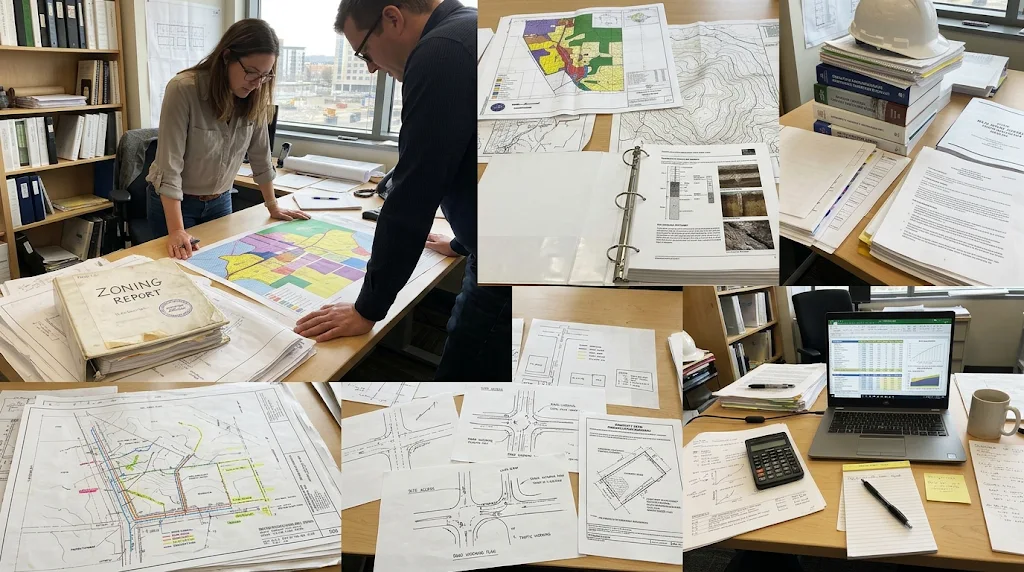
Supporting documentation is an important part of an incentive application.
The exact requirements vary by program, but developers should begin organizing commonly requested materials before the application window opens.
Depending on the program, these may include:
- Property ownership or site-control documentation.
- Parcel maps and site plans.
- Preliminary architectural drawings.
- Project descriptions and development schedules.
- Construction cost estimates and project budgets.
- Financial statements or funding documentation.
- Affordable housing or community-benefit information.
- Environmental or technical reports.
- Business registration and applicant information.
Do not assume that documents prepared for another approval process will automatically satisfy an incentive program’s requirements.
Use the administering agency’s current application checklist as the controlling reference.
5. Evaluate the Financial Impact
An incentive should be evaluated based on its actual potential effect on the project’s financial structure.
Developers should compare the estimated project costs with and without the proposed benefit.
Consider:
- Eligible project expenses.
- Potential incentive value.
- Matching-fund requirements.
- Application and professional fees.
- Additional construction or compliance costs.
- Required affordability or operational commitments.
- Timing of funding or tax benefits.
- Ongoing reporting and monitoring expenses.
A program may provide meaningful benefits while also introducing additional obligations.
For this reason, unapproved incentives should generally be treated as contingent opportunities rather than guaranteed project funding.
6. Identify Application Deadlines and Approval Requirements
Timing can determine whether a project is eligible for an incentive.
Some programs operate through competitive funding rounds, annual application windows, or limited allocations. Others require applicants to obtain approval before construction, equipment purchases, property improvements, or other qualifying activities begin.
Developers should confirm:
- Application opening and closing dates.
- Pre-application consultation requirements.
- Public hearing or agency review procedures.
- Required approvals before project commencement.
- Expected review and decision periods.
- Conditions that must be satisfied after approval.
Create an application schedule that accounts for document preparation, design coordination, agency communication, and other required approvals.
Avoid starting activities that could affect eligibility until the program administrator confirms the applicable rules.
7. Coordinate with the Right Professionals and Agencies
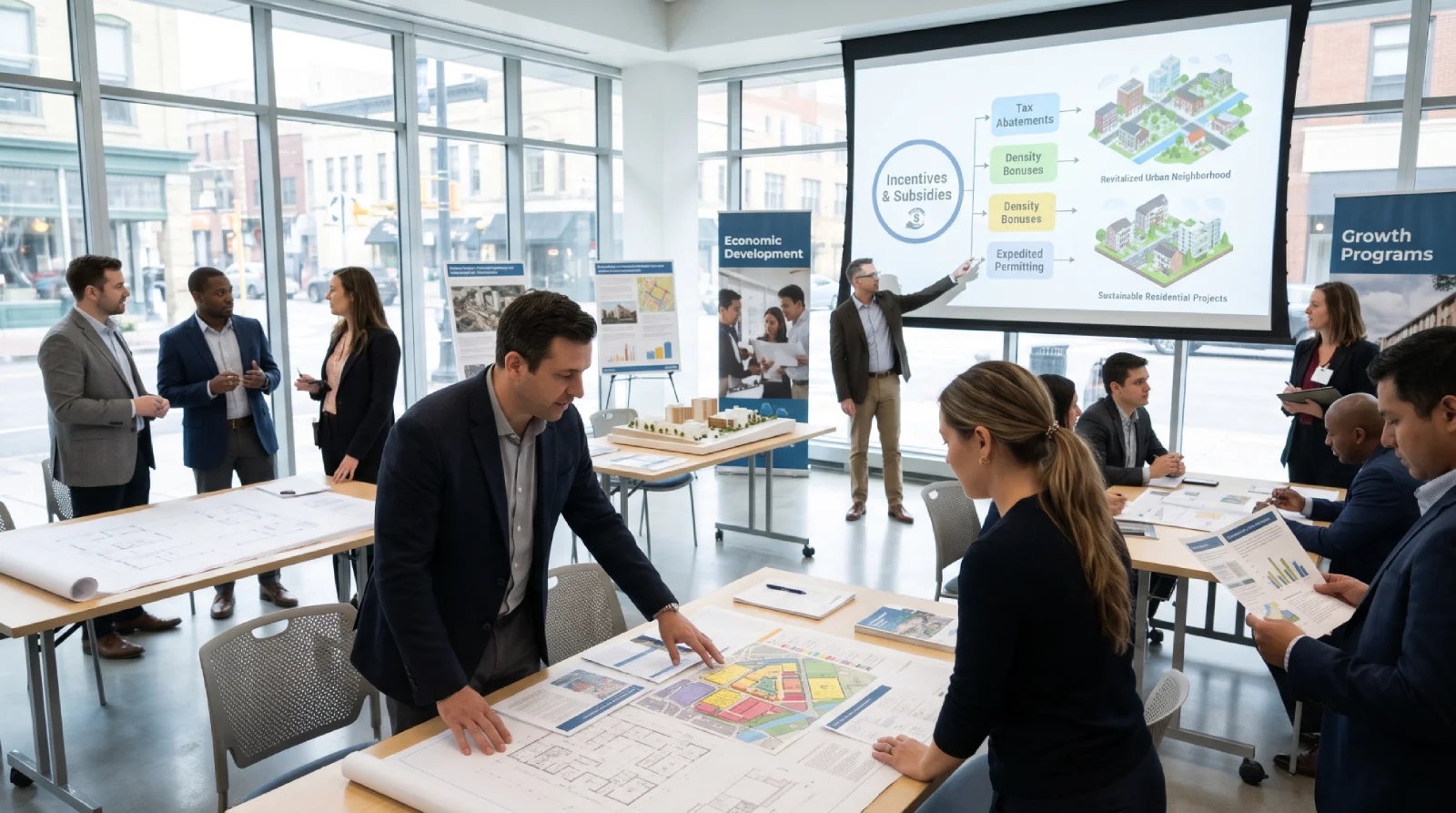
Development incentive applications may involve several disciplines.
Depending on the project, coordination may be needed among land-use consultants, architects, engineers, attorneys, tax professionals, lenders, contractors, and government agencies.
Each professional has a different role.
For example:
- Land-use consultants review zoning and entitlement requirements.
- Architects and engineers prepare technical plans and supporting materials.
- Tax professionals evaluate applicable tax implications.
- Attorneys review legal obligations and program agreements.
- Lenders evaluate financing requirements and project structure.
- Government agencies administer the program and determine eligibility and approval.
Clear coordination helps reduce conflicting information and ensures that application materials reflect the same project scope and development assumptions.
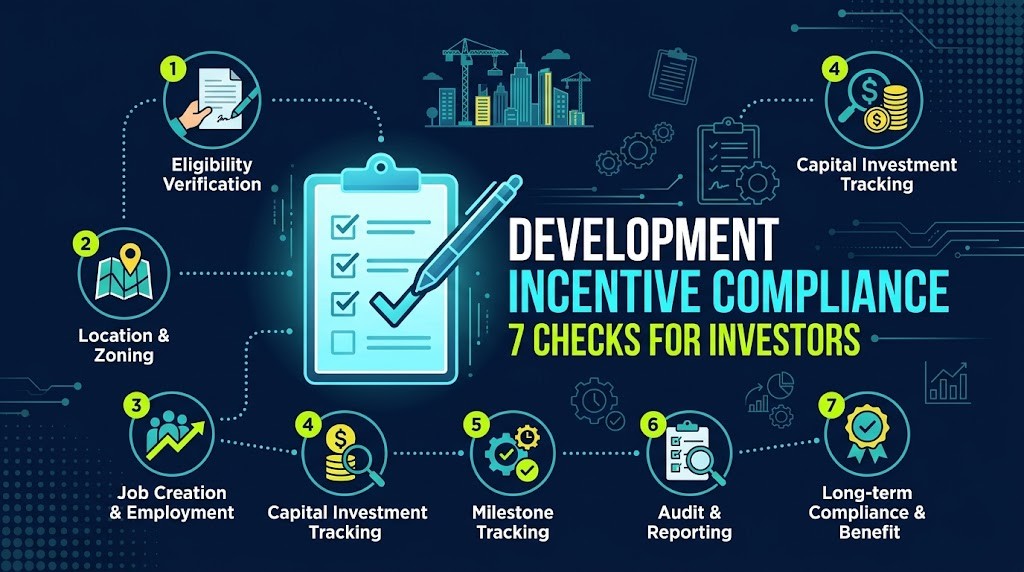
8. Establish a Compliance and Reporting Plan
Receiving an incentive does not necessarily end the developer’s responsibilities.
Some programs require continued compliance throughout construction and after project completion.
Depending on the program, obligations may include income restrictions, job creation targets, reporting deadlines, eligible expenditure records, property use requirements, or periodic inspections.
Before accepting an incentive, determine:
- Which conditions must be maintained?
- How long do the obligations last?
- What records must be retained?
- Who is responsible for reporting?
- What happens if project requirements change?
- What are the consequences of noncompliance?
A compliance plan helps developers understand the long-term responsibilities associated with an incentive before making a commitment.
Common Mistakes Developers Should Avoid
Even a promising incentive opportunity can become difficult to pursue when basic preparation is overlooked.
Watch for these common mistakes:
Assuming eligibility without verification. A program’s general purpose does not mean every property or applicant qualifies.
Using outdated program information. Funding availability, application forms, and eligibility rules can change. Always confirm requirements with the administering agency.
Submitting incomplete documentation. Missing financial, ownership, site, or technical information can delay review.
Ignoring zoning and entitlement constraints. Financial incentives do not automatically resolve land-use, building, or permitting requirements.
Overestimating financial benefits. Potential incentives should not be treated as approved funding until the appropriate authority confirms the award or benefit.
Overlooking long-term obligations. Reporting, affordability, operational, and monitoring requirements may continue after project completion.
How JDJ Consulting Supports Development Planning
Identifying a potential incentive is only one part of preparing a development project.
Property owners and developers must also understand the property’s zoning, site constraints, entitlement requirements, and permitting considerations.
JDJ Consulting Group supports development planning and land-use strategy across California, Texas, and Florida.
Depending on project scope, our consulting services may include:
- Pre-construction analysis and site feasibility review.
- Zoning and land-use evaluation.
- Density bonus and entitlement strategy.
- Development constraint identification.
- Application and agency coordination.
- Permit expediting and approval support.
Our zoning and development incentive guide provides additional information about potential regulatory pathways, while our permit expediting services explain how we support the application and permitting process.
For developers evaluating a new acquisition or planning a redevelopment, reviewing these requirements early can help establish a more informed development strategy.
Frequently Asked Questions About Development Incentive Applications
1. What documents are needed to apply for development incentives?
Requirements vary by program. Common documents include property ownership records, parcel information, project descriptions, site plans, construction budgets, financial documentation, and supporting technical reports. Always follow the administering agency’s official checklist.
2. When should developers begin researching incentive programs?
Ideally, incentive research should begin during site selection and pre-construction planning. Early evaluation allows developers to identify potential eligibility requirements, project restrictions, and approval conditions before major financial commitments.
3. Can a development project qualify for multiple incentive programs?
Potentially. Some programs allow qualifying projects to combine benefits, while others restrict overlapping funding or eligible expenses. Developers should review each program’s rules and confirm whether the proposed combination is permitted.
4. Do development incentives guarantee project approval?
No. Incentive eligibility and approval are separate from zoning, land-use, building, and construction approvals. A project may qualify for an incentive while still requiring separate agency reviews and permits.
5. Can developers apply for incentives after construction begins?
It depends on the program. Some incentives require approval before construction, purchases, or qualifying project activities begin. Others may allow applications at different stages. Confirm the timing requirements before starting work.
6. How long does an incentive application take?
There is no universal timeline. Review periods depend on the administering agency, program complexity, application completeness, funding cycle, and whether additional information or approvals are required.
7. What happens if a project does not meet its incentive requirements?
Consequences depend on the program agreement and applicable regulations. Potential outcomes may include reduced benefits, repayment obligations, loss of eligibility, or other penalties. Developers should understand these conditions before accepting an award.
8. Can JDJ Consulting help evaluate development incentive opportunities?
JDJ Consulting provides zoning, entitlement, pre-construction, and permitting support. Our team can help evaluate development constraints and potential regulatory pathways as part of a broader project review. Incentive eligibility and award decisions remain subject to the applicable program administrator.
Final Thoughts
Development incentives can support real estate investment, redevelopment, affordable housing, and business expansion. However, the value of an incentive depends on more than its advertised benefit.
A well-prepared application begins with a clear project scope, verified eligibility, realistic financial analysis, organized documentation, and an understanding of the requirements that continue after approval.
By addressing these considerations early, developers can make more informed decisions and reduce avoidable complications throughout the development process.
Planning a development project? Contact JDJ Consulting to discuss your property’s zoning, feasibility, and entitlement requirements.
Call (818) 793-5058 or email sales@jdj-consulting.com.